Summary
-
Iran vows regional and US infrastructure will be “irreversibly destroyed” in response to Trump’s 48-hour timeline to open Hormuz or else Iranian power plants will be obliterated.
-
Iran announces imposition a $2 million transit fee on ‘non-enemy’ ships wishing to transit strait.
-
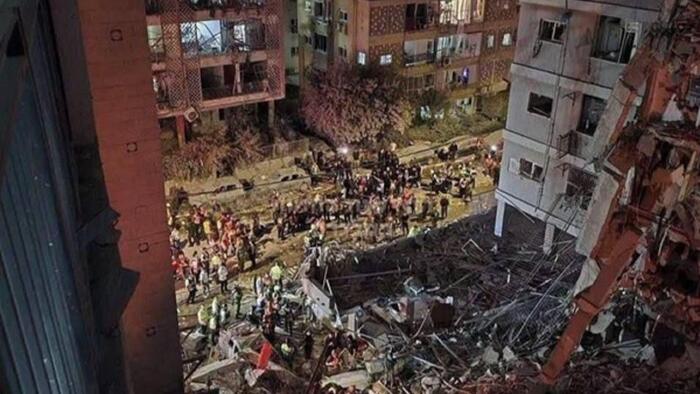
Unprecedented damage and many dozens of casualties in Israel’s south after tit-for-tat strikes on areas with nuclear plants.
-
Reports of US prepping diplomatic offramp plan but Iran says expanding war has effectively shut the door; Bessent says “50 days” of higher prices for 50 years of no Iran nukes.
* * *
Threatened War on Power Plants Looms
As a reminder here’s what President Trump threatened Saturday – so the clock is ticking – assuming he’s ready to make good on the promise: “If Iran doesn’t FULLY OPEN, WITHOUT THREAT, the Strait of Hormuz, within 48 HOURS from this exact point in time, the United States of America will hit and obliterate their various POWER PLANTS, STARTING WITH THE BIGGEST ONE FIRST!” Trump wrote.
Iran has responded with its own vow of escalation in response. In a post on X, Iran’s parliament speaker Mohammad Baqer Qalibaf warned that critical infrastructure and energy facilities across the Middle East will be “irreversibly destroyed” if Iranian power plants are attacked. He wrote:
“Immediately after the power plants and infrastructure in our country are targeted, the critical infrastructure, energy infrastructure, and oil facilities throughout the region will be considered legitimate targets and will be destroyed in an irreversible manner, and the price of oil will remain high for a long time.”

Iranian Foreign Minister Abbas Araghchi this weekend:
There’s no room anymore to talk with the Americans, as they deceived us with promises of no attack, and even after making significant progress in the negotiations, they decided to attack us anyway. The experience is extremely bitter, and trust is completely nonexistent. The regional war slams the doors of diplomacy shut for good!
$2 Million Hormuz Transit Fee, Except For ‘Enemy’ Countries
By now it’s clear that Iran’s approach to the Strait of Hormuz has been to only allow select countries while targeting others’ shipping and reportedly mining the waterway. An Iranian official said the strait is open to all vessels except those from “enemy” countries.
Iran state TV has further announced the imposition a $2 million transit fee on ships, with a senior lawmaker stating: “We have established a new regime governing the Strait after 47 years… We have to fund the war.”
Iranian state TV brag-reports from the Strait of Hormuz. https://t.co/vmP6M1UTFJ
— Yaroslav Trofimov (@yarotrof) March 22, 2026
Antonio Guterres stated the UN is prepared to help reopen the strait, along with some Gulf countries – but there’s still nothing in the way of any level of a practical military plan in place, given the obvious extreme risks.
The US is still considering plans to seize or blockade Kharg Island, which would be another massive escalation which some analysts have deemed ‘suicidal’ in terms of warships or any Marines sent that deep into Persian Gulf and strait waters.
Tehran has forced ships crossing the Strait of Hormuz to pay a $2 million fee says Boroujerdi of parliament’s national security committee
“We have established a new regime governing the Strait after 47 years,” he said smirking. “We have to fund the war”
The presenter smirks pic.twitter.com/nL4dsVSZp3
— Fazel Hawramy (@FazelHawramy) March 22, 2026
Heavy Blows Traded: Damage in Israel is Unprecedented
US and Israeli forces continued strikes across Iran, including in Tehran, Karaj, Isfahan, Natanz, and Ramsar – while as we’ve been reporting, Iran’s Atomic Energy Organization said the Natanz nuclear site was targeted in “criminal attacks.”
This in turn resulted in Iran targeting Dimona and Arad for the first time of the war, causing roughly 100 injuries. The conflict has just entered week four and already they are trading strikes on nuclear plants. Central Israel has continued getting hit hard, with Iranian cluster munitions spreading bomblets across Tel Aviv and nearby areas. Fifteen people were injured there, one seriously. Additional impacts damaged residential areas in Jaffa and Petah Tikva.
İran’ın İsrail’in başkenti Tel Aviv’e gönderdiği füzeler havada işte böyle görüntülendi.
— Haber Filesi (@haberfilesi) March 21, 2026
Local reports say there are 88 injuries in Arad alone, including serious and moderate cases. Hospitals, including Soroka Medical Center and Tel Aviv Sourasky Medical Center, treated dozens of wounded, including children. There are reports of growing anger and frustration inside Israel both at the government’s underestimating what Iran’s response would be like, and the apparent major failures of the Iron Dome defense system.
Mass casualties after large Iranian missiles on Arad and Dimona:
Benjamin Netanyahu has newly stated, “We’re responding with great force, but not on civilians. We’re going after the regime. We’re going after the IRGC, this criminal gang, and we’re going after them personally, their leaders, their installations, their economic assets. We’re going after them very strongly.” As for Iran, a state broadcaster reported over 1,500 deaths from US-Israeli strikes, but the true toll may be significantly higher amid ongoing rescue efforts and the fog of war.
Iraq to Lebanon To Yemen: Regional Spillover & Proxy Activity
Drone and rocket attacks targeted a US diplomatic and logistics center near Baghdad International Airport, with multiple overnight strikes reported. Iran-backed Houthis have increased threats, and they are imminently expected to join the war, with the potential ability to close the Bab al-Mandab Strait (Red Sea). Analysts have repeatedly warned their entry into the conflict would expand it significantly, drawing in Red Sea shipping routes and regional actors.
CNN reports Israel is dropping massive bombs directly on residential buildings in eastern Tehran. The blasts are so powerful they are leveling entire apartment blocks and severely damaging surrounding civilian neighborhoods. Absolute war crimes. pic.twitter.com/a8LayADZul
— Furkan Gözükara (@FurkanGozukara) March 22, 2026
Israel has meanwhile intensified operations in Lebanon, with strikes on southern suburbs of Beirut having killed over 1,000 people and displaced more than a million. Israeli Defense Minister Israel Katz has ordered accelerated demolition of homes in border villages: “Accelerate the demolition of Lebanese houses in the contact villages in order to thwart threats to Israeli communities,” applying tactics used in Gaza areas such as Rafah and Beit Hanoun,” he said.
In the Gulf, Saudi Arabia has expeled Iran’s military attache and four embassy staff, giving them 24 hours to leave the country, over “repeated Iranian attacks” on the kingdom’s territory. Riyadh and the UAE are inching closer to possibly joining the US-Israeli war against Iran, also as Trump and Netanyahu have called on other countries to enter a coalition.
Diplomatic Efforts and Conditions for Talks?
There’s been a lot of chatter about setting up conditions for a potential offramp, even as Tehran has appeared to shut the door on any future talks, and while thousands of Marines transported on several warships are en route to the region.
The US is exploring a diplomatic track while continuing military operations, Axios has reported. There’s obvious pressure on the US domestic front, where rising gas prices could spell serious trouble for Republicans ahead of next fall’s midterm elections. Axios reviews of preparations:
- Any deal to end the war would need to include the reopening of the Strait of Hormuz, address Iran’s stockpile of highly enriched uranium, and also establish a long-term agreement on Iran’s nuclear program, ballistic missiles and support for proxies in the region.
- There has been no direct contact between the U.S. and Iran in recent days, though Egypt, Qatar and the U.K. have all passed messages between the two, a U.S. official and two additional sources with knowledge said. Egypt and Qatar have informed the U.S. and Israel that Iran is interested in negotiating, but with very tough terms.
- The Iranian demands include a ceasefire, guarantees that the war will not resume in the future, and compensation.
One big problem is that after a spate of top level assassinations of Iranian leaders, Washington doesn’t know who in Tehran it would be negotiating with.

And given that on the US side Jared Kushner and Steve Witkoff are reportedly shaping potential negotiations, the Iranians are unlikely to want to have anything more to do with them. There are reports of indirect talk efforts via intermediaries including Egypt, Qatar, and the United Kingdom, but the reality is that Iran may have been pushed too far – into existential survival mode – and is ready to essentially ‘fight to the death’.