Japan is revamping its cooperation with Pacific Island nations. Humanitarian assistance has long defined Tokyo’s regional engagement; now, the East Asian nation is pursuing collaboration in a more consequential domain: defense. In response to Beijing’s expanding military footprint, Tokyo is turning to South Pacific nations to bolster its defense architecture. It seeks to forge strong defense ties and, crucially, counterbalance China’s regional influence.
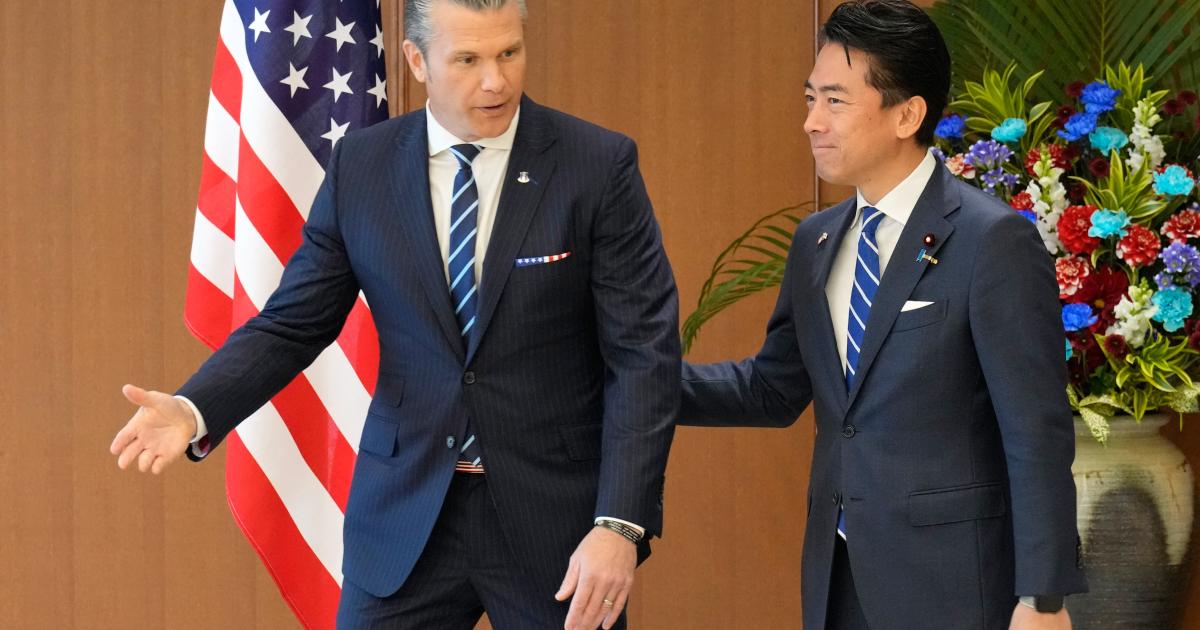
Tokyo made those ambitions clear during the recently held 3rd Japan-Pacific Islands Defence Dialogue. Japanese Defense Minister Shinjiro Koizumi proposed several security arrangements, hoping to initiate personnel exchanges for defense officials and to cooperate on maritime security. Japan’s vision, articulated by Minister Koizumi, is to “build a multilayered network reaching beyond regions.” Memoranda of Understanding on Defense Cooperation with Fiji and Tonga are slated to follow.
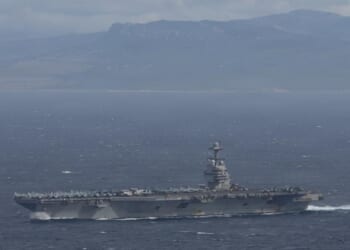
China’s military adventurism is no doubt the primary catalyst for Japan’s recalibration. Beijing has begun developing its forces to conduct operations far beyond its immediate backyard. In June 2025, Chinese aircraft carriers passed through the First Island Chain, a defensive security perimeter running from Japan to the Philippines, and conducted impressive naval aviation exercises.
Beijing’s presence now reaches deep into the South Pacific. In 2024, it deployed two of its most advanced destroyers, each capable of independently conducting missions and making port calls in Vanuatu. A few months later, a flotilla of Chinese naval vessels forced hundreds of commercial flights to divert course after conducting unannounced live-fire drills off the southeast coast of Australia. While these demonstrations are intended to showcase Chinese military might, they also serve another important function: familiarizing forces with the region’s operating environment.
That is worrying for Japan. Seeking territorial familiarity could portend aspirations to operate in distant waters. The South Pacific encompasses parts of the Second Island Chain, which extends from Guam to Papua New Guinea through Palau. U.S. military installations line the perimeter; these facilities lie outside immediate flashpoints and serve as staging grounds for resupply missions. During a conflict, they become vital hubs for transporting fuel and ammunition for forces based in Japan. If Chinese forces control intermediary areas between the island chains, they can deny critical logistics support.
Tokyo’s priority is preventing that possibility. To that end, it has pledged to deepen security cooperation through its Ship Rider Program. Japan’s Maritime Self-Defense Force (JMSDF) manages the program, which enables regional law enforcement officers to deploy on Japanese naval vessels for maritime patrol. In the past year, the JMSDF has already pledged that Japanese destroyers will make more port calls. The latest round of dialogue hints at possibly more deputized patrols.
Ship Rider programs leverage Japanese capabilities, enabling Tokyo to establish a security presence. Similar programs by the U.S. Coast Guard have produced remarkable results. In 2024, the U.S. Coast Guard Cutter Harriet Lane conducted an 81-day-long Blue Pacific Patrol, making port calls to five Pacific Island nations. Most notably, the crew of the vessel visited Port Vila in Vanuatu, where two Chinese naval destroyers would visit just months later.
>>> Why the U.S. Coast Guard Stormed the Decks of an Oil Tanker Headed for China
These joint law enforcement arrangements provide critical insight into the operating environment of the South Pacific, allowing Japan to become familiar with key infrastructure, maritime chokepoints, and logistical realities. All the while, they empower Pacific Island nations to police their own waters better, fostering lasting bilateral goodwill.
However, Japan’s increased regional engagement is unlikely to constrain China’s influence substantially. Beijing consistently ranks as the second-largest donor of bilateral aid in the region, trailing only Australia. Its state enterprises wield financial firepower that Tokyo simply cannot match. Chinese capital regularly pours into projects that companies pass over as economically unviable, which makes it difficult for small island nations with limited options to refuse. The pull of that largesse has proved powerful; three Pacific Island nations were persuaded to sever diplomatic relations with Taiwan in recent years.
Still, Tokyo is right to push for deeper defense cooperation. Even if it cannot match Beijing’s financial heft, it can still position itself as a credible partner.
China’s aggressive military provocations to intimidate adversaries have led to unintentional consequences: estranging its very allies in the South Pacific. Beijing’s previous missile tests over the Pacific Ocean, for instance, have drawn rare rebukes from strategic partners. These fissures may be small, but they offer possible openings for Tokyo to recalibrate regional dynamics.
This piece originally appeared in The National Interest