The other day on the subway, I overheard someone declare that Marilyn Monroe was “lowkey mid.” The opinion itself was worrisome, but the explanation that followed troubled me even more: “I mean, have you seen her eyelid exposure?” I wish I could say I was surprised to hear such clinical terminology used to describe something as abstract—perhaps even sacred—as beauty, but as a mother of three Gen Zers, I am already well acquainted with the quasi-scientific jargon circulating on their feeds.
A generation obsessed with looks is nothing new, but in the age of algorithms, the very concept of beauty is being drastically redefined. Qualities such as presence, charisma, and sex appeal hold little currency online, where the unnameable has always struggled to exist. A person’s je ne sais quoi, once the spark that made skin tingle and hearts leap, has been replaced by scientific language and mathematical precision that reads, to the uninitiated, like gospel. The canthal tilt and orbital depth of someone’s eyes, the angles of their cheekbones, the ratio between forehead and hairline, even tongue posture—these are just a few of new variables this generation has been trained to evaluate when they see a photo or encounter someone’s profile.
The days when a 13-year-old might daydream about “ugly-hot” actors like Gérard Depardieu or Benicio del Toro have faded away. Lord knows how many black-and-white postcards of James Dean lined my middle-school locker. Today, commenters would likely agree that, with his low-set brow, narrow inter-ocular distance, and asymmetrical lips, he’d likely be mogged by a conventionally symmetrical leading chad like Jacob Elordi.
Yes, my fluency in this new vernacular frightens me too. But it’s the language our kids are learning to speak as they sit beside us on the sofa scrolling on their phones, navigating a world where algorithmic feedback increasingly mediates the human gaze. The process is fast and surprisingly literal. Upload a selfie to one of the many face symmetry analyzers or beauty calculators, and watch as a grid maps hundreds of points across your face, producing a final harmony score based on bone structure and feature distance. I was curious, so I uploaded the Symmi app, and my own face scored a respectable 74 percent. (Apparently, the right side of my face is larger than the left, and my left eye sits higher than my right.) It made me wonder whether people actually noticed these asymmetries, and I felt my adolescent insecurities start to stir. I could have opted for the paid version to see what my face would look like with a higher score, but I thought better of it. I doubt that a 14-year-old would have shown the same restraint.
Quantification of people is one problem. But the looksmaxxing movement betrays a broader systemic shift. A world where beauty is no longer experienced but scored reflects a move away from the unpredictable, felt world we older generations grew up in, toward a more predictable future with probable outcomes and minimal risk.
Back in the ’90s, the unknown was our travel companion on a Friday night. My friends and I would wander in and out of bars, wait 40 minutes for a table, scribble our phone numbers on scraps of paper for a cute stranger. When we applied to college, we stalked our physical mailboxes for weeks, waiting for acceptance letters to show up. We spent hours cutting our own mixtapes, often without a log, so whoever listened had no idea what song would come next. We relied on instinct, whim, hard work, and a touch of bravery to move through life.
Young Americans today are strikingly averse to uncertainty. If they cannot get a dinner reservation, they choose a different restaurant. Before they even leave the house, they know, down to the minute, when they will arrive and how much an Uber will cost. From their dating app, they have already gathered a surprising amount of information about the person they are about to meet: how tall they are, where they grew up, where they work, their politics and religion, whether they are vaccinated, and even what type of pet they own. College admissions notifications arrive on their phones on the promised day, and Spotify’s Wrapped uses their listening statistics to tell them what kind of music they love, and in what order.
Coming of age during one of the most polarized and culturally volatile periods in the U.S. since Vietnam, younger Americans have gladly embraced tools that were designed to eliminate the risks and the outcomes we once called “fate.” Though we older people avail ourselves of these modern conveniences, we’ve experienced life without them. Our children haven’t; their default is to measure and weigh because it’s all they have known. Their world was built on a systematic annihilation of ambiguity. It was only a matter of time before they applied these same tools of certainty to what matters most to most young people: looking good.
The impulse to engineer the body as a system of self-improvement emerged from bodybuilding and biohacking cultures. The term looksmaxxing, however, gained its footing among incel forums and redpill communities, where men resolve the uncertainties and disappointments of romantic pursuit by taking those impulses to the next level. The denizens of these fringe groups fixate on steroid optimization, body fat percentages, and “testosterone maxing,” while their discourse is saturated with jawline theory, facial dominance metrics, and ranking frameworks such as the PSL scale, a 1-10 facial ranking system that separates the “normies” from the genetically elite.
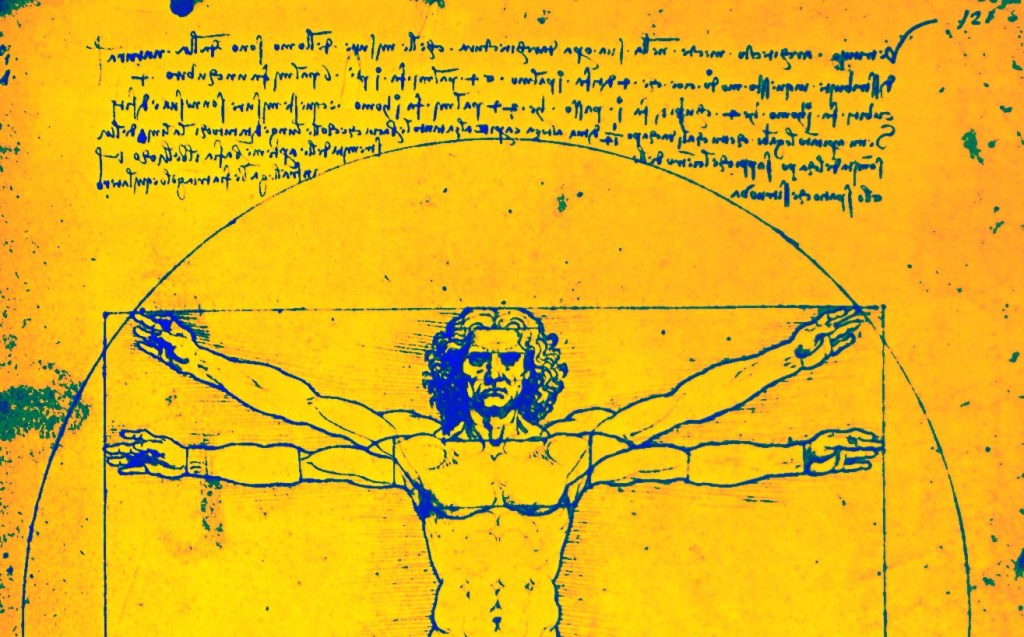
But looksmaxxing is not just a TikTok trend, nor is it new. It is simply the latest iteration of the human urge to measure beauty with scientific precision, an impulse that can be traced across the centuries from the Golden Ratio of ancient Greece to Leonardo da Vinci’s Vitruvian Man, which illustrates the Renaissance belief that beauty follows an underlying mathematical order. In the 19th century, movements centered around physiognomy and phrenology claimed that a person’s attractiveness, along with character, morality, and intelligence, could be determined through skull measurements and facial angles. Today’s AI and data culture have simply updated the software.
What is new, however, is the widespread adoption and gamification of such theories, and the extreme measures young people take for the sake of good looks. Peers advise one another to get on steroids at 14, to try meth to lose weight, or to save for jaw-extension or limb-lengthening surgery as the greatest investment they can make in their future. Some have even recorded themselves engaging in a practice known as “bone smashing,” in which they strike their own faces with blunt objects in the hope of reshaping their bone structure.
The manosphere may be where looksmaxxing first emerged, but it does not explain the growing obsession with quantifying beauty among girls and women, many of whom ridicule looksmaxxing influencers. Still, as my daughter and her friends put it, “Pretty privilege is real.” Med spas and plastic surgeons boast massive followings on social media, backed by billion-dollar industries that promote beauty optimization as self-care. In the United States, there is virtually no regulation governing how aesthetic medicine is marketed online. Botox and filler are pitched to women (and men) barely out of college as part of a normal routine. The messages are subtle but relentless: Aging is a problem and beauty requires routine course correction.
But solely blaming influencer culture or the absence of government guardrails for this fixation on optimized beauty ignores a deeper truth. Like most cultural shifts, this one did not stem from a single rupture, nor did it arrive overnight. The idea that beauty must be optimized has been reinforced over decades, as the everyday mirror complaints of millennials and Gen Xers about wrinkles and aging were passed onto our daughters. I am guilty of this. Recently, I was at a department store trying on makeup with my daughter and chatting with the saleswoman about the lines under my eyes. As we walked out of the store, my daughter looked at me and said, “Mom, you need to stop talking about your wrinkles so much. You’re making me not want to get older.” Beyond stoking my mother’s guilt, her comment revealed an unsettling truth about language and its influence: Any sentiment, repeated often enough, seeps inward, shaping how people understand themselves until it becomes part of the culture itself.
And it certainly applies to looksmaxxing. In such communities, terms such as genetic ceiling, a supposed hard limit determined by facial structure, and ascension, an escape from a lower state, legitimize extreme tactics, framing them as moral or spiritual progress. It’s the slow, steady drip of anesthetized thinking delivered through their feeds that makes young people adaptable enough to accept hyper-calculating and self-violence as self-evident.
But the true tragedy is not the impossible standard flashing before them or the extreme measures they take to meet it. Nor is it the commodification of beauty, which has been dissected and squeezed into formulas and ratios in much the same way LLMs turn language into particle board. The true tragedy is losing the freedom to wander inside our own minds, to leave room for instinct and surprise. That is where beauty has always lived: in the not knowing, in the wonder.