Sometimes, the headline raises more than one question: “Quadruple amputee cornhole player fatally shoots man, authorities say.” That is a very efficient headline: It raises many more questions than there are verbs in it. The first sentence of the story from ESPN answers none of these questions and, in fact, raises a couple more: “A county sheriff’s office in Maryland said Monday that a professional cornhole player who is also a quadruple amputee fatally shot a passenger in the front seat of a car he was driving during an argument.”
Wait—there are professional cornhole players?
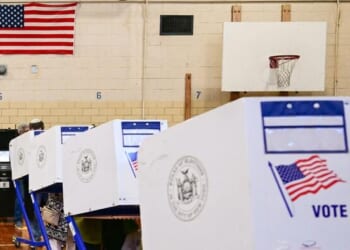
People who take an interest in voting fraud have been told—lectured—over and over again, for many years, that voting fraud is not a thing, that there is no evidence of fraud’s having changed the outcome of any American election. And yet there are those provocative headlines, e.g.:
And those headlines raise at least one question: Why go to the trouble—and take on the legal risk—of committing voting fraud if not to change the outcome of an election? Maybe Ezra Klein et al. think that as an issue voting fraud is itself fraudulent—“the voting fraud fraud” as Klein’s old Washington Post blog called it—but there are those who disagree, including, presumably, the real experts: the people committing voting fraud.
Because we live in a dumb world, it is possible—though not likely!—that this column will be put in front of the eyes of at least a few dumb people, and, so, a few caveats here. It is entirely possible for all of the following things to be true at the same time: 1) Donald Trump lost the 2020 election fair and square; 2) The only people who say otherwise are dopes, dupes, and charlatans; 3) Logistically, it would be extraordinarily difficult to fraudulently alter the outcome of a U.S. presidential election; 4) It is not the case that there are millions of illegal aliens registered to vote and voting; 5) Voting fraud happens; 6) Voting fraud happens regularly; 7) Voting fraud, though not pervasive, is more widespread than many would imagine; 8) It is possible, and even likely, that such fraud can and does change the outcome of certain elections; 9) Evidence suggests that the affected elections mostly are relatively obscure primaries and municipal elections in which the number of total votes is small and, hence, the number of fraudulent votes needed to change the outcome also is small; 10) If No. 8 is not true and no election is being successfully captured, then the only likely explanation for the persistence and regularity of actual, real-world voting fraud—the existence of which has been proved time and again to the satisfaction of the generally excellent standards of evidence relied upon in our criminal trials—is that the ballot-box stuffing and ballot harvesting and such are a kind of expressive, therapeutic exercise in extreme political tribalism, which strikes me as an unlikely explanation though far from impossible.
The so-called SAVE America Act (and here I will reiterate my desire to horse-whip legislators who insist on cutesy acronyms), which imposes strict voter-ID rules on the states, may be an imbecilic and bad-faith exercise in political self-interest—these are Republicans we are talking about, after all—but the underlying principles are defensible and, in my view, often prudent.
They are, in fact, so prudent that Republicans (however imbecilic and however bad their faith) might want to think twice about them out of self-interest: If, out of sincere concern for keeping noncitizens from voting, we restricted voting to people who could produce a U.S. passport, then Republicans would never win another election. Back in the days in which the typical Republican voter was a very squared-away Alex P. Keaton type and the typical Democratic voter was late for a Grateful Dead show, creating new administrative burdens for voting might have been good for Republicans. If you think that still is the case, then I have some bad news for you, Sunshine: I have been to a Trump rally, and I am pretty sure that the faculty in the women’s studies department at Harvard is more adept at keeping up with their paperwork. (William F. Buckley Jr. posthumously got his wish to be governed by the first 2,000 people in the phone book rather than the faculty of Harvard, except that it turned out to be the Enid, Oklahoma, phone book instead of Boston’s—and look how well it is going!) Today, it is the Democratic Party that represents educated, affluent professionals, while the GOP has become what the Democrats up in Minnesota still call themselves: the farmer-labor party.
Disenfranchising the discombobulated, or the merely overwhelmed, might very well backfire on the Republicans. The law could, for example, create some hassles for women who change their names after getting married, putting an additional burden on a traditionally Republican demographic: married women.
The federal government probably should not take on any new duties with regard to the administration of elections at all. While the Constitution does invest the central government with some regulatory authority in voting, Uncle Sam’s footprint at the polling place already is too big, and the states are perfectly capable of managing elections themselves in accordance with the constitutional mandate that “the “Times, Places and Manner of holding Elections for Senators and Representatives, shall be prescribed in each State by the Legislature thereof.”
Requiring “documentary proof of citizenship” to register to vote might, as critics complain, make it more difficult for some people to register, and that is, in my view, something well short of a full-blown democratic tragedy. Demanding photo identification at the polls, restricting or largely eliminating absentee ballots and voting by mail, etc.—there is a case to be made for such measures, and that case ought to be made state by state. Some states already have voting by mail exclusively in some elections and, while that is not the model I would choose, the people of Utah, in their wisdom, see things differently. It is a big country, and we have 50 different states for a reason.
Making it more difficult to vote is not necessarily a bad thing, and making it easier to vote is not necessarily a good thing. Good citizenship in a free republic requires a little bit of proactivity.
Voting fraud may be—almost certainly is—a very, very minor problem. But a little bit of fraud in our elections is like a little bit of penny-ante embezzling by government workers: It is not the grand totals that concern us so much as that the sums in question, however picayune, attest to corruption in the system and a lack of decent oversight.
In that sense, voting fraud is like one of Donald Trump’s other big issues—illegal immigration—in that the refusal of responsible parties to confront the issue forthrightly and proactively presents an opportunity for irresponsible parties to take up the issue. Washington has in these matters issued an engraved invitation to demagoguery, and Donald Trump has answered it. But the unseriousness of Trump and his sycophants does not detract from the seriousness of the underlying concerns. We should want our elections to be as clean as possible, even if it inconveniences a few people or a few million of them.
Something to meditate on.
Mostly, though, I want to know how that quadruple-amputee professional cornhole player managed to drive a car and shoot somebody at the same time.