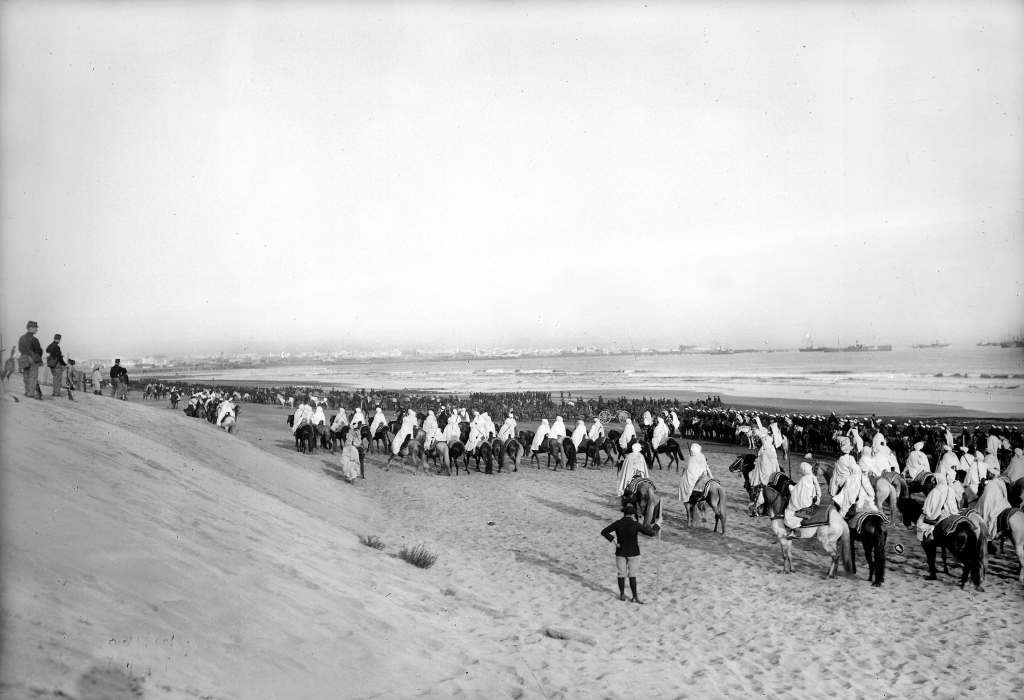
In 1912, Gen. Hubert Lyautey, an experienced colonial administrator, took office as the first resident general (aka governor) of the newly formed French Protectorate of Morocco. For 13 years until his retirement, he led an unusually thoughtful, even idealistic, approach to nation-building (in this case, “colonization”), based on respect for traditional social structures and leaders. He worked with local tribes, believed in local control, was against religious proselytizing, and tried to keep out French settlers. He invested in agriculture, railroads, schools, and clinics. In the ancient cities of Fes, Meknes, and Marrakech, Lyautey was careful not to impose. The modern buildings and streets that needed to be built were constructed next to, rather than inside, the traditional cities. The model he created, embodying the idea of adding on, rather than taking from or replacing, could serve as an example of “nation-building light.”
While the Trump administration, just in the first months of 2026, has sought to overthrow two regimes, it seems disinclined (so far) to doing any nation-building. It is clear however that whether regime change or nation-building, a light-handed approach is not Trump’s way. The historical record is worth looking into, because it is filled with lessons about the wrong-headedness of heavy-handed interventions in a sovereign nation’s affairs.
Nation-building has appeared in a variety of styles and forms going back at least to the Greeks, the Romans, and the likes of Genghis Khan. The spectrum runs from benevolent to oppressive, from constructive to extractive, from partial success to abject failure. As nation-builders, the Romans imposed new ideas, governance structures, and built roads enabling trade and economic growth. And they had singular advantages in their movements around the Mediterranean littoral and up through Western Europe to the North Atlantic: They took their time (time is and has been a key ingredient in nation-building), and they did not need to engage in “regime change.” In most places, they could start more or less from scratch. Some of the areas the Romans occupied as in the case of the Goths, were conglomerations of tribes and clans that existed in small villages. The Romans left behind, in scores of present-day nations, not just roadways and architecture, but language systems and ways of thinking about citizenship, laws, and governance.
In more modern times, however, there are fewer positive examples of “running” someone else’s country. More often, imperial style intervention has been at best a process that left behind a variegated legacy of beneficent institutional remnants as well as often negative unintended consequences, and at worst created enduring barriers to later development.
The early 17th-century Dutch takeover of what is now Indonesia is an almost pure case of exploitation and extraction (based on capturing the lucrative spice trade) that had negative long-term consequences. As economists Daron Acemoglu and James Robinson argue in their book Why Nations Fail, the economic and political institutions the Dutch created in order to optimize their profits from spices, in particular a plantation type of organization, “would condemn the islands to underdevelopment.”
Or consider the 333-year-long reign of Spain in the Philippines (1565-1898). That period left behind a massive conversion to Catholicism, a tradition of Spanish names (e.g., Ferdinand and Imelda), and arguably the beginnings of a Filipino identity among a vast array of islands. The U.S. takeover, from 1898 to 1946 (interrupted by the Japanese occupation from 1941-1945) moved the country to democracy—the 1907 Philippine Assembly, modeled after the U.S. House of Representatives, is considered the first elected legislature in Asia. But beneath the surface of American-inspired Filipino democracy is a system of cronyism. As much as 80 percent of the members of Congress in the Philippines are linked to a relatively small number of family dynasties. It is generally thought that this “padrino” system, as it is sometimes called, has its roots in the long-ago Spanish period.
In 1884 the European powers carved up most of Africa and began to run things, leaving behind a mixed legacy. For roughly three-quarters of a century, the British and the French ran, between them, territories that became 32 nations after independence in the 1960s. The French imposed systems and structures mirroring the centralized state in France itself, along with a belief that the local people could become like the French themselves. The British style was less direct, less assimilationist, but also aimed at benefiting their empire.
The Portuguese, in what is now Mozambique and Angola (and a few other much smaller African states) stayed longer, not leaving until the end of the 20th century. All the colonial powers left their marks, among them English spoken in Kenya and Ghana and others, French spoken by the educated people in Ivory Coast, Guinea, and Niger et. al., and Portuguese in Mozambique and Angola.
But in more important respects, it would be hard to argue that a British or French or Portuguese “way of life” characterizes these former colonies today. On the contrary, some colonial powers left behind barriers to progress; in many of the newly independent African nations, the early post-independence years were marked by a wholesale rejection of colonial systems and a strong belief in building their nations anew themselves. Similarly, after the collapse of the USSR, the Baltic nations and the nations of the Caucasus and Central Asia sought to shuck off everything smacking of the Soviet Union’s decades-long domination.
All in all, the historical record attests to the complexity of efforts to build nations or change regimes, as does the fact that over time, the occupiers’ impositions, either in the way the economy was run, or the way institutions were constituted, could plant seeds for later prosperity or create barriers against it. Perhaps the most important lesson running through the historical record is that those intervention efforts that left behind more good than bad (e.g., ideas, habits, elements of institutional infrastructure that helped lead to later growth and prosperity) took a rather humble approach; a willingness to understand and work with local complexities and culture.
As to the United States’ own record of nation-building and regime change, a Carnegie Endowment Policy Brief from 2003 looked at 16 historical cases of our nation-building. In some of these cases (such as Haiti from 1915-1934 or Nicaragua from 1909-1933) the U.S. ran things directly as “surrogate regimes.” Of the four cases cited in that analysis as “successes,” two were tiny countries (Panama and Grenada) with small and relatively homogenous populations. The other two were the American occupations of Japan and Germany immediately after World War II. Today their institutions and governance structures mirror our own. However, these countries had long histories of institutional evolution, developed infrastructure and human capacity, not to mention cultures that were conducive to economic growth. Overall, the Carnegie policy brief concluded that our record was dismal, and suggested that the challenges in Iraq made it unlikely that we would succeed there.
In his book The Wealth and Poverty of Nations, historian David Landes points out the importance of “the inner values and attitudes that guide a population” and notes that those who would want to “shape people and things” shy away from thinking about such things. Instead, “the technicians would rather do: change interest and exchange rates, free up trade, alter political institutions, manage.”
Translating Landes to recent American interventions (including Iran), a crucial flaw in our record is a kind of intellectual laziness; it is easier to be a “technician” than a thoughtful witness to the universal desires inherent in human nature. It is easier to move fast (“and break things” as the Silicon Valley mantra has famously put it) than to study the particular ways in which the various parts of a cultural and social system interact with each other. It is that laziness that in large measure accounts for our failures in Iraq and Afghanistan. Confusing military victory for lasting accomplishment, almost willfully forgetting the lessons of our Vietnam venture, the hubris of our act-first-think-later quick-win mentality, all led to the dismantling of the Iraqi army and the policy of “debaathification,” two fateful decisions that are regularly cited as among the reasons for our failure. We grossly underestimated the complex challenges of regime change and nation-building, behaving thus like tinkering technicians. Nor did we take the time, or have much of an inclination, to frame the endeavor comprehensively. The late anthropologist Clifford Geertz, who studied “new nations” and outsiders’ efforts to guide them, in his 2005 essay “What Was The Third World Revolution?” captured the essence of such inadequate approaches:
[T]he explosion, one after another, like invisibly connected firecrackers, of ethnic and ethno-religious, primordialized violence (Rwanda, Sri Lanka, Aceh, Darfur) and after-the-border-drawing micro-wars (Timor, Kashmir, Chechnya, Eritrea, Bougainville, Rio De Oro) — not only threatened to overwhelm our machinery for managing them, they escape, or nearly, the established categories of our understanding. It is not just our policies that are inadequate, or our analyses and explanations. It is the conceptual equipment we use to think them with.
Which brings us to 2026, and the questions: Why Venezuela and Iran? What are we even doing there; how are we intervening, and finally, why now? No one would reasonably argue that both regimes were not maddeningly oppressive to their own people, and obstructive in their regions. But there are other dictatorial regimes around today about which similar things can be said: Teodoro Mbasogo, ruling Equatorial Guinea for 47 years; Isaias Afwerki, a nasty guy pushing around his fellow Eritreans for the last 33 years? Should we attack them? Well, no, they are not seen as threats to our national security. But if, say, having nuclear weapons while at the same time being under the thumb of a capricious dictator, is a real threat, then North Korea and Russia would seem to qualify. Yet clearly Trump is not about to attack either one. Maybe the answer in the Venezuelan and Iranian case comes down to “because we can.” As to the HOW of Trump-style interventionism, so far it seems a good candidate for the poster child of thoughtlessness, and a guarantee of unintended consequences. In the Iranian case, the negative effects fall not just on us (e.g., oil shock and the perpetuity of our national debt), but on the entire world.
The counterfactual has to be raised here: Supposing we had just continued doing what we’d been doing with respect to Iran—sanctions and rallying international pressure—would the Iranian regime have eventually collapsed anyway? As a recent opinion piece in the Wall Street Journal put it,
[Trump] had to know he was disturbing a status quo already trending in the right direction: an Iranian regime hated by its people, its strategic assets disrupted by last June’s bombings, its aged leader at death’s door, a succession crisis looming, its neighbors aligned in favor of containment.
For example, with hindsight, the collapse of the Soviet Union would seem to have been inevitable. Anyone who visited the USSR, as I did in the 1960s and 1980s who saw first-hand the low quality of goods and machinery, the low level of life in general, the clamoring for Western culture from music to blue jeans, could guess at the hollowness of the regime. Had we interpreted these signs correctly, we might have understood that much of our fear of the USSR was unwonted, they were weaker than they seemed.
The lessons of history, sadly so often ignored, attest again and again to the folly of heavy- handed and thoughtless interventions in another country’s affairs. American examples, besides Vietnam, Iraq, Afghanistan, and Libya, include our overthrow of Iranian prime minister Mohammed Mossadegh in 1953, which led to the shah, and 26 years later, to the Iranian Revolution and Khomeini. In 1954, the CIA’s role in ousting Guatemala’s President Arbenz led to decades of civil strife and authoritarian rule.
Finally, in our record of attempts to change the world around us, our usually heavy-handed approach not only satisfies a kind of alpha male sensibility, it is more and more closely tied to something we were warned about by President Eisenhower in 1961- the rise of the military-industrial complex. Today that complex is huge; there are trillions of dollars at stake in the interlocking interests of politicians, mega corporations’ contracts with the military and the national security establishment (which Eisenhower did not anticipate). A light-handed, less-is-more approach would be a major existential threat to the players in this complex.
With the takeover rhetoric about Gaza, Canada, and Greenland, and Trump’s regime change action in Venezuela, and now Iran, the Trump administration, besides betraying his non-intervention campaign rhetoric, seems to be embracing a bullying school-yard style of playing at empire. Such a stance, grievously lacking the humility that would naturally accompany historical awareness and a recognition of the universality of human nature, portends, at the least, an unhappy outcome for all concerned.