Gordon’s excellent book, one of the most attentive and insightful works on early Islam that I have read lately, examines an interesting concept: qibla, meaning the direction of prayer. Most Americans may have no idea about it, but for most Muslims it is a part of their daily lives. Whenever they perform salat, the ritual prayer—five times a day if they are fully observant, or perhaps less frequently—all Muslims turn toward the qibla. In proper prayer spaces, such as mosques, the qibla, toward which the building itself is often oriented, is unmistakably clear. But those on the road must figure out where it is. For that, some Muslims may carry compasses, as in the old days, or keep Qibla Finder apps on their smartphones, which is much more common now.
So, where is this qibla? It is the direction to the Kaaba in Mecca, the holiest shrine in Islam. That cube-shaped building is not only the destination for pilgrimage—the Hajj, which attracts millions every year—but it is also the spiritual magnet to which Muslim faces turn all around the globe.
Yet there is an interesting detail here that reflects Islam’s deep connections to Judaism: Before turning to the Kaaba, for about a decade, the first Muslims had another qibla—the Temple Mount in Jerusalem. Then came the “change of qibla,” from Jerusalem to Mecca, marking a fateful moment in the trajectory of Islam.
Here is the slightly longer story. Islam was born in 610 CE in Mecca, when an Arab merchant named Muhammad began to receive revelations that would ultimately constitute the Quran. The core message was monotheism, which defied the idolatrous polytheism of Arab society. The Kaaba—which had existed for centuries as a shrine—was then at the heart of this paganism, hosting hundreds of idols. That is why Muhammad and his small band of followers did not initially pray toward the Kaaba. Instead, they followed the way of their monotheist predecessors, the Jews, and turned toward Jerusalem.
This continued until the year 624. By that time, Muhammad and most of his followers had fled persecution in Mecca and moved to another Arabian city, Medina. There they encountered Jewish tribes, with whom they signed a remarkably pluralistic agreement. The so-called Constitution of Medina declared, “The Jews have their religion, and the Muslims have theirs.” Yet tensions were rising between Jews and Muslims—due to political reasons, more than anything else—which would soon erupt into conflict. In that context, a new revelation instructed Muhammad to stop turning toward Jerusalem and begin praying toward Mecca instead.
This “change of qibla” was a sign of “the parting of the ways”—a term some historians have used for Christianity’s split from Judaism, but which can also be applied to Islam’s genesis as well. Because, in the beginning, it was not clear, at least to outsiders, whether nascent Islam might become “a sect of Jewry,” as suggested by the late scholar W. Montgomery Watt. It was, after all, a staunch monotheism that praised Abraham, Isaac, Jacob, and Moses. But with the change of qibla—from Jerusalem to Mecca—Islam established itself, visibly and unmistakably, as a distinct religion.
Yet this distinct religion still remained unmistakably Abrahamic—as also reflected in its new and permanent qibla, the Kaaba. Because while this ancient shrine had long been filled with idols, some Arabs believed it was originally built by Abraham and his son Ishmael. The Quran affirmed this belief, narrating how Abraham and Ishmael raised the Kaaba together—as “a resort and a sanctuary for people” (2:125), and even “the first House of worship to be established” (3:96). With this belief, in 630 CE, two years before Muhammad’s death, Muslims conquered Mecca and cleansed the Kaaba of its idols, restoring it as a monotheist temple.
At Yeshiva University, we discussed such Abrahamic connections at Islam’s foundational moment, thanks to Gordon’s book, which offers important insights into this well-known story. He notes, for example, that the change of qibla did not imply a “negation of the ritual practice of others”—that is Jews and Christians. Because while the Quran set Muslims on their distinct direction, it also said: “Each community has its own direction to which it turns: race to do good deeds” (2:148).
This pluralist message was further amplified in Quran 5:48, which, after speaking of Jews and Christians, said: “We have assigned a law and a path to each of you. If God had so willed, He would have made you one community, but He wanted to test you through that which He has given you, so race to do good.”
In his book, Gordon highlights this “remarkably inclusive statement” of the Quran, along with similarly pluralist themes in early Islam, which were later downplayed, to some extent, by medieval exegetes and jurists. They are worth highlighting and reviving today.
Gordon goes further and shows how an intra-Muslim pluralism also emerged in early Islam through the concept of ahl al-qibla, or “people of the qibla.” The term meant that Muslims should regard all those who pray toward the Kaaba, regardless of their perceived sins or heresies, as fellow Muslims. It was a precious antidote to sectarian fanaticism, which was a problem back then as it still is today. Gordon’s impressively detailed and perceptive study of this concept is a valuable contribution to Islamic studies—and deserves attention from Muslim scholars and intellectuals.
These were some of the themes I discussed with the Jewish scholars and students at Yeshiva University that day. We did not discuss current affairs in the Middle East, which has been on fire since the dark day of October 7, 2023, and even more so with the ongoing war over Iran. Had we done so, we might have had some disagreements—except on our shared hope for a better future in which Jews, Muslims, Christians, and others can live peacefully side by side, with equal security, liberty, and dignity.
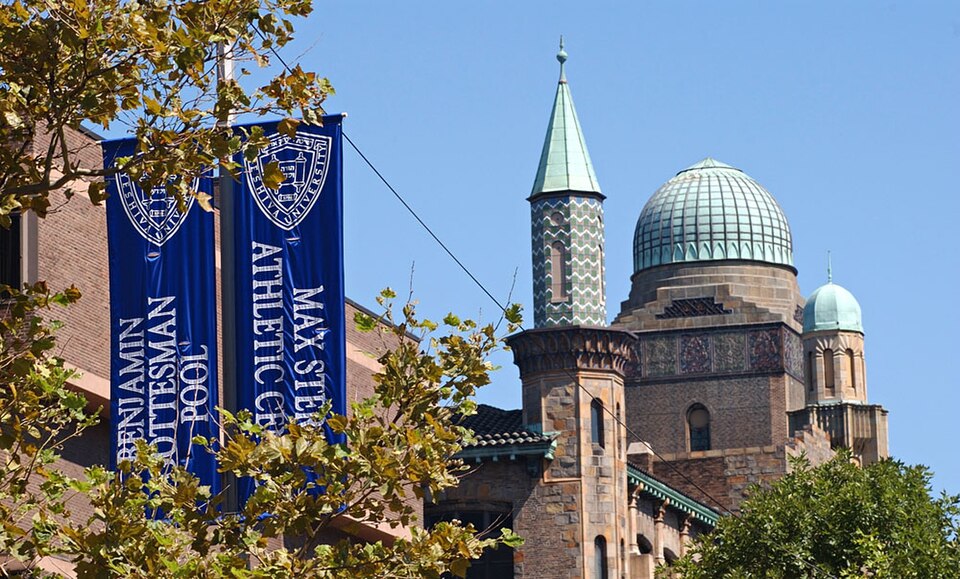
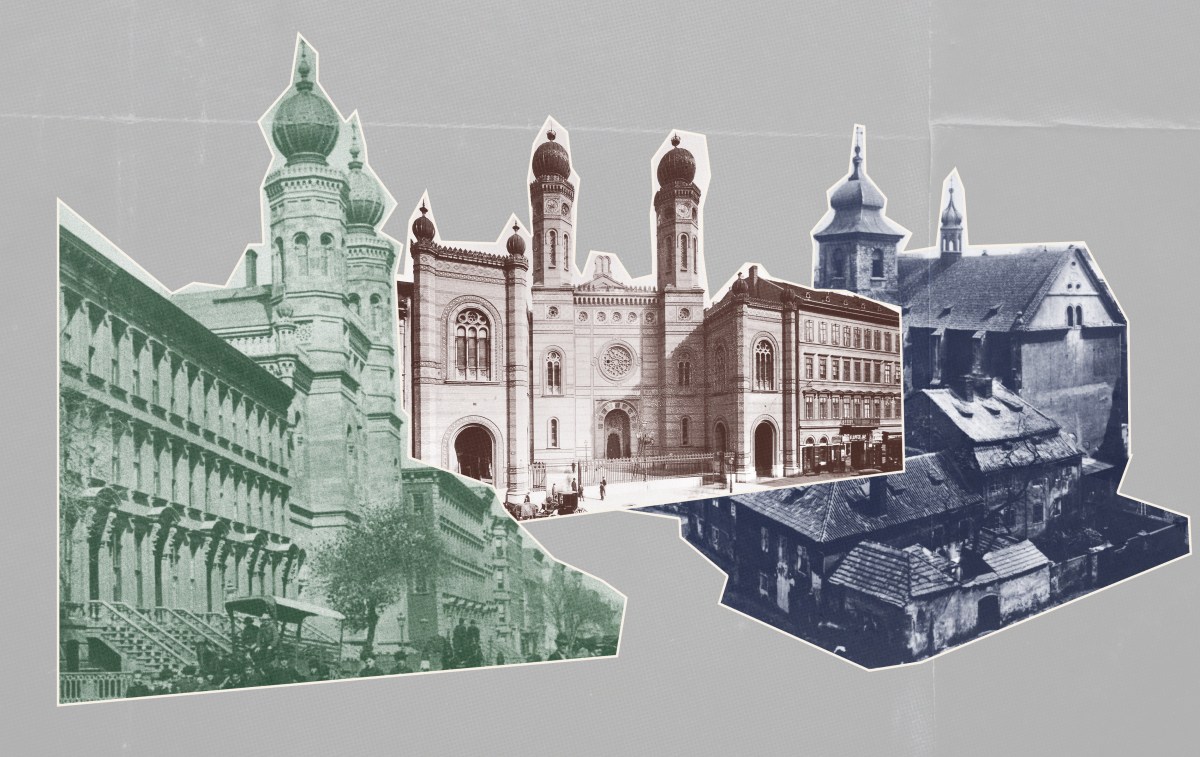
If such a future is ever to be realized, theology and history can play a role. They can remind us that Judaism and Islam are sister religions, and that Jews and Muslims share a long heritage of peace, coexistence, and mutual enrichment.That is why Zysman Hall looks like a mosque—and it is only a small relic of a broader “Judeo-Islamic tradition,” which remained alive until the eruption of the Arab-Israeli conflict roughly a century ago. It is a tradition worth remembering, studying, and evoking—not only as a historical truth, but also, hopefully, as an inspiration for a more peaceful world.