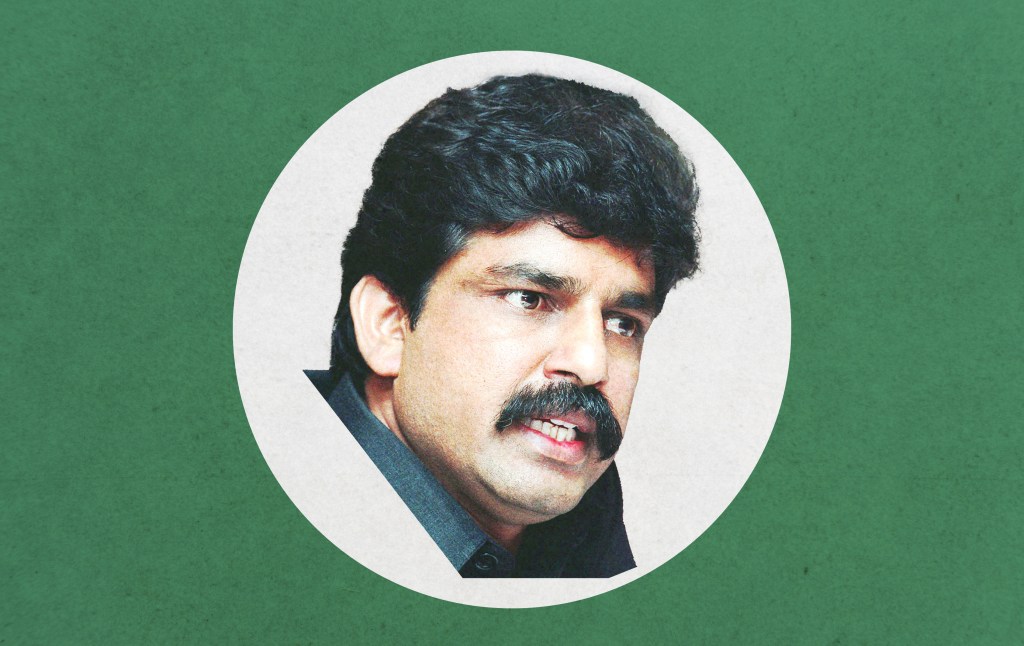
I once knew a man willing to sacrifice everything for religious freedom, a person who knowingly faced death to help others. How to best remember Shahbaz Bhatti, a modern-day martyr from Pakistan?
In the early 2000s, Shahbaz Bhatti was known worldwide as a courageous Christian voice for religious minorities in Pakistan. Fearless in the face of death threats from extremists, he advocated for any Pakistani persecuted for their faith, regardless of the cost. Tragically, it was a cost he paid with his life.
While not well-remembered 15 years later, his 2011 assassination made global headlines after Pakistani Taliban gunmen ambushed him in broad daylight while he was on his way to work.
Shahbaz loved his country, a complicated and fragmented place of 250 million. The Islamic Republic of Pakistan’s overwhelmingly Muslim population belies the country’s enormous diversity. Competing Islamic sects live alongside smaller communities of Christians, Hindus, Sikhs, and Zoroastrians (referred to as Parsis). Interwoven into all of this are dozens of ethnic groups and competing cultural identities.
Today, as 15 years ago, religious persecution runs rampant. Terrorists attack Christians and other religious minorities with impunity. Pakistan’s blasphemy law continues to victimize Christians, Hindus, and Ahmadi Muslims, with the U.S. Commission on International Religious Freedom (USCIRF) reporting hundreds currently jailed. According to my research, Pakistan holds the notorious record of imprisoning more people for the so-called “crime” of blasphemy than all other nations on Earth by several times over.
Pakistan is a hard country, especially for religious minorities. Before his government appointment in 2008, Shahbaz was a tireless campaigner for equal rights regardless of faith or background, launching the All Pakistan Minorities Alliance. Former Pakistani Prime Minister Benazir Bhutto noticed his ability to mobilize minorities to the polls and rally tens of thousands. After her assasination in 2007, her husband, Asif Ali Zardari, who then (as now) served as Pakistan’s president, appointed Shahbaz as the federal minister for minority affairs in 2008, making him the only Christian in the federal Cabinet.
Having achieved something few Christians ever have in Pakistan, a country whose constitution discriminates against non-Muslims for high government positions, Shahbaz continued to advocate for Christians and others—even from within a government whose policies he often opposed.
Events that would lead to his death started to accelerate in 2010 when a Punjab court sentenced Asia Bibi, a Catholic mother of five, to death over bogus blasphemy charges. He advocated for her release alongside Salman Taseer, the Muslim governor of Punjab. As the death threats piled up, both pushed ahead. Shockingly, Taseer was murdered by his bodyguard in January 2011 for opposing the blasphemy law. The stakes were becoming life and death.
During this period, when serving as a U.S. diplomat, I saw firsthand how Shahbaz courageously and tirelessly advocated for Bibi and fellow Christians or members of other communities. As threats against him proliferated, I met him in his poorly guarded Islamabad office. While I and many others worried about his safety, he was ever the optimist. In his brief time in the Cabinet, he successfully established a special federal jobs quota to help religious minorities overcome workplace discrimination, a national minorities day to remember the role of minorities in the country’s founding, and a network of interfaith peace committees. He even ignited a conversation about reforming the abusive blasphemy law, the ultimate third rail of Pakistani politics.
During his last visit to Washington in February 2011 for the National Prayer Breakfast, he met with then-Secretary of State Hillary Clinton and senior members of Congress. He knew the risks he would face for his work. “These threats and these warnings cannot change my opinion and principles,” he said in a hauntingly prescient interview days after leaving Washington. “I prefer to die for my principles and for the justice of my community rather than to compromise on these threats.”
Shahbaz spoke out on behalf of the persecuted until the very end, carrying his small candle into dark places to shine a light of hope. Terrorists tried to snuff it out on March 2, 2011.
Now, 15 years after his death, we can keep his flame alive by applying his example to our current moment. Global instability is increasing, with unrelenting religious persecution affecting every faith community somewhere. While nations have espoused a commitment to human rights, institutional and financial support is declining. The U.S. government and others in Europe are pulling back human rights support and retrenching along hard interests.
Shahbaz displayed courage without compromise, and so should we. Our polestar must be consistent and principled advocacy for religious freedom for everyone, everywhere. And we must do so with both parties, as political support has faded in recent years, starting in the Biden administration and now the second Trump administration, which has not continued several of the first administration’s most consequential initiatives.
Donald Trump’s first administration launched summits and an alliance to advance religious freedom globally, elevated the State Department’s religious freedom office, allocated new funding, and added Pakistan to the U.S. government blacklist of worst violators of religious freedom called “countries of particular concern” (CPC). Collectively and individually, these were actions no previous administration had taken, Republican or Democratic.
But the contrast between the first and second terms is stark. The second Trump administration has demoted the religious freedom office during the State Department reorganization and shrunk the staff, cut funding for advocates in the field, thus far has failed to issue the annual international religious freedom report (creating the first-ever yearlong gap in reporting) and has only named one CPC (Nigeria) while remaining conspicuously silent toward the previous 12 CPCs. Also, for the first time since the position of ambassador-at-large for international religious freedom was created in 1998, there will be no Senate-confirmed office holder.
Regarding Pakistan, there’s been zero indication of senior administration officials raising religious persecution or the CPC designation in bilateral talks, even as State Department announcements focused on a critical minerals deal.
Much like Shahbaz, those of us who care about religious persecution in Pakistan and beyond must think creatively about how to encourage, pressure, and cajole our political leaders not just to maintain our commitments but do more as persecution continues globally. We must overcome partisanship by partnering across religious and political differences. We should celebrate whoever gets it right and prod our side or the other when they fall short.
Shahbaz never enjoyed much support at home, but he made a difference by humbly and relentlessly advocating inside and outside of his country. He did not seek cameras unless doing so would make his work more impactful, as when he used his own initiative to meet Pope Benedict XVI and other international leaders. He was shrewd, working within the system but unafraid to buck it.
So we can, of course, hold up examples like Shabbaz. A new graphic novel titled Blood and Water: The Life and Martyrdom of Shahbaz Bhatti seeks to do just that by commemorating his life for future generations. I helped bring the project to life, thanks to a grant from the Templeton Religion Trust and his family’s support. While portraying Shahbaz’s deep faith, the graphic novel is geared toward a wide audience. It is a reflection on modern martyrdom and the importance of defending anyone persecuted for their beliefs. It depicts his relentless courage and energy. And it asks: How will we respond when persecution persists?
We best remember Shahbaz’s sacrifice by what we do: By emulating his advocacy for the persecuted, from all faiths and none; by insisting on robust diplomacy that advocates for the oppressed, pushes back against the persecutor, holds perpetrators accountable, and rescues victims; by following Shahbaz’s example with intentionality and courage.