You’re reading Dispatch Culture, our weekly newsletter exploring the world beyond politics. To unlock all of our stories, podcasts, community benefits, and our newest feature, Dispatch Voiced, which allows you to listen to our written stories in your own podcast feed, join The Dispatch as a paying member.
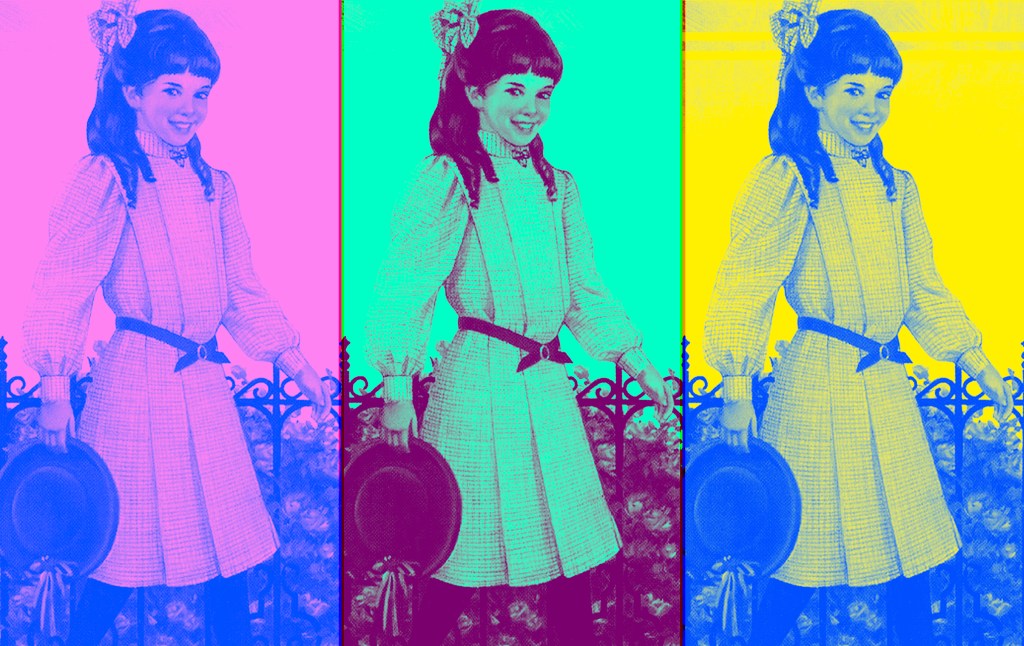
If you’re a woman, or if there’s a woman in your life, chances are you’re at least somewhat familiar with the American Girl dolls. But what about their associated book series, which chronicles the (fictional) lives of these characters? In today’s American Artifacts entry, editor Kerry Weber reflects on her childhood love of these dolls, and how their unique stories appeal to both children and adults. Elsewhere in this newsletter, you’ll find an essay suggestion from yours truly, a book review by frequent Dispatch guest Nick Pompella, recommendations from SCOTUSblog Managing Editor Kelsey Dallas, and a Work of the Week chosen by Dispatch member Paul Hoover.
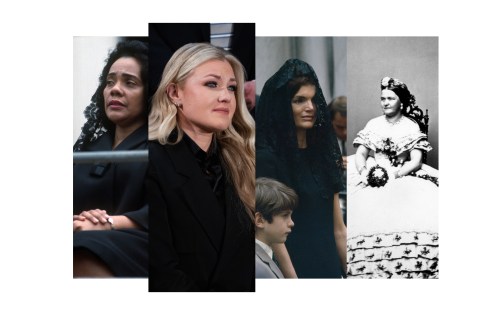
On the site today, we have an essay by Dispatch contributing writer LuElla D’Amico on Erika Kirk, grieving widows, and what LuElla describes as the vanishingly few acceptable lifestyles for conservative women. In reference to negative reactions to a speech Erika Kirk made 48 hours after her husband Charlie Kirk’s murder, LuElla writes: “Long before Erika Kirk opened her mouth, many viewers had already decided how a widow—especially a conservative widow—ought to behave. And what she ought to say.”
We also have our own Kevin D. Williamson on what he pitched to me as a “Straussian reading” of Kevin Smith’s 1999 film Dogma, which was recently re-released after the rights years spent languishing in the hands of one Harvey Weinstein. “Dogma is a funny and fundamentally silly movie, but it also is a movie about grief, about sin and its consequences, and, finally, about penance and reconciliation—serious subjects that sometimes benefit from being handled in a way that is not too serious,” Kevin writes. “It is a good-hearted film and, in its sneaky way, devout.”

From earlier in the week, we have Nick Catoggio’s deep dive into the footwear habits of the Trump administration, and then a smattering of great pieces by Dispatch contributing writers: Emmett Rensin on what John Hinckley Jr. and Olivia Nuzzi have in common, Katherine Dee on Gavin Newsom’s je ne sais quoi, and Ari David Blaff on a new men’s mental health app. That’s all!
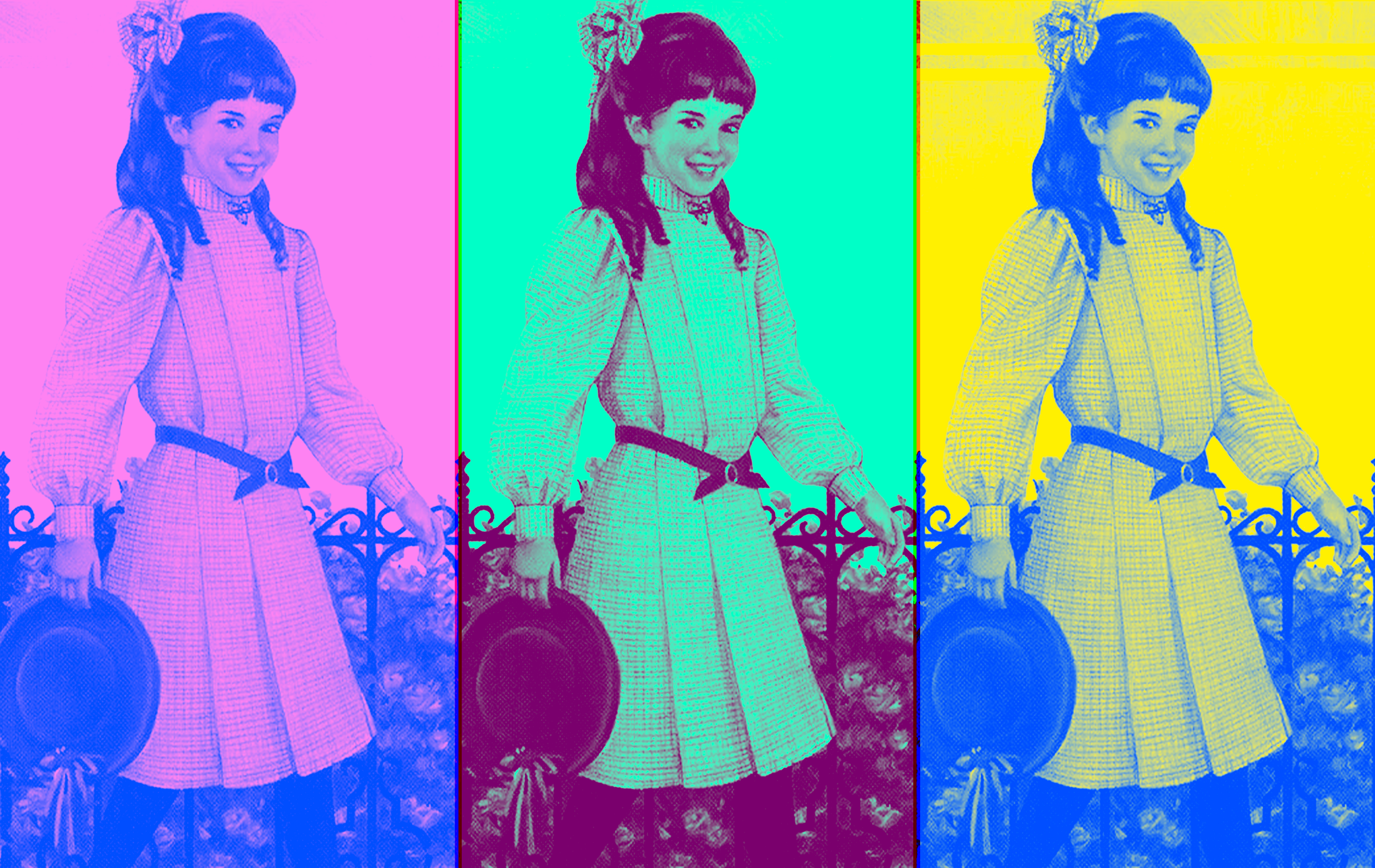
America’s Stories, Through a Doll’s Eyes
By Kerry Weber, an executive editor at America magazine and author of Mercy in the City.
My grandmother liked to point out that Kirsten Larson’s clothes cost more than her own. At about $20 apiece, the price of Kirsten’s outfits—among them a pink birthday frock and a black-and-white wool sweater with matching mittens—was on the higher end for women’s apparel in 1989, when a skirt or blouse could be bought for as little as half that. But the price of Kirsten’s clothing was particularly outlandish because she was, in fact, an 18-inch-tall plastic doll.
One of the three original historic dolls made by Pleasant Company, now known as American Girl, Kirsten was given to me by my parents when I was around 8 years old. I cared for her meticulously, storing her possessions in a wooden chest built by my father. The doll came with the knowledge that my parents had worked hard to buy it, but also the weight of American history as told through the accompanying historical novels about each American Girl doll.
Meet Kirsten told the story of a Swedish girl who immigrated to America in the 1850s and who lost her best friend to cholera on the journey across the ocean. Kirsten’s life included the struggle of learning a new language, living in a new country, and trying to hold on to her traditions. The dolls were well-crafted and their attire intricate, but I was drawn to Kirsten as much for the stories as the accessories.
The other two dolls in the original line included Samantha, the Edwardian-era orphan, and Molly, the Midwestern girl living through World War II. They represented different periods of American history, and while the specifics of their circumstances varied, their companion books followed a familiar arc. Each book in a doll’s series represented a key moment in their lives: an introduction, a lesson, a surprise, a birthday, a show of bravery, a time of change.
The books were not perfect narratives or literary masterpieces, but they were genuinely good, and their stories urged the reader to be the same. Their protagonists felt like both ancestor and peer, historic figure and present-day friend. Recently, I have found value in returning to these stories of our country as told through the eyes of its children, those whose spirits embody the optimism on which our nation was founded, but who have also borne suffering in its name.
The line of dolls has since grown in diversity and scope. And I have lived long enough that my own childhood is now considered another doll’s “historical” era. But this evolution hasn’t escaped criticism: The American Girl company recently produced “modernized” versions of the original historical dolls. Reissued thinner bodies, trendier hair, and shorter skirts, the dolls have been met with a firestorm of criticism from millennial AG fans who feel their favorite characters had suffered enough. “Kirsten didn’t endure six weeks on a boat across the Atlantic and lose her best friend to cholera for you to give her the Ozempic treatment and space buns,” wrote one social media user.
But I believe it is also fueled by this: To remove the dolls from their history is to separate them from the stories that made their characters strong. Our nation has always been shaped by stories, and in its 250th year, the stories we choose to tell will continue to shape its future. Our current era is one of real uncertainty, but each day we have a chance to determine what will define it, to ask what we are building and at what cost. As we write the next chapter, may our stories be of lessons learned, of good surprises, of demonstrations of bravery in a time of great change.
Chances are you’ve heard of certain Eskimo languages having untold numbers of words for snow. While that particular factoid is contested, it’s true that languages are indeed affected by their physical surroundings—and in a review of the book Thirty-Two Words for Field: Lost Words of the Irish Landscape by Manchán Magan, former Washington Post book reviewer Ron Charles describes some delightful vocabulary you may not have heard.
“Equal parts memoir, history, and linguistics, Magan’s charming book sings the praises of Irish,” Charles writes. “Here is a tongue, he reminds us, that may be ‘the oldest vernacular language in Europe.’ It’s been spoken for millennia. But this isn’t a work of nostalgia or archaeology — ‘it’s a revelry.’ … Thirty-Two Words for Field is organized as a series of short essays with headings such as ‘Thresholds,’ ‘Sounds,’ and ‘Winds.’ In each one, Magan introduces a few evocative Irish words and phrases like ‘crithir,’ which means ‘a particle or spark of flame or light.’ Or iarmhaireacht, which connotes “the loneliness you feel at cockcrow, when you are the only person awake and experience that existential pang of disconnection, of not belonging.” As a frequent taker of early-morning flights and trains, I’m excited to add iarmhaireacht to my vocabulary, provided I can achieve the appropriate pronunciation.
It is impressive that The Body Builders is Brooklyn-based author Albertine Clarke’s debut novel: The book successfully rides the line between high literary tone and genre fiction, and while its mix of psychodrama, science fiction, and speculative horror-fiction sounds tough to wrangle, Clarke actually sticks the landing.
Our protagonist Ada is a kind of Nietzschean “last woman”: a tired, emotionless specimen who lacks any real passions or goals. Ada is (in theory) a writer, with a day job at a London restaurant, but we see her do exactly zero writing.
Ada’s ennui is in part explained by a strained relationship with her divorced parents—a divorce that caused her father to enter a bodybuilding rabbit hole. It’s only when Ada stumbles into an older man she’s never seen in her building before—another writer named Atticus—that she starts to come out of her funk.
But something is amiss: the manuscript Atticus shares with Ada includes memories that seem to be taken from her own childhood. Right here, The Body Builders could’ve gone the BookTok romance-slop route, but Clarke blissfully spares the reader. Ada has to discover who Atticus really is—by deconstructing herself in the process. Atticus is more than he appears, but Ada is too, as it turns out.
The Body Builders loses out a bit due to its prose; it’s pretty clinical. But it’s still encouraging to see a new book that takes on such broad questions of the human condition, written in a way that competently blends both pop fiction and something more highbrow.
By Kelsey Dallas, SCOTUSblog managing editor
- Going to the Movies. Because I’m the parent of two young kids, I don’t get out of the house much. But because those two young kids love animated movies, when I do leave the house, it’s often to go to the movie theater. About once a month, my husband, the boys, and I settle into bright red, adjustable recliners (that are so much more luxurious than the theater seats of my youth) and then spend 90 minutes watching Spongebob or Mario or a group of talking cats go on a wild adventure. We eat way too much buttery popcorn and candy and sip on lemonade. It’s amazing, and I bet if I were watching movies rated PG-13 or R, it would be even better.
- Book Clubs. Stop me if you’ve heard this one before: Book clubs are a great place to meet new people. Yes, that’s true, but they’re also a great place to meet new enemies. As a former English major, it can be maddening to hear someone describe a literary classic as “not very entertaining.” That’s why I’d suggest this tweak to the common wisdom: Book clubs are a great place to meet new people when they’re about more than just the books. In other words, there has to be some other shared interest bringing the readers together. My book club is both a book club and a mom club. When the conversation about the book turns awkward—I’m an opinionated gal, what can I say?—we can shift gears and discuss school bus drama and potty-training plans. It lowers the stakes of the book talk and improves the quality of the small talk.
- Love Is Blind. We’re 10 seasons into the U.S. version of the Love Is Blind franchise, so it very well could be too late to bring new viewers into the fold. Still, I can’t resist this opportunity to share why I think it’s worth your time, too. As you may recall, this reality TV show brings single people together for truly blind dates—participants sit in “pods” during the first part of the show and don’t see their love connection until they’re already engaged. Is it cringey? Yes. But it’s also a window into today’s (very flawed) dating culture. Watching the daters navigate politics, parenting, debt, and a number of other tricky issues has deepened my understanding of the modern loneliness crisis and helped me see my own (non-romantic) relationships in new ways.
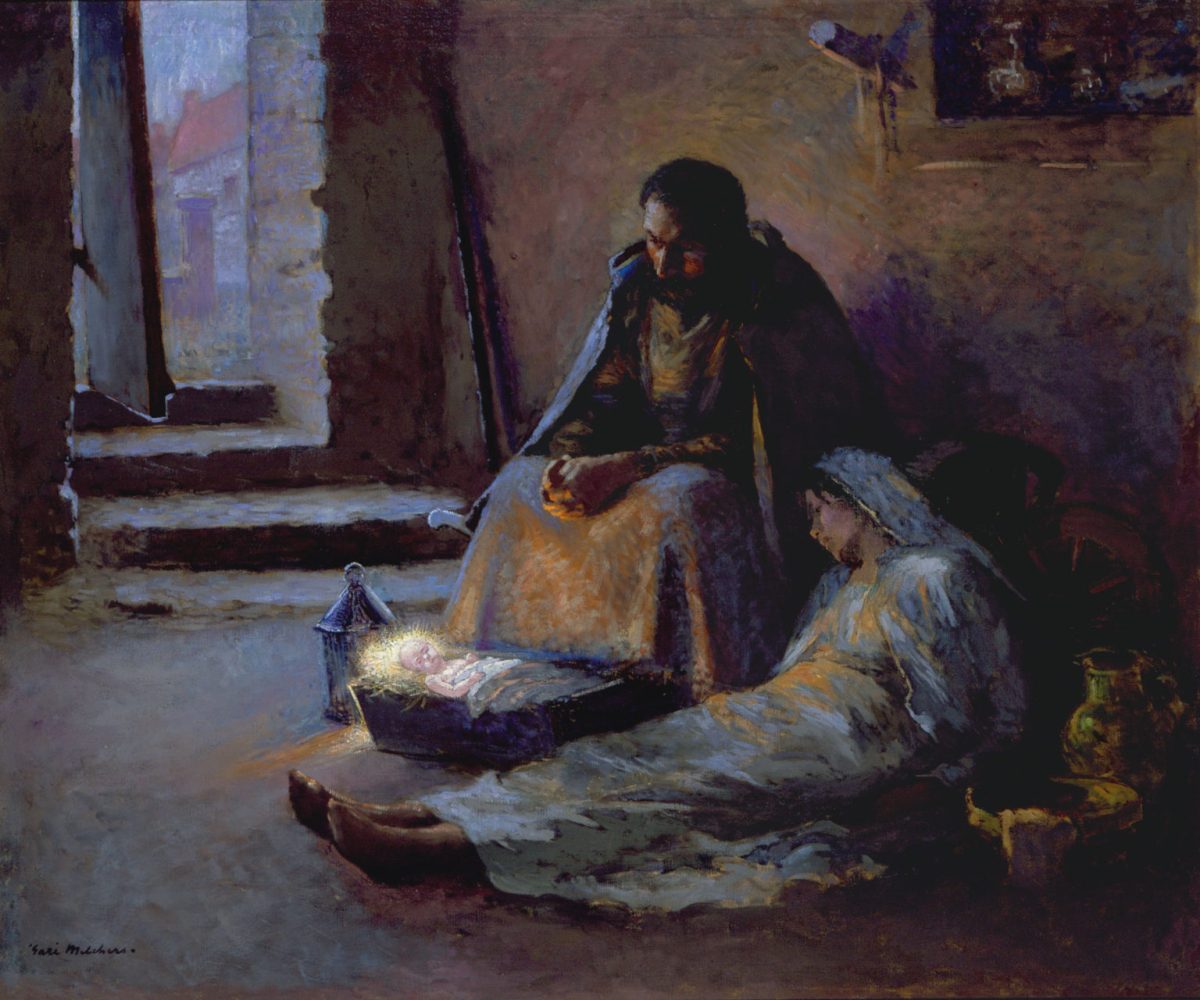
Work: The Nativity, Gari Melchers, 1891
Why I’m a Dispatch member: I joined shortly after the founding because I’ve always appreciated Jonah’s and Steve’s work and I wanted to support their endeavor. My small investment has paid huge dividends in a wide range of sane, trustworthy, and challenging content from staff and contributors.
Why I chose this work: This painting is not a traditional nativity scene in that it focuses on Mary, Joseph, and the infant without all the “supporting characters.” Mary is exhausted from childbirth, but if you zoom in, you can see she’s not sleeping; she is unable to take her eyes off the baby. Joseph’s face is a remarkable blend of care, concern, and wonder. This birth is like countless others, yet completely unique. I suspect that fact is dawning on Joseph as he stares at the child.
Interested in being featured in this section? Submit a work of art here.
Interested in being featured in this section? Become a Dispatch member here.