On December 10, Australia’s long-awaited and much-heralded provisions governing social media use by individuals under 16 came into force. This regulation, which is widely described as banning under-16s from social media platforms, is being closely watched by Denmark, the European Commission, France, Greece, Indonesia, Malaysia, New Zealand, and Romania—all of which are considering similar regulations.
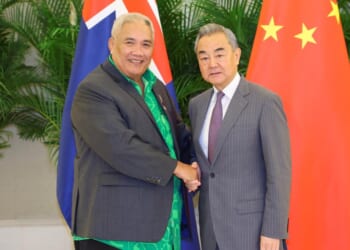
Australian Prime Minister Anthony Albanese describes the new regime as “one of the biggest social and cultural changes our nation has faced” and a “profound reform which will be a source of national pride in years to come.” The focus, he claims, is on children’s safety, but his target audience is their (voting) parents:
We’re doing this . . . for every parent. Because this law is about making it easier for you to have a conversation with your child about the risks and harms of engaging online. It’s also about helping parents push back against peer pressure. You don’t have to worry that by stopping your child using social media, you’re somehow making them the odd one out. Now, instead of trying to set a “family rule”, you can point to a national ban. . . .

From December 10, Australian kids will have more time to be kids and Australian parents will have greater peace of mind.
Albanese acknowledges that the provisions are imperfect and will not stop all underage access to the relevant platforms. Likening it to underage drinking, he observes:
Australia sets the legal drinking age at 18 because our society recognises the benefits to the individual and the community of such an approach. The fact that teenagers occasionally find a way to have a drink doesn’t diminish the value of having a clear, national standard.
The provisions are imperfect and not a total ban. Much like alcohol sale regulations, the restrictions are not for under-16s using social media but for those who supply access to this age group. But unlike alcohol sales, a breach occurs not when social media content is supplied but when one of 10 age-restricted social media platforms fails to “take reasonable steps” to prevent Australians under 16 from having social media accounts. The 10 identified platforms are Facebook, Instagram, Kick, Reddit, Snapchat, Threads, TikTok, Twitch, X, and YouTube. Failing to “take reasonable steps” to prevent account ownership will see the named platforms facing fines of up to AUD 49.5 million.
But under-16s will still be allowed to see publicly available social media content if it doesn’t require an account, or if the platform is accessed using an account held by an over-16. Whereas anyone selling alcohol to a minor is in breach, the social media crime is equivalent to a named alcohol seller failing to “take reasonable steps” to ascertain purchaser age before creating an account to facilitate the purchase of alcohol. Actual supply incurs no penalty. The platforms determine and declare the “reasonable steps,” but they must include multiple checks to ensure compliance. Checks used include providing evidence of age using ConnectID via an Australian bank account, a government ID such as passport or driver’s license; facial age estimation using a supplied photograph, and algorithmic analysis of usage patterns to estimate user age. Already, under-16s are proudly circumventing the rules by using false documentation or deliberately enhancing their photographic appearance using sophisticated makeup or human face masks.
Despite much-vaunted claims, the Australian provisions are unlikely to massively shift under-16s’ activity away from digital engagement. Specifically excluded from classification (and regulatory obligations) and still able to be freely used are Discord, Github, Google Classroom, LEGO Play, Messenger, Pinterest, Roblox, Steam, and Steam Chat, WhatsApp, and YouTube Kids. The exclusions derive from self-assessment of a platform’s “sole or primary purpose” or “significant purpose” being communication by messaging, email, voice or video calling, gaming, or supporting education or health services. If a platform allows end users to link to, or interact with, some or all of the other end users or the posting of posting of material on the service, then it is assessed as social media. Hence, Facebook is “age-restricted,” but its affiliated Messenger application is not. The alcohol equivalent is regulating the activities of only one type of alcohol supplier (e.g., pubs, bars, and retail outlets) while exempting others (e.g., wineries and breweries), even though they too may cause harm, because their business models and target clientele are different.
So the Australian rules are not a social media ban. They focus on providers’ behavior, not user harm. Despite their popularity, they will not result in Australian kids having more time to ride bikes, play sports, or read books, so long as (unregulated) competition from Roblox, Minecraft, Fortnite, FIFA, WhatsApp, and new startup platforms exist.
The post Australian Social Media Regulation: When “Banning” Isn’t a Ban appeared first on American Enterprise Institute – AEI.