A dumb bluff.
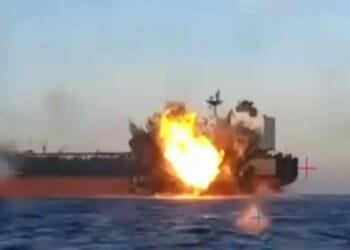
Threatening to blow up Iranian power plants if the regime doesn’t end the Hormuz standoff is dumb in half a dozen ways.
It places the Iranian people, our ostensible allies in this fight against the fanatics, in the crosshairs. Imagining what might be disrupted if Trump pulled the trigger, one Iranian activist named: “Gasoline, banks, water, health care, mobile phones, disruption to vital devices like ventilators and dialysis machines, home patients (with oxygen generators, medical devices), cold storage and everything.” It would be a humanitarian catastrophe.
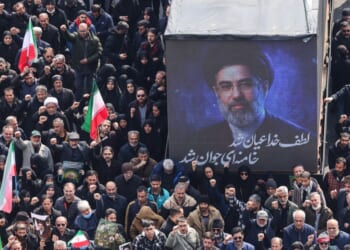
If anyone benefited from that catastrophe, it would be the regime itself. “An attack on power plants will backfire, and strengthen the antiwar camp and government,” one resident in Tehran told the New York Times. “It will bring more people to the side of defending the country.” After slaughtering Iranians by the thousands earlier this year, what better press could the mullahs hope for than America racking up a higher body count?
Even if everything after the strike worked out well for the United States—the strait reopens, the government falls—the world would be left figuring out how to turn the lights back on soonish in a country of 93 million people whose power grid has been laid to waste.
Obliterating Iran’s electricity infrastructure would also give the regime political cover to escalate its attacks on energy production in Gulf states like the UAE, Qatar, and Saudi Arabia. What good would it do to have the strait reopen if oil facilities across the region are offline indefinitely due to Iranian missile strikes? What would the price of oil be once the dust settled from those strikes?
And what if all of that happened and the strait still didn’t reopen? The regime’s strategy is to win a contest of wills with the U.S. and Israel by surviving and inflicting pain on the global economy until its enemies relent. For reasons I don’t understand, Trump seems to have imagined that bombing their power plants would have caused them to suddenly drop that strategy. It wouldn’t have. Then what? Start bombing hospitals next?
There’s also the small matter that targeting the enemy’s electrical grid is precisely what fascist Russia has been doing to Ukraine and arguably constitutes a war crime. The average American doesn’t care about such things, I realize, but the U.S. military might. If Trump ordered Joint Chiefs Chairman Gen. Dan Caine to plunge the Iranian population into darkness, would Caine obey? Whatever the answer, American forces would have faced a legal and ethical crisis.
In sum, “Do what I want or I’ll blow up your power plants” was a case of Trump putting himself in a position in which his only options if his bluff was called were to make the war an order of magnitude more painful than it already is for the planet or to TACO, humiliating himself and handing the regime a moral victory. How’s that for some fancy strategic thinkin’?
It’s not just foreign policy where he’s boxed himself in, though.
SAVE-ing face.
Remember when the president was set to endorse John Cornyn in Texas’ Senate primary runoff?
Cornyn finished slightly ahead of MAGA favorite Ken Paxton in the first round of this month’s primary, leading Trump to hint that he would soon announce his preference in the race. Paxton is drowning in scandal and would stand a real chance of losing to Democrat James Talarico in November, particularly in a national “blue wave” environment. The president seemed poised to support the more electable Cornyn in the coming runoff in order to maximize the GOP’s chances of holding the seat.
But then … he didn’t.
Paxton cleverly announced that he’d consider dropping out if Senate Republicans passed the SAVE America Act, the voter-ID legislation that’s captured Trump’s imagination. (The president named it his “No. 1 priority” a few weeks ago amid, uh, a major war in the Middle East and a cost-of-living crisis that’s about to eat his party alive at the polls.) With Democrats vowing to block the bill, the only way it can advance is if Republicans eliminate the filibuster or force the minority to conduct a weeks-long “talking filibuster” to try to block its passage, which could shut down Senate business for months. The GOP lacks the votes to do either.
So Trump did what he always does when he’s at an impasse. He looked around for leverage he could use to lean on his opponents and found it in the form of the Cornyn-Paxton runoff.
Most Senate Republicans, including Majority Leader John Thune, want Cornyn to prevail in the primary, knowing that if he doesn’t the seat will be held next year either by Talarico or by a corrupt Republican who’s destined to embarrass the conference. The president should obviously want Cornyn to prevail too, as control of the Senate and therefore the fate of his future nominees could plausibly come down to what happens in Texas.
The rational thing for him to do was to endorse Cornyn immediately and try to snuff Paxton’s chances in the runoff. Instead he’s withholding his Cornyn endorsement to pressure Thune and the rest of the Senate GOP into nuking the filibuster and passing the SAVE America Act—even though he’s reducing his own chances of having a compliant Senate majority next year by doing so.
It’s the same idiotic M.O. as the power-plant threat in Iran, gambling that his tactics will force an opponent to surrender meekly and leaving himself with only bad options if they don’t. If Thune and the Senate GOP refuse to go nuclear, the president will either 1) endorse Cornyn anyway and look like a chump for having given in after his bluff was called (TACO!), 2) refuse to endorse Cornyn out of spite, leading to a Paxton win in the runoff and serious jeopardy for the GOP in November, or 3) refuse to endorse Cornyn and watch passively as Cornyn prevails in the runoff, denying Trump the ability to claim that it was his influence over the Republican base that delivered victory to the incumbent.
Futile escalation.
The Cornyn-Paxton drama isn’t the only example of Trump escalating foolishly over the SAVE America Act, though.
Until this week, he and his party had an advantage in the ongoing shutdown of the Department of Homeland Security. Senate Democrats have blocked funding of the department for weeks in hopes of extracting concessions from the White House on how Immigration and Customs Enforcement conducts business. But that standoff has left Transportation Security Administration officers unpaid, and unpaid officers tend not to show up for work as often as they do when they’re being compensated. The result, as you’ve surely seen on the news, is preposterously long security lines at U.S. airports as TSA skeleton crews screen passengers.
Republicans were all teed up for a straightforward argument about culpability: If Democrats hadn’t shut down DHS, you wouldn’t be waiting in line for five hours for your flight. That argument was potent enough that Democrats sought a deal with the GOP this week (and are still seeking one as I write this) to restore funding for TSA, although not for ICE.
That partial surrender would have been a reasonably clean win for the White House. Enter Trump, who suddenly escalated on Sunday night when he declared, “I don’t think we should make any deal with the Crazy, Country Destroying, Radical Left Democrats unless, and until, they Vote with Republicans to pass ‘THE SAVE AMERICA ACT.’” He doubled down in public comments on Monday, warning Thune and his conference, “Don’t make any deal on anything unless you include voter ID.”
How much do you want to bet that whatever deal ends up being made will not, in fact, include new voter-ID requirements?
It was stupid for the president to introduce the SAVE America Act into the DHS funding standoff at the eleventh hour when he knew (or should have known) Democrats could never capitulate on that without infuriating their base. In doing so, he guaranteed that the final legislation will embarrass him by not including his big demand. He also foolishly took partial “ownership” politically of the ongoing snarl at U.S. airports: By rejecting Democrats’ attempt to end the shutdown at long last, he gave them an opening to claim that he’s the one who’s now prolonging it.
To top things off, he sent agents from one of the least popular government agencies in the United States to “help” with airport screening, inadvertently reminding Americans why Democrats felt obliged to shut down DHS in the first place.
At last check this afternoon, Politico was reporting that the White House is reluctantly coming around to a deal that “would pair funding for most of [DHS], save for ICE enforcement operations, with a new GOP reconciliation effort to pass the left-behind funding plus parts of the GOP elections bill known as the SAVE America Act.” If that’s true, it sounds like Senate Republicans are preparing to sucker the president: They surely know that the Senate parliamentarian will likely end up stripping out any SAVE America Act provisions from an eventual reconciliation bill on grounds that they’re extraneous to the federal budget. Rather than kill the bill themselves that Trump has his heart set on, they’re going to let Senate procedure do it for them.
Once again the president will have escalated pointlessly, in this case getting nothing for his trouble and actively painting himself into a strategic corner.
A strategic rationale?
All of these mistakes can be lumped under the familiar heading of “dominance as strategy.” Both by bullying instinct and postliberal disposition, Trump is forever being pulled toward escalation on the assumption that problems can and should be solved by ratcheting up pressure on one’s opponent until they cry uncle.
But if they don’t cry uncle, not only does he have no Plan B, he’s frequently in a worse position than he was before.
The supreme example of this (before the Iran War, at least) was the Greenland debacle. That was Trump in his element, believing that his leverage over NATO and Ukraine would compel Denmark and its European allies to forfeit the island to the United States without much of a fuss. He underestimated his opponents’ resolve, just as he did in Iran, seemingly not realizing that Europe couldn’t and wouldn’t capitulate to Putinism from the west while it rallied behind Ukraine to beat back Putinism from the east.
When those pressure tactics failed, the president had no fallback options: Denmark wouldn’t sell the island, and Greenlanders didn’t want to be acquired. Americans hated the idea of military action to seize the island, and the U.S. military might have been obliged to disobey any order to do so. NATO surely would have collapsed, depriving the United States of valuable alliances. Even Trump’s escalatory tariff threat was quickly aborted after a public outcry.
If he had gotten nothing from the Greenland episode, that would have been bad enough. In reality he got less than nothing: It’s not a coincidence that European nations politely declined his request to help out in opening the Strait of Hormuz after he tried to shake them down for territory. The Atlantic alliance will never be the same.
That’s “dominance as strategy.” There’s no actual strategy beyond the reptilian belief that intimidating one’s opponent insistently enough will—hopefully—cause them to give up.
The best I can do to find something resembling real strategic acumen in all of this is to speculate that Trump realizes the SAVE America Act is unlikely to pass. He might not even want it to pass. What he wants is ammunition to cry “rigged!” if and when (probably when) Democrats mop the floor with Republicans this fall. “If we had passed federal voter ID like I wanted, the left never would have been able to cheat!” the president will cry.
He’s setting the table for Stop the Steal 2.0 by moving early to convince fans that only urgent congressional intervention can prevent the midterm elections from being corrupted. That’s a strategy of sorts.
But it’s not a very good one, and not just because Americans have seen this movie before.
“Rigged!” is persuasive when a race is tight and your own base is highly motivated to believe you, as was the case in 2020. In 2026, neither is true. If the cost of living goes where we all expect it to go amid this clusterfark with oil and the Strait of Hormuz, November’s election will not be close and not even the most zombified MAGA types will need a conspiracy theory to help them understand the result.
Meanwhile, because a meaningful chunk of postliberals oppose the war and are eager to claim vindication for opposing it, they won’t be as eager this time to shift blame for Republican defeat away from the president and onto Democratic cheating. With a battle brewing over the future of the post-Trump GOP, which do you think “America First” isolationists like Tucker Carlson and Marjorie Taylor Greene would rather have right-wingers believe? That Americans love Trump’s war but were foiled at the polls by a massive plot to let illegal immigrants vote?
Or that Americans hated Trump’s war and turned out en masse on Election Day to punish him for it, requiring the GOP to take a bold new Lindberghian direction on foreign policy in 2028?
Weak strategy on the SAVE America Act, no real strategy at all on Iran: That’s what happens when your One Neat Trick is escalating to demonstrate dominance with no fallback plan in reserve. In a week the U.S. will either have bombed Iran back to the de facto Stone Age by destroying its ability to produce electricity or we’ll have witnessed the TACO to end all TACOs. Two bad options, but that’s kakistocracy for you.