Xu Bo is a Chinese billionaire who founded the Duoyi Network, a Chinese video game developer. He is reported to be a recluse who, despite an active online presence, has not had his photo taken in public for about a decade. He is also said to have fathered more than 100 children born in the United States via surrogate mothers.
He is one of the most extreme examples of wealthy people in China attempting to use surrogacy to father sometimes hundreds of U.S.-born babies, a trend that was highlighted by the Wall Street Journal in a report last month.
Xu’s case illustrates an exploitation of a fertility and assisted reproductive technology industry that is subject to little regulation. Surrogacy laws vary by state, and though there are some standards and best practices agencies try to adhere to, few levers exist to enforce compliance, allowing for cases like Xu’s. Such abuses highlight calls to regulate the industry as it allows ethically problematic practices now, with more on the horizon.
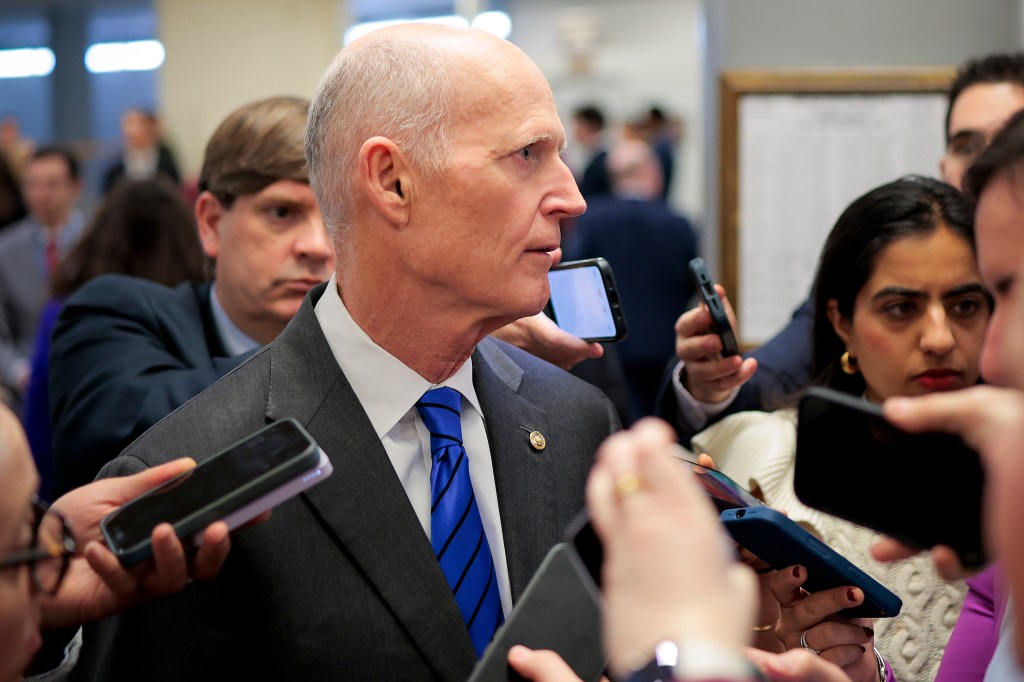
Republican Sen. Rick Scott of Florida has introduced a bill that could exclude Chinese nationals from using U.S. women as surrogate mothers. The Stopping Adversarial Foreign Exploitation of Kids in Domestic Surrogacy (SAFE KIDS) Act would make void and unenforceable surrogacy agreements between surrogate mothers in the U.S. and nationals from foreign entities of concern—that is, China, Russia, Iran, and North Korea. It would except those cases in which two prospective parents seeking a surrogate are legally married and one is an American citizen.
“We shouldn’t be allowing foreign nationals to have kids by surrogate and have their kids be U.S. citizens,” Scott told The Dispatch. “It shouldn’t be happening anywhere.” Though people across the country and the world participate in “altruistic surrogacy” in which a woman volunteers to carry another person’s child free of charge, many surrogates receive payment for carrying a child. Agencies exist to match people with prospective surrogates, who receive tens of thousands of dollars for their services.
Chinese nationals have made exceptional use of the U.S. industry in recent years. Researchers at Emory University found that between 2014 and 2020, 32 percent of embryo transfers to a surrogate in the U.S. were for expectant parents from out of the country. More than 41 percent of foreign nationals using the American surrogacy market were from China. Behind it were France, at just more than 9 percent, and Spain, at 8.5 percent.
All types of surrogacy are banned in China, which explains why so many people from there would want to come to the U.S. to access these services. But some wealthy Chinese are using surrogacy to have more than just a couple of children. In addition to Xu, Huiwu Wang, another Chinese businessman, hired American models as egg donors to father 10 children—girls, specifically—so that they can eventually marry powerful men, the Journal reported. Surrogacy specialists who spoke to the Journal reported cases of Chinese executives wanting as many as 200 children.
Scott’s bill has long odds of passing for a number of reasons, not the least of which is a lack of awareness among lawmakers about the widespread use of the surrogacy market by Chinese nationals. When The Dispatch asked lawmakers, even some known to be pro-life, if they had heard about wealthy Chinese businessmen using American surrogates to give birth to children in the U.S., many were unaware.
Sen. Dan Sullivan of Alaska, a Republican and the lone cosponsor of the SAFE KIDS Act, said he first read about the practice in the Journal’s report.
“Those Chinese billionaires are abusing women,” Sullivan told The Dispatch. “They’re going to abuse these kids because they won’t even know who their dad is. And they’re all Americans? It’s bullsh—.”
President Donald Trump has asked the Supreme Court to rule on the merits of his January 2025 executive order rescinding birthright citizenship, and it will hear oral arguments in the case in the next few months. But even if a court decision results in a reinterpretation of the 14th Amendment that removed incentives for foreign nationals to contract with U.S. surrogate mothers, most of the problems with the fertility industry would remain unchecked.
“We have this kind of laissez-faire attitude—you know, do not regulate the in vitro fertilization industry or the surrogacy industry,” Joseph Meaney, a senior fellow at the National Catholic Bioethics Center, told The Dispatch. “But it’s so clearly trafficking in human beings that it’s just not acceptable from our American tradition of human rights.”
The legality of commercial surrogacy varies widely across the globe. Commercial surrogacy is illegal in Canada, Denmark, the United Kingdom, and Australia, while France, Germany, Italy and Spain ban surrogacy altogether. Some countries also have taken steps to rein in their reproductive technology industries. In the U.K., for example, no more than 10 families can use a single donor’s sperm. In countries such as France, Poland, and Italy, one donor may conceive only 10 children. But the United States has no such limit.
Sperm banks in the United States sometimes use one donor’s sperm to father children at a similar rate to Xu. An Atlanta man who donated his sperm as a student at Georgia State University in 2011 was shocked to find out years later that he was the biological father of at least 97 children. There are other dangers associated with widespread use of a single donor’s sperm: An investigation last month by several news networks found that a European sperm donor, whose gametes had been used to father 200 children across the continent, unknowingly carried a cancer-causing gene. Some of the children he fathered have already died.
“The harms are concrete,” Emma Waters, a policy analyst at the Heritage Foundation’s Center for Technology and the Human Person, told The Dispatch. “Children grow up without access to their biological father, without accurate family medical history, and with a real risk of unknowingly dating or marrying siblings in the same region.”
Waters called for caps on the number of offspring that can be created by one donor, as well identity disclosure to adults who were conceived via donor gametes, plus national record-keeping standards for clinics.
However, the odds of putting such regulations in place are low. Scott did not express a desire to go beyond the bill he proposed. “I’m focused on the foreign nationals,” he told The Dispatch.
But social conservatives like Waters are not the only ones calling for regulation. Surrogacy professionals were aghast at the Xu Bo case as well.
Cases like Xu’s and those of widespread sperm donors “create that kind of bad connotation around gestational surrogacy, which in most of the world of gestational surrogacy, it’s really well done, and people are really happy,” Victoria Ferrara, founder and legal director of Worldwide Surrogacy Specialists, a surrogacy agency located in Connecticut and also licensed in New York, told The Dispatch. “It really affords people a way to have their children and have a family.”
Ferrara opposes Scott’s bill. “I think it’s just a knee-jerk reaction to the Xu Bo case,” she said. “It doesn’t really take care of the needs that we have for better oversight and regulation.”
She called for several regulations, including reporting requirements so that agencies know how many surrogacies a prospective parent is pursuing, as well as licensing requirements like those in New York. She also praised the state’s “Gestational Surrogates’ Bill of Rights,” which allows surrogates to make health care decisions around the pregnancy and entitles them to independent legal counsel as well as a health plan that covers associated medical costs.
Additionally, several other surrogacy professionals spoke to the Journal for its story about Xu and disapproved of his activities, especially since many agencies will not work with parents seeking more than two surrogacies—sometimes called “surrogacy journeys”—at once. Ferrara called for that to be codified. “I would support enforcement of that two-journey rule,” she told The Dispatch. Under such a regulation, it would have taken Xu about 38 years to father as many children as he has.
In many ways, the activities of Xu and other billionaires attempting to father similar numbers of children present a test case for both the federal government and the states. The assisted reproductive technology industry is set to pose serious ethical challenges as technologies become more advanced. If lawmakers can not rein in abuses, it is questionable whether they will be able to tackle larger ethical questions surrounding reproductive technology.
Already, companies are promising to test embryos conceived through in vitro fertilization for several conditions—from severe birth defects and genetic diseases to the likelihood of developing certain cancers to even manageable conditions such as diabetes and celiac disease—so that parents can choose which embryos they want to implant. At least one company promises to tell parents what their children’s eye color, height, and IQ will be.
“All these kinds of things, again, are very, very problematic from an ethical perspective,” said Meaney. “They’re treating the human person as an object, really, not as a person, and certainly not with the dignity and respect that a human being should have.”