On November 24, the U.S.’s designation of the “Cartel de los Soles” as a foreign terrorist organization went into effect, giving the Trump administration new options in what it has presented as a war against “narco-terrorism” called Operation Southern Spear. President Donald Trump recently told reporters he talked to Maduro directly but did not reach any solution. Apparently on Monday night he and his advisers had a meeting on how to proceed with Venezuela.
This all comes several weeks after Rubio and other Trump officials, in a closed-door meeting, assured members of Congress that military actions on land were not on the agenda, in part because they did not have legal authority for them. However, they did say they were seeking it. They now apparently think they have the authority with this terrorist designation, and the suggestion seems to be that Maduro needs to negotiate his exit or be the target of an attack.
Operation Southern Spear is essentially a regime change effort designed to skirt controls on the use of military power. It is an undemocratic move that not only threatens the U.S. with another disastrous military intervention but could do significant damage to our democracy.
Social scientists speak of democratic erosion as the process by which elected officials use their offices to dismantle checks on their own power and permanence. Going to war is one classic way. As James Madison and many others observed, use of the institutions of war concentrates power in the central government by reducing federalism and increasing the importance of the executive vis-à-vis other branches of government. Also, reframing issues in the existential terms of national security reduces citizen rights, delegitimizes debate, and reduces transparency and accountability.
We can think of the checks on executive power in two senses: those that provide horizontal accountability (checks provided by other institutions of government) and those that afford vertical accountability (checks provided by the people, through votes, public opinion, and protest). Operation Southern Spear effectively reduces both.
As has been widely observed, the entire operation is based on false pretenses. Venezuela is not a leading source of drugs shipped to the U.S., no fentanyl comes from Venezuela, Nicolás Maduro does not direct the criminal gang called “Tren de Aragua,” and there is no such thing as a “Cartel of the Suns.” These myths have been sold to the American public to justify the bombing of drug boats in the Caribbean and essentially reduce vertical accountability by misinforming and disabling debate.
President Trump and Secretary of Defense Pete Hegseth have suggested they have intelligence that the targets of the 21 boat strikes were all violent narco-terrorists headed to the U.S. However, suspicions that no solid evidence exists have only been deepened by the handful of cases in which there were survivors. When two people survived a drone strike in October, they were not taken to a U.S. military base for interrogation to collect valuable information regarding their terrorist groups. Instead, they were quickly returned to their home countries—as the U.S. tends to do with normal drug traffickers. Furthermore, journalists have found that those killed range from poor fishermen trying to make an extra buck, to local drug traffickers without any articulation to the organizations the Trump administration has designated as terrorist.
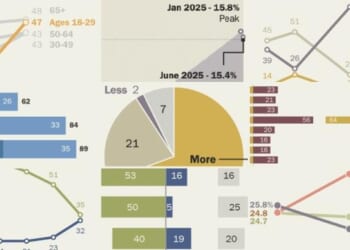
We are thus headed to a potentially extensive military action that has not been honestly presented to the American public. Indeed, recent polling shows that three-quarters of the American public feel that the logic has not been explained. But with what little information they have been provided, public opinion seems to be swinging against an intervention. Less than 15 percent of the population thinks Venezuela is a major security threat to the U.S., and 70 percent would oppose military action.
The same justification has effectively been used to skirt horizontal accountability as well. The original justification for striking the drug boats on the Caribbean is that the U.S. has declared war on narco-terrorists and that these drug traffickers are “unlawful combatants,” thereby preempting the need for a declaration of war from Congress. Two efforts to invoke the War Powers Act in the Senate have failed, after significant lobbying by the Trump administration with Republican senators.
To be fair, presidents of both parties have taken military action without congressional approval, against leaders or groups that are deemed imminent threats—President Barack Obama against Libya, Trump in his first administration against Syria, and President Joe Biden against Houthi rebels in Yemen. However, none of those came against organizations and individuals engaged in drug trafficking—normally considered an issue of law enforcement, not terrorism—nor on the basis of intelligence that is not made public or even provided to Congress.
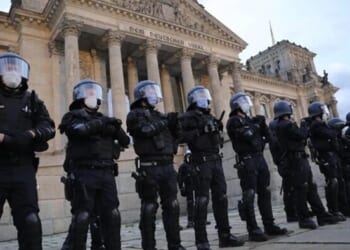
Nor did the actions take place in the midst of a process of domestic militarization never before seen in the United States. While Immigration and Customs Enforcement and Customs and Border Protection have been part of the Department of Homeland Security since their creation in 2003—effectively framing immigration as a national security issue—the Trump administration now favors the CBP precisely because its standards of professionalism are lower than those of ICE. The current tour of U.S. cities by Commander Gregory K. Bovino has explicitly been aimed at using military tactics in a public show of force.
And of course we have already seen Trump giving overtly partisan speeches to military officials and calling Democrats the enemy. He has also specifically targeted cities with Democratic mayors to send National Guard troops, supposedly to fight crime. Most recently he called Democrats suggesting troops could disobey illegal orders “traitors” whose behavior is “punishable by death.” This type of militarization essentially reduces the space for politics and civil governance in favor of using executive power with reduced responsiveness, transparency, and accountability.
Ironically, this is precisely how Venezuela’s process of democratic erosion began, with Hugo Chávez declaring his government was a “civilian-military alliance,” and using the military and military logics for issues of civilian governance such as policing and control of protests. He also openly encouraged partisan loyalties among military officers and used them as a basis for promotion.
If overthrowing Maduro is in the vital interests of the United States, as some have argued, that case should be presented truthfully to the American people and debated by their representatives in Congress. Given that Congress is controlled by the Republican Party, the Trump administration should have nothing to fear if it really has evidence and arguments.
Alternatively, if intervention in Venezuela is justified under Responsibility to Protect,”—the doctrine that suggests states have the duty to intervene in other national contexts in which mass human rights violations are occurring—that should be debated in the United Nations, and work should be done toward building an international coalition. This would be a better direction for the efforts of Nobel Peace Prize winner María Corina Machado than continuing to peddle half-truths to foreign media and governments.
In contrast, if the Trump administration carries out a bait-and-switch regime change operation based on questionable intelligence, it could lead not only to the protracted conflict many have warned about, it would further contribute to the process of democratic erosion already afflicting our country.