IN THIS ISSUE:
- Attribution Studies Are Built on Flawed Logic, Poor Assumptions
- Internal Variability and Volcanic Forcings Have Induced Massive Climate Changes in Greenland
- African Wetlands Largely Unchanged Amid Climate Change
Attribution Studies Are Built on Flawed Logic, Poor Assumptions
The team at Climate Realism have been debunking the rapidly generated extreme weather attribution studies produced by World Weather Attribution (WWA) for a few years now. To some extent, it’s like playing whack-a-mole: almost every day, if not every day, some place on Earth is experiencing an extreme weather event, and since these studies are not grounded in data or peer-reviewed, the models that generate the outputs can be produced at computer speed. Feed the flawed assumptions and circular reasoning into the computers, and—“Presto! Ta-da!”—there you have it: “proof” that climate change caused a particular flood, wildfire, hurricane, heat wave, etc., or at least made it “X times” or “X percent” more likely.
WWA is partially honest about what it is and what it is doing. It was founded by a group of academics, but it is not a scholarly institution: it’s an activist policy shop. Its goal is to motivate climate action, which is about as far from dispassionately developing a sound understanding of the causes and potential or likely consequences of climate change as one can be. Indeed, WWA specifically operates to produce reports tying specific extreme weather events to climate change while news of the event is still fresh.
These rapid attribution reports generate good headlines and play into the insider-accepted narrative that anthropogenic climate change causes everything bad, so the mainstream media, the trade press, and environmental journalists run stories touting the reports’ alarming findings as gospel truth without bothering to check the facts or look into whether there is countervailing evidence.
Statistician William Briggs, Ph.D., produced an excellent summary of how attribution modelling works:
A model of the climate as it does not exist, but which is claimed to represent what the climate would look like had mankind not “interfered” with it, is run many times. The outputs from these runs is examined for some “bad” or “extreme” event, such as higher temperatures or increased numbers of hurricanes making landfall, or rainfall exceeding some amount. The frequency with which these bad events occur in the model is noted. Next, a model of the climate as it is said to now exist is run many times. This model represents global warming. The frequencies from the same bad events in the model are again noted. The frequencies between the models are then compared. If the model of the current climate has a greater frequency of the bad event than the imaginary (called “counterfactual”) climate, the event is said to be caused by global warming, in whole or in part.
Both the “counterfactual” and the “current conditions” models can be massaged and changed to obtain nearly any result desired. It all depends on what assumptions are programmed in. There is no guarantee that the “real world” model is accurate. In fact, there is good reason to believe the Earth’s climate and weather systems cannot be modelled accurately to the degree attribution scientists claim, because of the interconnectedness and chaotic nature of the different systems. In fact Chaos Theory itself sprang up from the findings of an individual attempting to generate computer models for weather.
In the end, attribution studies suffer from a variety of fatal flaws and should not be used to drive media narratives, taught in public education classes or syllabi, and certainly not to inform public policies. They are produced rapidly, with no peer review, in response to the disaster headlines of the day. Their most fundamental flaw is that they are founded on the logical fallacy of “begging the question,” or “circular reasoning,” because they assume from the outset what they claim to be proving, that climate change is responsible for some particular extreme weather event—and no event analysis can prove that. Only a long-term trend of certain kinds of worsening weather could implicate climate change in a type of event occurring more often or being more severe, but attribution studies don’t look at or refer to trends.
The Global Warming Policy Foundation (GWPF) has now produced a report analyzing in detail the various problems with rapid attribution studies, such as those produced by World Weather Attribution. GWPF describes attribution studies as “a blot on science.”
The GWPF report specifically examines prominent attribution reports by the two biggest producers: WWA and the Grantham Institute, noting that in 2025 alone, WWA attributed 24 of 29 extreme events to climate change, stating climate change made them more likely or severe.
The GWPF press release notes several recurring weaknesses of attribution studies (some of which I discussed above):
- Flawed logic: attribution claims involve “begging the question,” the act of simply assuming the conclusion you are trying to investigate.
- Statistical practices that inflate headline probability claims while downplaying uncertainty.
- The neglect of historical records showing comparable extreme events long before modern emissions levels.
The author, physicist Ralph B. Alexander, Ph.D., “traces the growth of rapid event attribution to political frustration with the cautious conclusions of the Intergovernmental Panel on Climate Change (IPCC).” So, in short, the foundational reason for the existence of “attributional science” is that the scientists who study climate change weren’t coming to alarming conclusions nearly fast enough to achieve certain academics’ political ends. “Extreme event attribution studies are a blot on science, the hallmarks of which are empirical evidence and logic,” says Alexander. “Neither feature is central to attribution studies, which were created for legal and political not scientific reasons.”
“It is disturbing that event attribution studies have got so much traction in the international media, despite their underlying flaws,” said Harry Wilkinson, head of policy at GWPF. “This is a major scientific scandal.”
But it’s not a scientific scandal; it’s a betrayal of science. It’s not science but advocacy being passed off as science. If the scientific community is not careful, denouncing this effort quickly rather than granting it positions and establishing departments at universities, it might lead to a further distrust of scientists and of science as a process, which would be a costly tragedy for progress in knowledge as a whole.
Sources: Global Warming Policy Foundation; Climate Realism
Internal Variability and Volcanic Forcings Have Induced Massive Climate Changes in Greenland
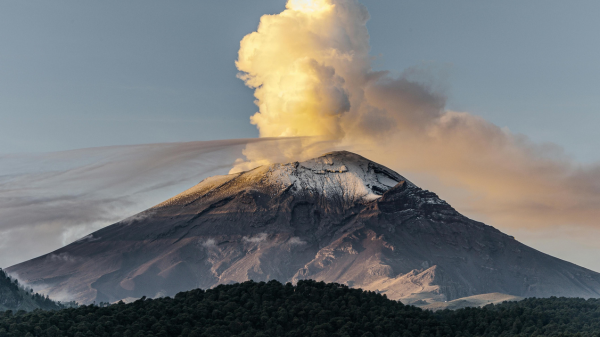
Research published in the peer-reviewed journal Science Advances suggests large-scale volcanic activity over tens of thousands of years has periodically driven rapid climate change, temperatures swings, and other changes orders of magnitude greater and much faster than the present climate change attributed to human greenhouse gas emissions.
An international team of scientists from Denmark, Norway, Switzerland, and Taiwan used “realistic volcanic forcing into a large ensemble of glacial era–coupled atmosphere-ocean model simulations. These simulations are constrained by sulfate records from ice cores, which help estimate the timing of past major eruptions.”
Specifically, the researchers attempted to identify the mechanisms that resulted in Greenland’s many dramatic climate shifts or changes from the period approximately 80,000 years before present to 11,700 years ago. Proxy data matched to model outputs indicated temperature shifts as great as 10℃ to 15°C warmer or colder occurred on multiple occasions. Some of those shifts endured for centuries and on occasion were accompanied by sea level rises of 20 to 40 meters. Yet, atmospheric CO 2 concentrations were only slightly higher during those periods, 10 to 15 parts per million during the shift, than before. That is far below the nearly 150 ppm increase the Earth has experienced since the Industrial Revolution. Clearly, CO2 didn’t drive the observed change, and the CO2 rise may have been a response to it.
Summarizing the paper, No Tricks Zone writes, “Greenland’s abrupt climate changes were likely induced by circulation shifts in ocean heat storage linked to the Atlantic Meridional Overturning Circulation (AMOC), which were, in turn, triggered by volcanic forcing and spontaneous, random ‘internal variability’ or ‘noise.’”
Note that no increase in human greenhouse gas emissions was needed to induce huge climate changes, changes much larger than those happening today and even those projected by the most extreme climate model emission scenarios. Indeed, the study postulates “increased internal climate variability, or noise, could enhance the glacial climate system’s resilience to abrupt
AMOC collapse,” which some researchers have claimed is slowing due to human-caused climate change.
Sources: Science Advances; No Tricks Zone
China and India Keep Adding Coal
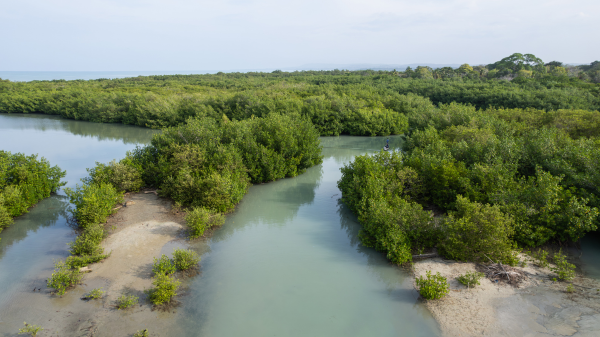
What impact, if any, climate change will have on global wetlands—net gain, net loss, no change—is unclear. To the extent that a modest increase in global average temperatures affects wetlands, it is likely to vary by region, location, and other associated drivers of change, such as human development or ecosystem evolution.
A recent study in the journal Nature Communications examines the change in wetlands across Africa, a little-explored area of study, during ongoing climate change. The researchers extensively mapped wetlands across the African continent to assess trends, using “270,000 sampling points, 810,000 Landsat images, and soil moisture data from 14 CMIP6 models.”
The scientists conclude there was “no large-scale loss of wetlands in Africa from 1984 to 2021.” Despite the large data set, some uncertainty remains about how ongoing climate change might affect Africa’s wetlands in the future.
Overall, there has been a modest net loss in wetlands of about a half a percent, driven almost entirely by a decrease in coastal wetlands. Those losses, however, have been the result of economic development, not climate change. There has been an approximately 0.50 percent expansion of inland wetlands across Africa.
“A comparison of the time series of wetland area and related drivers showed that the change of inland wetland area is closely related to climate change, and human activities have exacerbated the loss of coastal wetlands,” the abstract states.
If this research is correct, climate change has had little or no negative impact on wetlands across Africa and may be benefitting them, with the modest expansion of inland wetlands due to CO2 enhancement and better moisture conditions offsetting the loss of coastal wetlands due to development.
Source: Nature Communications