You’re reading The Morning Dispatch, our flagship daily newsletter explaining all the news you need to know today in fewer than 15 minutes. To unlock the full version, become a Dispatch member today.
Happy Tuesday! And Happy Saint Patrick’s Day! Please drink responsibly—or, failing that, memorably.
Quick Hits: Today’s Top Stories
Countries Turn Down Call to Help in Strait
After claiming on Sunday that he would soon announce a coalition of countries prepared to escort merchant vessels through the Strait of Hormuz, blocked to merchant shipping by Iranian threats, President Donald Trump said at the White House on Monday that he was receiving mixed responses from other countries to the U.S. request for aid. “Some are very enthusiastic about it, and some aren’t,” he said. Germany and Italy completely ruled out taking military action to reopen a passage through the Strait, while Britain and France agreed only to conditional involvement. British Prime Minister Keir Starmer said the U.K. “will not be drawn into the wider war” but said that British mine-hunting drones are already deployed, and France pledged frigates for “purely defensive” escorts. All four countries deployed naval assets to the Mediterranean and the Red Sea at the beginning of the conflict. Japanese Prime Minister Sanae Takaichi also said her country had no current plans to deploy naval assets to the region.
- Treasury Secretary Scott Bessent said Monday that the U.S. was allowing Iranian oil tankers to transit through the Strait to preserve global oil supply.
- Axios reported Monday that direct communications between White House diplomatic envoy Steve Witkoff and Iranian Foreign Minister Abbas Araghchi had been reestablished.
Court Blocks HHS Vaccine Decisions
A federal court on Monday blocked multiple vaccine policy decisions made by Health and Human Services Secretary Robert F. Kennedy Jr., along with temporarily reversing decisions made by his appointees to the Centers for Disease Control and Prevention’s Advisory Committee on Immunization Practices (ACIP), the federal government’s chief vaccine-recommendation body. Judge Brian E. Murphy of the U.S. District Court for Massachusetts—responding to a stay request from the American Academy of Pediatrics and five other medical organizations as part of a lawsuit challenging changes to the childhood vaccine schedule—found that there was a “substantial likelihood” that Kennedy’s appointments to ACIP were made without observing proper federal procedures and violated the Federal Advisory Committee Act (FACA). He also found that the January 2026 vaccine schedule likely violated the Administrative Procedure Act. Murphy stayed the ACIP appointments and barred the committee from making any further vaccine policy decisions until the suit was resolved. ACIP’s scheduled meeting for this week was postponed. The government said it will appeal the ruling.
- In response to the government’s argument that ACIP had virtually unlimited authority to make recommendations, even if those recommendations included that children be infected with measles rather than receive the vaccine, Murphy wrote that “the Court disagrees.”
- Over three meetings in 2025, the newly constituted ACIP rescinded recommendations for multiple childhood vaccines, including for Hepatitis B, which it had previously recommended for all newborns.
- Separately, in January, the CDC had reduced the number of diseases for which it recommended that children be immunized, from 17 to 11, including rotavirus, COVID, and the seasonal flu.
Israel Expands Lebanon Operation
Israeli Defense Minister Israel Katz said Monday that the Israel Defense Forces (IDF) had “begun a ground maneuver in Lebanon to remove threats and protect the residents of the Galilee and the north,” expanding what began as an air campaign earlier this month against the terrorist group Hezbollah in Lebanon’s south. Since Israel and the U.S. began the ongoing war against Iran, Hezbollah has launched over 1,000 rockets and drones at targets in northern Israel, according to the IDF. In response, Israel struck hundreds of Hezbollah targets in Lebanon, including its capital of Beirut, after issuing evacuation orders for civilians in large swaths of southern Lebanon, causing roughly 800,000 people to leave their homes.
- A Hezbollah rocket attack on the Israeli town of Nahariyah wounded six people on Monday evening.
- Direct talks between Israel and the Lebanese government, with U.S. involvement, are reportedly expected in the coming days.
Afghanistan and Pakistan Continue Strikes
Pakistan and Afghanistan continued to exchange strikes for the third consecutive week as the border conflict between the two countries shows no sign of abating in the near term. The Taliban government of Afghanistan on Monday accused Pakistan of attacking a hospital in Kabul that treats drug addicts, claiming the strike killed at least 400 people and injured at least another 250. Pakistan, which contends that it only strikes Taliban targets and locations harboring terrorist groups that also operate in Pakistan, denied the accusation. Afghan officials also said Monday that Pakistani mortar shells killed four people, including two children, in the southeastern Khost Province, an attack that Pakistani officials say was in response to Afghan mortar attacks in the northwestern Bajaur district of Pakistan that they claim killed four people. Indian foreign ministry spokesman Randhir Jaiswal on Saturday tweeted that the Pakistani establishment remained “hostile to the idea of a sovereign Afghanistan” and condemned the strikes. Pakistani spokesman Tahir Andrabi wrote on X in response that India was supporting its “terrorist franchise in Afghanistan.” To learn more about the war, read last Thursday’s issue of TMD.
- China, which is currently conducting diplomacy with both countries, called for a ceasefire and talks between the two sides in a Monday phone call between Chinese Foreign Minister Wang Yi and his Afghan counterpart, Amir Khan Muttaqi.
- On Monday, the United Nations Security Council voted to extend the mandate of the U.N. Assistance Mission in Afghanistan for three months, following a U.S. request to review its activities. The three-month extension is shorter than the original one-year extension proposed by China.
- U.S. Ambassador to the U.N. Mike Waltz had last week asked the council to “consider carefully the funds we collectively provide for this mission’s budget,” pointing out the Taliban government’s suppression of women’s rights and hostage-taking of U.S. citizens.
Blackout Throughout Cuba
As Cuba struggles to cope with a U.S.-imposed oil blockade, the nation experienced an island-wide blackout on Monday after its electric grid collapsed. The island has experienced multiple nationwide power outages in recent years. On Friday, Cuban President Miguel Díaz-Canel said that no fuel had been delivered to his country in the last three months, following the U.S. capture and arrest of former Venezuelan President Nicolás Maduro in early January. Venezuela had been one of the Cuban Communist regime’s main sources of oil imports. Díaz-Canel also claimed that Cuba had opened talks with the U.S. to resolve the country’s energy crisis. Basic government services, such as trash collection, have been severely curtailed, and operations at government-run hospitals and schools have been reduced.
- On Monday, Cuban Deputy Prime Minister Oscar Pérez-Oliva Fraga announced that his government would be open to members of the Cuban diaspora in the U.S. engaging in commercial activities on the island, and potentially opening Cuba to activities by U.S. companies.
- This would require the U.S. government to lift sanctions largely barring U.S. citizens from engaging in commerce with or within Cuba.
- Asked about Cuba at the White House on Monday, Trump told reporters that he believed he would have the “honor” of taking Cuba, adding, “I mean, whether I free it, or take it … I think I can do anything I want with it, to tell you the truth.”
On February 28—the same day the U.S. and Israel commenced military action against Iran—the Department of Homeland Security issued a bulletin about domestic security to law enforcement officials:
Although a large-scale physical attack is unlikely, Iran and its proxies probably pose a persistent threat of targeted attacks in the Homeland, and will almost certainly escalate retaliatory actions—or calls to action—if reports of the Ayatollah’s death are confirmed.
Early on March 1, less than 24 hours after military action began in the Middle East, a 53-year-old Senegal national—wearing a shirt with an Iranian flag design and a hoodie displaying the text, “Property of Allah”—opened fire outside a bar in Austin, Texas, killing three people and injuring 15 others. Six days later, two men, allegedly inspired by ISIS, lit and tossed two homemade explosives—which failed to detonate—into a crowd of protesters outside the residence of New York City Mayor Zohran Mamdani.
On the morning of March 12, a 36-year-old naturalized U.S. citizen, originally from Sierra Leone, entered Old Dominion University in Norfolk, Virginia, entered a classroom, and opened fire, killing the Reserve Officers’ Training Corps course’s instructor, Lt. Col. Brandon Shah, an Army officer. In February 2017, the gunman was sentenced to 11 years in prison for attempting to provide material support to ISIS and was released in December 2024.
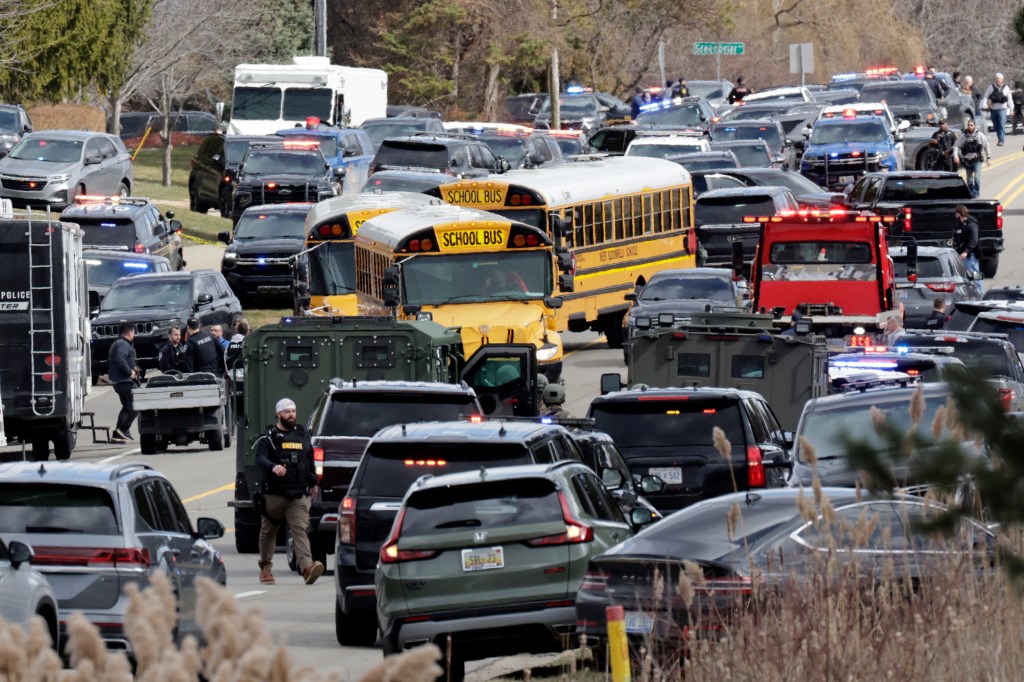
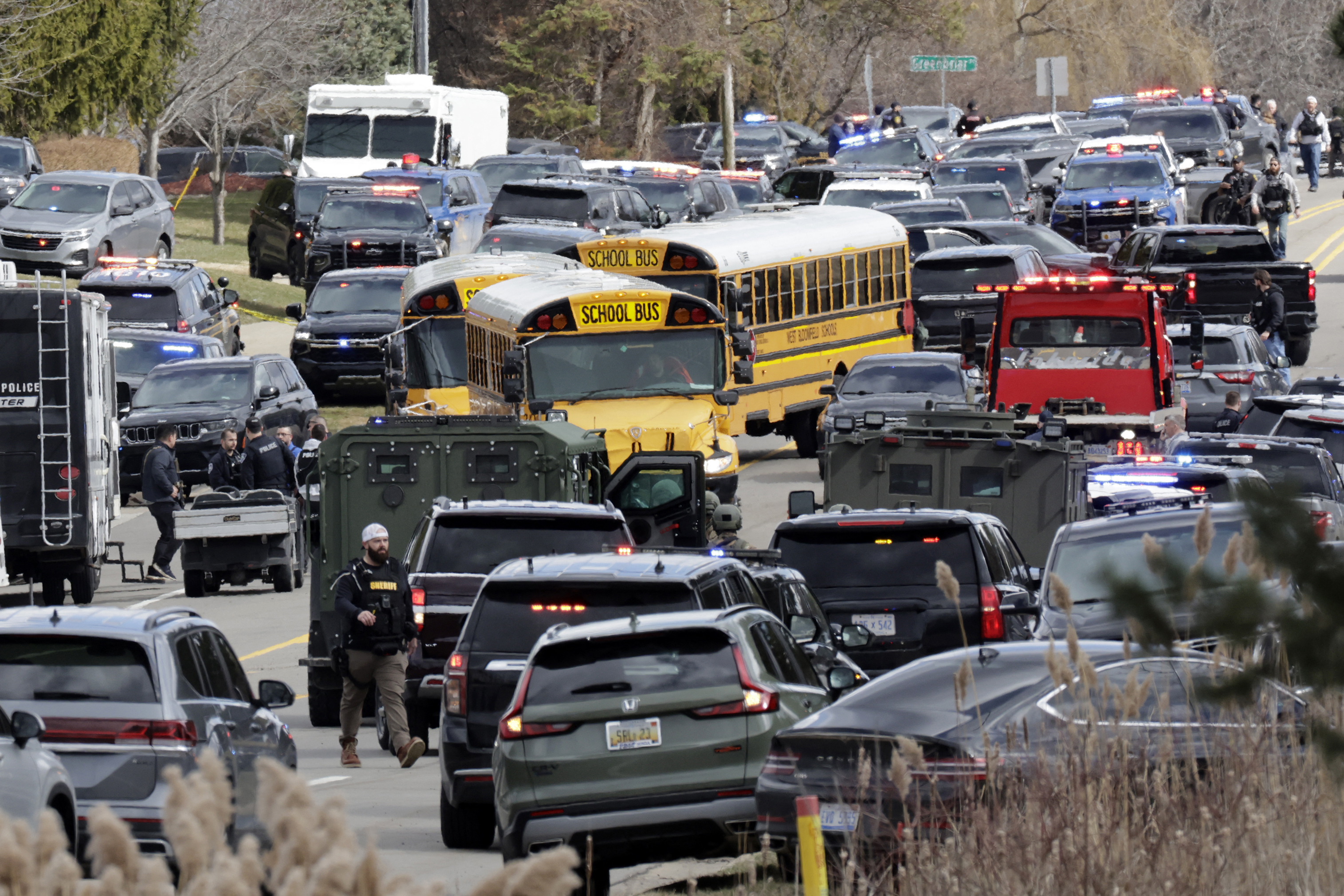
Hours after the shooting in Virginia, a 41-year-old Lebanese-born man drove a pickup truck into a synagogue in West Bloomfield, Michigan, and exchanged fire with the building’s security guards before dying on the scene. Media outlets reported that the attacker’s two brothers, nephew, and niece died in Lebanon on March 5 following an Israeli strike on a three-story building. In a statement, the Israel Defense Forces said on Sunday that one of those brothers was a commander with the Iran-backed terrorist group Hezbollah.
America has seen a notable rise in domestic terrorism recently. But is the rise directly connected to the war? Have government policies impacted our domestic security preparedness? And how serious is the risk of Iranian sleeper cells?
You are receiving the free, truncated version of The Morning Dispatch. To read the full newsletter—and unlock all of our stories, podcasts, community benefits, and our newest feature, Dispatch Voiced, which allows you to listen to our written stories in your own podcast feed—join The Dispatch as a paying member.

In recent weeks, four terrorist attacks on U.S. soil have left four victims dead. According to numbers from the Cato Institute, between 2023 and 2025, 16 people total—excluding the perpetrators—were killed in politically motivated Islamist terrorist attacks in the U.S., and between 2020 and 2022—amid the pandemic and before Israel’s war against Hamas in Gaza—there were none.
This is a spike, and the attacks—where a single person plots and carries out an attack—are the kind that are more challenging for officials to prevent.
“The smaller the conspiracy, the less leakage there is, and if these people are determined to conduct an attack, there’s very little that we can do to stop them,” Colin Clarke—executive director of the New York City-based Soufan Center, where he specializes in domestic and transnational terrorism research—told TMD. “If you look at what happened in Detroit, that was somebody in this country who had a brother in Hezbollah, and we still weren’t able to prevent him from launching that attack.”
So far, there’s no evidence that any of these attacks were Iranian sleeper cell operations—including the Austin shooting and the synagogue attack, which seem connected to the war in Iran—but terror attacks like these can set off a trend.
Jessica Stern, a research professor at Boston University who worked for the National Security Council under President Bill Clinton, noted a “so-called copy-cat phenomenon” when it comes to terrorism, where one violent attack can spur another, even if the perpetrators have different motivation. “I think it just gives people ideas,” she told TMD. “I’m not sure we really fully understand exactly why this happens.” She added: “We know that they mimic each other’s tactics and target.”
And the sleeper cell risk is not fiction. Jason Blazakis, who directs the Center on Terrorism, Extremism, and Counterterrorism at Middlebury College, told TMD that to him, “the biggest concern … is the potential [for Iran] to activate sleeper cells. This is a government that’s desperate, ultimately, and when governments are desperate, they’re going to do things they otherwise wouldn’t necessarily consider.”
Blazakis added that while Iran likely was hesitant to coordinate domestic terror attacks on U.S. soil before the war, the regime’s risk calculation may have changed in the aftermath of the war. American Enterprise Institute senior fellow Michael Rubin agrees with the concern, noting in The Dispatch on March 11:
Not all Iranians whom the Islamic Republic might press into service may be ideologically aligned with the regime. When Iranian Americans visit Iran, authorities interrogate them. Whether they know it, the regime sucks their electronics dry. If any of these computers or phones have anything the regime can use for blackmail, they will. This need not mean planting a bomb or shooting up a school: It could mean buying an innocuous component and transporting it to another location where an operative could assemble it, or plugging a USB with malware into critical infrastructure.
…
The sleeper cell problem is not just the stuff of Hollywood imagination or Brad Thor novels; it is real, and Americans are likely soon to get an unwelcome wake-up call.
Iran hasn’t been directly tied to physical attacks on Americans, but it has been linked to recent cyber attacks. On March 11, Handala—a hacking group that supports the Iranian regime—claimed responsibility for a large-scale cyberattack on the networks of medical technology company Stryker. The system breach reportedly caused some company data to be deleted from devices, while also causing the group’s logo to be displayed on their login screens. Stryker said in a statement that the breach had been “contained” and that the company was in the process of restoring its systems, but it remains unclear how long the cyberattack will impact the company. In a company filing on March 11, Stryker noted that “the timeline for a full restoration is not yet known.”
Handala did not state why it targeted Stryker’s online system in particular, but claimed the cyber attack was in retaliation for a missile strike that hit a school in Southern Iran and killed more than 160 people. (A preliminary U.S. investigation reportedly found indications that the U.S. was responsible after incorrectly identifying the location as an active Iranian military site.)
Acting Cybersecurity and Infrastructure Security Agency (CISA) Director Nick Andersen said in a statement that the agency had launched an investigation into the cyberattack and will provide technical assistance to Stryker.
The increased risk—both of physical attacks and infrastructure hacks—comes amid upheaval at the very agencies intended to prevent such attacks. The Trump administration has moved to lay off personnel at the FBI, CIA, National Security Agency, and CISA and has dramatically shifted attention toward immigration issues. In October, 23 percent of all FBI agents were working on immigration-related matters—including 45 percent of agents stationed at the agency’s 25 largest field offices—with agents and analysts pulled away from investigating terrorism, among other areas. And this reprioritization isn’t FBI-specific: In March, Reuters reported that DHS had diverted officials to work on immigration enforcement, including agents who were previously responsible for tracking down child abusers.
“I would like to hear some kind of acknowledgement from the administration that they’ve stepped up efforts to protect the homeland,” Clarke said. He pointed to “terrorist ineptitude” for having prevented what could have been far worse atrocities, such as the faulty explosive device thrown at anti-Islam protesters in New York City. But that doesn’t relieve concerns about potential future attacks. “We’ve had four attacks in two weeks, right? When’s the last time you can remember that happening?”
Clarke added, “And I still haven’t heard anyone from the current administration, including the individuals in charge of our counterterrorism policy, coming out and talking to the American people. I think we deserve that.”
Today’s Must-Read

The American Revolution created new opportunities for civic involvement outside official institutions—particularly for women. Mercy Otis Warren, born in colonial Massachusetts in 1728, published pamphlets, plays, and political satires criticizing British authority and warning her fellow colonists about the dangers of tyranny. Colleen Shogan, who served as the 11th archivist of the United States, tells the story of women who influenced early American politics beyond the ballot box. “Every year during Women’s History Month in March, we read or learn about the stories of suffragists, civil rights leaders, barrier-breaking firsts, and occasionally the modern-day stories of women as STEM and business leaders. But what about women who shaped the republic before they had access to the ballot?” she writes. “Far from being politically irrelevant, their influence wasn’t merely symbolic. It was structural and essential.”

In Other News
- Trump said that he delayed a scheduled trip to Beijing planned for late March by about “a month or so” due to the war in Iran.
- Energy Secretary Chris Wright invoked the Defense Production Act and directed a Texas-based energy company that owns offshore oil platforms and a pipeline system off the coast of California to resume operations, after having been shut down since 2015 due to a large oil spill.
- The Kennedy Center’s board of trustees unanimously voted to approve the Trump administration’s two-year renovation plans, which include closing the facility for two years.
- Securities and Exchange Commission enforcement chief Margaret Ryan announced she is departing from the job, after serving for only about six months.
- Susie Wiles, Trump’s White House chief of staff, has been diagnosed with breast cancer but said she plans to continue working.
- Nigerian police said that three suspected suicide bombings killed at least 23 people and injured 108 in the country’s northeastern city of Maiduguri.
- Following a two-month manhunt, Haitian police said they detained Arnel Bélizaire, a former lawmaker who now faces charges for acts including allegedly financing terrorism.
- An Azerbaijani court sentenced a French national to 10 years in prison for allegedly working as a French spy and seeking to acquire information about the country’s military ties with Turkey, Pakistan, and Iran.
- Kyrgyzstan’s tax authority published a video accusing the country’s former security chief, Kamchybek Tashiev, of engaging in corruption.
- Greece’s Coast Guard said that a European Union border agency patrol boat, which was carrying the Estonian ambassador to Greece and four other people, sank off the coast of the island of Kastellorizo. All were rescued.
- The Sri Lankan government announced a four-day work week for public sector workers—and has asked the private sector to mirror it—over fears that the Iran war will prolong fuel shortages.
- Mark Zandi, chief economist for Moody’s, tweeted that the firm estimates that there’s a 49 percent probability of a recession starting in the next 12 months and that surging oil prices could increase those odds.
- After announcing the release of strategic emergency oil reserves last week, the International Energy Agency said that more oil can be injected from the reserves and into the global market if needed.
- OpenAI is reportedly discussing plans to form a joint venture with private equity firms—including TPG Inc., Brookfield Asset Management, and Bain Capital—that would have a pre-money valuation of about $10 billion.
- The NBA’s Board of Governors is reportedly planning to vote on an expansion proposal that could see new teams created in Las Vegas and Seattle.
- Hyundai has stopped sales of its 2026 Palisade models and is recalling about 68,000 vehicles due to an issue with the vehicle’s powered seats after a child was killed in that model in an incident that remains under investigation.
- “Lessons in Freedom—from Jimmy Lai and My Daughter Alysa”—by Arthur Liu. (The Free Press)
- Terrence McCoy and Christian Shepherd report on the living conditions of laborers at Chinese electric vehicle companies. (Washington Post)
- David Oks explores why bank tellers outlasted the invention of the ATM, but not the iPhone. (Substack)
- Karthik Tadepalli examines how Taiwan’s Industrial Technology Research Institute helped usher in “one of the most successful industrial policy programs of all time.” (Asterisk Magazine)
- Hannah Ritchie looks at why Africa’s electricity usage is projected to fall further behind the rest of the world. (Substack)
Kyiv Independent: Without a Hint of Irony, Russia Mocks U.S. for ‘Miscalculating’ Iran War
404 Media: CEO Asks ChatGPT How to Void $250 Million Contract, Ignores His Lawyers, Loses Terribly in Court
Let Us Know
Have any thoughts or questions about today’s newsletter? Drop us a note in the comments or via email at tmd.questions@thedispatch.com. We read every submission, and your message could be featured in an upcoming “Behind the Scenes” segment.
Have any thoughts or questions about today’s newsletter? Become a member to unlock commenting privileges and access to a members-only email address. We read every submission, and answer questions in the following edition of TMD.