Lawmakers are kicking the tires on legislation that purports to expand protections for bank depositors, but is a wolf in sheep’s clothing. This thinly-veiled corporate welfare would result in average Americans and small businesses paying more down the road.
At issue here is the deceptively named Main Street Depositor Protection Act, which would greatly expand government-backed coverage of certain business deposits for businesses through the Federal Deposit Insurance Corporation (FDIC). Currently, deposits are insured up to $250,000 so that if a mismanaged bank goes bust, the FDIC still gives depositors their money, up to the cap.
But this bill would increase that threshold by well over an order of magnitude—to $10 million for businesses’ non-interest-bearing transaction accounts. The bill’s sponsors may be well-intentioned, but this would double down on a failed policy that creates a significant moral hazard.
The expanded coverage would help only a select few large corporate interests. Over 99 percent of all depositors are already covered by the current $250,000 limit. JPMorgan Chase found in 2016 that the median small business holds an average daily cash balance of just $12,100. The massive increase in FDIC coverage would effectively be corporate welfare for the largest businesses.
>>> Good Riddance to EPA’s Endangerment Finding on Greenhouse Gases
By perpetually promising to bail out banks that take too much risk with their depositors’ money, the FDIC already effectively encourages reckless lending by banks and while giving depositors precisely zero incentive to care if their bank takes on such risk. Everyone knows the system will protect them.
Of course, “the system” is a euphemism for other deposits and the taxpayer. FDIC bailouts are paid for by fees collected from banks, which are passed on to deposits and other customers of the bank. Whenever the FDIC runs out of cash, as happened in the Savings and Loan crisis of the 1980s and more recently in 2023 when Silicon Valley Bank failed, the Treasury is obliged to cover the shortfall.
Expanding coverage only exacerbates this moral hazard for the sake of benefiting a tiny number of massive corporations. But that’s just half the story: more coverage will mean much more regulation and government overreach.
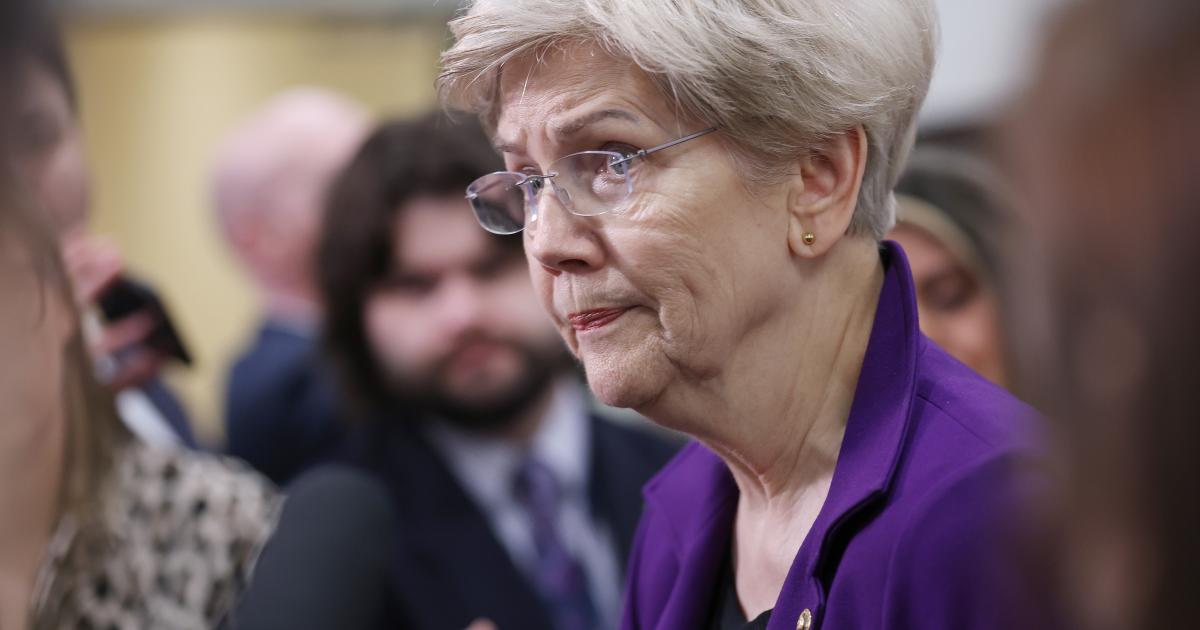
Sen. Elizabeth Warren (D., Mass.) gave the game away in an interview when she said, “If we’re going to raise the FDIC insurance, we’ve got to make sure first that we’ve got steady regulation over those banks, more regulation over the banks.” And that’s the real goal for the radical left in Washington, D.C.
For years, Warren and her ilk have been pushing for more control over banking, under the guise of so-called reform. They’ve largely been achieving their aims through overregulation that strong-arms financial firms, and that governmental overreach has yielded disastrous results.
>>> Cutting Bureaucratic Overregulation Will Aid Small Businesses—Not Mamdani’s Proposals
Under the Biden administration, financial institutions were compelled to debank many prominent conservatives, making life incredibly difficult for people whose only sin was disagreeing with leftwing ideology in public. Likewise, banks were effectively compelled to lend money for unprofitable ventures in wind and solar projects to meet regulatory requirements, while also refusing loans to profitable ventures in reliable oil or natural gas.
The financial industry has been compelled by the federal government’s regulatory arm to engage in all kinds of social engineering, and it’s been costly for American families. When loans to a failed wind farm go bust, the losses from that loan are made up for by higher interest rates on other loans, by higher fees on depositors, and fewer free services offered by banks.
This massive expansion of deposit coverage for a few special interests is a Trojan horse for an unprecedented increase in banking regulation, which Senator Warren has been champing at the bit to implement for years. It’ll mean more government control, and that means more government abuse of power.
The fact of the matter is that the FDIC is a permanent bailout facility for bad actors. We should be scaling it back, not expanding it. By extending governmental, and therefore taxpayer, protection, the FDIC has created an incentive for insolvency and a penalty for prudence. Let’s not make it any worse while also opening the door to even more overregulation.