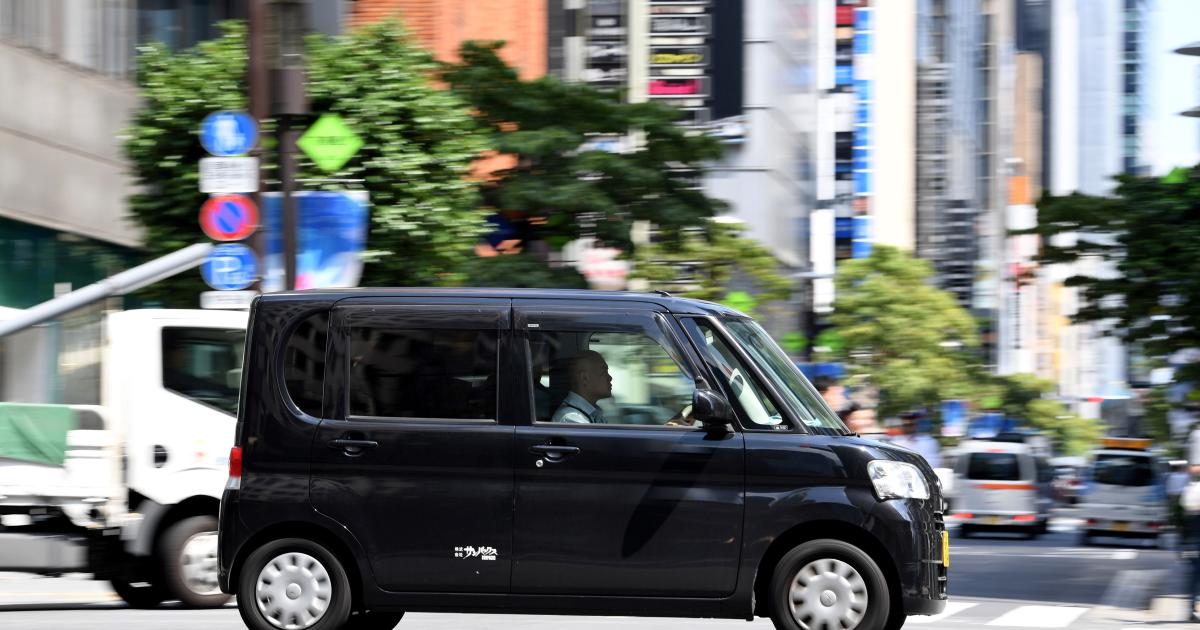
While teaching English in Okinawa, Japan, I bought a used 2012 Nissan Moco for $1,300 to zip around the island. While not ideal for America’s high-speed interstate travel, it was perfectly suited for commuting around Okinawa’s urban districts and taking in its breathtaking views, from day trips up north to Cape Hedo or Nakijin Castle Ruins.
When comparing costs, I was shocked to learn that new Japanese cars sold for about $10,000, while the average new car price in the United States was $50,080 as of September 2025.
Short for kei-jidosha, or “light vehicle,” kei cars like my Nissan Moco make up 30% to 40% of total car sales in Japan and offer an attractive solution for many Japanese students and families due to their low price, minimal maintenance, and great gas mileage.
Whether driving to the local San-A grocery store or the Onoyama tennis court in downtown Naha, I found that owning a kei car was a wonderful adventure and provided easy, affordable, and reliable transportation in Okinawa.
>>> Cutting Bureaucratic Overregulation Will Aid Small Businesses—Not Mamdani’s Proposals
Given that experience, you can imagine my excitement when Department of Transportation Secretary Sean Duffy announced the “Freedom Means Affordable Cars” movement last year. Even President Donald Trump has said he wants to bring “quite simply, AMAZING!!!” Japanese cars to America and authorized approval for kei car production in the U.S.
However, several outdated federal safety and emissions regulations need to be reformed across DOT, the Environmental Protection Agency, the National Highway Traffic Safety Administration, and at the state level.
Under current law, if I wanted to import and drive my 2012 Nissan Moco, I’d have to wait until 2037 because, according to the Imported Vehicle Safety Compliance Act of 1988, kei cars can only be imported into the U.S. if they are 25 years old or older. This classifies the car as a classic or antique and provides exemption from Federal Motor Vehicle Safety Standards, allowing it to retain original factory specifications and top speed.
While the preference is to drive a “classic” kei car rather than waiting until 2037 for my old Moco, I don’t believe this is what Trump or Duffy had in mind, especially since they want to build them in America.
According to the EPA, kei cars and trucks still lack a U.S. motor vehicle certification, making them non-road motor vehicles.
The headache is that non-road vehicles are forced to be permanently modified to cap their speed at 25 mph. So if America wants kei cars that can accelerate to speeds over 25 mph, they must be reclassified as motor vehicles under the Clean Air Act. Additionally, safety concerns for kei cars can be summarized in three points: Older kei cars lack modern safety technology, have small crumple zones, and have low maximum speeds.
>>> Cutting Red Tape on America’s Public Lands
To address these safety concerns, Japan’s New Car Assessment Program could be harmonized with NHTSA to expedite exports, a possibility that Subaru has raised in a recent DOT docket. States like Colorado have also restricted kei cars to roads under 55 mph, where crashes under that speed are less likely to cause injuries.
While the now-mandated golf cart speeds for non-antique kei cars might be fine for commuting around George Washington University’s campus, the American transportation system often requires more than a 25-mph-restricted Moco could provide. If the U.S. wants to see affordable and reliable kei cars on its streets, policymakers will need to address these roadblocks so Americans can import or domestically produce these zippy little cars. In cities like Washington, D.C., kei cars could be a practical way to solve everyday problems like tight parking, high transportation costs, and congested commutes.
Ongoing regulatory debates aside, kei cars can make sense for those on a budget. Young professionals like me would be happy to drive a cheaper, more maneuverable car that fits easily on crowded city streets. While kei cars won’t solve every transportation problem, small fixes to outdated regulations could bring big results to Americans.