A law you probably have never heard of could dramatically reduce American economic freedom and highlights how global governance could usurp the sovereignty of we the people.
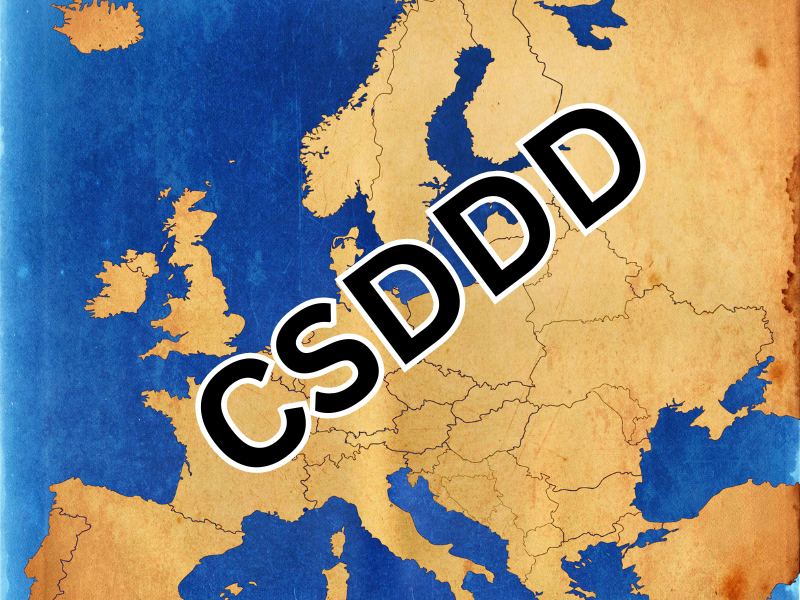
The law is the Corporate Sustainability and Due Diligence Directive (CSDDD), enacted by the European Union (EU) in 2024. A policy study by Jack McPherrin and Justin Haskins of The Heartland Institute (where I am a policy advisor) raises alarm on a measure approved by neither the federal nor any state government that will impact many American businesses.
The CSDDD’s scope is enormous. To see how, please recognize that Due Diligence roughly equates to environmental, social, and governance (ESG) scoring, an attempt to transform finance and business. Sustainability refers to all things environmental, notably climate change and ending fossil fuel use.
All EU member nations must codify the CSDDD by 2027. In addition, nations must allow enforcement by groups like unions and environmentalists.
The law will apply to all large businesses headquartered in or doing significant business in the EU. The thresholds are 1,000 employees and 450 million Euros in annual revenue. The European Commission estimates nearly 6,000 European and 900 international companies will have to comply, including most large American companies like Amazon, Apple, and McDonald’s.
Directly covered businesses are just the tip of the iceberg. As McPherrin and Haskins detail, the CSDDD’s provisions apply to all companies in a covered business’s “chain of activities.” This includes their supply chain and downstream partners. Farms supplying agricultural products to Cargill, for example, must comply.
The CSDDD has two parts. The first, as McPherrin and Haskins explain, is a preamble related to policy goals, followed by substantive provisions. The preamble requires member nations to adopt more than 90 international agreements, including the Paris Climate Agreement, the European Green New Deal, and numerous UN declarations.
Next come the obligations imposed on businesses. They include a strict ESG mandate across all activities, focused on largely environmental “adverse impacts.” Companies must consult with stakeholders on these impacts.
Covered companies must terminate business with partners failing to comply with the dictates. The CSDDD mandates fines of at least 5 percent of revenue and lets environmental and labor groups seek civil penalties.
The authors preview what might be in store. Germany passed the equivalent of the CSDDD before the EU. In 2024, Mercedes-Benz defeated a United Auto Workers (UAW) unionization drive at its Alabama plant. The UAW is suing Mercedes in Germany to, as McPherrin and Haskins note, circumvent Alabama’s right-to-work law.
Implementing ESG, stakeholder capitalism, and other progressive reforms would transform America’s free enterprise system. Businesses are voluntary organizations created by entrepreneurs; employees, suppliers, investors, and eventually customers participate if they find the terms acceptable. A business pursues the entrepreneur’s vision.
Progressive reforms like ESG enlist businesses as agents of social change. But every business already has a purpose – set by its founder. ESG requires businesses to serve the progressive project.
This transformation has consequences. Allen Mendenhall of The Heritage Foundation and I argue that forcing progressive goals on business necessarily delegitimates the pursuit of profit. Businesses can no longer just serve an entrepreneur’s vision.
The CSDDD illustrates how global governance helps intellectuals control society. Intellectuals, as economist Thomas Sowell explains, wish to impose their grand plans on society. While using the language of paternalism – the plan will usher in utopia! – intellectuals care about their plans, not people.
Representative democracy lets regular folks reject the intellectuals’ plans. Elitist intellectuals often lack the charisma to win elections (think Hillary Clinton). The workaround: take decision-making away from the electorate. One element involves replacing congressional legislation with regulations from bureaucrats.
Eliminating the ability of national governments to back out further consolidates the plan. Global governance accomplishes this and shifts power to the bureaucrats of nondemocratic international organizations.
President Trump is disrupting elite rule, both here and abroad. The numerous threats to America’s freedom, including laws from governments on other continents, make this task seemingly endless.