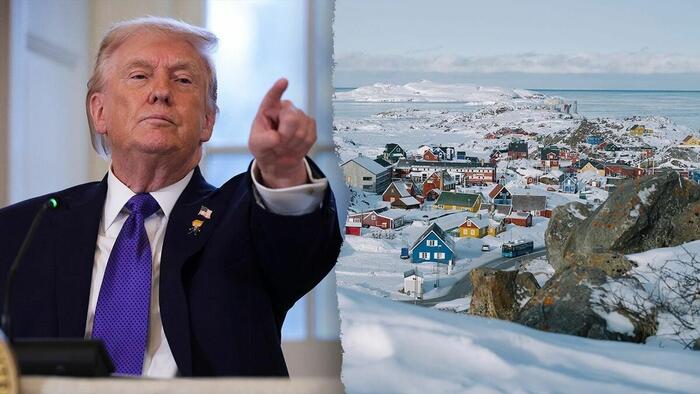
In January 2026, amid escalating tensions with U.S. President Donald Trump over his renewed push to acquire control of Greenland, Denmark’s military deployed explosives and blood supplies to the Arctic island as part of contingency plans to counter a potential American attack.

The preparations were revealed in a report by Denmark’s public broadcaster DR, which cited multiple high-level sources from the Danish government, military, and intelligence services, as well as officials in France and Germany.
Danish troops sent to Greenland early in the year carried sufficient explosives to demolish key runways – near the capital Nuuk and at the former air base in Kangerlussuaq – to prevent U.S. aircraft from landing in the event of an invasion. Blood supplies from Danish hospitals were also transported to treat potential casualties in combat scenarios.
Two European officials confirmed the DR reporting on Thursday, noting that Denmark aimed to dramatically increase the costs and risks of any forceful U.S. takeover. France and Germany supported Copenhagen’s strategy, with one official highlighting France’s immediate and significant assistance in developing defensive plans.
One European official expressed deep concern at the time, stating they feared “this was going to go really wrong” given Trump’s repeated threats during January.
These measures reflected the grave view taken across Europe of Trump’s rhetoric toward a fellow NATO ally. Danish Prime Minister Mette Frederiksen described the situation as “the worst foreign policy crisis since the Second World War,” crediting improved conditions to strong European cooperation.
The crisis eased after NATO Secretary-General Mark Rutte, leveraging his experience as a seasoned European leader, persuaded Trump during a meeting at the World Economic Forum in Davos to accept the framework of a potential “future deal” with Denmark regarding Greenland.
Frederiksen indicated that senior-level talks with the U.S. continue, seeking a compromise that upholds Denmark’s and Greenland’s sovereignty red lines. She expressed hope for an agreement but cautioned that Trump’s interest in controlling Greenland persists.

In January, Denmark – along with allies including France, Germany, and other Nordic countries – deployed troops to Greenland under the guise of a scheduled military exercise, which Copenhagen had formally notified to the U.S. Department of Defense. However, DR reported the true purpose was to ready defenses against a possible U.S. assault and to guarantee any takeover would require overt hostility.
“The French were incredibly helpful,” one European official told DR. “They understood straight away that we needed a plan.”
Fresh from the U.S. intervention in Venezuela that ousted President Nicolás Maduro, Trump reacted sharply to the European deployments, threatening additional tariffs on Denmark and the involved nations.
One European official remarked that after Venezuela, some in Washington seemed to believe they could act with impunity. While the immediate fear has lessened, it has not vanished entirely.
DR interviewed 12 senior officials from Denmark, France, and Germany about the heightened preparations following the Venezuela operation.
A former Danish minister summed it up: “Greenland has not gone away. It’s only sleeping.”