Which is interesting, as “America First” realism is supposed to be about laying cultural disagreements aside in pursuing national interests. As Trump told a Saudi audience during a visit to Riyadh earlier this year, “Far too many American presidents have been afflicted with the notion that it’s our job to look into the souls of foreign leaders and use U.S. policy to dispense justice for their sins.” Realists don’t pressure other cultures to adopt our values as a condition to allying with them.
Except, as we’ll see, when they do.
Contrary to what realists would have you believe, America’s new foreign policy is still very much based on “values.” It’s not our idealism that’s changed under Trump, it’s the ideals.
Civilizational erasure.
“Flexible realism” is the term used in the National Security Strategy to describe the United States’ newfound reluctance to pressure other nations to adopt “democratic or other social change that differs widely from their traditions and histories.” And for the most part, the document sticks to that.
The lengthy section on China, for instance, is devoted almost entirely to making sure that Beijing remains willing to work with the U.S. economically and doesn’t do anything nutty that might upend commerce in the South China Sea. The section on the Middle East likewise ignores disagreements over values like human rights, noting in passing the progress America’s regional allies have made in combating “radicalism” before pivoting quickly to a warning that that progress might be lost if we “hector” them about abandoning their “traditions.”
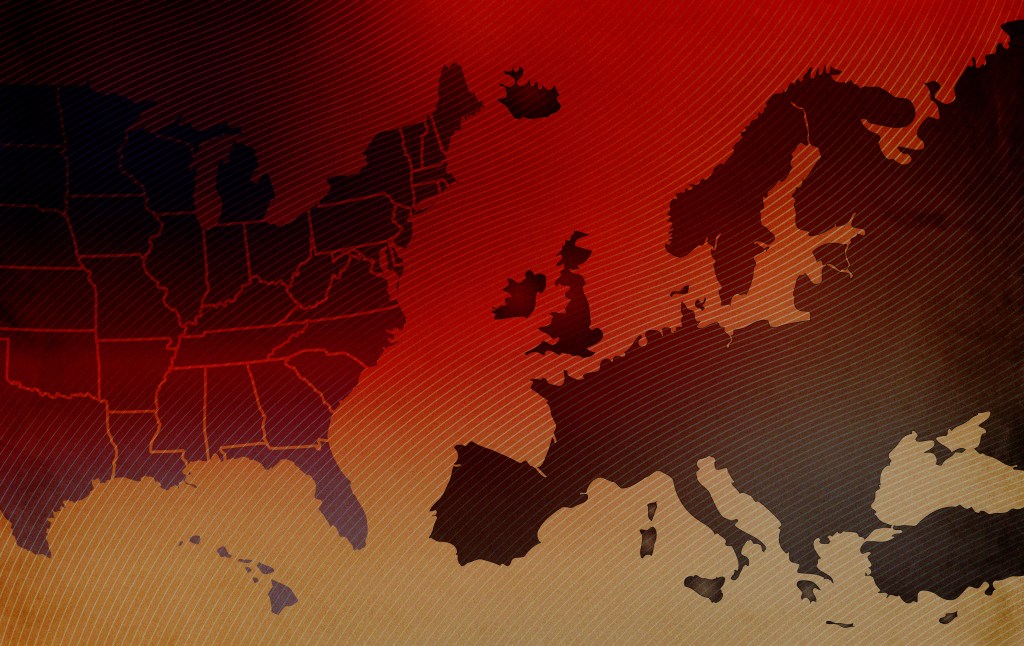
Only the Europeans, oddly, get a lashing about their failure to live up to the values they (supposedly) share with our country. In their case, our realism isn’t so flexible.
The New York Times made me laugh when it reported back in September that European leaders had come to suspect that Trump and his deputies want to see them all replaced with far-right leaders in the Viktor Orbán mold. I wonder what clued them in, I thought. Was it J.D. Vance lambasting them at that summit in Munich earlier this year? Was it Trump openly threatening to snatch Greenland from Denmark? Was it White House officials meeting repeatedly with European nationalists to promote their upstart parties?
If there was any doubt that America seeks a new order on the continent that’s more culturally copacetic with postliberalism, all traces of it evaporated this week. The president frankly told Politico in an interview that he regards Western Europe’s current heads of state as “weak,” “politically correct,” and symptomatic of the decline of their “decaying” nations. The National Security Strategy translated those views into official policy—and did so cleverly, by accusing Europe of having failed liberalism:
The larger issues facing Europe include activities of the European Union and other transnational bodies that undermine political liberty and sovereignty, migration policies that are transforming the continent and creating strife, censorship of free speech and suppression of political opposition, cratering birthrates, and loss of national identities and self-confidence.
…
American diplomacy should continue to stand up for genuine democracy, freedom of expression, and unapologetic celebrations of European nations’ individual character and history. America encourages its political allies in Europe to promote this revival of spirit, and the growing influence of patriotic European parties indeed gives cause for great optimism.
America should prioritize “cultivating resistance to Europe’s current trajectory within European nations,” the document concludes, which sounds a lot like the sort of meddling on the continent for which Russia is infamous. And which, one would think, a “flexibly realist” administration intent on engaging with countries as they are should eschew.
It’s fair in the abstract to say that Europe has been too lax on immigration, too intolerant of speech that challenges leftist ruling-class orthodoxy, and too keen to deprive upstart parties of a foothold in national elections. But coming from the Trump administration, that critique is fraudulent to the marrow. The president doesn’t care about democracy; he wouldn’t have tried to overturn the 2020 election if he did. He doesn’t care about free speech either, or else he and his cronies wouldn’t be using state power to try to put his critics out of business.
And if he’s worried about Europe being overrun by Muslims—“civilizational erasure,” as the National Security Strategy dramatically puts it—it’s strange that the allies he’s courted most assiduously during his second term are intolerant Sunni regimes. Last month he elevated Saudi Arabia to the status of “major non-NATO ally,” a distinction only 19 other countries enjoy. A Europe in which Muslims enjoy greater political power might be more favorably disposed to Trump’s America than the current version.
The through-line here is obvious. Singling out Europe has nothing to do with “flexible realism” and everything to do with values. The National Security Strategy is “a blueprint for building an illiberal international order, in which the U.S. can assert dominance unilaterally, strike deals with revisionist powers such as China and Russia, and work patiently to support right-wing populist parties in Europe in overthrowing centrist establishments,” international relations scholar Thomas Wright explained at The Atlantic. “One might call it dystopian idealism.”
Indeed. Autocratic, brazenly corrupt, contemptuous of the rule of law: There’s no need for us to “hector” nations like China, Russia, or Saudi Arabia about how they do business because they already share the Trump administration’s values. Europe, for all its faults, is different. If it doesn’t change soon, the new national security strategy implies, the Atlantic alliance can’t survive.
Realistically, of course, it’s on borrowed time anyway.
Making Europe fascist again.
I don’t think it’s crazy to imagine that the U.S. will have better relations with China circa 2028 than it will with Europe.
As I said, the China section of the National Security Strategy concentrates on the economic threat that country poses to the U.S., not any supposed cultural incompatibility between Trumpist America and communist China. The fate of Taiwan is treated largely as a commercial dispute, with the administration fretting that Beijing seizing the South China Sea could allow it to “impose a toll system over one of the world’s most vital lanes of commerce or—worse—to close and reopen it at will. Either of those two outcomes would be harmful to the U.S. economy and broader U.S. interests.”
Left unsaid is what might happen if China agreed to waive the so-called “toll” for us in exchange for, let’s say, the U.S. agreeing to let it purchase Nvidia’s very best AI chips. If there’s no irreconcilable clash of values between Washington and Beijing, if we have no objection to aiding their effort to use technology to perfect dictatorship, then literally anything—including acquiescing in China’s potential dominance of its own “sphere of influence”—should be negotiable. It’s not ideological, it’s just business. Ask the Ukrainians.
Meanwhile, Europeans will either elect far-right regimes or they won’t. And they might not: I can’t imagine that having a figure as morally repulsive as Trump “hectoring” them to support nationalist leaders like himself will make those leaders more appealing locally. That goes double if his long project to squeeze Ukraine into submitting to Russia finally bears fruit. By 2028 Trump could be facing the same sort of dynamic in Europe that he created in Canada, forced to negotiate with a leader who swept to power on a popular tide of wanting to punch back against Washington’s bullying.
If that happens, the already thin ice under NATO might finally crack.
On the other hand, the international illiberal tide that reelected Trump last year and that may yet elect Nigel Farage in the United Kingdom could spread to Europe and deliver the sort of Popular Front leadership that the president and Vance are hoping for. Surely a far-right Europe would be friendlier to Trump’s America than the current crop of leftist weenies are, no?
Maybe not. For one thing, the triumphant European right will need to consider the fact that American leadership is likely to toggle between liberal and postliberal regimes for the foreseeable future. Why would a new Orbánist leader on the continent choose to be a client of Trump’s rather than, say, Putin’s, when doing so could leave him saddled with having to answer to President Gavin Newsom in 2029?
If anything, Wright speculates, a Europe remade in the Trumpist mold might be less willing than the present iteration to help America maintain leverage against China. “Even in an illiberal international order, the U.S. will require Europe’s help on matters that run against Chinese interests, such as reducing American dependency on rare-earth metals sourced or processed in China,” he writes. “The administration is deluding itself if it imagines that a fractured Europe with numerous right-wing populist governments will provide any such support. This kind of Europe will cut deals with China and avoid any measures that might antagonize Beijing—some nations because they want to, and others because they are too weak to stand up to China on their own.”
The ice under NATO will crack in this scenario too, needless to say.
If it’s true that a more fascist Europe might foreseeably be more reluctant to advance American interests, we’re left to wonder why the Trump administration is so eager to engineer one. Is it because they can’t grasp that the authoritarian behemoths in Europe’s backyard, not the further removed United States, are likely to dominate a postliberal continent? Or is it because, for all their bloviating about “America First,” it’s more important to them to export the values of the postliberal revolution internationally than to advance America’s material interests?
A values-based policy.
Lurking in all of this is another question: Do Americans want, or even like, Trump’s foreign policy?
It matters because one of the knocks on Europe in the National Security Strategy is that its leaders supposedly aren’t carrying out the will of their constituents by continuing to support Ukraine against Russia. “A large European majority wants peace,” the document alleges, “yet that desire is not translated into policy, in large measure because of those governments’ subversion of democratic processes.”
That’s sure not how the polling reads to me, but if the White House wants to talk about governments ignoring their citizens’ feelings about foreign conflicts, here’s some numbers for them. Americans are split 30-70 against whether Trump should proceed with the military action he’s been planning against Venezuela. Their support for NATO has reached 68 percent, the highest level since at least 2018, while 64 percent favor sending more weapons to Ukraine (including 59 percent of Republicans). The president’s handling of foreign policy overall is nearly 10 points underwater, and his outlook on global trade is roughly as popular as gonorrhea.
That’s a lot of desire that isn’t translating into policy. And a lot of uncertainty for America about the direction of foreign policy in a post-Trump GOP.
To grasp how uncertain, consider what happened last month when two stars of populist media clashed over the question of Venezuela. Why are we targeting Nicolás Maduro, Tucker Carlson wondered? Sure, he practices left-wing economics, Tucker conceded to his right-wing podcast audience, but Maduro is also a staunch ally in the battle against, uh, “globohomo.”
Specifically, the Venezuelan leader opposes gay marriage, abortion, and transgenderism. He’s a socialist economically but a conservative socially. Of those two sets of values, which should matter more to a right-winger who’s trying to decide how to feel about him?
Ben Shapiro pointed back to those comments in an interview he gave afterward, condemning Carlson’s soft spot for strongmen. “Who gives a sh–!” Shapiro said of Maduro’s cultural conservatism. “The guy’s a communist dictator. Everyone in his country is eating dog. He’s shipping fentanyl [ed. note: not quite] to the United States to kill Americans. I don’t give a sh– whether he’s anti-LGBTQ rights.”
Maduro’s a conservative socially but a socialist economically—and a dictator. Which set of values should matter more to a right-winger?
That’s the gist of the debate over foreign policy that will play out in a post-Trump Republican Party. The question won’t be whether America should remain a “force for good” in the world; there will be consensus on the right that it should, realists’ complaints notwithstanding. The question will be which notion of the good is the proper one for America to advance abroad. Is it Shapiro’s liberal model of free markets and free elections or Carlson’s postliberal model of rolling back the tide of “globohomo”?
Wherever you land in that debate, values matter to you in foreign policy, just as they did to the authors of the National Security Strategy who spent pages “hectoring” Europe for failing to live up to the high civilizational standards of America’s fascist kakistocracy. Remember it the next time a postliberal like Tucker or J.D. Vance starts accusing people of caring too much about other countries, right before they launch into their latest harangue about Ukraine.