But having kissed off its sizable hardcore “Resistance” readership, the Post is no longer really competing with the Times at this point, either. It’s neither fish nor fowl, an entity in search of a centrist readership that’s receptive enough to right-wing politics to appreciate its new editorial direction yet also intellectual enough to appreciate the thoughtful commentary for which a newspaper of the Post’s caliber is known.
That’s a fool’s errand, at least for a publication of that size. You and I should know.
Slopaganda.
It’s too soon to tell what CBS News will look like once Bari Weiss is done making renovations, but writer Matt O’Brien has a hypothesis. “Bari is about to … do to CBS News what Bezos did to the Washington Post,” he wrote recently, “alienating your slightly left-of-center audience in search of a right-wing audience that either does not exist (for written media) or won’t watch you (for video media) because it prefers insane slopaganda.”
The modern mainstream right-wing audience does prefer insane slopaganda, it must be said—and has been said. The Bezos Post isn’t offering them slop. So with whom, exactly, did it expect to replace the left-leaning readers it alienated?
Last March, Pew Research conducted a survey that offered Democrats and Republicans a menu of 30 news outlets and asked which they used as a regular source of news. Only seven drew a higher percentage of Republicans than Democrats; of those seven, five were slopagandistic right-wing outfits like Newsmax and Breitbart. (The right-leaning New York Post and Joe Rogan, who supported Trump in 2024 but whose politics are heterodox, were the other two.) Some 57 percent of Republicans said they get their news regularly from Fox, easily the highest share among either party for any of the 30 outlets tested. The next-biggest draw among GOPers was ABC News at 27 percent.
Despite Jeff Bezos’ ongoing makeover efforts, the Washington Post drew just 7 percent of Republicans. That was smaller than the share of righties who said they watch MS NOW (then known as MSNBC). With precious few exceptions, if you’re hoping to build a big audience that tilts right, it’s slop or bust. The Post, by not offering slop, chose “bust.”
That’s only half the story, though. O’Brien is exaggerating when he says there’s no mass right-wing audience for written media, but not wildly.
The largest share of Republicans in the Pew Research survey who said they get news regularly from a predominantly print outlet was a measly 12 percent, tied between Ben Shapiro’s Daily Wire and Rupert Murdoch’s Wall Street Journal. (And even Shapiro’s site is known mainly for its podcasts at this point, so maybe that shouldn’t count.) That was slightly less than the share who said they get their news from … the BBC. Right-wingers, in other words, are more likely to turn to a famously left-leaning foreign news channel that produces predominantly video content than written media in their own country that shares their biases.
That problem isn’t entirely partisan. In the Pew poll, Democrats who got news from video outlets also consistently outnumbered Democrats who got news from print. The largest share of lefties who named a print outlet as a source of information was 31 percent, who said so of the Associated Press; almost every broadcast news network and cable news network (except Fox) drew a higher share of Democrats than that.
But the problem is plainly worse among the modern right, and how could it not be? The education gap that has emerged between the two parties, with college graduates migrating left and non-college voters migrating right, was destined to influence the two sides’ media habits. College grads are far more likely to read books than those who didn’t go to college—and, more to the point, they’re overrepresented among the audience for print news media while being underrepresented among the audience for video news platforms.
Which helps explain why, despite 20 years of growth, online right-wing media still has yet to produce a serious, successful journalistic enterprise to serve the populist grassroots. Tucker Carlson tried with The Daily Caller more than a decade ago—but within no time at all, he was posting “side-boob slide shows” to make money instead.
The reason right-wing slopaganda exists to begin with is because the audience to which it caters despised and distrusted left-leaning establishment media like the Washington Post, the paper that brought down Richard Nixon. And so the Bezos Post’s task in attracting Trump-era Republican readers isn’t a mere matter of providing content that might tear them away from the latest Tucker interview with a Holocaust revisionist or whatever. Its task is to overcome a degree of fear and loathing of the mainstream media that’s downright foundational to the modern right’s identity.
How was that supposed to happen, exactly? A mostly rural populist movement that doesn’t read much and holds hating “the MSM” as more sacred to its politics than conservative dogma was never going to mass-subscribe to a newspaper based in Washington, D.C., of all places, just because it promised to be a little nicer to Donald Trump. Who was the Post rebrand ultimately for?
Well, dear reader, I think it was probably for you. Which is why you’re partly to blame for all this.
A problem of scale.
Bezos’ plan “was not dissimilar to trying to do The Dispatch at a bigger scale,” one of my colleagues observed this morning, “but the audience is not big enough to sustain a paper of the Post’s size.”
Pretty much, no? Personal liberties! Free markets! Center-right political opinion, but an order of magnitude more thoughtful than whatever the latest conspiracy slop circulating in mainstream right-wing outlets might be and several orders of magnitude less Trumpy. It’s the Steve Hayes/Jonah Goldberg dream in full flower!
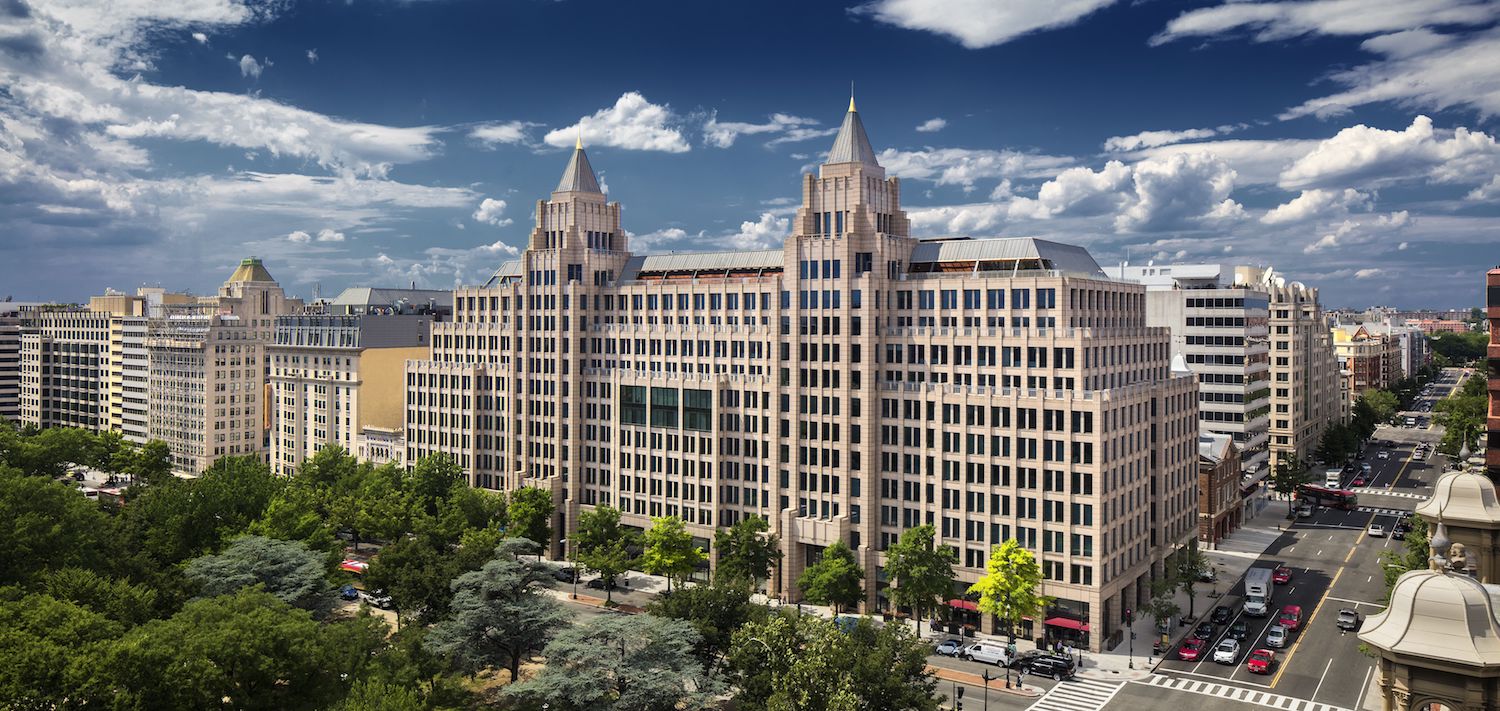
Praise Jesus, there’s still enough of a demand for that viewpoint in America to support a small-ish (but growing!) publication and its hard-working commentariat. But there isn’t nearly enough demand, it seems, to support a large-ish one with steep fixed costs like the Washington Post. Their office is only two blocks away from ours, you know—but they pay a lot more than we do.
So Bezos’ failure is really your fault, Dispatch subscriber. There aren’t enough of you. Go forth and multiply.
In the meantime, we’re left to wonder how one of the most successful businessmen to ever crawl out of the primordial soup misjudged his market so badly. Bezos could have gone full slop by firing the many MAGA critics on staff, replacing them with Jack Posobiec and Candace Owens, and positioning his paper as a sort of Fox News for the barely literate. Or he could have gone the other way, quenching the left’s insatiable thirst for Resistance-style content by leaning into skeptical coverage of the Trump administration—although that obviously would have caused problems for his other business holdings. Either would have attracted an audience, though.
Instead, he tried to grasp his way to a spot somewhere in the great, mostly vacant middle. It can be done, as you and I know—but not at the scale required to sustain the Post. Not in a country like the one ours has become.
We’re also left to wonder about this question, to which I have no answer: Why doesn’t Bezos just sell the paper instead?
Losing $100 million per year is no joke, but if anyone could comfortably bear that cost, it’s the god-emperor of Amazon. (Charles Foster Kane could afford to operate at a loss for 60 years; Bezos can go a few millennia.) But if doing so was too distressing for him, or if the newsroom occasionally angering the president was too risky to Amazon’s sway in Washington, he could have sought a buyer for the princely sum of $1. Or better yet, created a nonprofit with a generous initial endowment to run the paper while inviting contributions from other civic-minded billionaires to help keep it afloat.
Or he could have done the opposite, going all-in and throwing money around to lure away the most talented reporters around the country to staff the Post. Owning the paper only makes sense as a matter of prestige, after all: It would barely affect Bezos’ bottom line even if it were profitable, in which case the only reason for him to hold onto it is for the gravitas that comes with controlling a major news-breaking, taste-making information platform in America. Elon Musk has Twitter, Mark Zuckerberg has Facebook, the Ellisons have CBS News and TikTok, Bezos has the Post: You’re nobody in the new Gilded Age without your own showcase media property.
Except that, by wrecking the paper and damaging his own business—and civic—reputation along with it, Bezos has destroyed the stature he doubtless hoped to gain from ownership. (Ruining an august institution by trying to vampirically leverage its prestige feels … familiar.) So why doesn’t he sell it? Is there no one with the means and desire to blow nine figures per year on controlling the most influential newspaper in the capital of the most influential nation on Earth?
I bet some sleazy Salafist consortium in the Persian Gulf would take it off his hands for a few bucks. Those guys aren’t above paying $500 million bribes to the president; for far less, they could gain control of the Post and impress the White House by turning it into a clearinghouse of information about how the three greatest forces for peace on Earth are Donald Trump, the Saudi royal family, and Qatar.
A lot of right-wing grifters would happily apply to work there. Tucker Carlson, being deeply committed to the new mission, might even contribute for free.
But for reasons I don’t understand, Jeff Bezos has preferred to ride this rocket into the ground rather than hand off the controls to someone else before it crashed. Perhaps it’s an ego thing for him, not wanting to admit that his vision for the paper failed. Perhaps it’s something else. History will note the bitter irony, though, of a man who grew fabulously wealthy off of Americans’ appetite for long-form reads being undone in the newspaper business in part by their disappearing appetite for even short-form ones. You should have embraced the slop, Jeff. Soon it’ll be all that’s left.