We’ve unlocked this edition of The Morning Dispatch, our flagship daily newsletter explaining all the news you need to know today in fewer than 15 minutes. To get the full, unlocked version every day, become a Dispatch member today.
Happy Tuesday! Have you seen the newly redesigned SCOTUStoday newsletter? You can sign up for it here to get the latest on the Supreme Court in your inbox every weekday.
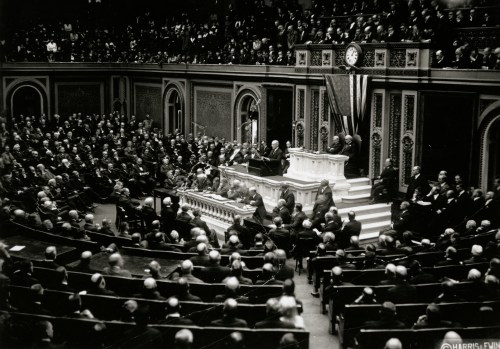
And don’t forget to tune in to a special Dispatch Live tonight after the State of the Union. Steve Hayes, Michael Warren, Sarah Isgur, and Charles Hilu will share their thoughts after the speech live on YouTube.
Quick Hits: Today’s Top Stories
Rising Iran Tensions
The State Department ordered staff at the U.S. Embassy in Beirut to leave the country on Monday, saying it is reducing the embassy’s staff to “essential personnel” amid heightened tensions between the U.S. and Iran. President Donald Trump is reportedly weighing his options for a military strike, with Gen. Dan Caine, the chairman of the Joint Chiefs of Staff, reportedly counseling him that a strike on Iran could result in an extended U.S. commitment to conflict and Jared Kushner and Steve Witkoff urging diplomacy. “We don’t need another war in this region,” Kaja Kallas, the EU’s top diplomat, said Monday.
- On Monday, Israeli Prime Minister Benjamin Netanyahu warned in the Knesset that an Iranian attack on Israel would be “perhaps the gravest mistake in their history.”
- In Iran, student protests entered their third consecutive day on Monday, with demonstrations at more than 10 universities across Tehran, Mashhad, and Isfahan. Students, marking the 40-day mourning period for those killed during January’s nationwide uprising, chanted anti-government slogans, burned flags, and clashed with Basij paramilitaries on multiple campuses.
- Iran’s Foreign Ministry spokesman said Monday that any U.S. attack, including limited strikes, would be considered an “act of aggression” and that Iran would respond “ferociously” in self-defense.
Judge Blocks Release of Jack Smith Documents
U.S. District Judge Aileen Cannon on Monday permanently blocked the Justice Department from releasing the second volume of former special counsel Jack Smith’s report on his investigation into President Donald Trump’s alleged mishandling of classified documents and obstruction of the subsequent investigation. The move came just a day before the report was slated for publication. The first volume, detailing Smith’s investigation into Trump’s efforts to overturn the 2020 presidential election, was released last year shortly before Trump returned to the White House. Cannon’s order, granted at the request of Trump and two of his former co-defendants in the case, bans Attorney General Pam Bondi—or her successors—from releasing or sharing the second volume of Smith’s report. “Special Counsel Smith, acting without lawful authority, obtained an indictment in this action and initiated proceedings that resulted in a final order of dismissal of all charges,” wrote Cannon, referring to her 2024 ruling that Smith had been unlawfully appointed to his role as special prosecutor by the administration of former President Joe Biden. “As a result, the former defendants in this case, like any other defendant in this situation, still enjoy the presumption of innocence held sacrosanct in our constitutional order.”
- After castigating Smith and his team for continuing to compile the report while they appealed her ruling that his appointment was unconstitutional, Cannon wrote that the “Court strains to find a situation in which a former special counsel has released a report after initiating criminal charges that did not result in a finding of guilt.”
- Bondi’s Justice Department backed Trump’s request, calling Smith’s investigation “unlawful from its inception” and arguing that Smith “weaponized the Department of Justice against a leading presidential candidate.”
- Two government watchdog groups, American Oversight and the Knight Institute, are still fighting for the report’s release through the 11th Circuit Court of Appeals.
Violence in Mexico Following Cartel Killing
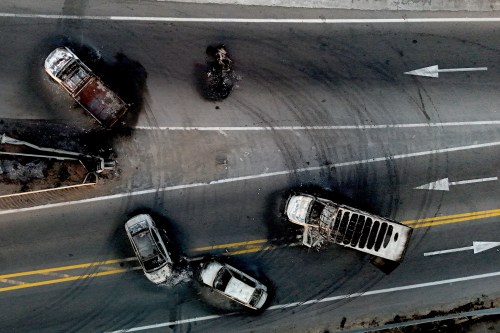
Following the death of Nemesio “El Mencho” Oseguera, the head of Mexico’s Jalisco New Generation Cartel, at the hands of Mexican security services, violent clashes erupted across Mexico on Monday between members of drug cartels and Mexican police and security services. The White House confirmed that the U.S. “provided intelligence support” for the operation, and U.S. Deputy Secretary of State Christopher Landau called Oseguera “one of the bloodiest and most ruthless drug kingpins.” Mexican defense officials said intelligence traced one of Oseguera’s romantic partners to the town of Tapalpa, leading to a raid involving six helicopters and special forces. In the wealthy coastal city of Puerto Vallarta, gunmen on motorcycles roamed throughout the city, setting vehicles on fire and blocking roads. Similar scenes unfolded in Guadalajara, Jalisco’s largest city and a host city for four matches in the upcoming FIFA World Cup this June.
- According to Mexican officials on Monday, 25 members of the country’s National Guard were killed in six attacks across Jalisco, along with a prison guard and an agent from the state prosecutor’s office, as well as around 30 criminal suspects in Jalisco and four in the nearby state of Michoacán.
- Burning vehicles and roadblocks were reported across roughly 20 Mexican states, and airlines including Delta, American, Alaska, and Air Canada canceled flights to Puerto Vallarta and Guadalajara. Authorities said that all cartel roadblocks had been removed as of Monday afternoon.
Trump Warns Trading Partners
President Donald Trump on Monday threatened economic retaliation against countries seeking to potentially renegotiate trade agreements following the Supreme Court’s invalidation of tariffs enacted under the International Emergency Economic Powers Act on Friday. “Any Country that wants to ‘play games’ with the ridiculous supreme court decision, especially those that have ‘Ripped Off” the U.S.A. for years, and even decades, will be met with a much higher Tariff, and worse, than that which they just recently agreed to,” he wrote on Truth Social. On Monday, the European Union delayed the ratification of the trade agreement reached between the U.S. and the EU last year, postponing a vote in the European Parliament planned for Tuesday. The body plans to reconvene on March 4, following potential clarification by the U.S. To learn more about the Supreme Court’s tariff decision, and its consequences, read the full piece in yesterday’s TMD.
- Indian negotiators have already postponed meetings in Washington that were meant to finalize a trade deal with the U.S. this week, and Britain’s Business and Trade Secretary, Peter Kyle, said that “all options” were on the table as his country seeks details from the U.S. on tariff policies going forward.
- Despite Trump announcing a 15 percent global tariff rate on Saturday, the new tariffs take effect today at 10 percent.
Peru Selects New Prime Minister
Peru’s new president, José María Balcazar, on Monday appointed Hernando de Soto as his prime minister. De Soto, 84, is an internationally prominent pro-market economist best known for his work on property rights in developing countries. He served as a governor of Peru’s central bank from 1978 to 1980, was a key economic adviser to President Alberto Fujimori, helped inspire the Washington Consensus, and ran for president himself in 2021, placing fourth. The decision by Balcazar—a leftist and former member of the Marxist Free Peru party—was widely seen as a sign that the president, who was appointed last week to lead an interim government until April, is committed to economic stability. Balcazar assumed office in the wake of former Peruvian President José Jeri’s departure from office after being censured by Peru’s Congress for holding unofficial meetings with a Chinese businessman.
- De Soto has received numerous international accolades for his work on the creation of markets in developing countries, including policy work on property rights for Peruvian farmers, which also inspired the World Bank’s “Doing Business” program.
- Balcazar is Peru’s eighth president in nine years and is slated to depart from office by July 28, following elections set for April 12 in which a record 34 candidates have registered to run. He has promised to ensure transparent elections and economic stability.
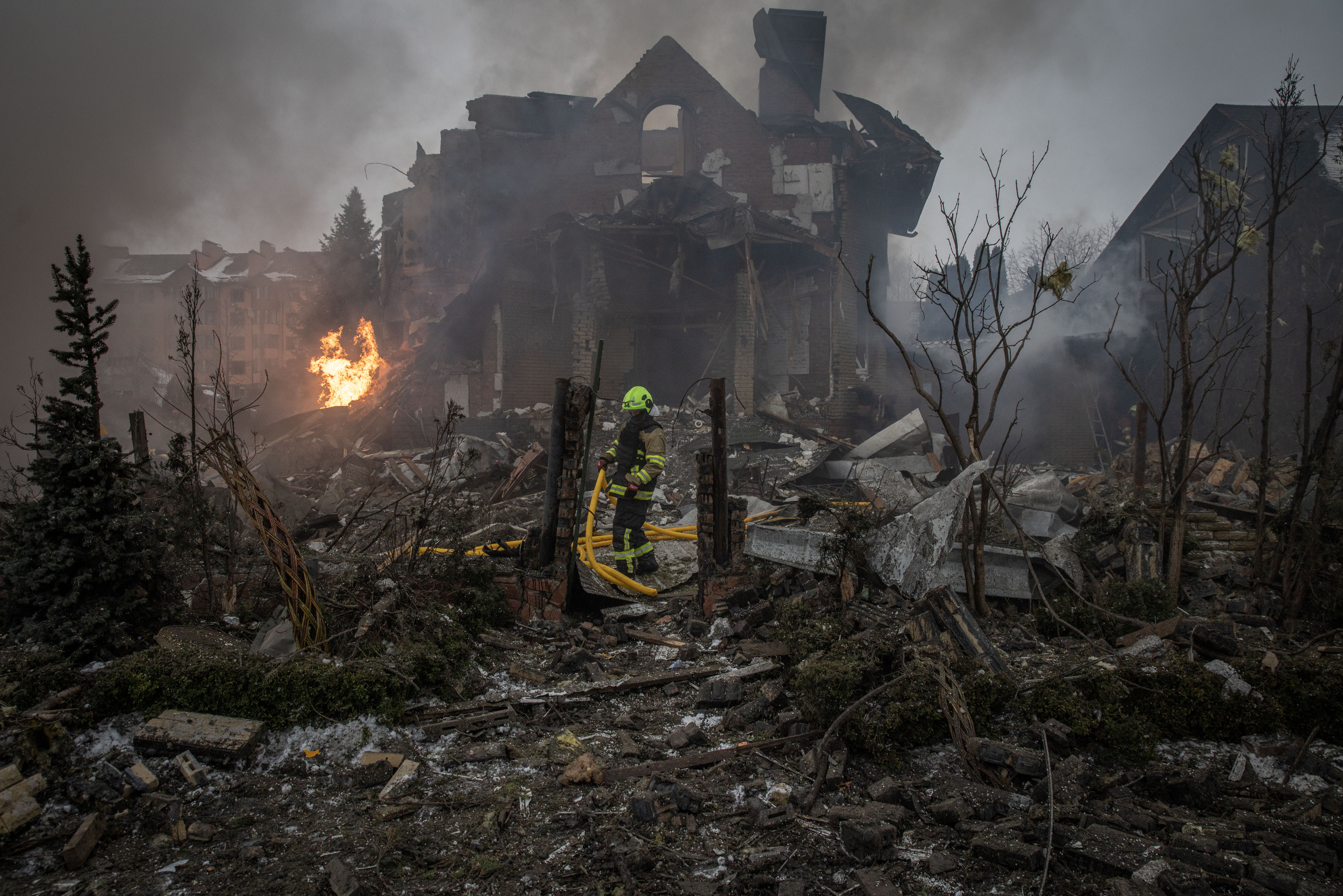
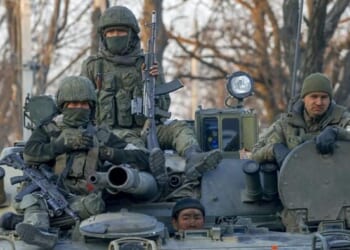
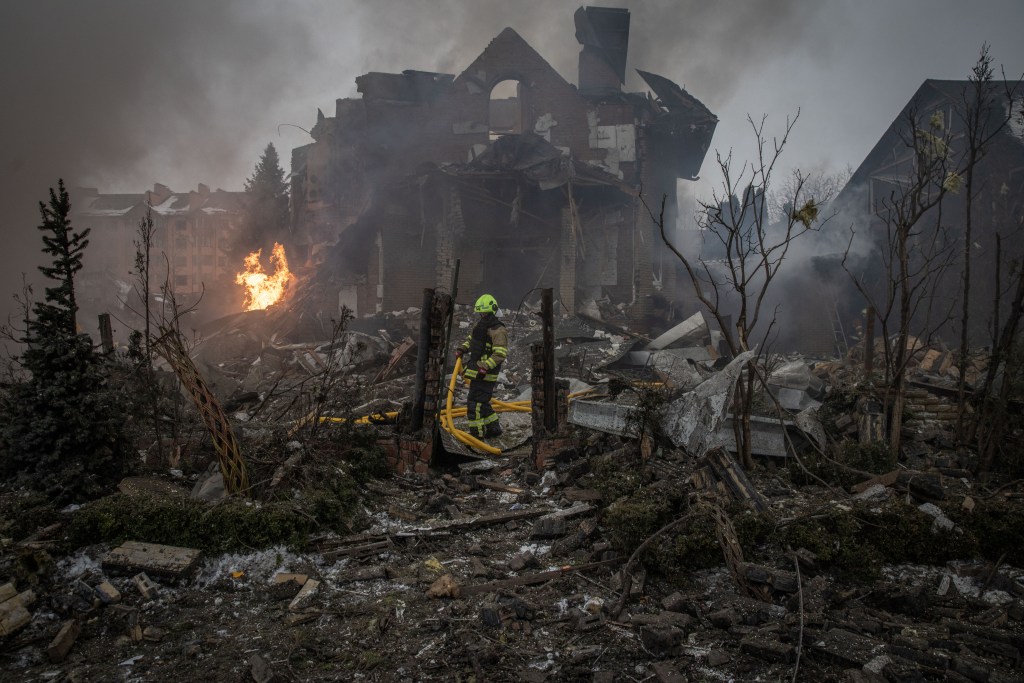
Four years ago today, Russia launched its invasion of Ukraine. Russian President Vladimir Putin expected his “special military operation” to last days, with the Russian army quickly seizing its neighbor. He was wrong. Ukrainians fought back, conducting strikes deep inside Russian territory and holding the front line against a vastly larger force while pioneering new drone innovations.
For the past two years, Russia’s gains have been incremental and limited to the eastern Ukrainian Donbas region; analysis from the Institute for the Study of War (ISW) shows that Russian forces have advanced over only about 4,700 square kilometers in the last year. The Center for Strategic and International Studies (CSIS) last month assessed that, since 2024, Russian forces have averaged gains “at an average rate of between 15 and 70 meters per day in their most prominent offensives, slower than almost any major offensive campaign in any war in the last century.” In recent weeks, Ukrainian forces have gained a slight upper hand: According to ISW, Ukrainian troops recaptured about 200 square kilometers of territory in just five days in mid-February—their largest gains since the 2023 counteroffensive—exploiting a Starlink shutdown that disrupted Russian battlefield communications.
But over four years of war, Ukraine has borne the immense costs of defending itself. The Office of the U.N. High Commissioner for Human Rights (OHCHR) verified this month that 15,172 civilians have been killed since 2022, including at least 4,762 women and 766 children; or about 10 civilian deaths per day. Some 41,378 others have been injured, including 13,464 women and 2,540 children. The war has displaced more than one-third of Ukraine’s population, and 5.9 million Ukrainians have fled the country, with 5.3 million settling in Europe, according to the U.N. Refugee Agency. On the battlefield, CSIS estimated in January that Ukrainian forces have suffered between 500,000 and 600,000 total casualties—including between 100,000 and 140,000 killed—since the invasion began, though precise figures remain contested and classified. Ukrainian officials have always provided lower numbers than such estimates, though; President Volodymyr Zelensky said last February that more than 46,000 Ukrainian soldiers had been killed and 380,000 wounded.
Amid halting peace negotiations, Europe’s deadliest war since World War II drags on. But how will Ukraine rebuild from years of fighting? And how different will the plucky country be in the aftermath?
This edition of The Morning Dispatch is fully unlocked. To receive the full version every day—and access all of our stories, podcasts, community benefits, and Dispatch Voiced, which allows you to listen to our written stories in your own podcast feed—join The Dispatch as a paying member.

Though Ukraine has broadly withstood the Russian invasion, about 18 percent of its internationally recognized territory remains under Russian occupation—spanning parts of Donetsk, Luhansk, Kherson, and Zaporizhzhia oblasts, as well as Crimea, annexed by Russia in 2014. According to the OHCHR, more than 1,800 people in occupied territories have faced fines for expressing dissent, while 12 were convicted on criminal charges for actions such as discrediting the Russian army and displaying Nazi symbols. In many cases, the offenses amounted to promoting Ukrainian imagery or cultural identity. In September 2022, Putin ordered referendums in the four occupied oblasts that purported to allow residents to vote on joining Russia.
Russian state news outlets claimed that Ukrainian residents voted overwhelmingly to join Russia. The Institute for the Study of War found that the Kremlin manipulated tallies and threatened residents to vote for Russian annexation, including at gunpoint.
That occupied territory is now the central sticking point in U.S.-brokered negotiations. Russia has demanded Ukraine withdraw from the remaining 20 percent of the Donetsk region it still controls, which Zelensky said is not something Ukraine can agree to.
But even in the parts of Ukraine still under government control, four years of war have exacted a punishing toll.
Ukraine’s national gross domestic product (GDP) dropped by 29 percent after Russia’s invasion. Real GDP gains—which take inflation into account—decreased from 5.3 percent to 2.9 percent between 2023 and 2024, and last year dropped to 1.9 percent, according to the National Bank of Ukraine (NBU). The country’s government debt-to-GDP ratio exceeded 90 percent in 2025, up from about 49 percent before the invasion, and though it continues to receive international financial aid, most of that goes toward its military. Ukraine now produces an estimated 4 million drones annually—more than all NATO countries combined—and its domestic defense industry reached $10 billion in output in 2024, comprising about 7 percent of GDP—but this has been overwhelmingly directed toward domestic military needs, not export revenue.
This is the economic reality of a years-long defensive war. The trouble is, most of these problems will outlast the conflict.
A September 2025 issue of the Ukrainian Analytical Digest, a joint project produced by four European-based research and policy networks, estimated the cost of complete reconstruction and recovery at $524 billion, more than double the nation’s 2025 GDP. Ukraine’s civil government has diverted resources to repairing critical infrastructure damaged in the war, but as of mid-2025, only about 4 to 4.5 percent of all damaged Ukrainian assets had been reconstructed or were in the process of being restored.
The four years of fighting have also degraded Ukrainian transportation services and infrastructure, including roads and railways, causing $36.7 billion in damage. The reconstruction and restoration costs for Ukraine’s agricultural sector total $11.2 billion, with more than half of that attributable to damaged machinery and equipment. Ukraine’s energy and industrial sectors have recorded damages totaling $38 billion.
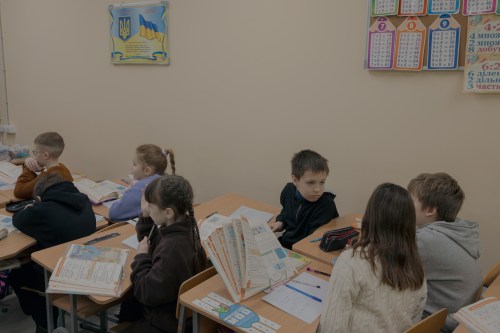
Of the civil sectors Russia has targeted, Ukrainian housing has suffered the most damage, with 13 percent of Ukraine’s total housing supply having been destroyed or damaged, valued at about $57.6 billion. The war has inflicted damage on more than 3,300 Ukrainian schools and other educational sites and destroyed 385 of them. And new constructions have new complexities, costs, and dangers, with mines or other explosives covering about 23 percent of Ukraine’s territory.
But the people Ukraine needs to rebuild may never return.
A report last year by the Razumkov Centre, a Kyiv-based public policy think tank, found that 15 to 20 percent of Ukrainian refugees now living in Europe don’t plan to return permanently to their home country. The report notes that such decisions are driven primarily by economic concerns—such as the availability of employment opportunities, infrastructure quality, housing, social standards, and security—but that relocated Ukrainian families are also making the best choice for their children. For many parents, that means keeping them in their current schools, surrounded by teachers and friends with whom they have built connections, rather than sending them back to a reconstructed former war zone where they would once again be neighbors of Vladimir Putin’s Russia. “In this sense, identity is more of a background to the choice than its main driver,” the report noted.
Many departing Ukrainians have been students. According to a report published last year examining Ukrainian standardized testing data for graduating high school students in 2022, the war’s outbreak and the ensuing conflicts displaced about 36,500 students, or about 16 percent of the graduating population. Of those, 64 percent have departed Ukraine entirely, with most relocating to the Czech Republic, Germany, and Poland. As the report’s co-author, professor Julia Stoyanovich at New York University, explained to TMD, “We are seeing in this data displacement within Ukraine, but also very significant displacement of students abroad. … These are all people who are 17 years old, 18 years old, they’re going to go abroad, they’re going to establish their lives there, they will go to college there, and it’s unlikely, unfortunately, that they will return to Ukraine.”
As she noted, “the ecosystem of innovation, of research, etc., in Ukraine is highly impacted by the brain drain that our analysis showed.” Meanwhile, students who remained in Ukraine have seen their test scores decline.
Data indicate that Ukrainian students have struggled because they are increasingly sleep deprived and stressed, in large part because of nightly missile strikes, according to a working paper from Dariia Mykhailyshyna, a postdoctoral researcher at the Kyiv School of Economics.
Amid ongoing attacks, Ukraine’s civil administration has attempted to keep up with the process of rebuilding infrastructure, repairing roads and buildings damaged by Russian explosives. “If you look at the train system, even in spite of war, the trains run on time in Ukraine, and for all of the war, basic public services have been pretty well protected and provided,” Timothy Frye, a professor of post-Soviet foreign policy in Columbia University’s political science department, told TMD. “So, I think, even given the wartime conditions, it is impressive how the Ukrainian government has held up much better than people expected.” Frye pointed to a “very robust civil society in Ukraine,” noting that volunteer efforts occasionally help pick up slack from government duties when its resources become overwhelmed.
But even so, the work is dramatically constrained by the availability of workers and budgets. “The longer the war takes, it’s going to be harder for Ukrainians to come back” and redevelop their infrastructure to pre-war quality, Romina Bandura, a senior fellow with CSIS’ Project on Prosperity and Development who specializes in Ukrainian recovery and reconstruction, told TMD. “Reconstruction, in terms of transport, of building, you need all types of labor. Not only high-tech or highly skilled, it will need manual labor.”
The trilateral talks in Geneva ended with little progress toward a peace deal, with Zelensky tweeting that “Russia is trying to drag out negotiations that could already have reached the final stage.” His office announced another round of talks, scheduled for Thursday and Friday, but the Russians have not publicly committed to them.
Today’s Must-Read
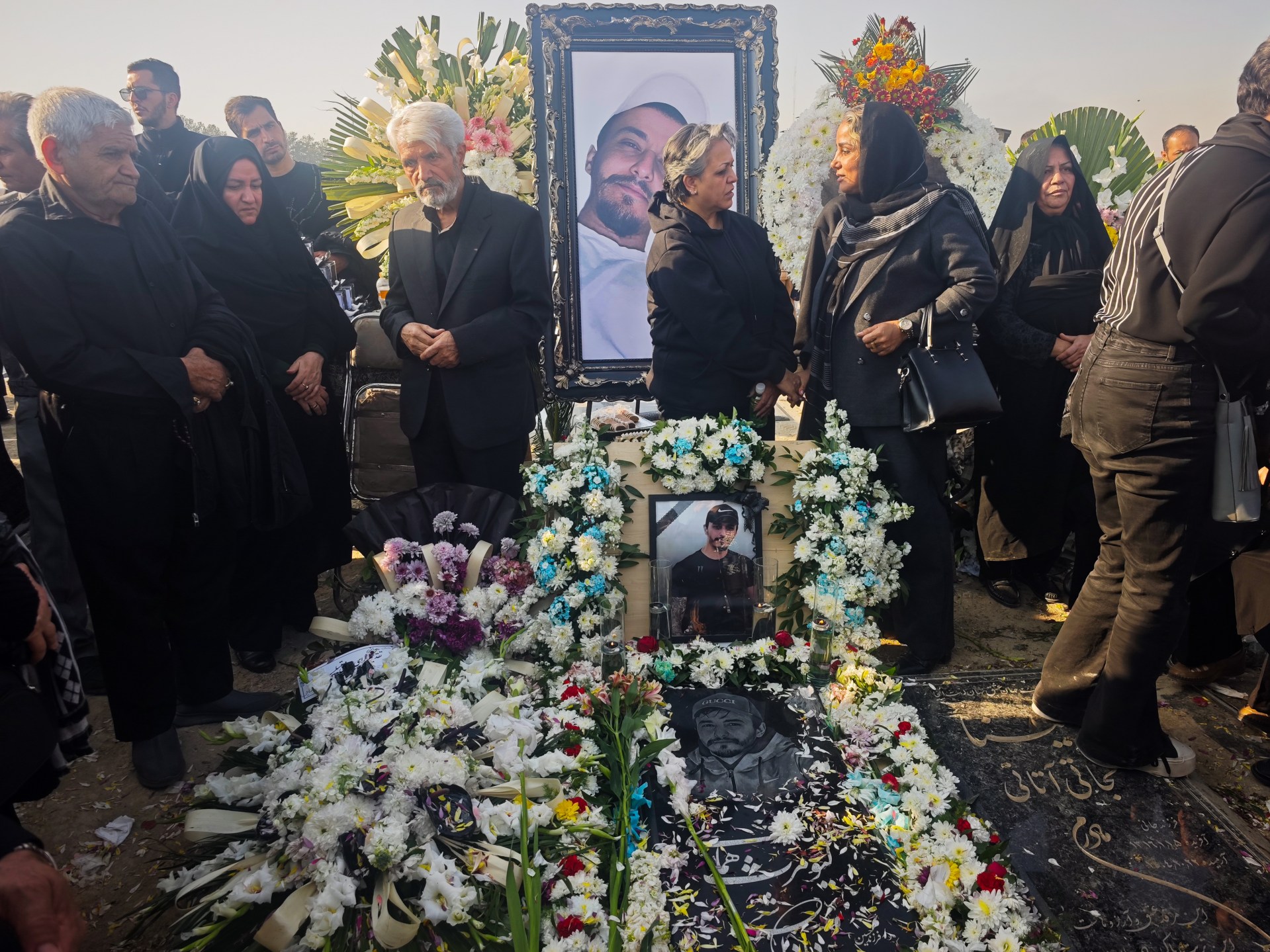
The U.S. has assembled the largest concentration of military force in the Middle East in more than two decades, all within operational range of Iran. This is peak American readiness for war-fighting, writes Mariam Memarsadeghi, senior fellow at the Macdonald-Laurier Institute, but there’s more to the story than the military buildup. Amid threats of another prolonged war in the Middle East, Memarsadeghi writes that “it can be easy to overlook that the current impasse between the U.S. and the Islamic Republic of Iran began with peaceful street protests by ordinary Iranians who could not put food on the table.” President Trump vocally supported the protesters, even suggesting that help was on the way—but more than social media posts or shallow diplomatic overtures with the Iranian government, Memarsadeghi argues that “a transition away from the regime and toward stability and freedom will require real American commitment.”
Toeing the Company Line


In Other News
- The Department of Defense confirmed another strike on an alleged drug smuggling boat, killing three. At least 150 people have been killed by these strikes.
- The Pentagon reversed its decision to support air safety legislation, the Rotorcraft Operations Transparency and Oversight Reform (ROTOR) Act, formed in the aftermath of last year’s deadly collision at Ronald Reagan Washington National Airport, citing “significant unresolved budgetary burdens and operational security risks affecting national defense activities.”
- FedEx sued the Trump administration seeking a “full refund” for all duties paid under IEEPA-enacted tariffs, which the Supreme Court ruled unlawful last week.
- A federal court ruled that a new congressional map for Utah, which could potentially flip one of the state’s four seats to a Democrat, can be used in the 2026 midterm elections.
- New draft guidance from the Food and Drug Administration would allow pharmaceutical companies and researchers to expedite the development of individualized therapies for patients with rare genetic diseases.
- Democratic Maryland Attorney General Anthony Brown sued the Trump administration, seeking to block the Homeland Security Department from constructing a new immigration detention facility in Maryland.
- British authorities arrested Peter Mandelson, the U.K.’s former ambassador to the U.S., amid an investigation into potential misconduct while in public office and his ties to Jeffrey Epstein.
- Seven Ukrainian police officers were injured, two seriously, following an explosion in the southern Ukrainian city of Mykolaiv, two days after a similar blast in the western part of the country that killed one officer.
- A suicide bomber in Moscow killed a police officer and two other officers this morning.
- Kazakhstan has fined journalists for asking members of the public for their opinion on an upcoming March referendum on introducing a new constitution.
- China imposed new trade restrictions on Japan, including adding complete export curbs on 20 Japanese-based entities, and partial restrictions on 20 other groups.
- An air ambulance plane crashed in eastern India, killing all seven people aboard, including two crew members.
- Paramount reportedly increased its bid to acquire Warner Bros. Discovery, though the exact figures have not yet been reported.
- Panama officially annulled contracts that allowed a Hong Kong-based CK Hutchison subsidiary to operate two ports on either side of the Panama Canal, after the country’s Supreme Court ruled last month that such actions were unconstitutional.
- OpenAI announced a multi-year partnership with four major consulting firms—Accenture, Boston Consulting Group, Capgemini, and McKinsey & Co.—to deploy its new enterprise AI platform, Frontier, designed for large organizations.
- Russian state media reported that the Kremlin is investigating Telegram founder Pavel Durov for alleged criminal involvement in the “facilitation of terrorist activities.”
- Eli Lilly unveiled KwikPen, a new device that can allow patients of the pharmaceutical company’s Zepbound weight-loss drug to receive one month’s worth of treatments in a single pen.
- “The ‘Godmother’ of Weed vs. Her Uncle, the DEA Agent” (The City)
- Mariana Lastovyria on the “anniversary effect” that millions of Ukrainians now suffer from since Russia’s invasion. (The Counteroffensive with Tim Mak)
- Vali Nasr explains why the Iranian regime may view war with the U.S. as a better alternative than bowing to Trump’s demands. (Financial Times)
- Nicholas Decker argues for free, publicly funded buses. (Homo Economicus)
- Kate Krader and Chris Rovzar on why the trendy move for hotels and restaurants is to be very small. (Bloomberg)
- Henrik Karlsson on the desire to create art. (Escaping Flatland)
The Hill: Hegseth Says He’ll Order Random Pizzas To Throw Off Monitoring App
Asked about the “Pentagon Pizza Report,” an account on the social platform X that tracks activity at local pizza joints near the U.S. military hub, Hegseth said he was aware of the account.
“I’ve thought of just ordering lots of pizza on random nights just to throw everybody off,” he said Sunday on Fox News. “Some Friday night when you see a bunch of Dominos orders, it might just be me on an app, throwing the whole system off so we keep everybody off balance. We look at every indicator.”
404 Media: Meta Director of AI Safety Allows AI Agent to Accidentally Delete Her Inbox
Mainichi: Distinguished Tokyo Police Dog Black Shadow Retires After 11 Years Sniffing Out Cases
Let Us Know
Have any thoughts or questions about today’s newsletter? Drop us a note in the comments or via email at tmd.questions@thedispatch.com. We read every submission, and your message could be featured in an upcoming “Behind the Scenes” segment.
Have any thoughts or questions about today’s newsletter? Become a member to unlock commenting privileges and access to a members-only email address. We read every submission, and answer questions in the following edition of TMD.