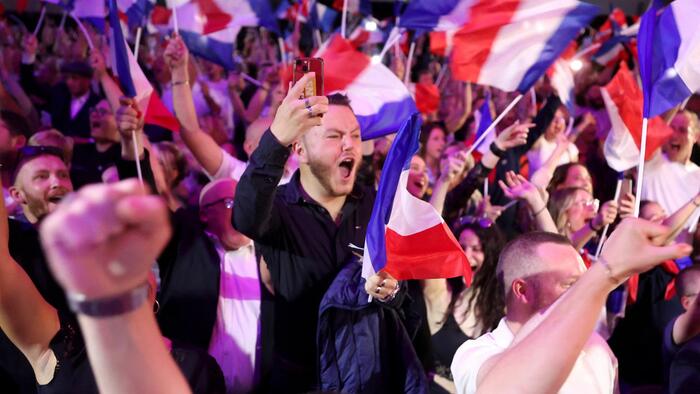
Marine Le Pen’s National Rally delivered its strongest performance ever in French local elections on Sunday, capturing dozens of municipalities and installing an ally as mayor of Nice – while socialists predictably held onto key urban centers, including Paris, Marseille, Lyon and Lille.
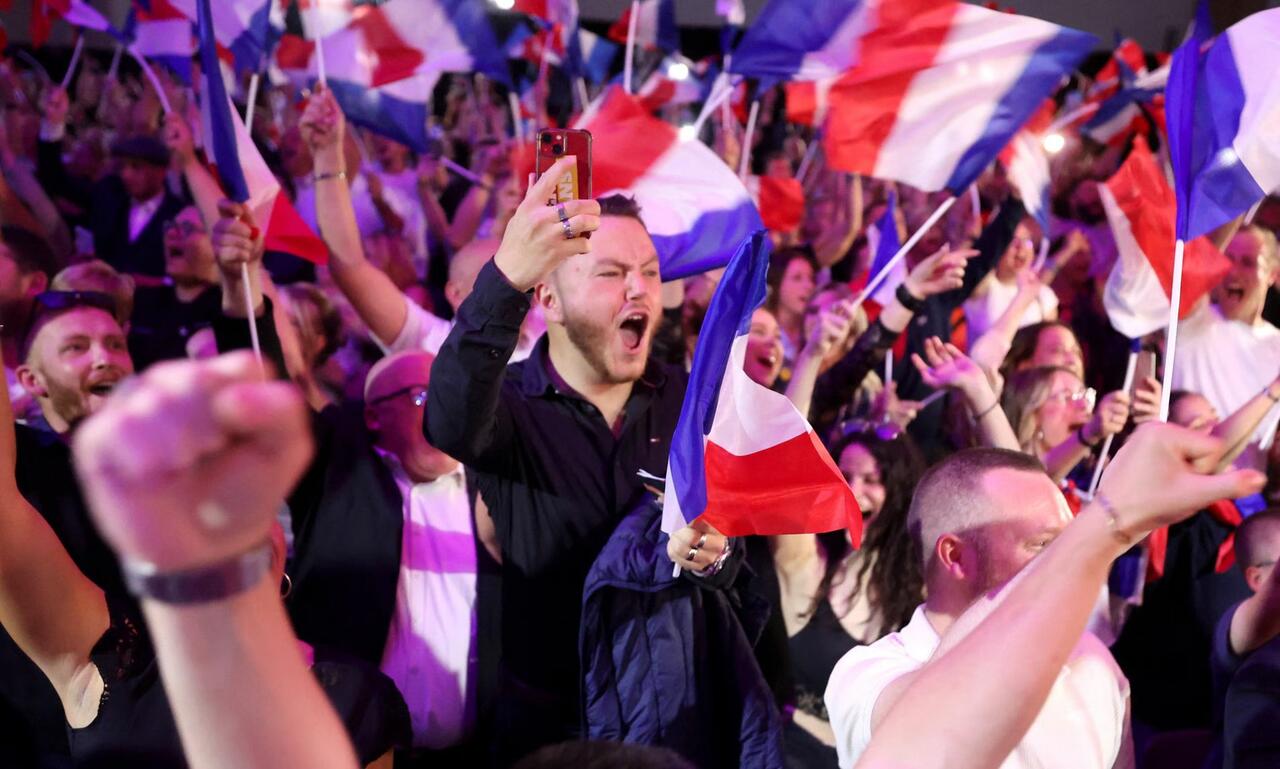
The results of the second-round municipal vote on Sunday mark the clearest sign yet that the populist party is no longer a protest movement but a genuine governing force in parts of France – and a growing threat to President Emmanuel Macron’s centrists and the traditional right ahead of the 2027 presidential election.
Jordan Bardella, the 30-year-old RN president widely seen as the party’s next presidential standard-bearer, hailed the night as “the greatest breakthrough in its entire history.” Speaking to cheering supporters, he said voters had delivered “a message of deep aspiration for change.”
Le Rassemblement National réalise ce soir la plus grande percée de son histoire.
Après le premier tour, à l’issue duquel nos maires sortants ont été plébiscités, nous comptons ce soir de nouvelles victoires par dizaines ! #Municipales2026 pic.twitter.com/FclSlPTyKM
— Jordan Bardella (@J_Bardella) March 22, 2026
Marine Le Pen, still battling a conviction that could bar her from running in 2027, struck a similar note: the party is now “implanted everywhere” and ready to govern.

C’est par dizaines que le Rassemblement national remporte ce soir des communes à l’issue du second tour des élections municipales. C’est une immense victoire, et la confirmation de la stratégie d’implantation locale du Rassemblement national.
Bravo à tous nos candidats, quelle…
— Marine Le Pen (@MLP_officiel) March 22, 2026
Yet the evening was far from a rout. While the RN and its allies picked up control of smaller and mid-sized towns – including Carcassonne, Castres, Agde, Liévin, Vierzon and La Flèche – and as noted above, it lost high-stakes runoffs in Marseille, Toulon and Nîmes after left-wing and center-right candidates formed tactical alliances against it. In Paris and other major cities, the party remained marginal.
The party did secure one major symbolic prize: former Les Républicains leader Éric Ciotti, who defected to the RN orbit, won the mayor’s office in Nice, France’s fifth-largest city.
🚨BREAKING: Thousands are gathering in Nice, France now to celebrate the unprecedented victory of the RN/UDR nationalist candidate Éric Ciotti
HOPE is restored to the French! ⚜️ pic.twitter.com/qOVd10cyjF
— Inevitable West (@Inevitablewest) March 22, 2026
What Happened: Full Results Breakdown
- First Round (March 15): The RN posted record scores in many areas, especially in the south. It led or tied in key races including Marseille (neck-and-neck with the incumbent Socialist mayor) and performed strongly in Toulon, Nîmes, and Carcassonne.
- Second Round Runoffs (March 22):
- Wins and Holds: Retained Perpignan (its largest city). Secured new victories in mid-sized and smaller towns including Carcassonne, Castres, Agde, Liévin, Vierzon, and La Flèche. Overall, the party and its allies are set to govern dozens more municipalities than before.
- Major Symbolic Victory: RN ally Éric Ciotti (a former mainstream conservative who defected) won Nice, France’s fifth-largest city — a landmark urban gain.
- Setbacks in Big Cities:
- Marseille: Incumbent left-wing mayor Benoît Payan cruised to re-election with ~54% against RN candidate Franck Allisio (~39%).
- Toulon and Nîmes: RN candidates lost despite strong first-round leads, defeated by united opposition slates.
- Paris, Lyon, and other major urban centers: RN remained marginal (e.g., just 1.6% in Paris).
Turnout hit a historic low (~48%), underscoring voter fatigue but also strategic bloc voting against the far right.
A new local power base – and a launchpad for 2027
Until now, the National Rally’s weakness has always been local: it struggled to field experienced candidates, build alliances or win runoffs. That changed Sunday. The party enters the next electoral cycle with real administrative experience, control of budgets in dozens more towns, and a proven ability to turn first-round strength into second-round wins in its southern heartlands.
Analysts say the gains reflect deep voter frustration over immigration, crime and the cost of living – issues the RN has hammered relentlessly while softening its image under Le Pen and Bardella. In Marseille, where drug-related violence has made headlines for years, the RN candidate came within striking distance before the left held on.
The results also expose the continuing fracture on the traditional right. Ciotti’s victory in Nice – after he was essentially expelled from Les Républicains for moving too close to Le Pen – underscores how the mainstream conservative camp is splintering, with pieces drifting toward the RN.
What it means for Macron – and for Europe

Macron’s centrist bloc, already reeling from the 2024 legislative elections that left parliament hung, now faces another warning. The president has 13 months to rebuild credibility before voters choose his successor. His prime minister, Michel Barnier, offered a cautious reaction, saying the results “confirm the fragmentation of our political landscape.”
For Europe, an RN victory in 2027 would be massive – as the party has pledged to challenge EU migration rules, renegotiate France’s relationship with Brussels, and take a harder line on support for Ukraine. A Le Pen or Bardella presidency would align Paris more closely with populist governments in Italy, Hungary and the Netherlands – and put new pressure on the transatlantic alliance.
Of course, Le Pen’s own legal fate looms over the festivities. She is appealing a conviction for misusing European Parliament funds, which carries a potential five-year ban from public office. A decision is expected this summer. If the ban stands, Bardella – younger, smoother and less burdened by the party’s toxic history – would almost certainly become the candidate.