US futures tumbled and oil surged as the war in Iran showed little sign of deescalating over the weekend and led to more major Middle East producers curbing output. Still, futures retraced more than 50% off the overnight lows as WTI nearly touched $120 overnight, the highest since 2022, before dropping back to around $100 after a report G7 countries may release 300 million to 400 million barrels, or around 25% to 30% of the 1.2 billion barrels in strategic reserve. As of 8:00am ET, S&P futures are down 1%, although well off session lows, having tumbled as much as 2% earlier before the SPR news hit; in pre-market trading, Mag7 names are weaker, but certain AI plays are positive pre-mkt with Energy the standout sector and Defense bid higher, too. Generally, Defensives over Cyclicals. Bonds deepened losses while the dollar hit its highest level since January. Bond yields are higher, bear flattening, but Treasuries are outperforming global peers with European bonds in freefall due to fears of a spike in inflation driven by higher gas prices; Commodities are stronger led by Energy with all segments / sub-segments higher ex-precious metals which are being sold to fund margin calls in oil. WTI Crude futures have pared an increase of as much as 31% to about 13% but remain highest since 2022 as the war in the Middle East restricts supply via the Strait of Hormuz. Today’s US economic data slate includes February New York Fed 1-year inflation expectations at 11am. Reports ahead this week include CPI, personal income and spending (includes PCE price indexes), 4Q GDP revision, JOLTS job openings and industrial production

In premarket trading, oil and gas companies are extending gains during the turmoil in energy markets. Among movers: Chevron (CVX) +0.7%, Exxon (XOM) +0.8%, APA (APA) +2%. Magnificent Seven stocks are all lower (Alphabet -1.4%, Amazon -1%, Meta Platforms -1.2%, Microsoft -1.1%, Tesla -1.8%, Apple -0.7%, Nvidia -0.8%).
- Airline and mining stocks tumble on the higher energy prices and concern over weaker economic growth. Delta (DAL) falls 3% and Alaska (ALK) is down 3%.
- Applied Optoelectronics (AAOI) rises 4% after saying it received its first volume order for its 1.6T data center transceivers from one of its long-term major hyperscale customers to boost its network bandwidth for AI workloads.
- Dianthus Therapeutics (DNTH) climbs 22% after announcing an early “GO” decision based on an interim responder analysis in a Phase 3 trial of claseprubart in chronic inflammatory demyelinating polyneuropathy.
- Hims & Hers Health (HIMS) jumps 39% after Bloomberg News reported that Novo Nordisk plans to sell its weight-loss drugs on the telehealth company’s platform, ending a public feud.
- Jefferies (JEF) falls 3% after being downgraded to equal-weight by Morgan Stanley analysts who cite credit concerns due to the bank’s exposure to the bankrupt auto parts supplier First Brands and the failed UK lender MFS.
- Live Nation Entertainment Inc. (LYV) rises 7% after Politico reported that the company reached a settlement with the Department of Justice in its antitrust case and will pay $200 million in damages to participating states.
- PG&E Corp. (PCG) climbs 1.4% after UBS raised its recommendation on the utilities company to buy on improvements in wildfire policy and affordability.
- Xenon Pharmaceuticals (XENE) soars 43% after announcing its experimental epilepsy drug azetukalner met the primary endpoint in a Phase 3 trial for focal onset seizures
In corporate news, billionaire Leo KoGuan doubled his stake in Nvidia to 2 million shares. Live Nation Entertainment is said to be close to settling a federal antitrust lawsuit accusing the company of illegally monopolizing the live music industry. Hims & Hers Health shares are surging in premarket trading after Novo Nordisk was said to have ended its public feud with the company with an agreement to sell its drugs on the Hims platform. Vertiv, Lumentum, Coherent and EchoStar will join the S&P 500 in the latest quarterly rebalance, S&P Dow Jones Indices said Friday. The companies will replace Match, Molina Healthcare, Lamb Weston and Paycom Software.
The spike in oil and losses in bonds and equities were initially steeper, but news that Group of Seven finance ministers would discuss a possible joint release of oil from reserves – just hours after we said this should happen – trimmed the moves
Hello @ENERGY it’s time to open the SPR
— zerohedge (@zerohedge) March 9, 2026
Still, the selling is adding fresh stress to markets as the US and Iran dug in for what could become a prolonged conflict. Iran’s new supreme leader, Mojtaba Khamenei, signaled Tehran won’t back down, while President Donald Trump said higher oil prices were a “very small price to pay” for safety.
“The market is anticipating the worst-case scenario,” said David Kruk, head of trading at La Financiere de l’Echiquier in Paris. “The selloff is all about oil, it’s about the inflation that is deduced from it, it’s about the risk of stagflation.”
Arab states across the Persian Gulf and Israel continued to face incoming missiles and drones from Iran, which said it had the capacity to sustain the war for months. Israel struck fuel depots in Tehran and threatened the Islamic Republic’s power grid. Trump is also weighing the option of deploying special forces on the ground to seize Iran’s near-bomb-grade uranium, according to three diplomatic officials briefed on the matter.
The stock market’s reaction has so far been restrained, with hopes lingering that strikes will remain contained in scope and time, said Wolf von Rotberg, equity strategist at Bank J Safra Sarasin.
“We have not yet seen markets capitulate,” von Rotberg said. “As oil infrastructure has been hit over the weekend, a prolonged rise in oil prices becomes more likely and a quick reversal of recent moves becomes increasingly difficult.”
For stocks, Goldman Prime Brokerage data indicated that fast-money investors are ramping up bets against the broad US market while increasing holdings in individual names as they look to pick up bargains. Goldman’s Ben Snider sees a “meaningful” threat to S&P 500 earnings from sustained higher oil prices, while Morgan Stanley’s Mike Wilson is staying positive on US stocks over a 6-12 month period. Meanwhile, strategist Ed Yardeni raised the probability of a US market meltdown this year to 35% from 20%, and slashed the odds of a meltup — a rally driven more by investor enthusiasm than underlying fundamentals — to just 5% from 20%. Elsewhere in strategy, Vanda Research said that Friday’s record net buying by retail investors in the United States Oil Fund ETF suggests bullish oil bets may be the next “meme theme.”
the retail ETF momentum brigade is in, which means Jane Street is getting ready: “USO on track for its biggest day of retail net buying ($40mn*) – suggesting that long oil may be emerging as the next ‘meme theme’ for retail investors.” – Vanda pic.twitter.com/rGuBAr9kR8
— zerohedge (@zerohedge) March 6, 2026
Europe’s Stoxx 600 falls 1.9% and has erased its year-to-date gain as a gauge of European blue-chip stocks approached a 10% drop from its February peak. The region’s bonds faced a steeper selloff than US peers, with traders fully pricing in two European Central Bank interest-rate hikes and raising bets on a Bank of England move. The yield on two-year gilts jumped 25 basis points. Mining and real estate shares led declines, while energy and insurance stocks were the biggest outperformers. Here are the biggest movers Monday:
- European fossil-fuel extraction companies rise as news of production cuts in the Middle East sent oil prices soaring above $100 a barrel and lifted natural gas futures as much as 30% in Europe
- Yara climbs as much as 2.1%, to the highest since June 2022, as Danske Bank upgrades to buy and sets a new Street-high price target, saying an already tight urea market may become even tighter
- Nexi rallies as much as 4.8%, following last week’s 20% drop, as Morgan Stanley upgrades the payments company to equal-weight, saying risk/reward on the stock is now more balanced
- Temenos shares climb as much as 2.7%, bucking the wider slump in European equities, as Bank of America upgrades its rating on the Swiss software provider to buy from neutral, seeing limited risks of disruption from generative AI
- European mining shares, airlines and banks tumble Monday as the war in Iran enters its 10th day
- Roche drops as much as 7.5% after a late-stage study of the Swiss pharmaceutical company’s experimental breast-cancer drug — called giredestrant — in combination with another treatment failed to meet the trial’s main goal
- Ipsen shares fall as much as 4.5% after the pharmaceutical company said it is voluntarily withdrawing its Tazverik cancer drug from all markets
- Cosmo Pharmaceuticals shares fall as much as 15% after the company forecast revenue for 2026 that missed the consensus estimate and which Oddo BHF said was disappointing
Earlier in the session, Asian stocks tumbled as the escalating Iran war drove oil near $120 a barrel and fueled fears of a fresh inflationary shock. All Asian markets fell Monday, with South Korea and Vietnam posting the sharpest declines. The MSCI Asia Pacific Index slumped as much as 5.6%, entering correction territory before paring losses on a report that the Group of Seven finance ministers are set to discuss a possible joint release of oil reserves. Chipmakers TSMC, Samsung and SK Hynix led the losses in the gauge. Chinese EV makers and AI firms, including BYD and Meituan, bucked the broader decline as government pledges of support lifted outlook for the sectors. Technology stocks were among the worst hit in the region, also weighed down by Oracle and OpenAI scrapping plans to expand a flagship artificial intelligence data center in Texas. The MSCI’s gauge of tech stocks was down as much as 8.5%.
In FX, the Bloomberg Dollar Spot Index rises 0.3% with small gains seen in the kiwi and Canadian dollar. The euro and pound fall 0.6% each.
In rates, treasury futures remain under pressure after gapping lower at the Asia open as oil extended its surge, leaving front-end yields 4bp-5bp higher in early US session. US session has few scheduled events, and Treasury auctions resume Tuesday. Fed policymakers are in an external communications blackout ahead of March 18 policy decision. US long-end yields are only about 3bp cheaper, flattening 2s10s and 5s30s curves by less than 1bp. 10-year is higher by about 3.5bp near 4.18%, outperforming most counterparts globally. Gilts lead the selloff in European government bonds, with two-year yields jumping 25 bps to 4.13% as traders now see potential tightening by the Bank of England this year. 10-year gilts are s about 13bp higher on the day, front-end tenors around 25bp higher; inflation fears have driven up swaps market pricing of interest-rate hikes this year by both BOE and ECB. German two-year borrowing costs climb 8 bps. Treasury auctions resume Tuesday with 3-year notes, followed by 10- and 30-year sales Wednesday and Thursday for a combined $119 billion.
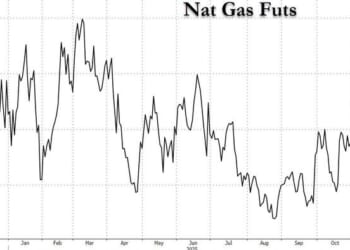
In commodities, WTI crude futures remain above $100/barrel after Saudi Arabia has started reducing oil production, while G-7 ministers are set to discuss a possible joint release of oil reserves. US benchmark WTI crude futures have pared an increase of as much as 31% to about 13% but remain highest since 2022 as the war in the Middle East restricts supply via the Strait of Hormuz. European natural gas futures jump ~18%, prompting a fresh wave of hawkish policy bets that have weighed on the region’s assets.
US economic data slate includes February New York Fed 1-year inflation expectations at 11am. Reports ahead this week include CPI, personal income and spending (includes PCE price indexes), 4Q GDP revision, JOLTS job openings and industrial production
Market Snapshot
- S&P 500 mini -1%
- Nasdaq 100 mini -1.1%
- Russell 2000 mini -1.8%
- Stoxx Europe 600 -1.8%
- DAX -2%
- CAC 40 -2.2%
- 10-year Treasury yield +4 basis points at 4.18%
- VIX +2.3 points at 31.83
- Bloomberg Dollar Index +0.3% at 1207.5
- euro -0.6% at $1.1553
- WTI crude +12.2% at $101.99/barrel
Top Overnight News
- Brent crude rose to almost $120 before paring gains as the Iran war showed no signs of abating and more major Middle East producers cut output. The Strait of Hormuz is still effectively shut. BBG
- Iran’s top clerics have chosen Mojtaba Khamenei, the son of the slain supreme leader, ads his father’s successor in a move that signals the Islamic republic is likely to maintain its hardline policies towards the US, Israel, and the west. FT
- G7 Finance ministers will discuss a possible joint release of petroleum from reserves co-ordinated by the IEA, in an emergency meeting on Monday aimed at tackling the surge in oil prices following the conflict in the gulf. One person familiar said a joint release of ~300-400M barrels, or ~25-30% of the 1.2B barrels held in reserve, is on the table FT
- Trump is weighing the option of deploying special forces on the ground to seize Iran’s near bomb-grade uranium, according to diplomats. He told the Times of Israel that a decision on when to end the war will also involve Benjamin Netanyahu. BBG
- Israel’s strikes on 30 Iranian fuel depots Saturday went far beyond what the U.S. expected when Israel notified it in advance, sparking the first significant disagreement between the allies since the war began eight days ago, according to a U.S. official, Israeli official and a source with knowledge. Axios
- China’s consumer inflation accelerated to the highest in more than three years due to the effects of the Lunar New Year holiday, while producer deflation persisted as weak demand remained a drag on an economy facing stiff external challenges. China’s PPI for Feb came in at -0.9% (vs. the Street -1.1% and vs. -1.4% in Jan) while the CPI rose 1.3% (vs. the Street +0.9% and vs. +0.2% in Jan). RTRS
- Japanese workers’ wages adjusted for inflation rose for the first time in 13 months, a development that may bolster consumer sentiment and support both the Bank of Japan and the government in their pursuit of key policy goals. BBG
- Germany’s industry got off to a surprisingly weak start in January, with orders falling more than forecast and output unexpectedly decreasing, according to statistics office data. January orders declined by 11.1% compared with the previous month on a seasonally and calendar adjusted basis, putting an end to four consecutive increases. RTRS
- SoftBank Group Corp.’s credit default swaps widened and its shares fell after concerns mounted over the viability of the artificial intelligence infrastructure project known as “Stargate,” in which the Japanese conglomerate is involved. BBG
- US FDA is planning to ease some requirements for drugmakers to develop copycat versions of expensive biologic medications: BBG
Iran War
- US President Trump said that Iran would be hit very hard on Saturday and the US would consider targeting areas and groups in Iran that were not previously considered as targets.
- US President Trump said there would have to be a very good reason for the US to deploy ground troops in Iran, while Trump also said that he has ruled out having Kurdish forces go into Iran.
- US President Trump is said to be considering the option of deploying special forces on the ground in Iran to seize its near-bomb-grade uranium, according to Bloomberg, citing three diplomatic sources briefed on the matter.
- US envoys Kushner and Witkoff cancelled their planned arrival in Israel tomorrow, local Israeli reported suggest.
- US may be responsible for the bombing of a girls’ school in Iran that killed 168 people on February 28, according to sources cited by CBS News.
- US President Trump tells Times of Israel in a brief interview that it will be a mutual decision with Israeli PM Netanyahu regarding when the Iran war ends.
- US Secretary of War Hegseth reiterates that US strikes on Iran are only just the beginning during a CBS 60 Minutes interview.
- Iranian President Pezeshkian said on Saturday that he instructed the military not to attack any country that is not striking Iran and apologised to Iran’s neighbours for conducting strikes against them, although reports noted that there were no signs that Iranian forces had stopped striking their Arab Gulf neighbours.
- Iran’s Foreign Minister Araghchi said he is in constant contact with his Saudi counterpart and that Saudi officials said they were fully committed to not letting their territory, water and airspace be used against Iran.
- Iran’s Supreme National Security Council Secretary Larijani said the US must pay for its actions and that Iran would not leave US President Trump alone for killing Supreme Leader Khamenei, while he also stated that Tehran has no problem with regional countries but warned Tehran would continue attacking neighbouring countries if they allow their territories to be used for attacks against Iran.
- Iran picked former Supreme Leader Ali Khamenei’s son Mojtaba as the next Supreme Leader, while Iran’s Revolutionary Guards said they are ready to follow and obey new Supreme Leader Mojtaba Khamenei.
- Iranian Foreign Ministry spokesperson said there is no doubt the US is after Iranian oil resources and aims to weaken and break up the country, SNN reported. When asked about a possible ceasefire, said as long as attacks continue, there is no point in talking about anything but defence and retaliation against enemies.
- Launches from Iran towards Northern Israel and Lachish area were identified, according to Kan News.
- Iran’s Revolutionary Guards say they are ready to follow and obey new Supreme Leader Mojtaba Khamenei.
- Iranian missile attack causes power outage in Tel Aviv, according to ISNA.
- Iranian strike hit a Bahraini desalination plant, according to Semafor.
- Israeli Channel 12 estimates that the battle with Iran may continue for at least five additional weeks, Sky News Arabia reported.
- Israel conducts raid on Kfar Kila in southern Lebanon.
A more detailed look at global markets courtesy of Newsquawk
APAC stocks sold off heavily with global markets rattled after the Iran war entered a second week with no signs of abating and as oil prices surged around 30% intraday on continued disruption, with more producers forced to cut output. ASX 200 slumped at the open with heavy losses across all sectors aside from energy due to the oil price surge. Nikkei 225 suffered intraday losses of more than 4,000 points as manufacturers and exporters suffered from the rising energy costs and shipping disruption. Hang Seng and Shanghai Comp conformed to the broad risk-off mood with sources tempering expectations for a breakthrough in the upcoming Trump/Xi summit, but with the downside in the mainland somewhat cushioned after firmer-than-expected Chinese inflation data.
Top Asian News
- China NPC Standing Committee said it is to revise law on enterprise state-owned assets, will strengthen research on legislation in AI and other sectors, will also revise PBoC law and banking regulation law.
- Japanese Finance Minister Kato said a weak yen is one factor behind rising prices.
- Japanese Trade Minister Akazawa said will make all efforts to ensure all price rises do not affect Japanese people’s lives negatively.
European bourses (STOXX 600 -1.5%) are entirely in the red, coming under significant pressure amid the surge in crude prices, which in turn holds back global growth. The FTSE 100 (-1.2%) is performing the best out of a bad bunch, as oil majors (Shell +1.6%, BP +1.0%) limit losses in the index. The SMI (-1.9%) is the laggard, weighed on by losses in Roche (-4.6%) after Genetech’s persevERA breast cancer study did not meet the primary objective of a statistically significant improvement in progression-free survival. European sectors are completely in the red, with Real Estate (-3.2%) the worst performer as higher yields affect mortgage rates. Basic Resources (-3.1%) the worst performer after JPMorgan cut a number of European mining equities, warning that escalation in the Middle East could weigh on metal prices. Energy (U/C), unsurprisingly, sits at the top of the pile as Brent topped out just shy of USD 120/bbl.
Top European News
- German Industrial Production MoM (Jan) M/M -0.5% vs. Exp. 0.9% (Prev. -1.9%).
- Swiss Sight Deposits (w/e Mar 6). Domestic Banks CHF 428.861bln (prev. 440.5bln), Total CHF 454.072bln (prev. 459.8bln).
- Swiss Consumer Confidence (Feb) -30 vs. Exp. -29 (Prev. -30).
- Norwegian PPI YoY (Feb) Y/Y -9.4% (Prev. -7.8%).
FX
- DXY is stronger this morning and trades at the upper end of a 98.83 to 99.69 range, with the index buoyed by the ongoing Iran war. In brief, there are currently no signs of a near-term resolution of the war, with oil prices surging some 30% at one point. (See the Newsquawk analysis piece at 08:25 GMT for details)
- Further upside for the index could bring into play a cluster of highs from late November 2025, and the key 100.00 mark on the 25th of November 2025; the high that day was 100.26. But, upside may be limited in the near-term as markets count down to the G7 ministers meeting at 08:30 GMT / 12:30 EDT. A source cited by the FT suggested a joint release in the range of 300-400mln barrels, 25-30% of the IEA’s reserves, would be appropriate. For reference, the Ukraine-Russia war led to the IEA releasing some 182mln barrels in March and April 2022. Therefore, a release of 300-400mln barrels could spur some short-term pressure in the USD.
- EUR and GBP both continue to extend losses, as the net-importers of oil face significantly higher energy prices, stoking inflationary fears. As such, money markets now fully price in two ECB hikes in 2026 (vs none pre-war); markets now assign a 50% chance of a hike at the BoE (vs three cuts in 2026 pre-war). Elsewhere on a domestic footing, focus has been on the Baden-Württemberg election in Germany. The Greens won the election, whilst the CDU (29.7%) extended on its standing from the last election; importantly, the SPD fell to 5.6% (prev. 11%), which may stoke fears for Chancellor Merz, and the standing coalition.
- Havens (CHF & JPY) also extend losses, given both are net-importers of energy. For the CHF specifically, Switzerland has voted to introduce individual taxation; the government believes that the reform could bring back around 60k people to the labour force, and boost GDP by around 1%. As for Japan, USD/JPY continues to advance into “intervention territory”, which has been seen around 158-160. However, it can be argued that any attempt to intervene may prove to be inconsequential, as recent strength in oil prices show little sign of abating.
- Antipodeans were initially pressured by the USD strength, but have recently edged slightly higher; the Kiwi is the top G10 performer. Upside which could be facilitated by the firmer-than-expected Chinese inflation data overnight.
Fixed Income
- A bearish start to the week for benchmarks as yields react to energy prices. See the 08:25GMT update for a full geopolitical brief, but in brief, the ongoing Middle East conflict, supply/production disruptions, and no clear signs that the US or Iran are set to back down have lifted crude to above USD 100/bbl, a level not seen since 2022.
- This saw USTs begin the week with losses of nearly 20 ticks, Bunds down by over 90 ticks and Gilts gapping lower by 119 ticks at a 88.80 trough, just above the 88.52 contract base.
- For the UK, the move lifted the 10yr yield to a 4.78% peak, the highest since October 2025 and takes us back to the September 2025 peak of 4.86%. Action that has seen a marked shift in BoE repricing, with markets implying around a 70% chance of a hike by the end of 2025; a marked shift from mid-February, when two cuts were essentially priced. Note, this move will likely moderate as while easing is likely off the cards in the near-term, the UK’s job market situation does not support tightening in the near term.
- Back to USTs, the benchmark is lower by around 15 ticks as it stands, just off a 111-26+ base. The day ahead is focused entirely on energy, with a G7-IEA meeting expected at 12:30GMT to discuss a potential strategic release.
- For Bunds, they are also off worst and by quite some way. Down by around 25 ticks currently, but around 70 off a 125.94 trough. A moderation that has perhaps come as the benchmark finds some modest haven allure given the broader risk tone. Additionally, a rethinking of ECB pricing from the knee-jerk this morning may be factoring; at most, markets priced in two 25bps hikes by the ECB in 2026.
- Bank of Korea is reportedly to purchase up to KRW 3tln of government bonds.
Commodities
- Oil opened in panic mode, with WTI and Brent initially surging above USD 100/bbl and rising 30% to briefly approach USD 120/bbl as the Iran conflict entered a second week and Gulf supply disruptions intensified (full Newsquawk analysis on the feed). Crude prices later pulled back after reports that the G7 will discuss a coordinated emergency reserve release, with some US officials said to favour a 300–400mln barrel draw (~25–30% of IEA system reserves), with the call set to take place at 12:30 GMT (08:30 EDT) amid the US clock change.
- European gas prices surged sharply by some 30% at the open amid Hormuz risk and Gulf infrastructure disruption. Severe tanker interference, soaring war-risk premiums and regional refinery attacks exacerbated volatility. While alternative routes (e.g., Red Sea) may cushion some flows, they cannot fully offset Hormuz volumes. Gas remains sensitive to any reopening signals or reserve coordination outcomes.
- Spot gold softened alongside a firmer USD and broader risk-off liquidation from energy-induced inflationary fears. Central bank demand remains supportive, with the PBoC reportedly extending gold purchases for a 16th consecutive month. Spot gold currently resides in a USD 5,015.04-5,171.95/oz range at the time of writing (vs Friday’s 5,063.21-5,176.63/oz parameter).
- Copper slumped at the reopen as oil’s surge and geopolitical risk dampened cyclical appetite. Prices recovered modestly off worst levels following firmer-than-expected Chinese inflation data, but the tone remains fragile. Persistent energy disruption and USD strength pose downside risks, while any easing in Gulf tensions could stabilise sentiment. 3M LME copper resides in a USD 12,594.00-12,845.00/t range at the time of writing.
- Japan METI orders oil reserve station to prepare for a release, according to Nikkei.
- Japanese Chief Cabinet Secretary Kihara sees crude prices rising further amid the Middle East situation and said no decision on all reserve release.
- Bahrain’s Bapco declares a force majeure.
- G7 is to discuss a joint release of emergency oil reserves in an emergency meeting on Monday, according to FT; call at 08:30 EDT (12:30 GMT).
- Some officials are discussing a potential 300-400mln barrel release, up to 30% of the IEA’s 1.2bln barrel emergency stockpile, according to Kpler’s Bakr.
- China raises its gas and diesel prices by CNY 695 and 670/ton respectively from March 10th.
- Qatar to reportedly push LNG expansion to 2027 following drone attacks.
- EU Commission Spokesperson said European oil and gas supply groups are to meet on Thursday 12th to discuss the Middle East situation.
- US President Trump posted “Short term oil prices, which will drop rapidly when the destruction of the Iran nuclear threat is over, is a very small price to pay for U.S.A., and World, Safety and Peace. ONLY FOOLS WOULD THINK DIFFERENTLY!”.
- Mizuho’s Rochester writes “oil is now on a USD 100/bbl handle and it might be there to stay” with increasing likelihood of USD 130-150/bbl as the Middle East conflict/supply situation persists.
- Kpler’s Bakr posted “Europe has few options to replace lost jet fuel flows from the Middle East following disruption in Hormuz. With Asian markets pulling cargoes eastward and export restrictions tightening supply…”. Cont’d.. “attention is shifting to the Atlantic Basin – particularly the US Gulf Coast and West Africa – though available volumes are unlikely to fully offset the shortfall.”.
Trade/Tariffs
- US Customs and Border Protection told a court it cannot immediately refund about USD 166bln in tariffs deemed illegal by the Supreme Court, as its computer systems, administrative procedures and staffing do not enable it to comply at once.
- US President Trump and Chinese President Xi’s summit is said to unlikely yield a breakthrough, with five people briefed on preparations saying the summit is unlikely to create room for even a limited reset of business and investment ties.
- Chinese Foreign Minister Wang Yi said China and the US could make 2026 a landmark year for sound, steady and sustainable development of China-US relations, while he added that China’s attitude is always positive and open. Furthermore, he stated regarding US President Trump’s planned visit to Beijing, that the agenda of high-level exchanges is already on the table and that both sides now need to make preparations accordingly.
- Japanese Trade Minister Akazawa said Japan requested that the US exempt it from the planned tariff increase from 10% to 15%, following a meeting with US Commerce Secretary Lutnick. It was also reported that Japan is said to be considering JPY 15tln for a second US investment project and that the government approached Japan Display (6740 JT) about operating a USD 13bln cutting-edge factory in the US as part of the USD 550bln investment package.
- South Korea’s Industry Minister Kim said the US is unlikely to impose the previously threatened 25% tariffs on South Korea if the Korean parliament move swiftly to ratify the investment legislation in the week ahead.
d
Loading recommendations…