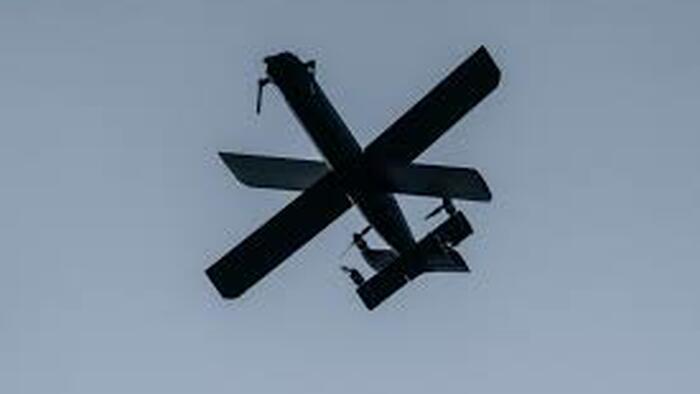
A major new trend which has been heating up on Europe’s periphery over the last years of war in Ukraine has been the use of suicide drones and drone swarms, which have proven effective as well as frightening for anyone on the receiving end.
This has resulted in more European countries making it a priority to invest in this type of warfare, as the Ukraine battlefield has demonstrated that this relatively cheap weaponry can inflict devastating costs and destruction on an enemy. There’s also lately been a phenomenon of European countries like Denmark, Poland, and Germany alleging an increased number of ‘mystery’ drone incidents where their airspaces get breached.

Germany’s parliament on Wednesday approved the first €540 million tranche to procure the Bundeswehr’s own suicide drones, as Berlin is racing to integrate loitering munitions into its force structure.
The broader procurement framework was initially projected to reach a whopping €4.4 billion over the coming years. This sudden reversal of German ‘neutrality’ and willingness to go to opposite extremes with massive spending on defense has been a trend spurred on by fears of ‘Russian aggression’ against the continent.
However, the Bundestag’s budget committee reportedly capped the program at €1 billion per supplier, according to German news agency dpa – an effort to impose some fiscal guardrails amid rapid militarization.
German drone startups Helsing and Stark Defence will be among the first significant beneficiaries to the newly greenlit program. Underscoring the low-cost nature of the drone technology, Helsing’s units reportedly carry a price tag of about €44,000 apiece before taxes, and the Stark systems run significantly higher, closer to €80,000 per drone.
The Helsing drones have already been battle tested in live combat:
Feedback from Ukraine reportedly cites the HX-2 as “highly economical,” a view attributed in part to the company’s decision not to profit from deliveries to Ukrainian forces.
Currently, Helsing’s Resilience Factory (RF-1) in southern Germany produces up to 450 HX-2 units per month. The facility has the capacity to scale production to 1,000 units monthly with additional staffing. Plans are also underway for a second factory, which could increase output to approximately 2,500 units per month.
According to company specifications, the HX-2 has a flight range of up to 100 kilometers and a maximum approach speed of 220 km/h. It weighs up to 12 kg and can be equipped with a 4 kg payload, allowing it to target armored vehicles or fortified positions.
Several thousands of these drones from both firms are expected to first be deployed to Germany’s NATO brigade in Lithuania.
The NATO defense establishment is still pushing the idea of a “drone wall” protecting Europe:
Former CIA Director Petraeus: When about 20 drones violated Polish airspace, Warsaw didn’t call Brussels or Washington, it called Kyiv.
Ukraine is the most advanced in building a “drone wall,” showing how to defend vast front lines.
— Tymofiy Mylovanov (@Mylovanov) February 11, 2026
Germany is reorganizing aspects of its army to integrate drone units, responsible for deploying suicide drone swarms against enemies in the battlefield.
Loading recommendations…