Submitted by Thomas Kolbe
The year 2025 ends for the slap-prone German Chancellor with a resounding smack in Brussels. After the failed raid on Russian assets at Euroclear, Berlin now turns its gaze to the hoped-for comeback of the German economy. Yet here too awaits the next bitter realization for naïve statisticians: wealth cannot be printed with debt.
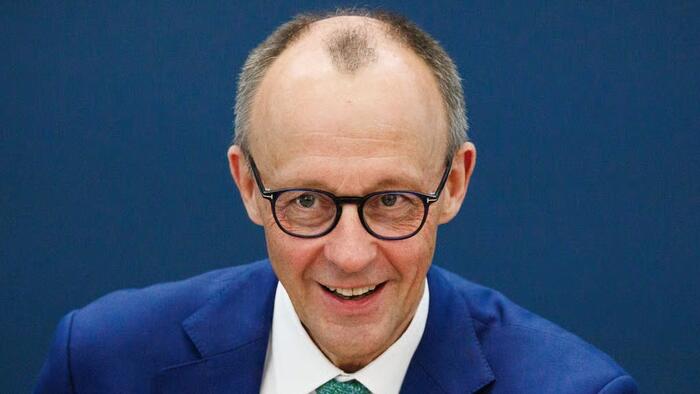
Whether the Chancellor finds any sense of fulfillment—or even joy—in his current job is difficult to discern. Not that Friedrich Merz, with his numerous political sleights of hand, has preserved any claim to professional happiness. And yet curiosity remains: what must the psyche of a man be like, who for nearly eight months has been led by social-democratic buccaneers such as Lars Klingbeil and Bärbel Bas by the nose through the political circus—exposed, humiliated, and repeatedly made ridiculous?
March into Command Economy
Merz’s grandiose promises of cutting bureaucracy, unleashing the economy in a vitalizing fall of reforms, and his bizarre economic patriotism à la “Made for Germany” evaporate at the slightest breeze of intra-coalition opposition. It reads like a naive comedy: the CDU and SPD camouflage reform policies, only to steer the central plan of transforming society and the economy into a green command economy with a military-industrial complex through increasingly rough seas to a safe harbor. The good old Erich—what would he have thought of what the old “FRG” has become?
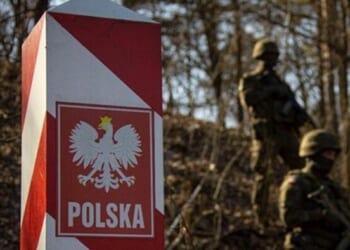
The ongoing public humiliation of former BlackRock breakfast director Friedrich Merz reached a temporary peak on Friday in Brussels. At the EU summit, he received a resounding slap from the small Visegrád coalition led by Hungarian Prime Minister Viktor Orbán, ultimately preventing the expropriation of Russian assets at Euroclear.
For those who understand the significance of Euroclear and even vaguely grasp what it means to damage a pillar of the trust-based international financial market architecture, a sigh of relief was inevitable.
What threatened here was nothing less than a reckless kick against a system’s foundation—whether from ignorance, political incompetence, or an almost manic denial of reality regarding the long-lost war in Ukraine. Panic replaces reason, EU-Europe digs deeper into the spiral of debt and recession, whose accelerating spin now lifts once-prosperous cities like Stuttgart and Wolfsburg off their fiscal saddles.
In Brussels, Merz and his allies were shown a boundary—unmistakably. Thus, the circle closes on a disagreeable year 2025 for him. And everything suggests the coming year will offer little cause for optimism.
Toward the Sunset
The German economy alone ensures that 2026 will seamlessly continue the disaster of 2025. An honest economic assessment requires a willingness for an honest inventory. The state’s share of German GDP has long surpassed the magic mark of 50 percent. New borrowing next year—adjusted for the federal government’s accounting tricks—will amount to roughly 5.6 percent.
Merz’s relentless fight against the debt brake now forces even Bundesbank economists to a sober assessment. For the coming year, they forecast an official budget deficit of 4.8 percent—a figure indirectly confirming our estimate of actual new borrowing.
If one views the state as a consumer filling its deficits with a debt printer, then statistically reported zero growth means nothing more than the private economy—producing goods and services for real consumers—is shrinking dramatically.
To counteract this economic erosion, the federal government, in addition to its already high-deficit budget, channels special funds into two artificial economies: the green disaster economy and the freshly revitalized war sector. Over €50 billion per year is borrowed on the credit market for this purpose.
It is this mixture of economic ignorance, historical oblivion, and near-childlike faith in miracles that leaves one speechless. One can safely assume that no cabinet member comprehends that only capital saved from the economic process and transformed into investments on a free market creates wealth.
The Merz–Klingbeil duo is building a bubble economy ideologically committed to the green transformation and geopolitically following a historically fatal idea: the growth of a war economy.
The Silent Erosion of the Real Economy
This policy may further swell the public sector. Merely distributing these massive debt and credit programs puts tens of thousands to work at the expense of the productive population. The high regulatory tempo in Brussels and Berlin has forced the German economy to create roughly 325,000 new administrative positions over the past three years—solely to handle the flood of documentation and regulatory requirements. Paper piles upon paper: absurd, Kafkaesque, and economically destructive.
The state thus effectively outsources its own bureaucracy and distorts statistics on multiple levels. While administrative apparatuses grow, hundreds of thousands of industrial jobs have already been lost. The consensus estimate for economic growth in 2026 of just about one percent is the true disaster Berlin must now digest.
It matters little how much credit the state withdraws from the capital market or which incentives it creates to direct private capital into industrial wastelands—green steel or wind energy. In this environment, the private sector will shrink by at least four percent next year.
The Turning Point
For Friedrich Merz, this economic catastrophe is no longer merely a domestic political time bomb. If the downward spiral continues, media spectacles, ritualized bashing of entrepreneurs, hollow site patriotism, and endless “persevere” slogans will not suffice to explain to citizens why their exsanguination through taxes and labor markets continues to rise while no one addresses the causes.
At its core, this crisis is about correcting two fundamental ideological misdirections. The moment will come when Germany must abandon the leftist illusion of permanently acting as the world’s social office. This cut will coincide with the end of destructive climate socialism, which is either bankrupting German industry or pushing it into the arms of rationally managed locations.
The Visegrád group delivered a demonstrative kick to Merz’s shins. But the real dynamics extend further: a powerful opposition of conservative parties and governments—from Hungary, the Czech Republic, Slovakia, and Italy—is forming. They will eventually behead the climate-socialist Medusa of central planners. Yet, given the stiff headwinds and fierce resistance of Brussels’ powerful core, the birth of the liberating European Perseus may be a long and difficult labor.
Loading recommendations…