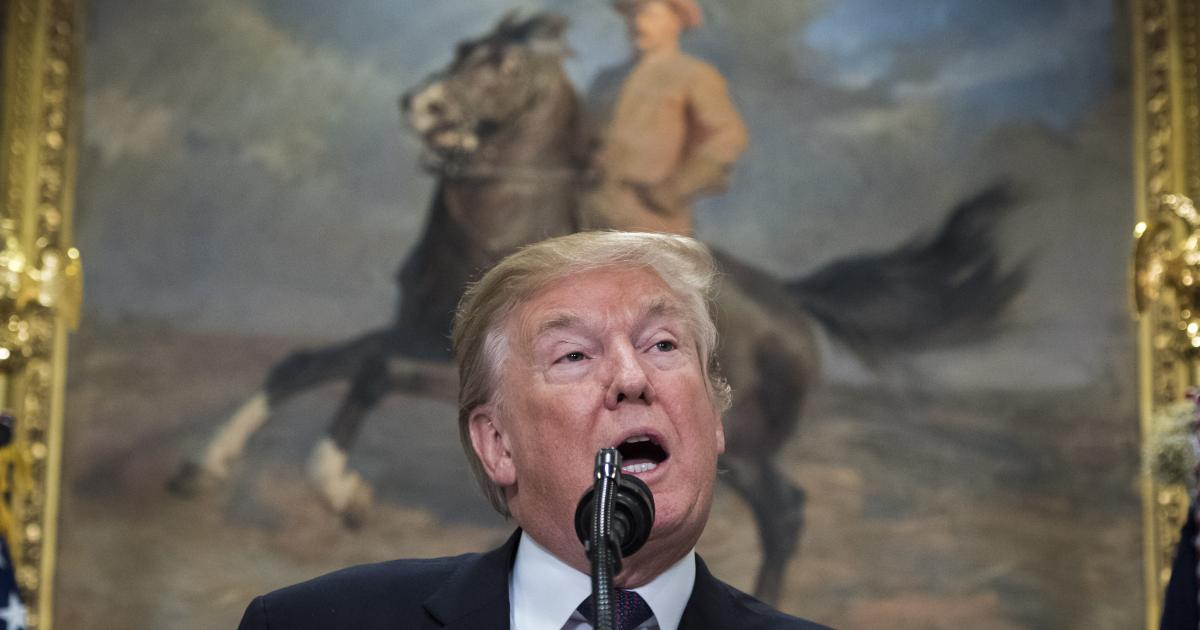
In its recent coverage of the Trump administration’s “total victory” over the Obama-era endangerment finding regarding carbon dioxide and other greenhouse gases, the New York Times chose a striking photograph: President Trump and OMB Director Russell Vought standing before a painting of Theodore Roosevelt on horseback.
Roosevelt, the great conservationist, reminds us that the Left’s climate change hysteria is the opposite of truly stewarding our natural resources well.
Like Mr. Trump, Teddy was a New York Republican who bucked his party’s establishment. His energetic leadership awoke the nation from its Gilded Age malaise, and his Rough Rider confidence defined the dawn of the 20th century, just as Mr. Trump’s charisma has come to define this century.
Both men can be defined, first and foremost, by their willingness to take action where others would not. Reversing the endangerment finding, which will become one of the most consequential deregulatory acts of the modern era, is the latest example of this similarity.
>>> Cutting Red Tape on America’s Public Lands
For years, the Obama-era determination that greenhouse gases endanger public health has served as the legal cornerstone for sweeping federal regulation. Its reach has been immense, shaping energy markets, constraining industrial growth, and imposing compliance costs of more than $1 trillion across the economy.
As Heritage and many others have demonstrated, these burdens fall hardest on working families and industrial communities—places where affordable energy is not a luxury but a necessity.
Supporters of the finding respond to this overwhelming economic evidence with a simple claim: Environmental protection demands it. Climate change leaves no alternative.
Of course, this isn’t reality. The United Nations climate models used to justify the endangerment finding overestimated warming trends, and new data show that the moderate rise in CO2 levels we are currently experiencing can actually produce many benefits.
The deeper truth is that this debate has never been merely scientific or economic. It is philosophical—rooted in rival visions of man’s place in the natural order.
One view sees humanity and nature locked in perpetual conflict, with civilization itself suspect. The other view is older, deeper, and more consistent with the Western tradition. It sees man not as nature’s enemy but as its steward. Civilization and creation need not be adversaries. Rightly ordered, they flourish together.
This is where Theodore Roosevelt again enters the picture. Roosevelt was no enemy of development, believing firmly in American growth, industry, and national strength. But he was also the nation’s great conservationist, setting aside nearly 230 million acres of pristine American wilderness, creating five new national parks, and convening the first-ever conference of governors to discuss the conservation of natural resources.
>>> Reversing the EPA’s Endangerment Finding on Greenhouse Gases
In his opening address to governors, he declared: “As a people we have the right and the duty, second to none other but the right and duty of obeying the moral law, of requiring and doing justice, to protect ourselves and our children against the wasteful development of our natural resources.”
For almost two decades now, the endangerment clause and the Left’s climate hysteria have prevented the American people from enjoying that right or exercising that duty.
We have allowed radical environmentalists to frame the debate as a stark and unforgiving choice between prosperity and preservation. But this is a false binary.
A free and self-governing people can pursue energy abundance, economic vitality, and responsible conservation at once. Indeed, history suggests that they must.
Saying good riddance to the endangerment finding will not only reduce regulations and unleash our energy sector, but it will also give our whole nation the opportunity to once again become serious stewards of our country’s great natural wealth.