Large additional subsidies for Obamacare plans enacted during the Biden administration are expiring at the end of this month as Republicans and Democrats remain divided over both fiscal considerations and the issue of taxpayer funding of abortion.
This week, four House Republicans joined all House Democrats to sign a discharge petition that will force the House to vote in January on a Democratic proposal to simply extend the enhanced Affordable Care Act (ACA) subsidies for three years. But that extension was already blocked in the Senate earlier this month. Both that Democratic proposal and a Republican alternative fell nine votes shy of the upper chamber’s 60-vote hurdle.
The Republican alternative in the Senate would spend less than the Democratic proposal and subsidize ACA beneficiaries primarily by depositing federal funds in Health Savings Accounts. It would also apply the Hyde Amendment, which prohibits federal funding of abortion except in cases of rape, incest, and when the life of the mother is endangered, to those the new funds for Obamacare enrollees. That issue could be a major sticking point in January.
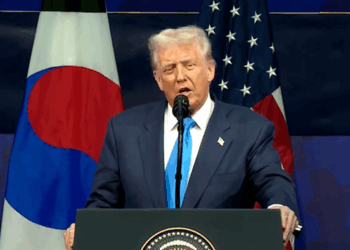
Missouri GOP Sen. Josh Hawley, one of four Republicans who voted last week to advance the Democratic bill to extend the enhanced subsidies for three years, said this week that he thought the issue of abortion funding could be solved with an executive order from President Donald Trump. Such an order enforcing a “separate billing rule” for plans covering elective abortions, he said, would be a “pretty good” solution.
The issue of preventing taxpayer funding of abortion in Obamacare has “always been an enforcement challenge,” Hawley told reporters on Tuesday. He pointed to a rule the Trump administration issued in December 2019 that would have required separate transactions to pay premiums for plans that covered elective abortions (rather than merely providing an itemized receipt for the so-called segregated abortion funds, as the Obama administration had required). “HHS could put that back in place that would enforce existing law,” Hawley said. “That was a pretty good enforcement mechanism.” The 2019 rule issued by the first Trump administration was blocked by federal courts and was never enforced before Trump left office.
But the largest pro-life group in the United States rejected Hawley’s idea.
Marjorie Dannenfelser, the president of Susan B. Anthony Pro-Life America, said Hawley was simply wrong—the problem was the text of the law itself and not merely its enforcement. “Obamacare’s separate abortion‑payment scheme is nothing more than an accounting gimmick—and enforcing it simply means enforcing a gimmick,” Dannenfelser said in a statement to The Dispatch. “It remains an inadequate and unacceptable proposal because it fails to address the core problem: federal tax dollars continue to flow to health plans that cover abortion on demand.”
Dannenfelser’s statement echoes the arguments that leading pro-life groups and members of Congress put forth when Obamacare was making its way through Congress in 2009 and 2010. Obamacare “was the first real break with the Hyde Amendment,” Yuval Levin of the American Enterprise Institute told The Dispatch last week. “There’s a long-standing principle that taxpayer money doesn’t pay for abortion, and that had been established and stood in place for the entirety of the Roe era, and so to violate that principle really was a big deal.”
Dan Lipinski, a former Illinois congressman and pro-life Democrat, was the subject of an intense lobbying campaign by the Obama administration to vote for Obamacare in 2010. “The pressure was really on from the highest levels,” Lipinski told The Dispatch. “President Obama tried to describe to me how [under] the Senate bill … abortion wasn’t being funded by taxpayers. And I told him he was wrong about what was in the Senate bill,” Lipinski said. He voted to pass the 2009 House Obamacare bill that included the Hyde Amendment but opposed the Senate bill, which did not include Hyde, when it came up for final passage in 2010.
The Senate bill that became law allowed insurers to offer plans subsidized by federal tax dollars to cover elective abortions, unless such abortion coverage was prohibited in a state by a new law (states may also require abortion coverage). When Obamacare plans covered elective abortion, those plans were supposed to segregate a small surcharge of premium payments to fund elective abortions. In Lipinski’s view these segregated funds were just an “artificial separation” of fungible money. “It just made no sense whatsoever except to be a political fig leaf,” Lipinski told The Dispatch. “Even if it’s enforced, it still doesn’t really solve the issue.”
Back in 2010 Lipinski was part of a small group of pro-life Democrats, led by Michigan Rep. Bart Stupak, who insisted on attaching a Hyde Amendment to any federal health care bill. Stupak repeatedly said that the legislative proposal in the Senate bill to segregate abortion funds was “unacceptable” and a “phony” solution, but under intense pressure from the Obama administration Stupak and every member of his group—except for Lipinski—ended up voting for for the Senate bill when it came up for final passage in the House. Stupak said he would vote for the bill because Obama had agreed to sign an executive order saying that the Hyde Amendment would apply to the law, but that executive order was “fairly meaningless,” Lipinski said, because it couldn’t alter the text and structure of the law.
The issue of taxpayer funding of abortion in Obamacare has not gotten much attention over the past 15 years because the subsidies originally enacted in 2010 are automatic and mandatory under permanent law—the U.S. Treasury sends those subsidies to insurers even during a government shutdown. But the issue of taxpayer funding of abortion has cropped back up now because it takes an affirmative vote of a Republican Congress and approval of a Republican president to do anything about expiring enhanced subsidies.
That Hawley—a Republican who, until now, had impeccable pro-life credentials—seems to be volunteering to reprise the role of Stupak in 2025 is another sign of just how desperate many Republicans are to surrender on the issue of Obamacare.
But pro-life groups are still putting up a fight. “This separate‑payment scheme was unacceptable when so‑called ‘pro‑life’ Democrats caved and embraced it as a fig‑leaf solution during the original Obamacare debate more than 15 years ago,” Dannenfelser told The Dispatch, “and the prospect of its enforcement as a solution under a Republican administration is no more acceptable today.”