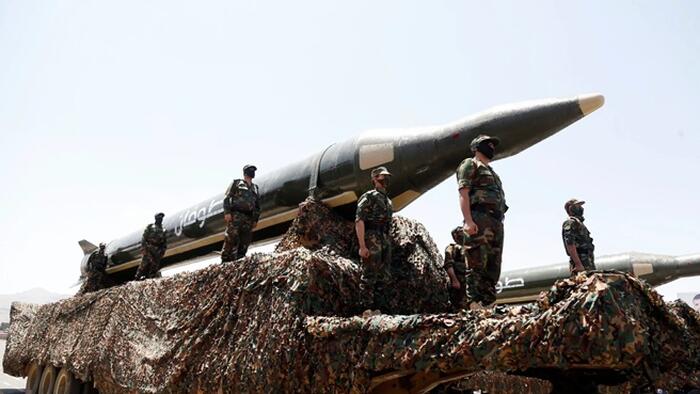
Amid several waves of missile strikes out of Yemen onto Israel from Tuesday into Wednesday, the Iran-aligned Houthis have made it clear they are coordinating with both Tehran and Hezbollah.
Yemeni Brigadier General Yahya Saree said the Houthis have carried out several missile launch operations on “sensitive targets” in “southern occupied Palestine”. The statement underscored this was conducted “in continuation of supporting and backing the fronts of Resistance” and as part of a “religious, moral, and humanitarian duty” toward allied forces in Iran, Iraq, Lebanon, and Palestine – specifically saying there was coordination with Iran.

The Houthis first announced last week they would be joining the war, but it has been the last 24 to 48 hours that Israel has really been subject of some of the biggest inbound rocket attacks in weeks.
This is because not only have Houthi forces stepped up attacks alongside Iran, but Hezbollah is increasing them too:
Four people were lightly injured as Hezbollah fired around 130 rockets at northern Israel on Wednesday and Thursday, the start of the Passover holiday, as the military struck dozens of sites in Lebanon belonging to the Iran-backed terror group.
The bombardment as Israelis celebrated the first two days of the Passover festival sent hundreds of thousands of people into shelters, as Iran continued to also launch missiles at the country, including the north.
The Houthis have very powerful, and longer-range rockets (compared to Hezbollah, apparently) – which were supplied (or assisted in terms of development) by Iran.
The Houthis are warning of more missile waves to come so long as Iran is attacked, saying the US-Israeli strikes “will only push free Yemen toward further escalation.“
One conflict monitor has compiled some recent examples of the tight Iran-Hezbollah-Houthi coordination this week:
The coordination seems to have been primarily the timing of the launch, as Iranian missiles were launched at Tel Aviv and Bnai Brak at the same time, wounding 14, and Lebanon’s Hezbollah fired rockets at the northern city of Kiryat Shmona, announcing it as the start of the “Khaybar 2″ operation in defense of Lebanon.
The Houthis had previously targeted the resort city of Eilat with missile strikes, and there were missiles that hit that city, though Israeli media has continued to maintain that all the missiles and drones fired by the Houthis were successfully intercepted, so it’s not clear where the Eilat missile actually came from.
Footage shows an Iranian ballistic missile hitting central Israel.
No injuries. pic.twitter.com/u7BAH5CVLw
— Open Source Intel (@Osint613) April 2, 2026
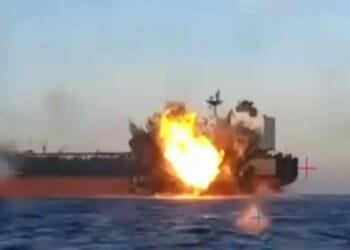
A big lingering uncertainty regarding Yemen’s role in the conflict is whether the Houthis will start attacking Red Sea shipping once again. It has already threatened to, and such an escalation would add to deep uncertainty and rising prices in oil and energy markets.