Europeans have long had a special fascination with America’s grand experiment in modern republicanism. Many reflections on the subject have come from our English cousins. But the greatest foreign commentary on the meaning of our nation remains Democracy in America (1835-40) by the young French aristocrat Alexis de Tocqueville. One question that still arises about this classic text is who Tocqueville intended his audience to be: Did he write primarily for his French countrymen, to persuade supporters of the Old Regime that democracy was not nearly as chaotic as its critics insisted? Or did he intend the book mainly for his American readers, to warn them about the downsides of their democratic way of life?
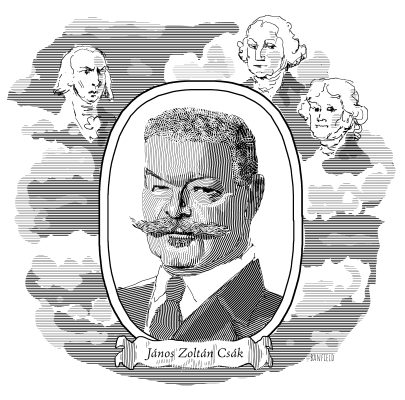
Similar questions about audience arise in The Genius of America by János Zoltán Csák, whom one reviewer hailed as “A Hungarian Tocqueville.” Since 2022, when his book first appeared in Hungary, Csák has served as minister of culture and innovation in the government of Prime Minister Viktor Orbán. That pairing—“culture and innovation”—underscores the paradoxical nature of both Csák’s office and his book. On the one hand, he is dedicated to preserving those traditions that shape Hungary’s distinctive culture; on the other, he is looking to America for innovative ways to improve the Hungarian way of life. For Csák, though America offers a model of risk-taking and entrepreneurial daring that Hungarians would do well to emulate, it also exemplifies the moral decline that occurs when a country neglects its most valuable institutions. Unfortunately, Thomas Sneddon’s English translation, which came out in 2024 during the waning days of the Biden Administration, sends mixed messages to both its Hungarian and American readers.
The foreword by Patrick Deneen sets the stage. Deneen, one of America’s best-known critics of liberalism, sees in Csák someone who understands the limitations of the Enlightenment’s political principles. Whereas America’s first settlers precariously balanced classical and liberal, Biblical and rational perspectives, in time the country surrendered fully to the Enlightenment project, charges Deneen. He endorses Csák’s argument that the Puritan John Winthrop’s “beautiful” understanding of liberty, as the freedom to do what is morally right, was gradually replaced by an individualistic understanding of liberty as doing what one wants. Deneen shows how Csák contrasts Winthrop’s idea of liberty with what Csák calls the “theological” strain of thought inherent in Manifest Destiny, which encouraged a belief in progress and human perfectibility while discounting the injustices done to Native Americans and slaves. Accordingly, Deneen can see why Csák finds America’s ruthless dispossession of the Native Americans somewhat similar to Nazi and Soviet assaults on Hungarian culture. Deneen points out the irony: without the American expansion fueled by Manifest Destiny, the United States would not have been able to defeat the Nazis and bring down the Soviet empire. Good and evil are inextricably bound up together.
***
Despite his admiration for John Winthrop, Csák sees the current division in the United States as a battle between what Deneen calls the “Puritan, Jacobin, Marxist, Left-liberal” attitude on one side, and the “Biblical, Classical, Liberal-Republican Conservative Worldview” on the other. At first sight, lumping the Puritans with those on the left is puzzling—until one recalls that the Puritans, too, thought they were redeeming the world. Csák’s main point, however, is that both sides are now more alike than different. The American ruling class today shares a common “materialistic, individualistic, and liberationist ethos.” Neither side cares to strengthen those institutions that promote the kind of character required to preserve America’s ideals of freedom, justice, and equality before the law. Instead, conservatives are fixated solely on the virtues of the free market, while liberals clamor for a redistribution of the country’s material resources. Citing the findings of the “Future Potential Index” (compiled in Hungary), he concludes that Americans are not living up to their potential in terms of “attachment and belonging,” “care and generativity” (by which he means for the next generation), or “health and a sense of balance.”
Csák begins with a strange story about visiting a museum in Connecticut featuring Indian maps and drawings. He asks the docent if there are still any Indians in the neighborhood. Her evasive reply, that the Indians had “a different idea of the future,” gives him his storyline about the different ways in which Indians and Americans perceive time and space. Starting with Manifest Destiny, Americans have looked only to the future, whereas Indians respect their ancestors and the lands where they are buried. Although it was “necessary” and therefore excusable for the Americans to expand across the continent, the outrages committed in the process cannot be morally justified. Still less can they be divinely sanctioned. This train of thought leads Csák to wonder if, by the start of this millennium, the libertarian view of freedom had reached its limits. He notes the country’s declining social cohesion, its deteriorating security after 9/11, its failure to extend democracy abroad, and the threats posed to democratic institutions by a bloated bureaucracy and shadowy interest groups. These woes have been compounded by the dizzying oscillation in public policy as the nation lurched from Barack Obama, to Donald Trump, to Joe Biden. One cannot help wondering what Csák would have to say about Trump’s return to the White House.
***
As the book’s title suggests, Csák seeks to recover the “permanent, enduring intellectual phenomenon and spiritual heritage” that gives America its “particular national genius,” or character. Csák devotes one chapter to the Founding Fathers, detailing the ways in which they combined classical and Biblical ideas with those of the Enlightenment. Accordingly, he emphasizes that the rights enshrined in the Declaration are bestowed by the Creator, but he says very little about the rights themselves. This is a serious omission. The genius of America does not revolve around the two poles of Puritanism and Manifest Destiny. In seeking to recover our enduring intellectual heritage, one would expect at least some discussion of what the rights to life, liberty, and the pursuit of happiness mean to Americans. The Constitution, too, receives short shrift. Perhaps thinking of the European Union, Csák emphasizes that the Constitution created a federal system which allowed the states to preserve their traditions and ways of life. He is too polite to point out that Southern “traditions” included slavery, arguing instead that the Constitution’s much-heralded institutional arrangements are insufficient on their own to create a people.
What then does create a people? As a European conservative, Csák focuses on the importance of tradition in supplying a country’s ideals. This makes his ensuing appeal to Abraham Lincoln especially odd—until we see that he focuses almost entirely on Lincoln’s increasing tendency to invoke religious imagery in his speeches and messages during the Civil War. He has almost nothing to say about the natural rights tradition that the founders, Thomas Jefferson in particular, made central to the American genius. This was the tradition that Lincoln patiently explained to his countrymen in almost every speech he delivered from 1854 to the outbreak of the Civil War. If one is looking for a unifying intellectual idea, it is impossible to ignore the principles Jefferson set forth in the Declaration.
Csák completed the book in 2022, just as President Joe Biden was super-charging his DEI initiative. Accusations of racism were routinely hurled at anyone who dissented from the reigning orthodoxy. It was thus unfortunate that Csák chose that moment to focus on the historic wrongs done to Native Americans and African Americans. Csák makes some interesting arguments about the different ways in which Indians and Americans understood time and space, citing President Andrew Jackson’s December 1830 Message to Congress, in which Jackson noted how Americans had left everything behind to start over in the New World. Time and space, however, do not explain slavery, nor do they fully explain the different worldviews of the Americans and the Indians. Some of these tribes were peaceful and made a good faith effort to become civilized, which makes it particularly disgraceful that their treaties with America were not honored. As Tocqueville noted, though, other tribes were much closer to the early European aristocrats, whose values were those of a warrior culture. It simply was not possible for these two very different ways of life—the warrior ethos and the republican ideal—to exist side by side. This does not excuse America’s failures, but it does complicate the picture. So does the fact that—as Theodore Roosevelt pointed out in his account The Winning of the West—conquest, dispossession, and in some cases annihilation of native peoples have been constants throughout recorded history.
***
The book winds down after this chapter. Csák extols America’s material successes while insisting that something is missing. But he does not return to his earlier search for an intellectual and spiritual guiding principle. He turns instead to the “mediating institutions,” which, he notes, have traditionally passed on “the spiritual heritage of the American genius to the next generation.” These are the family, the schools, and the churches. Csák cites statistics to show that America spends a much greater percentage of its resources on caring for the elderly than it does on supporting its children or addressing its declining birth rates. It is not clear what would reverse this trend. Hungary’s heroic efforts to encourage childbearing have not met with great success. Csák closes his argument by once again citing de Tocqueville’s reflections on whether the American republic will last. Curiously, however, he leaves out the most important part. Tocqueville warns that republican principles will “disappear without return only when an entirely new people has taken the place of the one that exists in our day.” A new people, let in by the millions, unschooled in how republican government works (and aided by activist judges), will support changes in the laws that will in the end undermine attachment to the Constitution. Given Hungary’s strong stance on policing its borders, this is a missed opportunity.
George Friedman, a Hungarian-born, naturalized American citizen and accomplished political philosopher, closes out the book with a short afterword. Friedman offers a very different view of his adopted country—one closer to that of Thomas Hobbes, and possibly Friedrich Nietzsche, with a dash of Ayn Rand on the side. After earning his doctorate, Friedman abandoned academia and reinvented himself very successfully as a geopolitical strategist. This is Friedman’s America: the land of opportunity for those who overcome fear and take risks. He reminds his friend Csák that slavery was introduced into America by Europeans and that the largest slaveholders were the Portuguese, who established Brazil. The same goes for the Indians, who variously allied themselves with the French, the English, and the Spanish as they vied for supremacy in the New World. And what happened, asks Friedman pointedly, to the previous occupants of the Carpathian Basin in Romania that Hungarians now occupy? Friedman insists that Americans have accepted the guilt and responsibility for their wrongs, which is something very few peoples—including Europeans—have done.
With its complementary and contrasting points of view, this short volume invites Americans to re-engage with how our European friends see us. Csák may not quite be the “Hungarian Tocqueville,” but he still gives us plenty to think about.