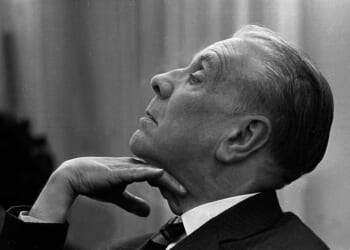
In the 1920s, the liberal consensus was shattering across Europe. In the wake of the Great War, Bolshevism was on its murderous march across the East and rightist ideologies like Italy’s Fascismo and Germany’s National Socialism were duking it out with communists. A young philosopher in his 20s had already experienced the whole gamut of extremism: Aurel Kolnai was a Hungarian Jew, and by early adulthood he had lived through the Bolshevik revolution and the violent dictatorship of Béla Kun. And he was ultimately forced to flee Hungary to escape right-wing violence against Jews.
Kolnai arrived in Vienna in 1920, a time of intellectual ferment. Already tutored by the depredations of political radicalism, he was immediately disgusted by the emerging Nazism in Germany and Austria. His essays against the Nazi regime were some of the very earliest published, and he carried on a sustained critique for roughly the next 15 years, including after his escape to North America. In the 1920s and ’30s, as a convert to Catholicism, he published under the name Van Helsing, after the scholarly Catholic vampire hunter from Dracula.
The 1920s were an era in which everything seemed up for grabs. Critics left and right declared the liberal consensus dead. But Aurel Kolnai stood in the center, not falling to the right or to the left of extremism. As certain voices today sing tunes from the hymnals of a century back, it is worth looking at this forgotten philosopher, who fought for human dignity in the face of ideology. The fascists and communists of the 1920s were not all crazed lunatics; many of them were simply conservatives or progressives who took the wrong road, who, step-by-step, were desensitized to their own radicalization. Kolnai shows us how we can retain our balance.
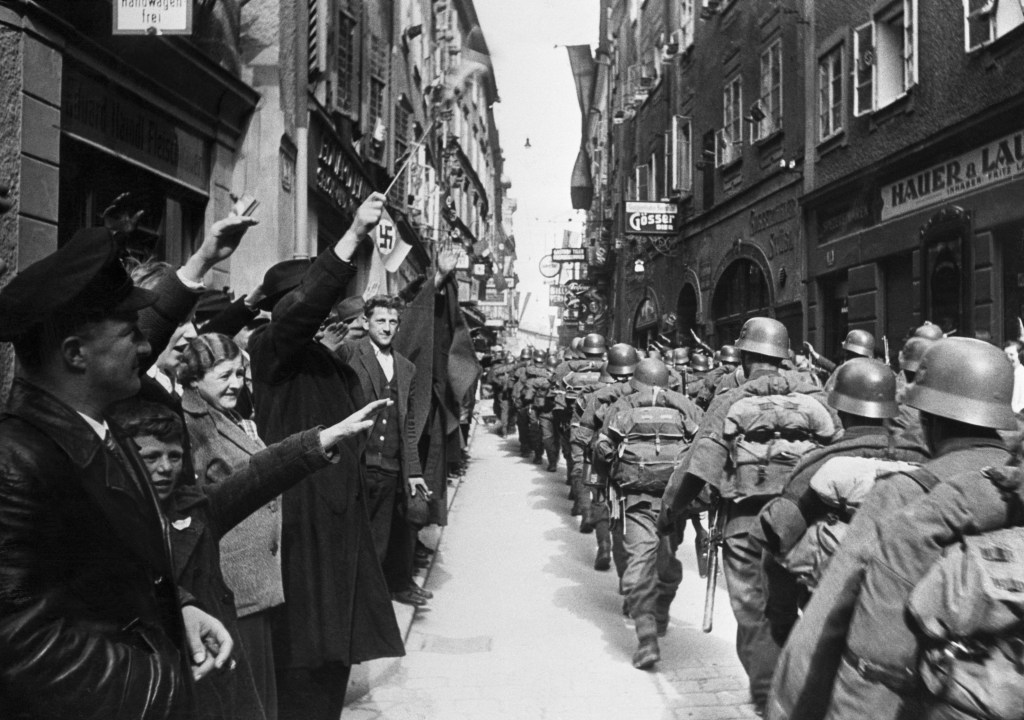
In the years leading up to the Second World War, a thrilling new air was blowing across central Europe. The vanquished powers of World War I had spent more than a decade in defeat and shame. An incompetent liberal regime ruled postwar Germany, and Germans were ready for something new. Thus came a movement born from the minds of philosophers and poets: National Socialism.
The coalition that began to gather around this label was a diverse one. It contained neo-pagans, followers of the philosopher Friedrich Nietzsche, quasi-monarchists, and conservative Christians. They were united, above all, by hatred of the liberal world order.
In 1938, Kolnai wrote the first real critical study of Nazi ideology: The War Against the West, published in English through a London press. The book investigated the Nazi ideas of the common good, the state, and the human person, and Kolnai began with Nazi philosophers’ critique of liberal individualism. Not unlike postliberals today, “The philosophers and prophets of Nazism are more assiduous in heaping their obloquies on ‘individualism’ than on any other feature of the West,” Kolnai wrote. He quoted the Catholic Nazi theologian Michael Schmaus as an example of this view: “In Liberal society, men did not stand by one another as an existential community: they were so many individuals, equal, of equal rights, and self-subsistent who—rather like stones in a heap, not like the members of a body—formed unions by free decision and contract.”
The Nazi motto, as printed at the head of the original party platform, was “common good before individual good,” and this was to be heard on the lips of Hitler’s brownshirts across Germany. The liberal idea of “rights” was, for them, a harmful fiction that supposed the individual subject had personal claims that trumped those of the nation as a whole. Liberalism, by placing a priority on individual liberty, had created a society of conniving, greedy businessmen. It served “The odious ‘money-lenders’ and ‘international men of finance.’” (One can hear the subtle antisemitism here, but the bogeyman is sufficiently vague, Kolnai points out, to serve as a universal culprit.) All of this trouble grew from the stem of the liberal philosophy that “all men are created free and equal”—the very sentiment at the heart of the American form of government.
Just as communism takes the notion of equality to a murderous and anti-human extreme, so fascism takes the idea of authority, nation, and order to a violent and destructive end.
The rejection of liberal democratic norms and institutions felt transgressive and exciting. The idea of struggle, combat, and of dedicating oneself to a great national cause proved attractive to new fascists. “Fascism,” wrote Kolnai, “has a keen consciousness of opening out a ‘new era,’ and of closing the ‘outworn epoch of liberalism’ … it glories in the paradoxical attitude of shaking off liberty as though it were shaking off oppressive fetters. A new youth is breaking the bonds of dried-up formulas and hoary ideas.” For Kolnai, however, what attracted the young to fascism was not so much any real practical concern, nor any really coherent philosophy. It was, rather, a kind of boredom with the peace and orderliness of liberal times. Distinctly lacking in liberal societies is the kind of enmity, battle, conflict, and esprit de corps that a conquering master-nation can provide.
Carl Schmitt, the Nazi jurist, argued that all political life was based on this kind of struggle. A nation only exists, he thought, to the extent that it can identify a clear and distinct enemy and unify itself against it. Explaining Schmitt, Kolnai wrote, “The first and original factor of public life is to be found, not in the need for an authoritative regulation of the questions and conflicts arising from the contact and interpenetration of human lives in society, but simply in the phenomenon of collective systems of power hostile to one another.” A great leader will identify such an enemy, and, by declaring a state of emergency, claim for himself the power to destroy it. This was the framework Schmitt concocted to legally justify Hitler’s rise to power.
This idea is linked by Kolnai to ethnic hatred. He quotes the academic Gerhard Gunther, who he identifies as a follower of Schmitt: “The foreigner—the stranger—is not a fellow-man for the Horde, the Tribe, he is a cause for superstitious shudder and abhorrence…. It is this mystical feeling of the exclusive right of one’s own tribe to live, combined with the abhorrence of the stranger—with whom neither reconciliation nor fusion is permissible—which lies at the root of the powerful feeling that we rediscover to-day in the shape of national honour.”
Perhaps, at this point, you can see how the pieces are falling together. For fascists, there are no inalienable human rights that belong by nature to all persons. For fascists, equal moral consideration is not given to both those who belong to the national community and those who do not. For fascists, the interests of the individual always come after the interests of the nation. Meaning and purpose are to be found in the loss of the individual in a national struggle against a common enemy.
The élan, in short, of fascism comes from this idea of national greatness, of noble struggle, of togetherness in a great whole, and of a rejection of the boring, bland world of liberalism. But we do know where all that led. The clear and distinct national enemy was the liberal West, yes, but domestically it was above all the Jew. Why the Jew? Because it was he who had preached the ideas of universal liberalism. It was he who promoted these ideas in order to enrich himself through capitalist exploitation. And above all, he was an outsider and he did not belong. These, at least, were the types of tropes expressed in the influential propaganda The Protocols of the Elders of Zion, which purported to outline the details of a worldwide liberal, capitalist, and Jewish conspiracy.
In the 1920s and early 30s, few postliberals saw the end to which all of this would lead. Michael Schmaus, the Nazi theologian, eventually left the party as things worsened. Many of the early Nazis never expected anything like the Holocaust. But in their eagerness to reject the liberal world order, they collaborated with, promoted, and supported a regime that, even in its earliest days, was vicious, violent, and racist.
One might justly wonder how a Christian could subscribe to the Nazi creed. After all, Christianity is a system of universal love and mercy, and the core thinkers of Nazism and fascism more generally were not religious. But Schmaus was not at all alone. Theologians like Jakob Hommes, Karl Adam, and the influential Lutheran Friedrich Gogarten were excited by the fascist rejection of liberalism and the return of the “strong gods” of community and nation against globalism. Franz von Papen, the conservative Catholic chancellor, played a crucial role in bringing Hitler to power. And German Evangelicals created the German Christian Movement, a new denomination that fully embraced Nazi ideology.
In the 1920s, “fascist” was not yet a “bad word.” Fascism was a live option; just the name of another political movement. If we look back and merely see monsters, we miss the point that many fascists—and communists—were simply ordinary people who were mistaken. They did not think of themselves as monsters; they thought of themselves as people who had seen through the lies of liberalism. They could not see the whole picture. This includes those many Christians who swallowed the Nazi line.
Aurel Kolnai was remarkable because in 1938, and even earlier, he did see what was happening and what was to come. Kolnai, at a very young age, experienced a nation shaped by violent dictatorship. As an ethnic Jew, he had known persecution for his race. As a Catholic, he took seriously the Scriptural teaching that God came into the world for the sake of all men, including the weak and the marginalized. This gave him clarity in a time that was very morally muddy—and without the knowledge we now have, that both of these ideologies, communism and fascism, end again and again in murder, injustice, and pain.
Aurel Kolnai was not naive about the problems of the liberal West, and he worried about the reduction of liberalism to mere libertinism. Nonetheless, he argued that it is precisely within the context of freedom and mutual reasoning that we must approach whatever problems we face. For Kolnai, the essential liberal idea is this: that government must take place by means of the free exchange of reasons between equals. Such a commitment is skeptical of utopia and skeptical of any man or party who professes to bring it about. It shuns overweening state power, because it knows the risk of tyranny, and, above all, it commits to the inviolability of every human person. For Kolnai, these are deeply traditional, even Christian ideas.
Liberalism, for him, referred not to some pie-in-the-sky secular humanism. In the 1920s, among the great liberal powers were America and England. These were not ideological utopias. They were, in reality, mixed regimes that were home to a constant dialectical back-and-forth between interests, ideals, and goals. In their legislatures, socialists, conservatives, and libertarians could argue and come to some kind of workable compromise. Sometimes conservatives won, sometimes progressives.
Ironically, liberal governments—despite the charge that liberalism leads to toxic individualism—did often prioritize the common good over individual good. In the 1920s, liberal governments like America’s and England’s did this all the time. The courts, the common law tradition, economic regulations, and much else was undertaken not for an individual’s interest, but to promote the common goods of justice and peace. Of course the state prioritizes the common good. The difference between Kolnai and the Nazis was that, for the former, the common good was not the good of some organic whole called “the nation” but indeed the shared good of a multitude of unique individuals, none of whom were disposable.
Kolnai’s was the liberalism of Edmund Burke and Alexis de Tocqueville, one which embraced freedom in the context of tradition. Like de Tocqueville, Kolnai warned against democracy as an all-encompassing ideology, as “a certain anarchical spirit of mass democracy which proclaims the sanctity of the People’s will irrespective of any objective consideration as to moral or spiritual standards.”
Put another way, Kolnai did believe in the essential importance of tradition, religion, and community. But he also believed that the liberal form of government is part of our tradition. Liberalism works best, as in the vision of de Tocqueville, when supported by a robust life of faith and with a rejection of moral relativism.
This can be confusing. Conservatives, because they value loyalty, family, patriotism, tradition, and the common good, can be swindled and misled by the language of fascism. Liberals, because they are afraid of fascism, might be swindled into rejecting the normal, healthy, and essential place of tradition, loyalty, and religious life. But, just as communism takes the notion of equality to a murderous and anti-human extreme, so fascism takes the idea of authority, nation, and order to a violent and destructive end. Kolnai knew how to keep the balance.
For Kolnai, fascism and communism alike embodied a deep immaturity. Ideologues of both stripes failed to understand the complexity of human life. Each of them became obsessed with certain values at the expense of others. They divided humanity into friends and enemies. They believed that if only they were in charge, everything would be perfect.
By contrast, Kolnai described his own politics as focused on “civilization.” Differing from the Nazi conception of civilization as the manifestation of a tribal “life force,” Kolnai’s conception of the word was warmer, more wide-ranging.
This more pregnant and ambitious idea of civilization covers a vast field of facts and tendencies, of axioms and habits such as the respect for personal freedom and security, the belief in argument and discussion, the humanitarian standards of conduct, the appreciation of a well-divided and well-balanced system of the amenities of life, the reverence for objective truth and impartial judgment, the sense of proportion which comes under the general heading “sanity,” or the consciousness of human limitations and frailties (as measured by the generally valid standard of human dignity), which is sometimes called a sense of humour.
Civilization involves, then, a respect for reasoned discourse. If barbarism settles disputes by means of arms, civilization solves them through discussion, debate, and courts of law. If barbarism is about the assertion of power and will against enemies, civilization holds the notions of impartiality and objectivity sacred, though we may never perfectly achieve them. Modern barbarism obsesses over a single idea, like equality, strength, or the nation. But a civilized sense of proportion recognizes that equality must exist alongside freedom, justice alongside mercy, strength alongside care for the weak, liberty alongside order.
If one wishes not to be a fascist or, indeed, a communist, Kolnai’s markers of civilization are helpful guideposts. If we are unhappy with the state of society, we must eschew extreme, utopian visions in favor of the messy and imperfect work of human community. If we value equality, we must work to bring it about with respect to other human values and in a spirit of collaboration. If we value faith and tradition, we must build them up, likewise, through responsible, human means, and not through coercion or force. An ideologue is someone who sees the world through one, all-encompassing idea. A civilized man sees the world according to the totality of factors at play.
Aurel Kolnai stands as a counterexample to the failures of the 20th century. He held on to a measured, sane, and reasonable vision of civilization. We would do well to read his work today. If we hold on to the principle Kolnai called “the solidarity of man as such,” we shall be safe from making the mistakes of our fathers, left and right.