A few days ago, amidst heightened US-Iran tensions, a military helicopter landed at the Erbil airport in the Kurdistan region of Iraq. Although Western troops are rarely seen on the city’s streets, Erbil Air Base is heavily staffed with soldiers, and military helicopters fly overhead every day. Now, this airport could potentially become a target for Iran if the situation escalates. Since 2018, the Kurdistan region, including Erbil’s airport, has come under attack by drones, rockets and ballistic missiles from Iran and its proxies.
In July last year, a suicide drone was shot down above the airport amidst attacks on oil fields in the region. On January 21, a drone also targeted an Iranian Kurdish opposition party, killing one Kurdish fighter.
“There are foreign forces here, including Americans, and the Kurdistan region traditionally has good relations with western countries and America,” Ziryan Rojhelati, the director of Rudaw Research Center, told Middle East Eye. “In this last year, we witnessed how a militia group targeted the Khor Mor gas field in the Kurdistan region. So many people think that in a possible war between Iran and America, and Iran and Israel, some kind of tension would be spread to the Kurdistan region.”

In recent weeks, the US has positioned around 100 aerial refuel tankers, carrier strike groups and fleets of fighters in the region. Meanwhile, US President Donald Trump has not ruled out strikes if nuclear negotiations between Washington and Tehran, set to resume on Thursday, fail.
Sources told Middle East Eye that, amid the high possibility of a US attack on Iran, several countries belonging to the US-led coalition in Iraq have withdrawn or repositioned troops from Erbil Air Base, fearing possible Iranian retaliatory strikes.
“I think as you start seeing repositioning from Erbil, which is a likely counter-attack target and the ordered departure of nonessential personnel from Beirut, the chances of a US strike are going up. A lot hinges on the meeting in Geneva on Thursday,” Michael Patrick Mulroy, the former US deputy assistant secretary of defence for the Middle East, said.
Repositioning troops
In a formal letter to the UN secretary-general on February 19, Iran’s UN ambassador warned that all US bases, facilities and assets in the region could be considered legitimate targets if Tehran is attacked.
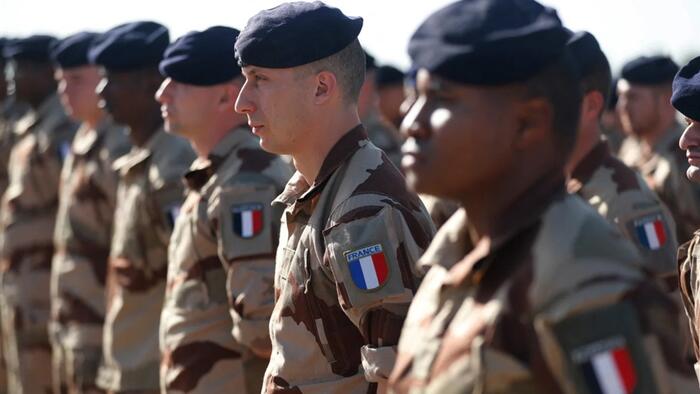
Several sources confirmed that roughly half of the coalition forces in Erbil have repositioned to other countries as a precautionary measure. While US and Hungarian troops have largely remained, Norwegian and Swedish forces, along with a number of Italian and French soldiers, have left.
Only Norway and Germany have so far publicly confirmed that they have relocated forces from the Erbil base. “Norway has about 60 soldiers in the Middle East region, carrying out various missions. Some of them have been relocated due to the tensions in the region, in cooperation with our coalition partners,” Norwegian military spokesperson Brynjar Stordal told MEE.
A German military source said the army reduced its forces in response to the escalating regional conflict. Captain Raissa Broeren, a spokesperson for the Dutch defense ministry, on Monday said that they “are closely monitoring the situation in the region. Naturally, the safety of our personnel is the highest priority. If necessary, we will take security measures”.
However, she did not confirm if Dutch troops at the base have relocated. Andrew J Tabler, a senior fellow at the Washington Institute for Near East policy, who served during the first Trump administration as a senior adviser in the US State Department’s Bureau of Near Eastern Affairs, told MEE that it is “logical for coalition forces to move out as they believe they will be in the crosshairs of an Iranian retaliatory strike”.
A prominent target
According to Reuters, there are estimated to be fewer than 2,000 troops in Erbil, after the US-led coalition moved its forces from Baghdad and Ain al-Assad to Erbil as part of a 2024 deal to end its presence in federal Iraq by the close of 2025, and in the Kurdistan region of Iraq by September 2026.
The latest Pentagon Inspector General report, released on February 19, confirms that coalition forces relocated to the Kurdistan region after handing over their headquarters in Baghdad to Nato in November, and the al-Asad airbase to the Iraqi government in December.

The coalition moved its headquarters to Erbil and Kuwait. As a result, the Erbil airbase, which is located at a civilian airport, has become a more prominent target for Iran, since it is now the only US base left in Iraq.
“The Erbil base has a large target on it not only due to US withdrawal from other Iraqi bases but also because attacking it provides the Iranians with an opportunity to make a declaration to local US partners in the region as to the cost of working with the Americans,” Nicholas Heras, the senior director for the Strategy and Programs Unit in the Academic Division at the New Lines Institute, told MEE.
The New York Times reported on Sunday that Trump is leaning towards conducting a strike in the coming days to force Iran to make concessions. “The US is preparing for a conflict with Iran and will want to minimize the potential exposure of its personnel to Iranian attack,” Heras added. “The Erbil base is a relatively large, multi-agency base that has rotating personnel, so in the event of a war with Iran, at a minimum the US will want to rotate out nonessential personnel.”
Loading recommendations…