In a surprise twist, Iran appears to have turned its back on its best (and only) client, Beijing, when it blocked two China-owned container vessels from the Strait of Hormuz in what the WSJ said was an unusual move by Tehran, which has focused its shipping blockade on countries it deems supporters of Israel and the U.S.
Paper says “open.” Reality says something else.
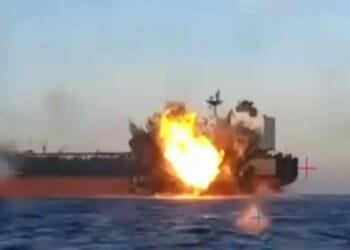
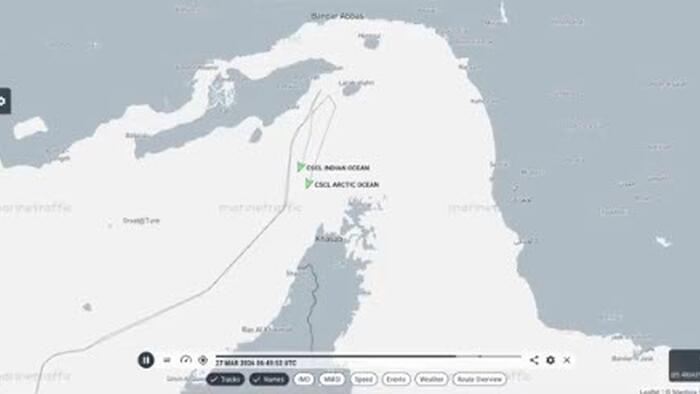
Today, two ultra‑large COSCO container ships — CSCL Indian Ocean and CSCL Arctic Ocean — tried to exit the Gulf through Iran’s “approved” Hormuz lane… but turned back even after Iran said Chinese ships could pass.
Operators… pic.twitter.com/vbEn0WKQYm
— The Maritime (@themaritimenet) March 27, 2026
The two ships – CSCL Indian Ocean and CSCL Arctic Ocean – made U-turns near Larak Island, about 20 miles from the port of Bandar Abbas in southern Iran, the WSJ reported.
COSCO vessels abort Strait of Hormuz transit attempt amid ongoing instability
Following COSCO’s announcement to resume booking acceptance to Gulf destinations, new developments overnight suggest the situation in the Strait of Hormuz remains highly unstable.
According to… pic.twitter.com/VkrtGwOZgD
— MarineTraffic (@MarineTraffic) March 27, 2026
In recent days, some ships have transited the strait via the narrow channel between Iran’s Qeshm and Larak islands, including those signaling Chinese owners and crew members.
Also on Friday, Iran’s Revolutionary Guard said that it had turned back three container ships of various nationalities trying to cross the strait, adding that all ship traffic to and from ports of supporters of the U.S. and Israel was prohibited, according to Nour News, which is affiliated with the country’s Supreme National Security Council.
Container ship owners told the WSJ the only vessels that can now cross the strait are those with cargoes of Iran-destined household goods, cars, clothing and pharmaceuticals.
In the past week, Iran has allowed four ships loaded with grains to cross the Strait of Hormuz in the other direction, after waiting nearly three weeks in the Gulf of Oman, according to brokers who arranged the cargoes. The bulkers unloaded at Iran’s Bandar Imam Khomeini port, where three-quarters of the cargo handled is grain imports mainly from Russia and South America.