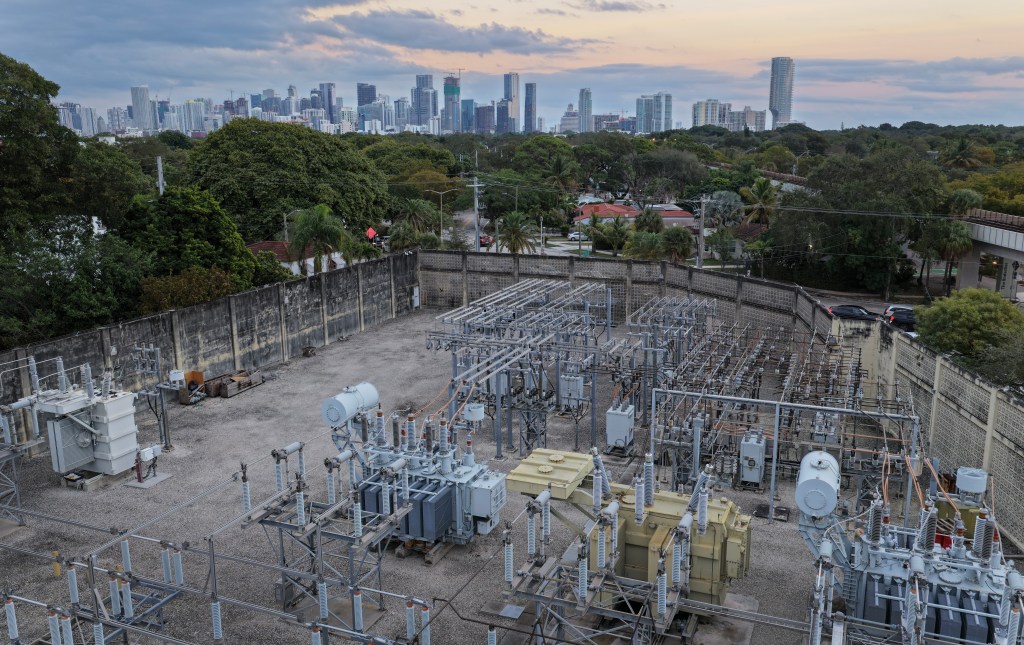

Welcome to Dispatch Energy! During last week’s State of the Union address, President Donald Trump declared that tech companies will “pay for their own power.” The line landed effectively. But, as is often the case in electricity markets, reality is far messier than slogans. This week, I unpack what it would actually mean for an AI data center to “bring its own power”—from the transaction cost economics of vertical integration to the layered jurisdictional puzzle of federal and state utility regulation to the counterintuitive ways that large new customers can actually result in lower average rates.
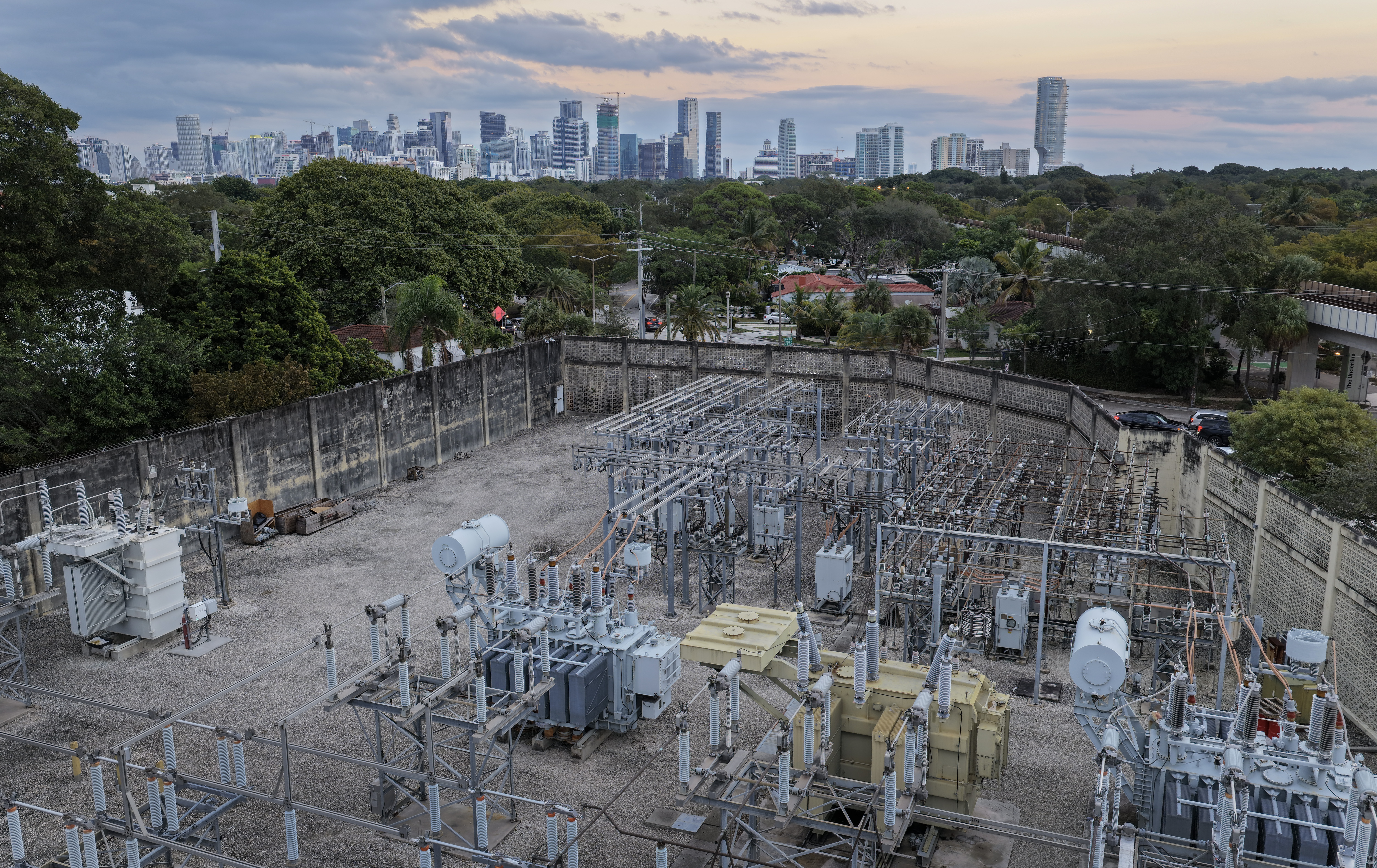
Trump’s speech last week raised one of the most politically charged—and economically misunderstood—questions in energy policy today: Who actually pays for the electricity powering the AI boom? His salient message: Technology companies building massive data centers should foot the bill for their electricity use. The White House followed up on the vow on Wednesday, announcing that seven tech companies had signed a “ratepayer protection pledge” to shield American consumers from rising utility prices.
Across much of the country, monthly bills are higher than they were a few years ago. Inflation explains part of the increase, so in terms of real purchasing power, the rise has been less drastic than headlines imply. Another major driver is long-deferred investment in transmission and distribution infrastructure as utilities modernize aging grids and harden them against wildfire and storm risk. These cost pressures are structural and familiar to regulators; artificial intelligence did not sneak them into the rate base last year. But the politics of a monthly utility bill rarely turn on a careful analysis of nominal versus real increases or capital expenditure cycles. The number at the bottom of the page is what voters see—and feel.
Data centers, meanwhile, are visible monuments to digital abundance—vast warehouses of servers owned by some of the largest firms in the world, powering photo storage, text messaging, video streaming, and now the growing computational demands of artificial intelligence. AI promises productivity gains and geopolitical advantage. It also consumes electricity at a scale that would have startled utility planners a decade ago. If bills are rising and tech firms are booming, the political juxtaposition is hard to ignore.
That intuition is understandable but incomplete.
Electricity is not produced and consumed in isolation. It flows through a capital-intensive network with lumpy, long-lived costs allocated through layered federal and state institutions. Retail rates are set largely by state public utility commissions under a “just and reasonable” regulatory standard. Wholesale markets operate under federal oversight. Infrastructure is financed up front and recovered over decades. In such a system, the question “Who pays?” has no clear-cut answer, however emotionally satisfying the slogan might be.
Will Florida lead the next nuclear revolution?
Nuclear innovation is no longer a hypothetical debate for the distant future. The wheels are already in motion. Advanced reactor designs are set to begin real-world testing this summer, and savvy state lawmakers—like the sponsors of Florida’s HB 1461—are actively laying regulatory groundwork to ensure their state comes out on top.
The president’s ratepayer protection pledge crystallizes a deeper economic question. What does it mean, in a regulated network industry, for a large new customer to “pay for its own electricity”? Does that principle imply vertical integration—that a technology company should build and own its own power plants? Does it mean the use of long-term contracts that cover incremental generation and transmission costs? Are those contracts with the regulated utility, with a non-utility independent power producer, or some hybrid arrangement? Or, because data centers are new customers on this large shared network that has been built over decades, does this principle require them to pay for infrastructure costs incurred long before a single AI server came online?
These questions sit at the intersection of transaction cost economics, regulatory law, and the political economy of utility cost allocation. They determine whether new load raises average rates, lowers them by spreading fixed costs more broadly, or does something in between. They also reveal the limits of federal rhetoric in a system where most of the policy levers that shape residential bills reside at the state level. What, then, does it mean for AI companies to supply their own power?
At first glance, the phrase suggests vertical integration. If a data center requires 500 megawatts to power it, perhaps the technology firm should build and operate a 500-megawatt power plant. The symmetry is appealing: a self-contained industrial ecosystem that neither leans on nor burdens the surrounding grid—what engineers would call an islanded system—like a medieval manor, but with better cooling systems and a worse relationship with local zoning boards.
But transaction cost economics implies that such a fully symmetric approach to organizing production is neither empirically common nor necessarily efficient. In his seminal 1937 article on the theory, economist Ronald Coase asked a deceptively simple question: Why do firms exist at all? Coase framed the firm as an alternative governance structure to the price system, arguing that firms arise when coordinating activity through markets entails nontrivial transaction costs—search and information costs, bargaining and drafting costs, and the costs of monitoring, adaptation, and enforcement under incomplete contracts. On this account, vertical integration is optimal when market contracting is comparatively costly.
In electricity, these governance trade-offs are even more acute. Operating a power plant requires several specialized, capital-intensive capabilities, giving utilities and independent power producers a comparative advantage over technology companies, which specialize in computing and software. Even very large firms rarely wake up one morning and decide that running a power plant is an obvious side hustle.
In many industries characterized by large, durable demand and highly specialized assets, the efficient solution is not vertical integration but long-term contracting. Power purchase agreements, capacity contracts, and bespoke infrastructure arrangements already exist precisely to align incentives without erasing organizational boundaries. The make-or-buy literature in economics suggests that the relevant question is not whether a data center should own a power plant. The relevant question is which institutional arrangement minimizes transaction costs while ensuring that incremental system costs are borne by the load that causes them.
That framing shifts the debate. “Bring your own generation” can mean negotiating contracts that internalize incremental costs, not reincorporating as a utility. Even once firms settle on contracting instead of vertical integration, what the contract must accomplish is defined by regulatory law.
Here, the technology firms’ language—that “growth should pay for itself”—must align with regulatory law. Under the Federal Power Act and parallel state statutes, retail and wholesale rates must be “just and reasonable.” Over decades, this standard has come to embody cost causation and non-discrimination. Customers should bear the costs they cause, and not much more. A related regulatory principle holds that customers should bear costs proportionate to the benefits they enjoy. The combination of “cost causation” and “beneficiary pays” provides guidance for data center payment that is just and reasonable.
Between these poles lies a bargaining zone that goes back to Coase: When rights are clear and transaction costs are manageable, parties can negotiate arrangements that internalize incremental cost causation and limit inefficient cost shifting onto residential customers. In that setting, the data center can procure a power service commitment with a predictable expected cost profile, while the utility can secure revenue sufficiency and reduce demand and investment risk, thereby improving capital recovery and mitigating the prospect of underutilized or stranded network upgrades. On this interpretation, “growth pays for itself” is not a claim that new load finances the entire embedded system, but rather an incremental recovery principle: Incremental demand funds the forward-looking costs it induces, with legacy sunk costs allocated under prevailing rules. This outcome emerges from contract and tariff design under regulatory oversight, rather than from political rhetoric.
The issue of jurisdiction further limits what a federal political pledge can accomplish. Most of the investments currently pushing residential bills upward—distribution upgrades, wildfire mitigation, storm resilience—fall under state public utility commission authority. The Federal Energy Regulatory Commission oversees wholesale markets and interstate transmission. It does not set retail distribution rates in any state, and presidential rhetoric cannot change that.
This distinction matters because much of today’s rate pressure reflects capital cycles that predate AI’s surge. Artificial intelligence coincides with those cost items; it did not cause them. To the extent that new utility rate cases incorporate forecasts of future data center growth, those AI-related infrastructure costs will start showing up, which is why this question is so fraught right now.
The economics become less intuitive in systems with excess capacity. Electricity networks have economies of scale, high fixed costs, and low marginal costs. When demand is weak, fixed costs are spread over fewer kilowatt-hours and average rates rise. A large, steady customer with a high load factor can improve utilization and spread those fixed costs more broadly. Under the right conditions, new incremental demand can lower average rates. In tighter systems, it can raise them. The effect depends on local capacity, regulatory treatment, and contract design. A universal claim in either direction is politically convenient and often wrong.
Overlaying all this is the uncertainty I mentioned in my last edition of Dispatch Energy. Transmission lines and generation assets last decades. Decisions made today assume something about the durability and location of AI demand. Will models become more energy-efficient? Will on-site generation expand? Will data centers migrate toward energy-rich regions? Infrastructure built for one customer may later serve many; infrastructure justified for system reliability may become indispensable to a single large load. The value creation is rarely static, even if grounded in backward-looking static accounting.
Electric power networks are complex adaptive systems governed by layered law. Costs are joint. Investments are forward-looking. Allocation is institutional, not automatic. Against that backdrop, Trump’s State of the Union pledge operates at the level of rhetorical clarity rather than system design.
Such clarity has political value. It signals fairness and attentiveness to affordability. But institutional design requires more than clarity; it requires cost causation, jurisdictional awareness, and bargaining discipline. Growth can either raise or lower average costs. Which outcome prevails depends on how firms structure the deal and under what regulatory principles.
Ensuring that growth pays for itself is a defensible objective. Achieving it depends less on presidential promises than on the careful application of just-and-reasonable principles in the institutions that actually govern electricity.
The applause line was simple. The electricity economics, as usual, are not.
Policy Watch
- Late last year, the Federal Energy Regulatory Commission directed PJM Interconnection, the largest power grid operator in the United States, to develop new rules governing the colocation of large loads like data centers with generation resources. The core issue is whether, and under what conditions, a large customer can build a new facility behind or adjacent to a generator and effectively “bring its own power” while still relying on the regional grid for reliability services. The commission concluded that PJM’s existing tariff lacked clear, durable rules for these increasingly common arrangements and ordered PJM to craft a framework that both “embraces innovation” and protects system reliability and other customers from cost shifts. In practical terms, the commission signaled that colocated configurations cannot evade cost responsibility simply by changing the physical wiring diagram; if a facility depends on the grid for backup, transmission access, or capacity accreditation, the tariff must reflect that reality. In January, PJM’s board responded by outlining a structured path forward through its stakeholder process, emphasizing the need to integrate large-load additions in a way that preserves reliability, respects cost causation principles, and avoids unintended cross-subsidies. PJM indicated it would refine interconnection procedures, clarify capacity and transmission cost allocation, and develop guardrails for colocation proposals, while acknowledging both the urgency of data center growth and the operational constraints of a tightly managed regional market.
Innovation Spotlight
- Materials science researchers at the University of Surrey recently achieved a deceptively simple advance in sodium-ion battery technology that could accelerate the shift toward safer, cheaper, and lower-carbon energy storage. By deliberately keeping water inside a key sodium-vanadium-oxide cathode material rather than driving it out, the team created a nanostructured sodium vanadate hydrate that substantially boosts energy capacity and stability compared with conventional dry materials—nearly doubling charge storage in lab tests and maintaining performance over hundreds of cycles. Beyond energy storage, this hydrated material also demonstrated the ability to operate in saline aqueous environments and extract sodium ions from seawater, pointing toward a design in which the act of charging the battery could simultaneously remove salt from water. This dual functionality suggests a complementary system in which desalination and energy storage reinforce each other: Excess renewable electricity could power ion removal and charge storage at the same time, effectively linking water treatment with grid balancing. Because sodium is far more abundant and less toxic than lithium, improvements like this bring sodium-ion systems closer to commercial viability for grid-scale storage while illustrating how revisiting long-held assumptions in materials science can yield unexpectedly broad economic and environmental benefits.
Further Reading
- In December, an Electricity Journal paper examined what has driven recent changes in U.S. retail electricity prices at the state level. A detailed research summary produced by the Brattle Group complements the article. Using descriptive analysis and regression modeling across the 48 contiguous states between 2019 and 2024, the authors find that while national average prices rose about 23 percent in nominal terms, this increase largely tracked economy-wide inflation—meaning real prices were essentially flat nationally, though with dramatic variation across states. The study identifies several key drivers of above-inflation price increases in specific states: shrinking customer loads, state renewables portfolio standards requiring costly incremental renewable energy, natural gas price volatility, and—most dramatically in California—wildfire mitigation costs and liability insurance. The roughly 75 percent of utility-scale wind and solar deployment that occurred outside of renewables portfolio standards mandates showed no association with price increases and may even have exerted modest downward pressure on prices. States that experienced load growth generally saw prices decline, as fixed infrastructure costs were spread across more customers. The implications are significant: Policymakers cannot point to a single culprit for rising electricity costs, as the drivers vary considerably by state and over time.
Pacific Legal Foundation has been fighting for freedom since 1973. We sue the government on behalf of farmers, fishermen, teachers, nurses, and entrepreneurs—Americans from every corner of the country and from every walk of life—and we win.