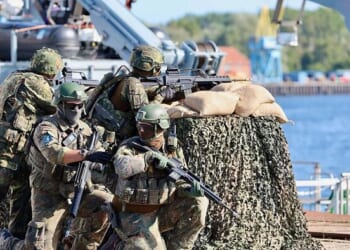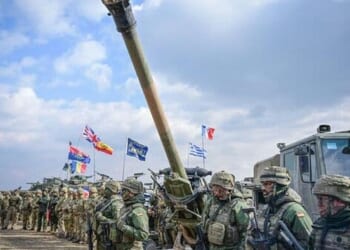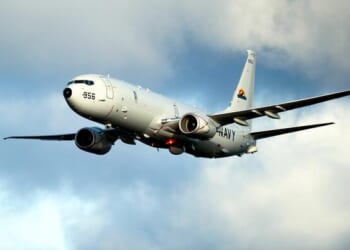
The United States has assembled the largest concentration of military force in the Middle East in more than two decades, positioning more than 10,000 additional troops, two aircraft carrier strike groups, long-range bombers, stealth fighters, and extensive surveillance and refueling infrastructure within operational range of Iran. This is peak American readiness for war-fighting and represents a substantial share of America’s deployable naval and air combat power. U.S. bases across the Persian Gulf, along with Israel and other regional partners, have elevated their defensive posture in anticipation of Iranian missile, drone, and proxy retaliation.
Yet this level of forward deployment is inherently difficult to sustain: It strains munitions stockpiles and air defense interceptors, readiness cycles, and global force commitments, creating pressure for resolution. The result is a narrowing strategic window. The military buildup is both coercive leverage and operational preparation, placing Tehran on an implicit countdown—facing the choice between accepting U.S. demands through negotiation or confronting the credible prospect of large-scale American military action.
Amid this military buildup and threats of a prolonged, region-wide war in the Middle East, it can be easy to overlook that the current impasse between the U.S. and the Islamic Republic of Iran began with peaceful street protests by ordinary Iranians who could not put food on the table. The value of the rial plunged to 1.42 million to the dollar by late December, losing more than 56 percent of its value in just six months and reaching the lowest level in history. Food prices were up 70 percent year-over-year. Already accustomed to a merciless economy ravaged by a mafia state and its support for terror, as well as ensuing international sanctions and the 12-day war waged by Israel and the U.S. against the regime, Iranians saw their purchasing power collapse, their savings hollowed out, and their future rendered more uncertain than ever.
Bazaar merchants, a base of support for the regime and a historic bellwether for political shifts in Iran, shuttered their shops in defiance on December 28. Shortly after, the working poor, the mustazafin in whose name the Islamo-Marxist revolution was waged in 1979, staged protests in all major cities including Tehran, Isfahan, Mashhad, Shiraz, and Tabriz. They have done so since 2017, when they first chanted against regime reformists and hardliners alike, just when they were meant to benefit from the largesse of the 2015 Iran nuclear deal, which delivered to the regime sanctions relief, restored its oil revenue and access to the global financial system, and signaled its soft acceptance by the United States, lessening the regime’s isolation while strengthening its capacity to survive domestic dissent.
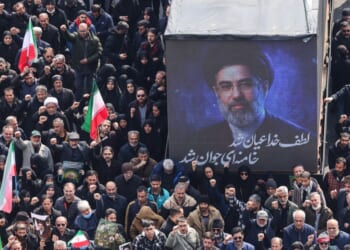
The latest demonstrations quickly became a mass, nationwide uprising of many millions of protesters, including in smaller towns like Abdanan, where videos show broad swaths of the population on the streets. Though striking in scale, the demonstrations were also a long time coming. Well before the recent economic meltdown, it was not uncommon for even educated Iranians to work two or three jobs and still not make ends meet. Extreme poverty, suicide, drug addiction, child labor and exploitation, prostitution, and homelessness have long been ubiquitous Iranian social ills, often made invisible by the shiny lives of influencers on Instagram and the great success the Iranian diaspora has achieved. The country that led the Middle East region in its modernity and progress before the revolution, surpassing the economies of South Korea and Turkey, is now on the brink of financial collapse. It is saddled with every manner of existential crisis, most notably ecological collapse and water bankruptcy. As in Venezuela, petro mafia overlords live in luxury, with their vast fortunes offshored and their children residing comfortably in the West.
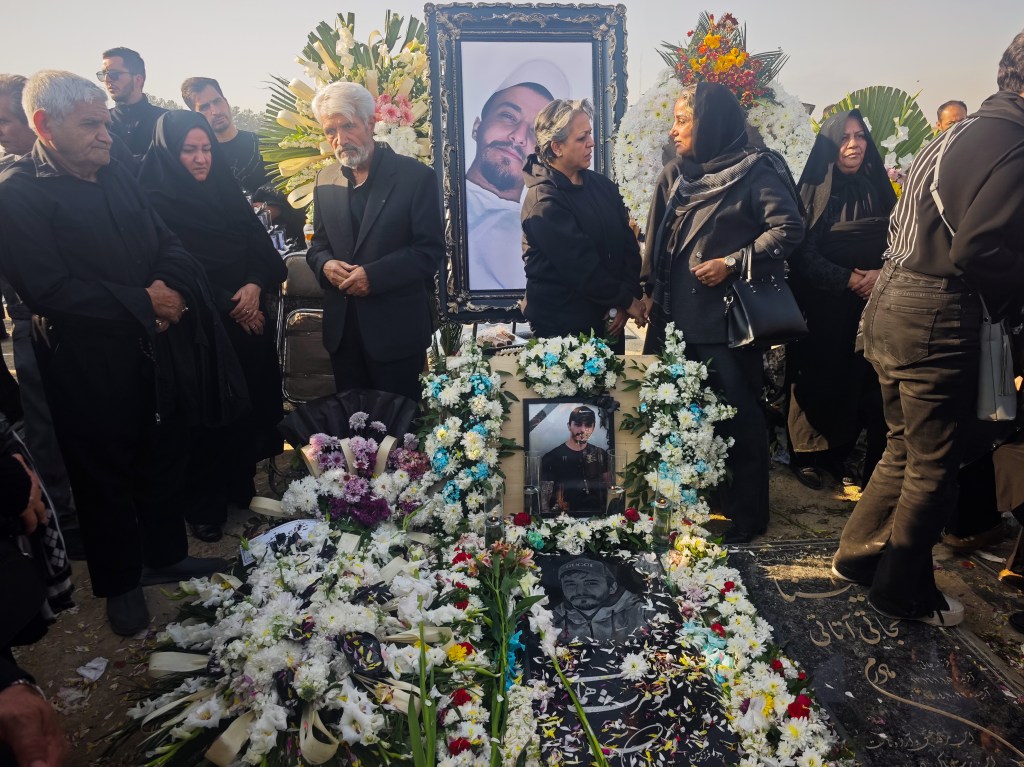
The millions of Iranians who came out from every corner of the country to protest their misery and the corruption of the ruling elites were met with military-grade weaponry and clear shoot-to-kill orders. In a massacre of historic proportions, more than 30,000 people are estimated to have been gunned down over just days, all as the country was under internet blackout. Islamic Revolutionary Guard Corps (IRGC) soldiers, Basij members, and police fired directly into large crowds and at fleeing protesters. Security forces murdered injured protesters in their hospital beds, and to suppress evidence of the regime’s crimes against humanity, beat and arrested the doctors and nurses treating the wounded. Neighborhood raids, large-scale arrests, mass intimidation tactics, as well as death sentences, including for juveniles, also followed.
Families of the missing were left to sift through body bags to identify their beloved in morgues across the country. For the right to bury their kin, they were made to pay hundreds and even thousands of dollars to the regime for the bullets it used to kill them—a long-standing practice of the Islamist state, intended to add humiliation to terror.
The protests were stoked, at least in part, by the vocal support of the U.S. president. In early January, Donald Trump wrote on Truth Social that America was “locked and loaded” should the regime fire on protesters. This bravado from an American president had profound reverberations. Days later, Reza Pahlavi, the exiled son of the deposed shah, issued a call for two nights of nationwide protests. Iranians came onto the streets in numbers unprecedented since the regime took power in 1979, with many calling for Pahlavi’s return to Iran. But the call to protest also brought out Supreme Leader Ali Khamenei’s killers.
After its forces massacred tens of thousands, the regime sold Trump the lie that through his intervention, the executions of some 800 protesters were thwarted. Tehran knew Trump needed a moral victory and provided him a false one, one that would mask the reality of the nationwide slaughter it had already committed, buy some time to kill more opponents, and relieve Trump of any responsibility to act.
Now, despite the president’s promise to protesters that “help is on its way,” Washington is once again engaged in another round of negotiations regarding Iran’s nuclear program. Amid renewed diplomacy, global media quickly became preoccupied with levels of enrichment rather than the regime’s growing weakness in the face of the remarkable bravery of the Iranian people.
It is not clear what the regime privately communicated to the Trump administration to make it backtrack from promises to side with protesters, particularly considering that Israel and the U.S. inflicted significant damage on Iran’s nuclear facilities during the 12-day war. There are conflicting reports about whether the regime was able to preemptively move 60 percent enriched uranium away from the Fordow Fuel Enrichment Plant in the days preceding the attack. In any case, the regime may have displayed to the Trump administration evidence of still holding significant amounts of 60 percent enriched uranium as a means to lure the U.S. back to the negotiating table.
It is not clear what, if any, military action Trump will take to confront the Islamic Republic. The United States is demanding that the Islamic Republic surrender its stockpile of highly enriched uranium, accept permanent international inspections, and dismantle or severely limit key enrichment infrastructure to ensure it cannot develop a nuclear weapon. Beyond the nuclear file, Washington is also pressing Iran to curb its ballistic missile program, which provides the regime with its primary means of deterrence and long-range strike capability. The United States further seeks an end to Iran’s support for proxy militias and terror groups across the Middle East. Taken together, these demands would significantly weaken the regime’s ability to project power abroad and deter external threats, undermining the foundations of its military strategy and regional dominance. It is highly unlikely Khamenei would accept the full list of demands.
At this point, Iranians view regime change as a matter of survival—and U.S. intervention as its only means. To make a deal now would be a betrayal far worse than that of former President Barack Obama’s failure to act amid the 2009 Green Movement.
But if Trump does make a deal with the regime, as he has repeatedly emphasized is his preference, the Iranian people’s struggle for freedom will be dealt a severe blow, one not delivered by Russia or China but by the United States—the country Iranians look to with great hope and affinity, and which the regime has since its inception tried to convince them is the “great Satan.”
Iranians of all perspectives, lifestyles, and worldviews have been clamoring for military intervention that ends their tyranny, believing American bombs are now their only protection against continued massacre, torture, and execution. At this point, Iranians view regime change as a matter of survival—and U.S. intervention as its only means. To make a deal now would be a betrayal far worse than former President Barack Obama’s failure to act amid the 2009 Green Movement.
Even with U.S. involvement, the path to regime change won’t be easy. Ending the 47-year rule of the imperial Islamists is morally right and a profound victory for the civilized world, but only if we assume Iran can transition away from totalitarian evil in a manner that improves regional security and stability. Iran has the potential to evolve into a prosperous democracy, as much of Eastern Europe and the Baltic states did after the fall of Communism. But it also has the potential to follow the path of the Soviet Union, reincarnating into a new totalitarianism. Islamist elites could refashion themselves as secular nationalist oligarchs profiteering from more terror and war. It is also possible that remnants and vestiges of the regime will survive U.S. military intervention, plunging the country into civil war.
To secure a transition away from the regime and toward stability and freedom will require real American commitment. A Venezuela scenario in which the country’s top figure is deposed and its remaining leaders fall in line to cooperate with the U.S. is hard to fathom, not least because the Iranian system has dispersed, institutionalized power beyond Khamenei and his inner circle. On top of that, it will be particularly difficult to convince Iranians that a large number of IRGC need not be immediately prosecuted. Even before the recent massacre of protesters, prominent Iranians close to Pahlavi regularly peddled pledges for revenge and retributive killing.
Pahlavi had for months been telling Iranian and global audiences alike that he had attracted defectors from the regime, claiming prior to the massacre that 50,000 had communicated to him, and after the massacre, claiming the number had risen far higher. But not a single regime insider has publicly denounced the slaughter, much less announced allegiance to the crown prince or committed to a transition away from the regime. America cannot count on Pahlavi to divide and conquer the Islamic Republic, despite his very real popularity among Iranians.
But that doesn’t mean Washington is out of options for enacting meaningful political change in Iran. What the United States can do is execute an operation that combines 1) military action similar to NATO’s targeted aerial bombing campaign against Serbian leader Slobodan Milošević, 2) U.S. and Israeli special operations teams partnering with Iranians to take over government institutions, and 3) political transition management, including experts in security as well as democratic institution building, that incorporates hard-earned lessons from failures in Iraq and Afghanistan as well as successes in post-communist states to make the American commitment one that creates a true solution to the problem of Islamic terror.
Even without help from the outside world, Iranians are continuing to risk their lives to bring down the evil that threatens liberal civilization. A decision by Trump to turn his back on them would sidestep the foreign entanglement Americans rightly seek to avoid, but at the price of kicking the can down the road. Trump claims he is building peace in the Middle East. He cannot do so while giving new life to the decrepit, depraved regime that drives the region’s terror and bloodshed.