Life, Liberty, Property #128: 2025 Breakdown
Forward this issue to your friends and urge them to subscribe.
Read all Life, Liberty, Property articles here, and full issues here and here.
IN THIS ISSUE:
- 2025 Breakdown
- Video of the Week: Minnesota: Land of 10,000 Frauds – In the Tank #521
- The Government Solution to Unaffordability
IT’S BACK! SAVE THE DATE. SPRING 2026.

2025 Breakdown
The year 2025 brought the American people a greater understanding of how thoroughly corrupt all levels of government in the United States have become, and of precisely how difficult it will be to reverse this decline into mass corruption and delusion.
The events of the years 2020 through 2024 cast enormous doubt on the competence and decency of American government. The same is true of all the nation’s other institutions. The past year accelerated that shattering of illusions.
Though conditions were not as chaotic as in the prior four years, 2025 destroyed any plausible faith in the competence, fairness, good intentions, resistance to the temptations toward corruption, and even the legitimacy of the federal government and those of nearly all the states, if not all the latter. Likewise, practically all the nation’s institutions—of business, education, philanthropy, culture, entertainment, and so on—were exposed as shockingly corrupt, greedy, power-mad, arrogant, ignorant, incompetent, morally deaf, financially irresponsible, and altogether unmoored from reality and its limitations.
Examples abound. Wildfires raged in southern California as the year began, tragically demonstrating the gross negligence and incompetence of the state and local officials who allowed the Santa Ynez reservoir to go dry before the fires raced through Los Angeles, destroying homes and killing 31 directly and accounting for a total of at least 440 excess deaths according to a study published in JAMA. The California officials’ failures compounded the damage from years of foolish federal, state, and local environmental policies that have prevented forest clearing that averts wildfires.
Soon after that, the federal Department of Government Efficiency (DOGE) began exposing billions of dollars of ongoing unauthorized government spending and waste, reporting $215 billion in savings at the end of the year. That was only a minor fraction of what the government has been wasting each year, however, and Congress has made no effort to take real (not symbolic) action against the problem.
One area where DOGE was successful was in its exposure of massive corruption in the U.S. Agency for International Development, which multiple presidential administrations had used as a slush fund for illegal payments to Democrat activists and advocacy groups. Stopping that spending reverses decades of government sleaze.
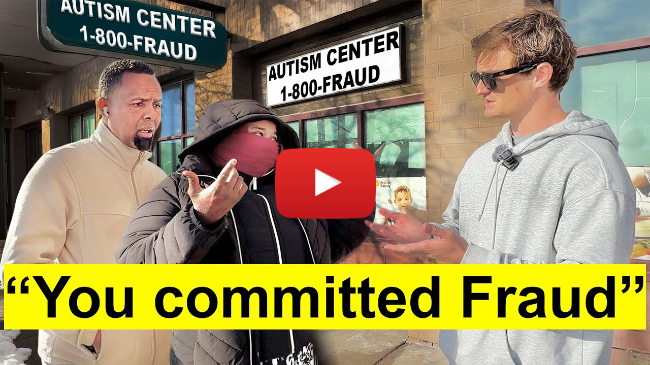
In a related development, Medicaid corruption and immigrants’ contempt for American laws and morals finally hit the news. Independent YouTube journalist Nick Shirley exposed Somali immigrants’ appalling theft of millions of dollars of taxpayer money, simply by getting out of his chair and asking them about the services they claimed to be offering:
That has been followed by claims that multiple other states have been home to similar scams. Investigations to follow.
This open corruption went unreported for years, casting shame on the nation’s legacy media and evoking invidious comparisons to heroic independent journalists.
In a notorious example of legacy journalists’ perfidy and sloth, the “autopen” revelations showed that President Joe Biden’s team repeatedly broke the law and violated both the spirit and wording of the Constitution by allowing people other than the president to sign legislation, executive orders, and other presidential directives. That is a scandal of immense proportions, yet it did not receive even a small fraction of the attention it deserved, because (1) Democrats did it, and (2) everybody knew that it was happening all along.
President Donald Trump promptly closed the border and began deporting people who were here illegally, as soon as he was inaugurated for his second term. The Trump administration also identified gross fraud problems in which people in the country illegally have been receiving federal and state benefits against federal law.
Those and other efforts proved that President Joe Biden and his administration had repeatedly lied to the American people in claiming that they were doing the best that anybody could in securing the border (an openly ludicrous claim), while lavishing money on nonprofits and directly on lawbreaking foreigners to pay for illegal immigration as an enormous Democrat-voter expansion scam amounting to billions of dollars in criminal election interference.
Blue-state politicians’ interference in the federal government’s enforcement of immigration laws provided further confirmation of the lengths to which at least one of the nation’s political parties will go to grasp and hold on to political power. Trump’s successful effort to subdue crime in Washington, DC illustrated the incompetence and callousness of politicians in Democrat-controlled cities across the country, who allow crime to run rampant while they impede others’ efforts to enforce the law, refuse to prosecute and incarcerate lawbreakers, and do everything they can to disarm law-abiding people.
Trump characterized the U.S. involvement in the Russia-Ukraine war as a gigantic waste of money that provides no positive value for the American people and greatly increases the risk of a nuclear war. The exposure of the Department of State and the U.S. military and intelligence services as caring more for the whims of European politicians and the profitability of defense contractors than for the American people is a chilling portrait of deadly betrayal.
The president’s pivot away from Ukraine and Europe in general toward the Western Hemisphere cast much-greater light on the scale of drug-running and human-trafficking operations penetrating the United States from Central America. Trump called out Mexico for laxness in dealing with the enormous criminal cartels within its borders, and he put pressure on countries to the south to halt the illegal export of destructive and deadly recreational drugs into the United States.
On the second day of the new year, Trump went so far as to send a Delta Force team into Venezuela to capture President Nicolás Maduro and his wife and bring them to the United States to face criminal charges under a federal indictment filed in 2020. The capture, which the White House described as an arrest, followed weeks of military strikes against boats purported to be running drugs from that country to the United States.
These activities and U.S. support for Venezuelan opposition leader María Corina Machado amount to a forced regime change and clearly pose a risk of further strain in the region. It is obvious, however, that the United States under Trump has the upper hand in the situation, further demonstrating the weak commitment of previous administrations (including Trump’s first term to a lesser degree) in dealing with the international drug trade.
Trump also exposed rampant, illegal race and sex discrimination and the acceptance (and often encouraging) of antisemitism at the nation’s colleges and universities. Many of these institutions have been receiving federal taxpayer money for research and other activities for many years, amounting to hundreds of billions of dollars, plus federal guarantees of student loans. All that largesse has enabled these schools to raise tuition charges to dizzying heights, miring graduates in immiserating debt for decades on end.
Student loan debt is a big element of the affordability crisis that the media promoted throughout the year. That crisis is in fact the result of a short-term spike in costs of necessities that was caused entirely by overspending passed (solely by Democrats) in 2021 and 2022. The rapid price inflation that the spending hikes caused has not yet abated fully. It will, if the president and Congress resist the temptation to raise spending.
The leftist media have exploited the Democrats’ price-inflation folly by falsely pinning this misery on the Republicans and President Trump. Young people have been telling pollsters that they support socialism and want to see a socialist win the presidency in 2028. Even 30 percent of self-identified Republicans among likely voters under the age of 40 say this, as do 40 percent of self-described conservatives and 35 percent of 2024 Trump voters.
These woes are not the result of free markets. Enormous government interference in private enterprise has been the reality for decades, resulting in a corporatist system in which the U.S. government uses superficially private enterprises to do its bidding, through regulation, tax breaks and punishments, subsidies, and an antitrust law system that perversely results in ever-greater concentration of industry power in tight oligopolies of multinational firms in league with the government.
To pacify the populace, federal spending continued to rise in 2025 despite numerous promises and initiatives to reduce it. The hapless responses of the Republican majorities in both houses of Congress and by the president show how deeply entrenched are the incentives for ever-greater spending. The welfare-warfare state continues to expand, exposing powerfully corrupted incentives at the heart of the nation’s political system. No solution is visible, short of a fiscal collapse.
Lower-court judges across the country blocked the Trump administration at every turn, despite their obvious lack of authority to do so, affirmed repeatedly by the Supreme Court’s rejection and overturning of nearly all these actions. The nation’s justice system was thus exposed as rotten, unfair, grossly politicized, and willfully ignorant of constitutional principles.
All these and countless other events proved that governments and institutions across the nation are now wholly un-American. So, too, is much of the nation’s population. Millions of people endorsed the imprisoning and/or killing of those who defend traditional American values and the country’s constitutional system of government. Pollsters report widespread approval of politically motivated violence, primarily among those self-described as left of center.
Individuals motivated by a pathological hatred of Christianity and especially a vicious animus against disapproval of transgender surgery on minors rose up in violence, engaging in mass murders, including the targeting of children. Antisemites and a variety of extremists on both sides of the political aisle murdered politicians and others. People rushed to social media to applaud the killings.
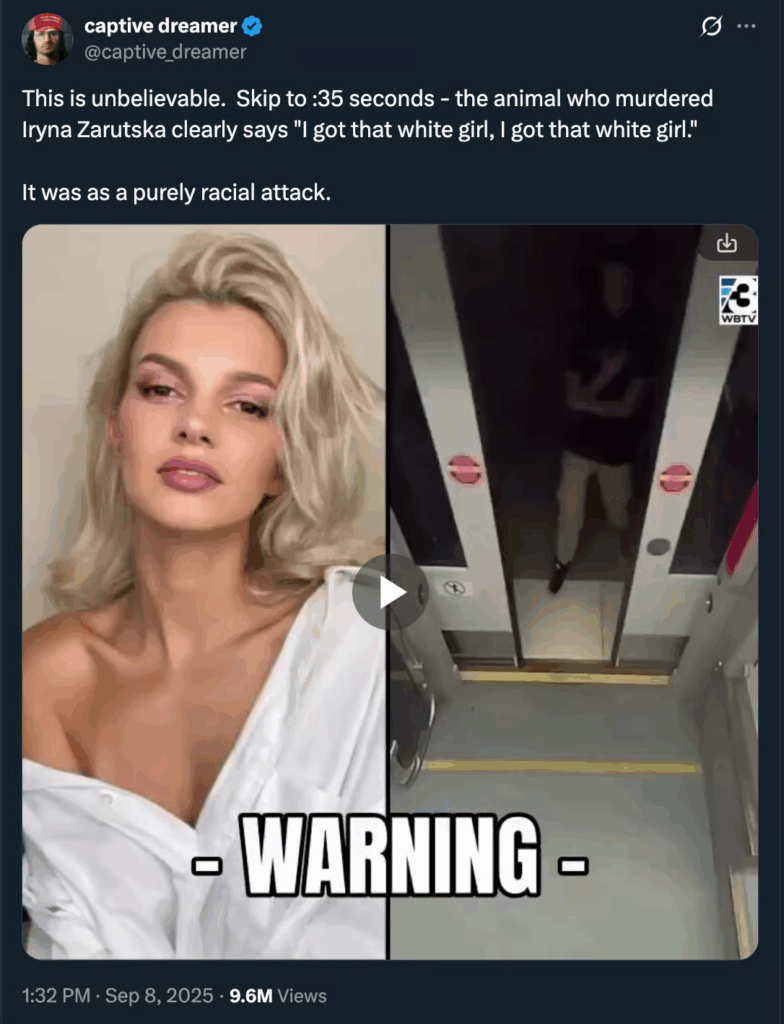
Deranged individuals perpetrated multiple unprovoked crimes of violence against whites, some of them truly horrific, based solely on racial hostility. That was exemplified by alleged North Carolina murderer Decarlos Brown Jr. muttering, “I got that white girl, got that white girl,” after brutally stabbing young Ukrainian immigrant Iryna Zarutska to death on a Charlotte commuter train, “while walking around with her blood dripping from his knife” and the other passengers doing nothing to help the dying woman, as investigative reporter Andy Ngo described it:
Then, thousands of Americans publicly cheered the murder of a young, Christian, conservative family man and policy advocate who dared to meet them in public to debate the issues.
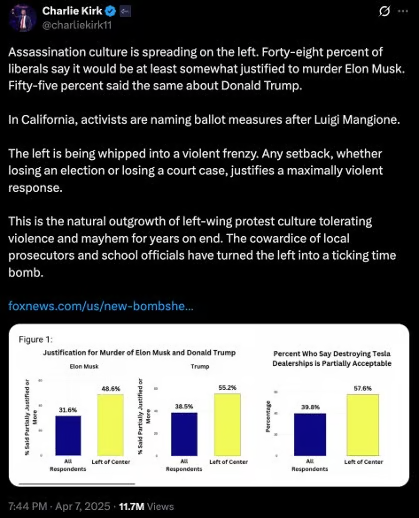
The victim, Turning Point USA founder Charlie Kirk, had chillingly identified the mania that would lead to his death just a few months later:
Leftist media blamed “political polarization” for the violence, though nearly all of it was emanating from one side of the political divide. It is rather obvious, for example, that the mania represented by what National Association of Scholars President Peter Wood described as the 1619 Project’s “mythmaking of a particularly vicious sort … aimed at fostering racial resentment and political division” led to what appears to have been a real-life “2025 Project” of violent attacks by lunatics and fiends.
There certainly is polarization. The events of 2025 revealed the depth and extent of the country’s problems and how difficult it will be to restore a semblance of order and foster peace and prosperity, if that is even possible at this point.
The United States is in the throes of a crisis. A collapse of the final shreds of authority in the United States is definitely possible, and it is probably the most likely scenario for the future. It is terrible to contemplate what might follow such disintegration: quite possibly an openly brutal and authoritarian central government, perhaps preceded by a descent into criminal anarchy that will provide a pretext for establishment of that type of regime.
There is a narrow path by which the United States could avert this fate: reverse course and set out to provide for the common defense by securing the nation’s borders, establish Justice and promote the general Welfare by eliminating favoritism toward particular demographic groups and un-American multinational corporations, and ensure domestic Tranquility by removing the dead hand of government from the economy and requiring the states to have republican forms of government that do not steal elections and that fairly execute the police powers that the federal government has usurped.
That would secure the Blessings of Liberty to ourselves and our Posterity and form a more perfect Union. What 2025 showed vividly is how far away from that ideal the United States has gone, and how unlikely a full recovery remains.
Sources: U.S. Department of Government Efficiency; CBS News; Newsmax; Andy Ngo (X)

Video of the Week
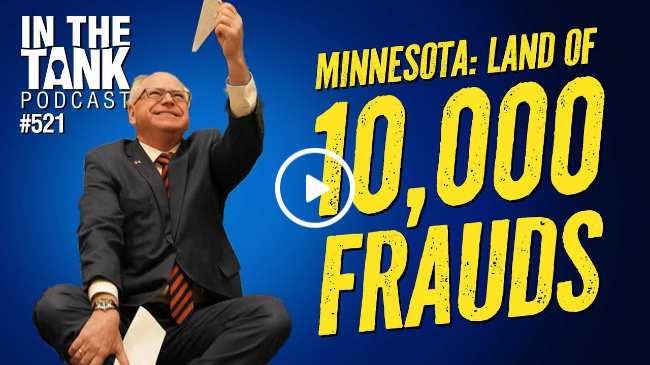
“Woke” and its pushers continues to be exposed for the ugliness, fraud and tyranny their policies unleash on the rest of us, all over the world. We’ll cover how the architect of Jaguar’s disastrous rebrand has finally been canned, and Rep. Aftyn Behn’s loss to Matt Van Epps in Tennessee reveals her and her party as very sore losers indeed. We’ll also take a look at the years of widespread fraud inside Minnesota’s social services system, and discuss how Governor Walz not only buried the problem but may be setting the stage for even more abuse through a new program. And on UNHINGED: Multiple-time violent criminals are being released to attack people again, and other craziness. The Heartland Institute’s Linnea Lueken, Jim Lakely, and S.T. Karnick will talk about all of this and more on Episode #521 of the In The Tank Podcast.
The Government Solution to Unaffordability

In a year of intense turmoil throughout the United States, probably the biggest issue of 2025 was the affordability crisis. The current year is surely likely to bring much more discussion of the problem, duly politicized. Advocacy groups and the press (the Venn diagram for which has a very large overlap) have carpet-bombed President Donald Trump and congressional Republicans with the crisis characterization.
Their effort has largely succeeded, with young people in particular expressing a rising approval of socialism. Defenders of market freedom and individual rights seem to have been sandbagged by this concern. The congressional Republicans have been entirely nonplussed.
They should not have been surprised about the problem, nor about the left’s eagerness to exploit it for political gain. Affordability is a long-term problem, and the recent pain brought on by the burst of inflation in the middle years of the Biden administration pushed up prices of necessities, as is the common effect of currency devaluations.
The solution is, as should be obvious, a reversal of what caused the problem. That means removing or at least diminishing the economic distortions caused by excessive government spending, debt, and regulation, as I have pointed out regularly in this newsletter and elsewhere.
Northwestern University constitutional law professor John O. McGinnis agrees, stating, “Classical liberalism offers a straightforward diagnosis and an equally straightforward cure,” writing in Law & Liberty. The affordability problem arises from the unequally distributed pain that inflation causes, McGinnis writes:
At bottom, the affordability issue reflects the failure of wages to keep pace with prices. Given that incomes in the United States have generally been increasing, affordability is not a fundamentally macroeconomic problem of stimulating greater economic growth, although, of course, growth would be beneficial. It is, instead, a microeconomic problem in which prices in essential sectors such as housing, medicine, education, and parts of agriculture continue to rise much faster than inflation.
The culprit is obviously the government, McGinnis notes:
What do these sectors have in common? Government intervention in the form of price controls, subsidies, or both. In areas where the government is absent, prices for technological goods or home-delivered household goods through online platforms such as Amazon are decreasing, quality is increasing, or both.
It stands to reason, then, that the solution is to restrain the government: “Thus, the classical liberal solution to this year’s economic crisis is more of the old-time religion: free markets, open competition, and the elimination of subsidies, particularly to those who are not poor,” McGinnis writes.
How to explain that to the public has been a difficulty for free-market proponents, mainly because most of the latter fail to acknowledge that the United States does not have a free-market system. As McGinnis indicates and as I have written regularly, the U.S economic system is a corporatist scheme grossly distorted by government interventions.
Donald Trump seems to have a grasp of that fact, though his scattershot approach to argumentation means he requires significant backup from likeminded economists and policy analysts. That has been much less than adequate thus far.
Fear of seeming unsympathetic to people who are struggling is a major factor in this reticence. McGinnis, however, recognizes that another major reason for this shyness about identifying these economic disturbances is the benefits that influential market participants and much of the public receive through government favoritism:
Unfortunately, this is easier said than done. Restrictions on market entry benefit incumbents, who have greater influence with politicians than unorganized entrants. Subsidies drive up prices. But, of course, those enjoying the subsidies have every interest in retaining them. The effect of subsidies on prices is just an economic argument, but for the recipient, the subsidy appears as money in the bank. It is thus unsurprising that they are challenging to eliminate. Political scientists have long observed that legislation tends to deliver concentrated benefits and diffuse costs, even if the diffuse costs far exceed the benefits.
Writing at X, economist Brian Wesbury demonstrates the right approach by foregrounding his clearly heartfelt sympathy for the victims of this system and emphasizing that none of this is a result of free-market capitalism:
Few people understand how devastating all this government spending is. Government has grown 3x faster than the economy since 1965.
We now have the 7th generation of people on Great Society welfare, 42 million on food stamps. Medicaid is out of control.
Not only did it fail, it killed souls. Yes, fraud is rampant…of course it is. When there are trillions of dollars flying around, and those dollars are controlled by politicians who can use them to get rich themselves, buy votes and stay in power, corruption expands.
Wesbury calls for a radical and proportionately beneficial reform that would be far better for present-day “beneficiaries” of this gross government metastasis:
Ending the entire welfare system would not actually be painful, it would lead to more and fuller lives, personal responsibility, a surge in Godly faith, and an economic boom of epic proportions. It’s time to start thinking differently. It’s time for us to unwind this system which is ruining lives.
McGinnis recommends attending to another critical need in getting prices back to where they will reflect the real values of goods and services to people across the country:
Given that bad government regulation is at the heart of the affordability crisis, the most effective antidote is deregulation. Thus, the most significant source of optimism for classical liberals in 2025 was the Trump administration’s domestic deregulatory agenda. Most importantly, the Trump administration has made substantial changes to the overall regulatory structure. It has emphasized regulatory budgeting and required the deregulation of ten rules for every new rule issued. It has mandated that new regulations be issued, or existing ones survive, only if they are based on the best reading of the statute, thereby suggesting that the administration will reconsider regulations grounded in overly aggressive readings that supported expansive regulation.
These policy solutions and rhetorical adjustments will sound quite familiar to readers of this newsletter. They are exactly what I have been calling for since issue number 1.
Let’s all resolve to take this approach throughout 2026 and win the nation for a wise and truly benevolent course of free-market, pro-liberty reforms.
Sources: Law & Liberty; Brian Wesbury (X)
NEW Heartland Policy Study
‘The CSDDD is the greatest threat to America’s sovereignty since the fall of the Soviet Union.’

Contact Us
The Heartland Institute
1933 North Meacham Road, Suite 559
Schaumburg, IL 60173
p: 312/377-4000
f: 312/277-4122
e: [email protected]
Website: Heartland.org