The One Big Beautiful Bill Act (OBBB) created a new system of accountability for higher education programs that depend on federal subsidies—colloquially known as the “Do No Harm” principle. Degrees and certificates which fail to increase their graduates’ earnings potential are on notice—within a couple years, they could lose access to federal student loans.
Last week, the Education Department convened a negotiated rulemaking committee to draft regulations to implement this provision of OBBB. (For more on the regulations that emerged from that committee, see my companion post.) To aid the process, the Department released a preliminary dataset—officially the 2026 Program Performance data; unofficially the One Big Beautiful Dataset—including nearly 50,000 degree and certificate programs and whether they are likely to pass the new accountability test.
The “Do No Harm” test compares how much graduates of a particular program earn four years after leaving school to a benchmark—the earnings of comparable high school graduates (for undergraduate programs) or the earnings of comparable bachelor’s degree holders (for graduate programs). If the program’s earnings fall below the benchmark earnings for two out of three consecutive years, the program can no longer enroll students using federal loans.
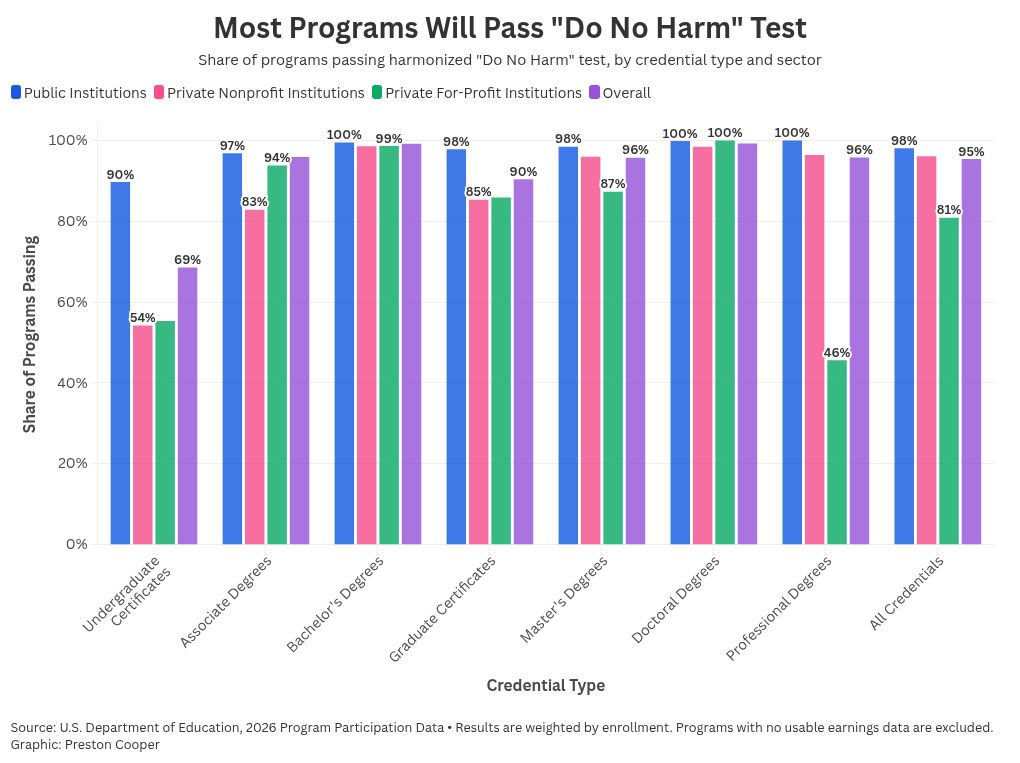
The test is a low bar; according to the Department’s data, 95 percent of students are enrolled in a program that is likely to pass the earnings test. Undergraduate certificate programs are by far the most likely to fail, along with a smattering of associate and master’s degree programs.
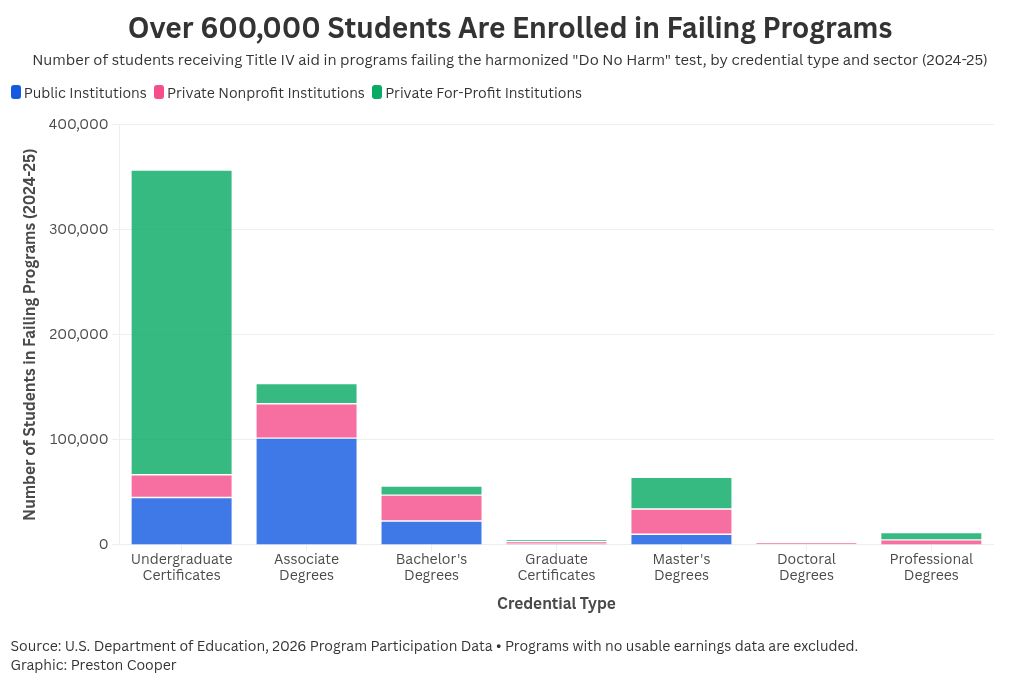
But the five percent of programs that are likely to fail the earnings test enroll a large number of students in an absolute sense. During the 2024–25 academic year, 644,000 students enrolled in one of those failing programs using federal student aid. The loss of loan eligibility for these programs may induce some of those students to choose higher-value programs of study.
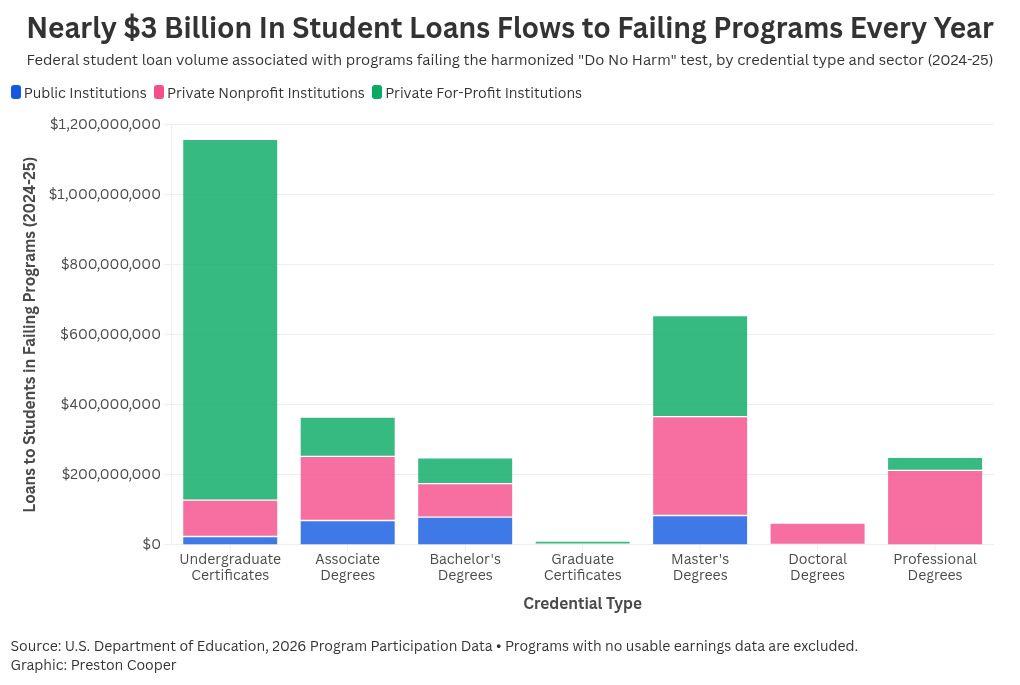
Failing programs also receive considerable subsidies from the federal government. During the 2024–25 award year, the Education Department disbursed over $2.7 billion worth of loans to students in failing programs. Given the low earnings of these programs’ graduates, much of that debt is unlikely to be repaid in full. Cutting these programs off from federal loans is therefore a significant win for taxpayers.
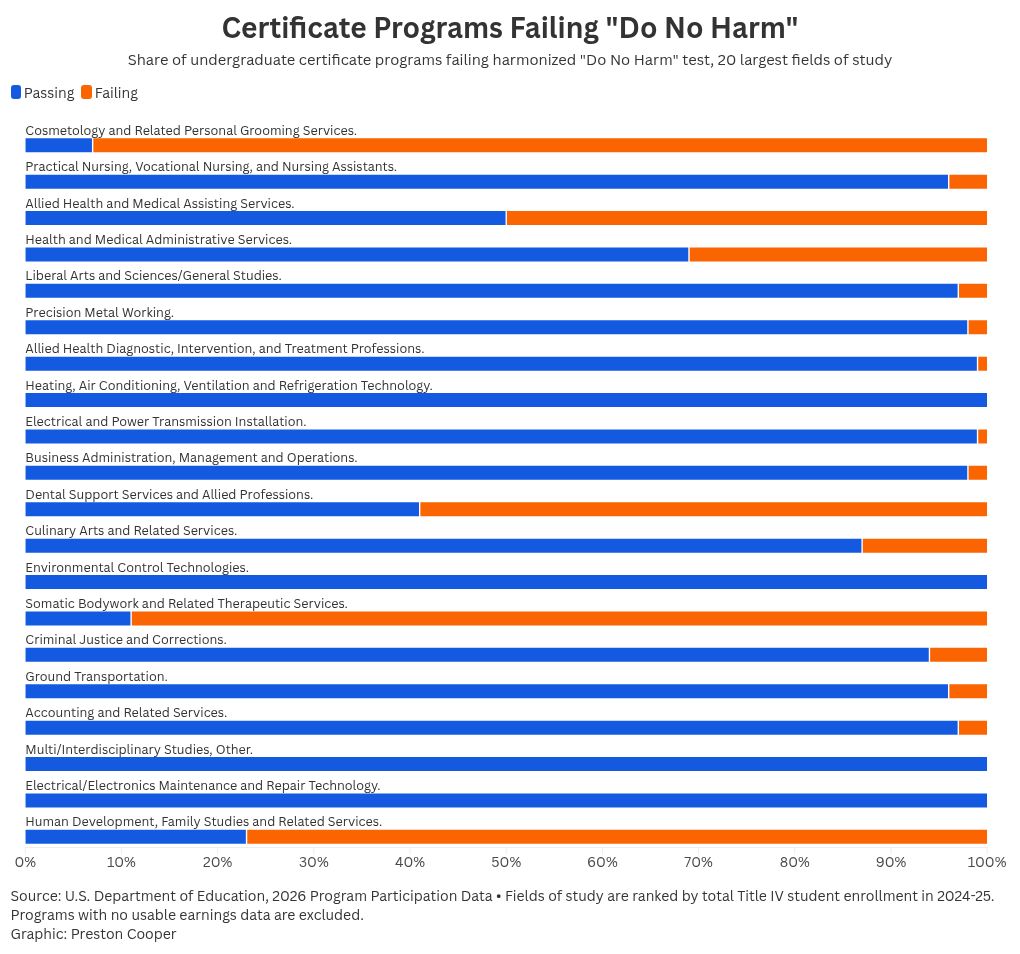
Cosmetology programs are among the likeliest to fail the Do No Harm standard, with 93 percent of undergraduate certificate programs in cosmetology coming in below the earnings benchmark. Other fields of study likely to fail at the certificate level include medical assisting and somatic bodywork.
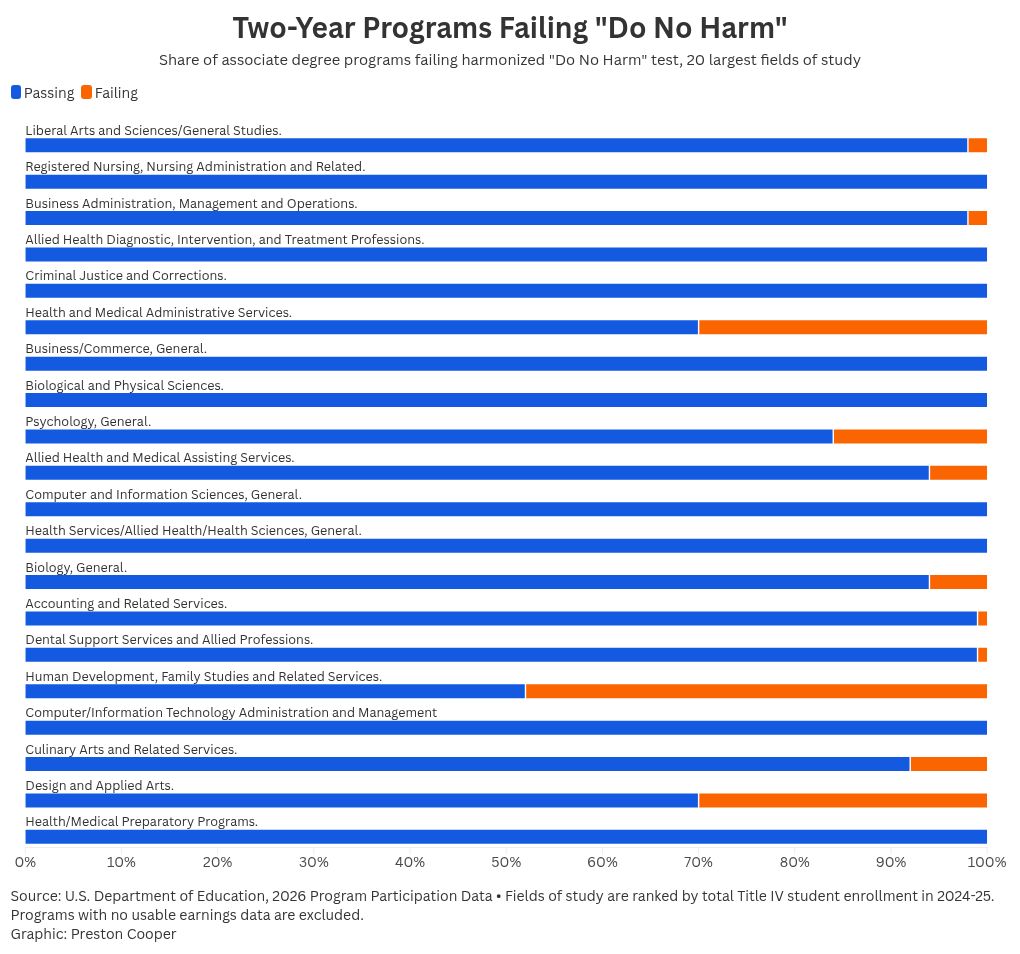
At the two-year degree level, most programs pass—but a handful of fields such as health and medical administrative services, as well as design and applied arts, have a substantial share of programs falling below the earnings threshold.
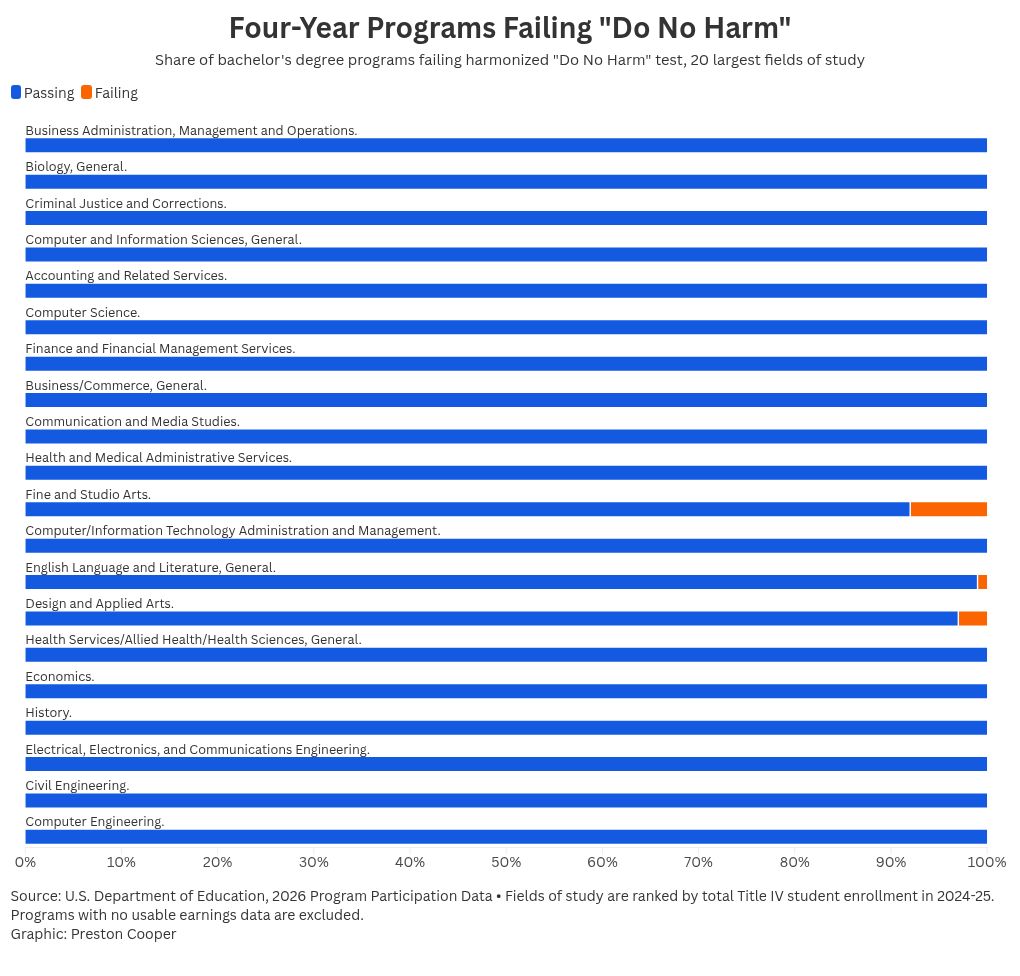
Almost all bachelor’s degree programs are likely to pass. Because four-year degrees tend to attract students with higher preexisting earnings potential, very few of these programs fail the earnings test. However, there are a handful of failing programs in the arts and humanities fields.
At the master’s degree level, 4 percent of degree programs fail, with mental and social health services being the only large field where a majority of programs fall below the earnings benchmark. Still, failing graduate programs collectively receive close to $1 billion in student loan funding every year—hardly pocket change.
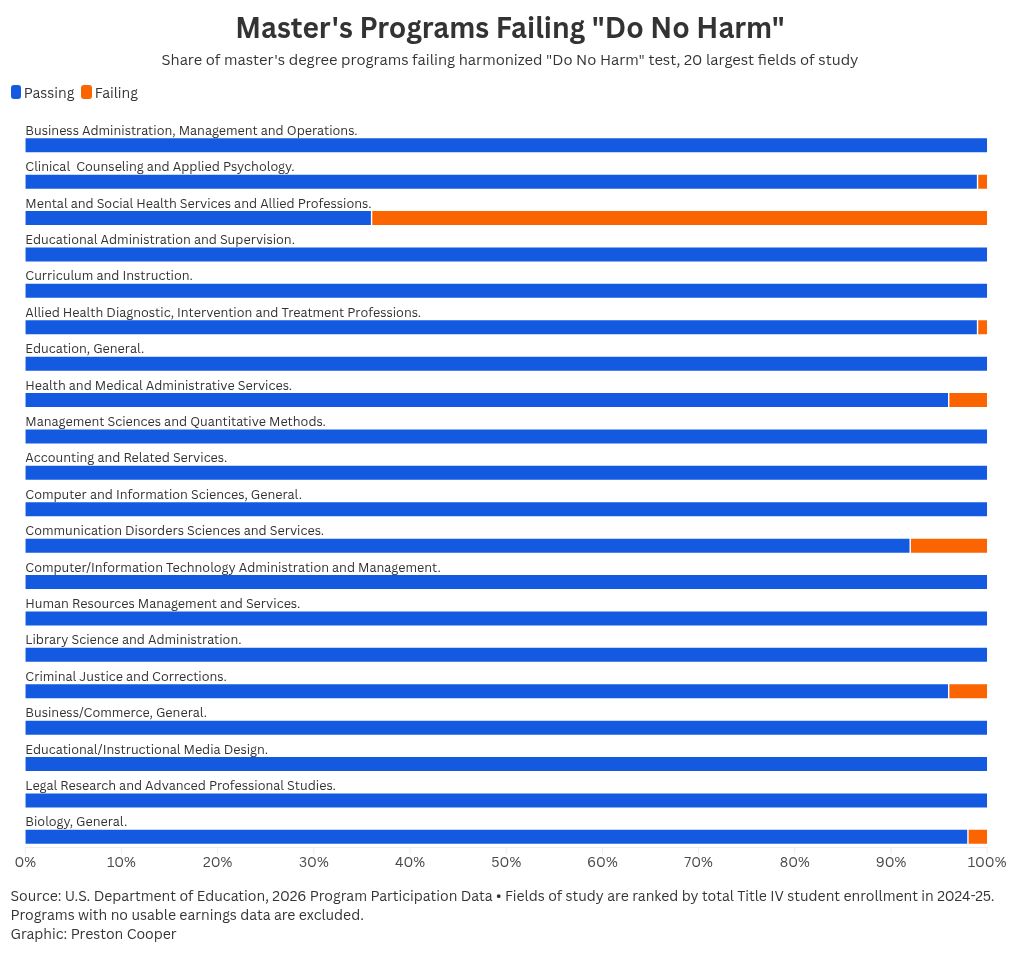
While most programs are likely to pass the earnings test, institutions with failing programs may need to start preparing for the changes that are to come. Out of America’s 5,000 colleges and universities, nearly 2,000 have at least one failing program. Schools can identify which of their programs are likely to fail in the table below.
The post Low-Earning Degrees Will Soon Lose Access to Federal Loans—Is Yours on the List? appeared first on American Enterprise Institute – AEI.