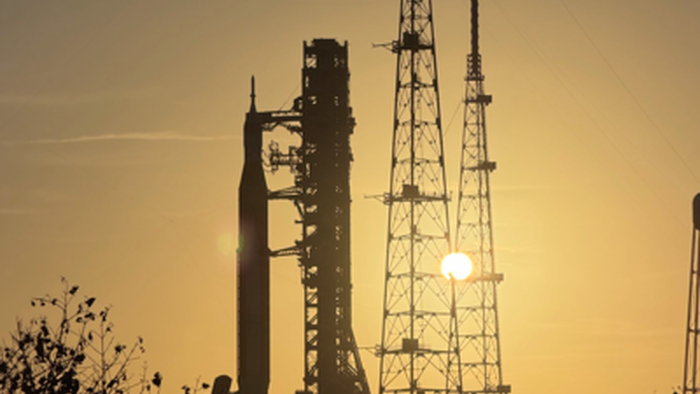
NASA’s Artemis II mission is finally set to launch three Americans and one Canadian atop the Space Launch System rocket on a lunar mission not seen in more than 50 years.

The Artemis II mission is scheduled for launch at 6:24 p.m. EST on Wednesday from Kennedy Space Center in Florida.
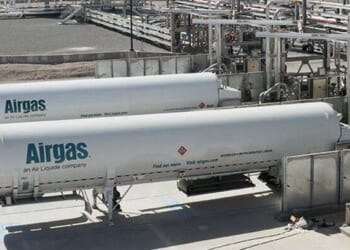
The fueling process for the Artemis II rocket has picked up speed. The rocket is now more quickly filling with liquid oxygen and liquid hydrogen.
When the core stage is completely full, it will contain 196,000 gallons of liquid oxygen and 537,000 gallons of liquid hydrogen. pic.twitter.com/wejiCveeNb
— NASA Artemis (@NASAArtemis) April 1, 2026
The crew of four, including NASA astronauts Reid Wiseman (commander), Victor Glover (pilot), and Christina Koch (mission specialist), along with Canadian Space Agency astronaut Jeremy Hansen (mission specialist), will circumnavigate the moon in a 10-day flight aboard the new Orion spacecraft.

Artemis II is a critical test of the Orion capsule and marks another step toward future lunar landings, which SpaceX is likely to support as early as 2028.
Three hours and 30 minutes after liftoff, if everything goes to plan, the Orion spacecraft and its service module will separate from the second stage of the rocket, perform a manual flight test high in Earth orbit, and prepare for a translunar injection, in other words, a trip to the moon, during which Orion’s service module will fire its engines and catapult the four astronauts to 25,000 mph on a three-day journey into lunar orbit.

Artemis II will enter the moon’s gravitational field about four days into the mission and then begin its U-turn, enabling a flyby around the far side more than 12 hours later. If today’s launch goes according to plan, that flyby of the moon will take place next Monday.
“No one has ever seen this full crater on the far side of the moon, and so this would be really neat,” Hansen said. “I’m excited to have a look at it. It’s just enormous, super complex, and you could probably stare at it for hours.”
The flyby will set the astronauts up on a “free-return trajectory” that will essentially slingshot them around the far side and back to Earth without burning additional fuel.

By April 10, Artemis II is forecast to re-enter Earth’s atmosphere, nine days and one hour after liftoff, and splash down off the coast of Southern California.
A successful mission sets NASA up for a crewed 2028 lunar surface mission.

NASA Administrator Jared Isaacman has recently stated that his agency plans to build a nuclear reactor on the moon.