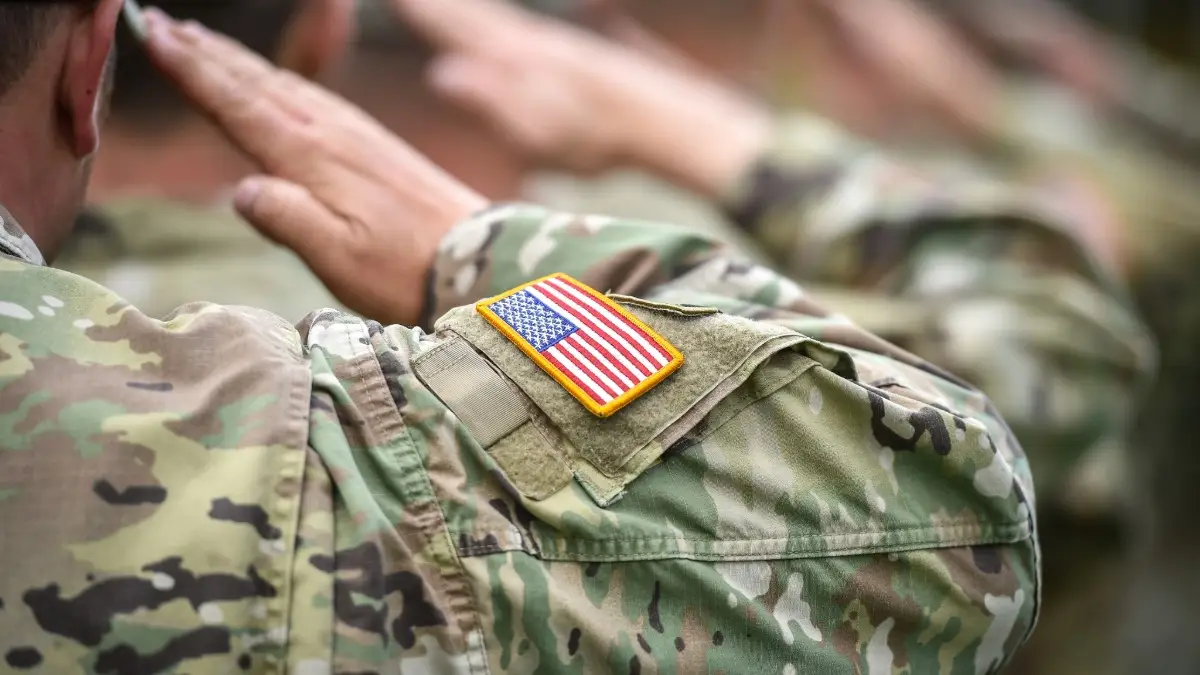
Every year, Congress passes the Department of Defense (now Department of War) appropriations bill that funds our military. In addition, Congress must also pass a bill that authorizes policies and sets spending limits for our nation’s armed forces — the National Defense Authorization Act (NDAA). In recent years, the NDAA has been used as the vehicle for implementing leftist programs that led to significantly depressed recruitment and weakened the strength of the military. This year, necessary changes are being made to repair the harmful military policies of the past Administration. President Donald Trump campaigned on this issue and Secretary of War Pete Hegseth has already begun the process. This week, Congress is doing its part by codifying these wins in this year’s NDAA.
The House and Senate have been working on the NDAA for months. The House passed its version in September, and the Senate passed a companion in November. This triggered a process in which House and Senate leadership, along with several hand-picked Members from each chamber, convene a conference committee. In this conference, Members work out the differences between the different versions. This process often happens behind closed doors. Fortunately, the product (S. 1071) — that contains several conservative wins — was reported and is now headed to floor votes in both chambers.
The NDAA furthers President Trump’s agenda by codifying 15 executive orders pertaining to the military. Several of those orders eliminated the “woke” diversity, equity, and inclusion (DEI) policies that promoted servicemen based on their skin color or gender rather than their merit. Around $40.5 million was saved just by slashing these programs.
Other policies line up with the administration’s DOGE priorities by slashing $20 billion in waste. Because of these savings, they were able to boost military spending by $8 billion over the President’s original proposal. Service members will also receive a 4% pay raise.
In July, we sent an alert to our grassroots activists to urge Senators on the Armed Forces Committee to oppose any provision that would require young women to register for the Selective Service. In recent years, this unfortunate policy found its way into committee-passed bills with bipartisan support. There were even talks to soften drafting our daughters by adding a caveat that would prevent drafted women from being put in combat roles. We were not enticed. This year we are delighted that Congress heard our opposition and did not include women in the draft in the NDAA at all.
Another contentious issue in the NDAA is the expansion of in-vitro fertilization (IVF) coverage. Currently, IVF services are provided to families where one spouse was injured in the line of duty. Attempts have been made to extend that coverage to all service members, their families, and even to allow young women to freeze and store their eggs. Proponents of this language will use the umbrella term of “artificial reproductive technology,” which expands the definition of fertility treatments to include cloning and other unethical methods. This type of language was in both versions going into the conference committee. Thankfully, Speaker Mike Johnson (R-LA) successfully advocated for the removal of the expanded IVF coverage and has been a stalwart supporter of the right to life in all circumstances.
Strong national and international security measures were also included. The NDAA fully funds the National Guard to aid in border patrol. It increases our defenses against China while strengthening our allyship with Israel.
Secretary Hegseth’s consistent America-first rhetoric and no-holds-barred attitude have brought a renewed enthusiasm for our military. Since he has led the Department of War, all branches of the military have met and exceeded their recruitment goals — a feat that hasn’t happened in years. Passing this NDAA will help continue the policies that make our armed forces successful. Eagle Forum sent a letter to both the House and Senate informing Members of our support of the NDAA and that votes would be recorded in our Congressional Scorecard. You can visit our Scorecard here to see how your elected officials voted after the votes occur.