Regime Transformation vs. Change: Why Asher Fredman Argues 2026 is Different from 2003 Iraq
The White House has defined the goals of Operation Epic Fury as destroying the Iranian regime’s missiles, annihilating its navy, degrading its terror network, and ensuring that it never obtains a nuclear weapon. Given the experience of Iraq and Afghanistan, it is understandable that regime transformation has not been defined as an operational goal.
Pushing Away From Regime Change
At the same time, it should be recognized that Iran of 2026 is not Iraq of 2003. With the right strategies, Iranian-led regime transformation is a feasible and realistic goal. Achieving this goal would be highly beneficial for vital American interests at home, in the region, and across the globe.
The ayatollah regime is the greatest threat to U.S. interests in the Middle East. It has been targeting American citizens and interests for 49 years, leading to over 1,000 American deaths. Tehran and its terror proxies have carried out tens of thousands of attacks against key U.S. allies, including Saudi Arabia, Bahrain, the UAE, Jordan, and Israel.
>>> Are the Iran Strikes a Good Idea?
Adversarial Alliances
The repeated wars and instability fomented by Iran have been a key factor in preventing a true American pivot from the Middle East to the Indo-Pacific. In fact, this is one of the main reasons that China has developed such a strategic alliance with Iran, along with Beijing’s desire for access to inexpensive Iranian energy.
China is not the only American adversary that Iran actively supports. Tehran has been a vital supplier to Russia of drone technology, thereby prolonging the Russia-Ukraine war and making a negotiated settlement more difficult.
Finding New Leadership in Iran
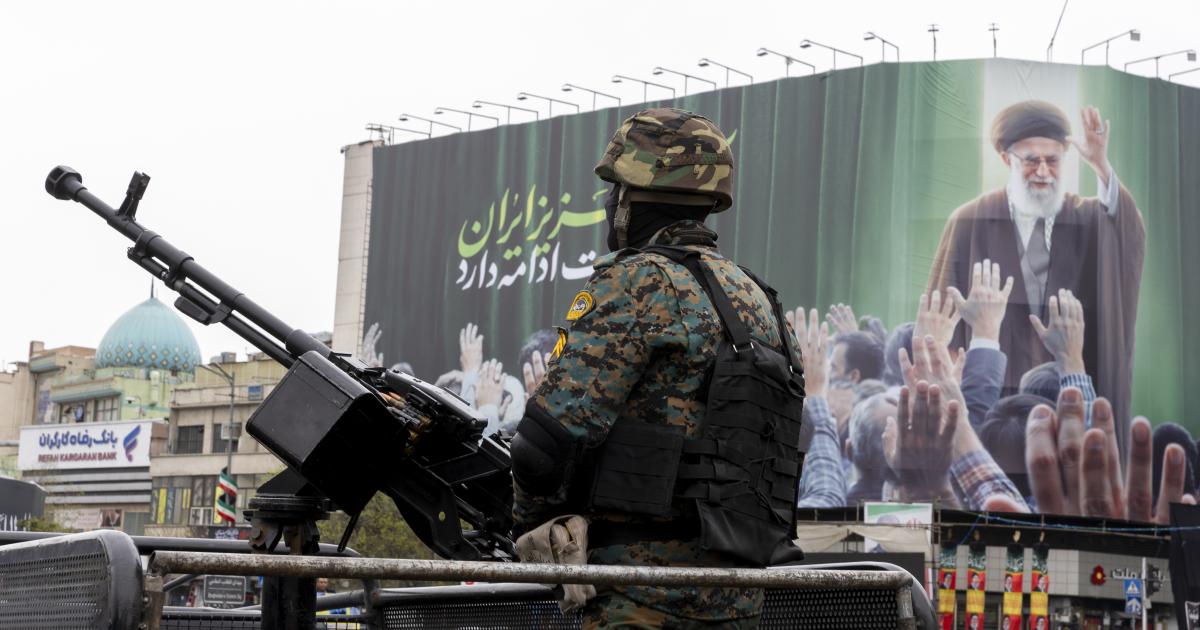
The U.S.-Israeli operation against Iran is unlike any other in the history of modern warfare. The initial action eliminated more than 40 senior Iranian leaders in the first minute. Air dominance over all of Iran was achieved in five days. The U.S. and Israel are now positioned to eliminate the regime’s forces and instruments of repression in an unimpeded manner.
Again and again, large segments of the Iranian people have shown a courageous determination to retake their country from the ayatollah regime. While differences exist between various protest groups and regions, those leading the protests are aiming to build a better future for their homeland, not see it devolve into sectarian battles or Jihadist holy wars.
The best available data regarding the Iranian people’s preferences comes from the Group for Analyzing and Measuring Attitudes in Iran (GAMAAN). The June 2024 survey, based on anonymous responses from more than 77,000 respondents, found that 70% of Iranians oppose the Islamic Republic. 89% say they support a democratic system. Two-thirds reject governance based on religious law.
While the poll found that no opposition figure enjoys a majority, Reza Pahlavi is the most popular opposition figure, with 31% support, suggesting his potential to galvanize an uprising.
Another indication of how Iranians see their country’s future comes from a September 2026 GAMAAN poll, which found that 69% of Iranians believe their country should stop calling for the destruction of Israel. In that poll, the U.S. enjoyed the highest favorability rating of any country examined.
A peaceful, moderate, and U.S.-aligned Iran would present tremendous benefits to U.S. security and prosperity. With 92 million people and the world’s third-largest oil and second-largest natural gas reserves, Tehran could become a very important economic and energy partner to the U.S.
An Iran that reverted to its rich heritage as a civilizational crossroads could integrate into regional frameworks such as the India-Middle East-Europe Corridor and the Abraham Accords to shape one of the most dynamic and powerful corridors of trade, innovation, and energy in the world. An Iran allied with the U.S. would also be a significant blow to China and Russia.
The lessons of Iraq must be learned. The U.S. must be extremely cautious about deploying ground troops. There may be elements of the governmental apparatus and the regular Iranian military that can be kept in place.
>>> A “Tear Down the Wall” Moment in Iran Will Damage Both the Islamic Republic—and China
Regime transformation cannot be achieved from the air or imposed by a foreign power. It will be up to the Iranian people to seize their country. As President Trump declared: “I call upon all Iranian patriots who yearn for freedom to seize this moment, to be brave, bold, heroic, and take back your country. America is with you…The rest will be up to you.”
Nevertheless, the core components for a successful regime transformation are in place. There are numerous steps that the U.S. and Israel can take to create the best conditions possible for the Iranian people to take back their country, with minimal threat to U.S. troops.
These include systematically eliminating interim leaders and officials chosen to replace those killed, deepening the physical and communications disconnect between the regime’s leadership and people, intensifying damage to installations used for internal control and repression, and encouraging cooperation among opposition groups and militias.
While it is essential to learn from the past, it is also important not to be blinded by overly simplistic analogies. President Trump has demonstrated, time and time again, the ability to break conventions and achieve outcomes in the international arena that most pundits considered impossible.
As the U.S. focuses on eliminating Iran’s missile, naval, terror, and nuclear capabilities, it should also help create the conditions for the Iranian people to successfully shape a better future for their nation, the region, and the world.