Oil prices surged Sunday night and into Monday morning, March 9, to their highest level in four years, to over $110 per barrel. The WTI price has since retreated to about $94 per barrel, and Brent currently sits at about $99 per barrel. U.S. gasoline prices are now up about 17% since the war started.
Iraq, Kuwait, the United Arab Emirates, and Saudi Arabia have cut oil production, as tanker traffic around the Strait of Hormuz remains essentially closed. Gulf Arab states are cutting production because they are running out of storage space, and the oil has nowhere to go. The bottleneck also threatens to increase shipping and food prices globally. If the Strait of Hormuz remains essentially closed, fertilizer prices will rise as the Persian Gulf is a dominant source of the world’s fertilizers, especially those that deliver nitrogen to soils. Farmers may use less on their crops, producing less food at a higher cost.
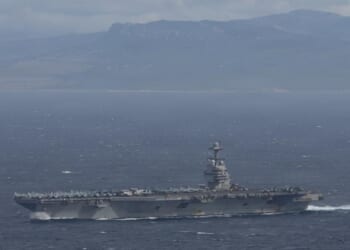
Last week, President Trump said that the U.S. Navy would escort oil and gas tankers through the Strait of Hormuz when it becomes safe to do so and after the United States removes Iran’s navy. However, U.S. forces are still focused on limiting Iran’s missile and drone capabilities. The International Development Finance Corporation will provide up to $20 billion in rolling reinsurance to cover oil tankers and other commercial vessels transiting the Strait of Hormuz. According to JPMorgan analysts, however, that insurance coverage is “too small for the risk,” estimating that roughly 329 tankers currently in the Gulf could require up to $352 billion in total insurance protection.
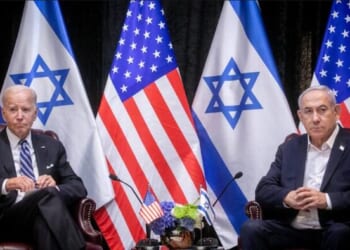
G7 finance ministers held an emergency meeting early Monday morning, March 9, to discuss oil prices after Brent oil surged above $100 per barrel, with an option to release some 400 million barrels of strategic reserves to increase supply and bring oil prices down. However, the G7 has agreed not to release petroleum reserves at this time, according to France’s finance minister. If G7 nations do release petroleum reserves in the future, it would be the first time in four years, following Russia’s invasion of Ukraine, which resulted in similar energy price shocks. Unfortunately, the Strategic Petroleum Reserve in the United States is already depleted, with President Biden draining it by a net 240 million barrels for political purposes. While President Trump is working to refill it, the progress is slow, and the necessary repairs must be undertaken after the significant withdrawals.
Oil Producers Shut-In Oil Production
Gulf Arab states are cutting oil production because they are running out of storage space: the Strait of Hormuz, from which 20% of the world’s oil consumption transits, is essentially closed, and pipeline outlets are essentially full. As CNBC reports, Kuwait, the fifth-biggest producer in OPEC, announced precautionary cuts to its oil production and refinery output due to “Iranian threats against safe passage of ships through the Strait of Hormuz.” The state-owned Kuwait Petroleum Corporation did not detail the size of the cuts. The United Arab Emirates, the third-biggest producer in OPEC, is “carefully managing offshore production levels to address storage requirements.” The Abu Dhabi National Oil Company (ADNOC) said its onshore operations are continuing normally.
Output in Iraq, the second-biggest OPEC producer, has effectively collapsed. Production from its three main southern oilfields has fallen 70% to 1.3 million barrels per day. Those fields produced 4.3 million barrels per day before the Iran war. According to Iraqi oil officials, the country’s largest oil field, Rumaila, was cut by 700,000 barrels a day, while the West Qurna 2 field saw its output fall by around 450,000 barrels a day. Iraq also cut production at the Maysan oil field and has suspended production in the northern Kirkuk region as a precaution.
Shutting in an oil well risks long-term damage to reservoir pressure and incurs high restart costs, usually making it a measure of last resort. Restarting production can take days or even weeks, depending on the reservoir, so producers prefer to use any other available options.
According to the Wall Street Journal, Gulf states, including Saudi Arabia, the U.A.E., Kuwait, and Qatar, rely heavily on massive tank farms at export terminals across the region. These tank farms act as buffers, where oil and refined products flow from fields into tanks. Complex manifold systems and pump networks blend the oil to strict contract specifications before loading it onto ships for transport. When the Strait of Hormuz is not an option and other outlets are at capacity, producers can temporarily continue production by injecting oil into these tanks. Saudi Arabia has a much larger storage capacity and can bypass the Strait of Hormuz via pipeline. Still, those options are limited as Saudi Arabia has much higher production and exports than other Persian Gulf exporters.
Fertilizer Becomes a Commodity at Risk
The Persian Gulf is a dominant source of the world’s fertilizers, which are exported via the Strait of Hormuz. Five Persian Gulf countries (Iran, Saudi Arabia, Qatar, the United Arab Emirates, and Bahrain) supply more than a third of the world’s urea, an important nitrogen fertilizer, and nearly a quarter of the world’s ammonia. These five countries produce nearly one-fifth of phosphate fertilizers. Recently, the price of urea sold in Egypt increased by more than 35%.
Russia’s war with Ukraine also reduced fertilizer supplies, as both countries produce them. While China is an alternative source, last year it imposed restrictions on fertilizer exports, in part to shield its farmers from geopolitical disruptions. In India and Brazil, governments have encouraged farmers to reduce their use of imported fertilizers by diversifying their crops and adding locally available nutrients to their soils. India imports about 40% of its urea and phosphate-based fertilizers from suppliers in the Middle East.
The abundance of energy in the Persian Gulf has led to the development of factories that produce raw materials for many types of fertilizer, especially those containing nitrogen. Nitrogen fertilizers are natural gas reconfigured as plant nutrients. For now, most factories in the Gulf that produce nitrogen fertilizers are continuing to do so. But their delivery to farmers requires entry through the Strait of Hormuz. One major source of urea, QatarEnergy, halted production when it lost access to natural gas due to strikes from Iranian drones and missiles.
Sulfur, a yellow, powdery substance that is a byproduct of refining oil and gas, is also at risk since almost half of the world’s sulfur is impacted by the closure of the Strait of Hormuz. Sulfur is shipped in bulk freighters to ports around the world and then used to make both phosphate fertilizers and metals.
Analysis
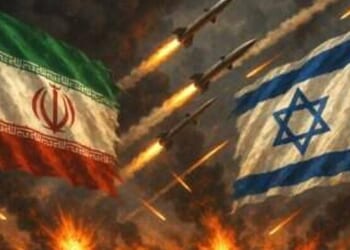
Oil and gasoline prices are rising rapidly as the conflict in Iran intensifies for the second straight week. Oil prices are over $100 a barrel, and gasoline prices have risen 50 cents a gallon, both effectively due to the closure of the Strait of Hormuz, where 20% of the world’s oil consumption transits. President Trump is offering a U.S. Navy escort through the Strait once Iran’s navy is annihilated. Four Persian Gulf oil producers are cutting production at oil fields because pipelines and storage facilities are near capacity. Restarting oil field production can take days or even weeks, so production cutbacks are the last option taken. Five Persian Gulf countries produce nearly one-fifth of the world’s phosphate fertilizers, more than a third of the world’s urea, and nearly a quarter of ammonia, which are exported via the Strait of Hormuz and are currently unavailable to farmers.
For inquiries, please contact [email protected].