Authored by Tsvetana Paraskova via OilPrice.com,
-
Oil prices dropped by more than 5% on hopes that U.S.–Iran tensions may be easing.
-
President Trump suggested Iran is engaged in serious talks, dampening fears of military escalation.
-
Analysts said broader market weakness and election-year politics added to the downward pressure on crude.
Oil prices slumped by 5% early on Monday from a five-month high at the end of last week, after the most recent tensions between the United States and Iran appeared to have eased.

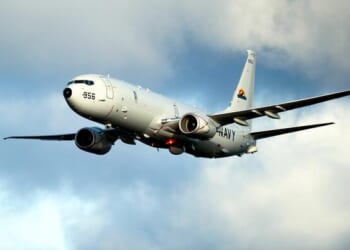
This morning, the Brent Crude international benchmark was back to $65 per barrel, down from $70 it hit last week when U.S. President Donald Trump warned Iran that a “massive armada” of U.S. Navy ships is headed to the Persian Gulf.
Brent Crude prices had slipped by 4.83% to $65.99 on Monday morning, while the U.S. benchmark, WTI Crude, was trading down by 5.11% at $61.92.

Last week, markets reacted to the renewed tension in the world’s most important oil-producing and exporting region, and oil prices soared.
However, this weekend, President Trump said that he believes Iran is “seriously” talking with the U.S., adding he hopes that negotiations could lead to an “acceptable” deal.
President Trump told a reporter aboard Air Force One that he certainly can’t tell them if a military strike is still an option.
“But we do have very big, powerful ships heading in that direction,” President Trump said, but added, “I hope they negotiate something that’s acceptable.”
“They should do that, but I don’t know that they will. But they are talking to us. Seriously talking to us,” the president said, referring to Iran.
Trump says he has quietly imposed a deadline on diplomacy with Iran – just as Turkey, Qatar, and Egypt scramble to keep talks alive. When pressed by reporters, he refused to answer any specifics in terms of planning.
When Israel, followed by the US, attacked Iran last June in the 12-day war, it too was apparently based on an internal timeline only the White House knew about (and presumably Israel) .
Tehran leadership’s working theory seems to be that Iran absorbs heavy blows but responds with unprecedented regional retaliation, including mass-casualty strikes on US forces, to shatter Trump’s apparent belief that war with Iran would look anything like a Venezuela-style operation.
Confronted with that reality, the calculation goes, Trump would be forced to scale back his maximalist demands and reset the parameters.
Whether Iran can actually strike that hard, or survive the scale of US retaliation that would follow, remains an open question.
With the risk premium unwinding, oil prices retreated on Monday from the five-month highs seen last Thursday.
“A broader correction across financial markets has added to the downward momentum,” ING’s commodities strategists Warren Patterson and Ewa Manthey said on Monday.
According to Saxo Bank’s analysts, “With the President facing weak poll numbers, a military escalation that risks pushing gasoline prices sharply higher appears unlikely ahead of the November midterm elections, where affordability and his time in office are set to dominate voter focus.”
Loading recommendations…