You’re reading Dispatch Culture, our new weekly newsletter exploring the world beyond politics. To unlock all of our stories, podcasts, community benefits, and our newest feature, Dispatch Voiced, which allows you to listen to our written stories in your own podcast feed, join The Dispatch as a paying member.
I hope you had a great week. This Saturday, we’re starting off with a review of the latest book by American writer George Saunders. “We live in an arrogantly materialistic age, Saunders mused in a 2016 interview with Image Journal about his art and faith, published shortly before Lincoln in the Bardo came out,” writes Ohioan Nadya Williams. “Modernity keeps trying to reject anything that science cannot prove. But the world we see is not all there is.”

Second, we have New Jersey denizen James Scimecca, otherwise known as The Dispatch’s audience engagement editor, with an in-depth, some would say geeky feature on what he calls the pop-punk renaissance of 2025. “While it may be soul-crushing to think about that merciless march of time (really, what could be more emo than that?), it’s safe to say that pop punk has—so far—avoided the dreaded label of dad rock, in part because the genre continues to dominate the culture for those under 40,” James writes.

From earlier in the week, we have Kevin D. Williamson on Martin Luther King, Jr. and civil disobedience, a Remnant episode on crime in 1980s New York City, and the writer and historian Susan Dichter on the birth of the American hotel and how it shaped the behavior of a young nation.
American Artifacts
Old Color for a Gray New World
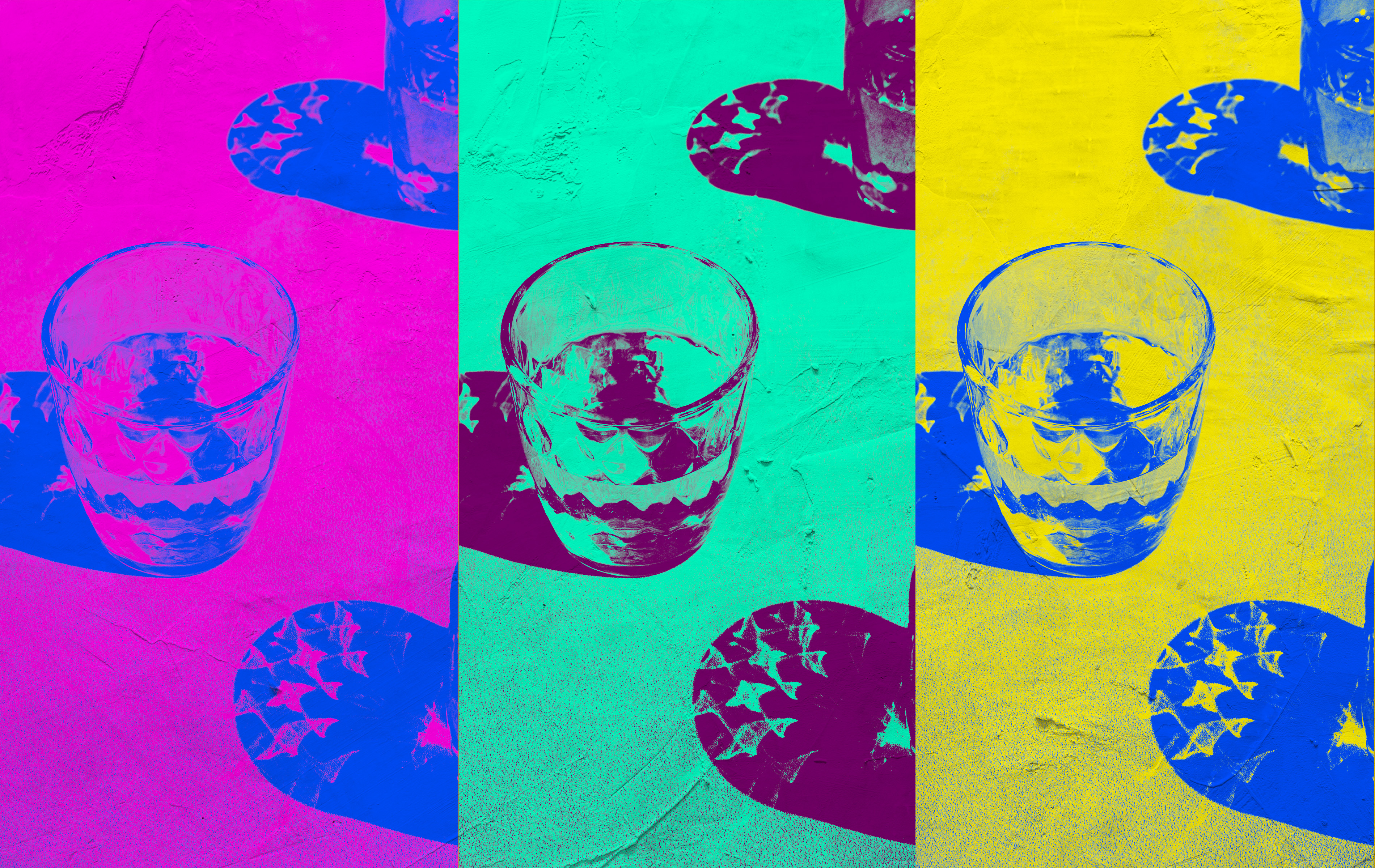
Nothing has ever tasted as good as a root beer float with coffee ice cream, prepared by my grandfather in his kitchen in the house he had remodeled in the West Mount Airy neighborhood of Philadelphia. It was not just any root beer float, of course. The root beer was Hires, the coffee ice cream Häagen-Dazs. After a lifetime as a skilled carpenter, my grandfather had a perfect eye for proportions, all the better to know the right ratio of soda to ice cream. And, most importantly, he delivered the treat in a 10-ounce tumbler made of mottled, dark green, and translucent “Depression glass.”
There is no question that any drink tastes better in Depression glass. We grandchildren fought to be served our floats (or, sometimes, milkshakes) in one of the two Depression glasses my grandparents still had, survivors of a larger set—perhaps six or eight of them. For 10 years, from about 1929 to 1939, numerous companies produced editions of this cheap but attractive glassware, often tinted green or blue, often stamped or etched with all manner of baroque designs. The coloration and intricacies made the items seem desirable, even though they were of inferior quality to the china or crystal that consumers aspired to use.
The glasses—one could also get serving dishes and other kitchen items in Depression glass—were distributed through mass-market venues, like department stores and five-and-dimes. My grandfather recalled that he got his by redeeming proofs of purchase of other items. And indeed, one website dedicated to Depression glass says that “pieces of this elegant glass were often used as a promotional item, given away for free with the purchase of other products (by including free gifts of a piece of the inexpensive glassware in food boxes), or sold in sets as a way to encourage consumers to buy more.” Quaker Oats included pieces of Depression glass with their product, to induce consumers to buy more or collect a whole set.
Today, there is a strong market for antique Depression glass, available on specialty sites and, of course, eBay, which has more than 70,000 listings. You can shop by manufacturer and color, and aficionados can hunt for the subset known as uranium glass, which include an admixture of, yes, uranium, causing the glass to glow under ultraviolet light. (Uranium glass preceded the Great Depression, but became extra-popular during it.) I myself have acquired—as a birthday gift from my younger brother—four juice glasses in the same dark green we remember from our grandparents’ kitchen.
Depression glass deserves this renaissance. We live in a bland, monochromatic age, when it seems that everything is mass-produced in whites, beiges, and grays. When was the last time you saw a house repainted in an eye-popping color? What man today wears the bright yellow power tie so common in the 1980s? The majority of new cars today come in achromatic shades, but it doesn’t have to be that way: The 1970 Volkswagen Beetle, for example, came in hues like Clementine Orange, Cobalt Blue, Royal Red, and Chinchilla Gray, and the convertible was also available in Yukon Yellow, Poppy Red, and Deep Sea Green.
The blanching of our world seems beyond our control, the new color schemes handed down by the gods, without human consultation. One despairs of fighting back: Subaru isn’t going to make a purple Outback, no matter how nicely I ask. But if cars are beyond our control, dishware isn’t: Glass doesn’t have to be totally clear. Depression glass doesn’t have the modernist, Crate-and-Barrel simplicity that today’s interior decorators have persuaded us we crave. They are instead fun and whimsical. And they will make your root beer float taste out of this world, provided you use the right ratio of ingredients.
An Outside Read
Since we’ve already talked about hotels, why not mention another one? The moribund Beverly Hills Hotel is the setting of this 1993 dispatch by New Yorker writer Adam Gopnik, but the true protagonist is Irving, the 87-year-old man who over decades had become a fixture of the hotel’s poolside scene. “Irving is one part Meyer Wolfshiem, one part Colonel Stingo, and eight parts everything your grandfather in Fort Lauderdale would dream of being if only he could get loose from your grandmother,” Gopnik wrote at the time. “He is certainly the best-dressed eighty-seven-year-old in America. He is slim, has beautiful, almost silver-white hair, a dashing white mustache, which recalls those of the rakish leading men of the forties—Cesar Romero or Douglas Fairbanks, Jr.—and a wardrobe that extends into new vistas of rococo elegance every time you see him. His appreciation of fine clothes is mostly untouched by narcissism. Spying an old friend just arrived at the hotel and wearing, let’s say, a white linen suit with a blue shirt and a flowered Liberty print tie—nothing much at all, really—Irving, dressed in a black cashmere Edwardian coat, chocolate kid gloves, and a camel’s-hair scarf, might pause before crossing the lobby and, after a warm handshake, say, ‘I didn’t want to come over too quickly. I was having too much pleasure in admiring that wonderful suit you’re wearing, and observing how perfectly you’ve accessorized it.’”
Stuff We Like
By James Scimecca, audience engagement editor (again)
Consider this a bonus helping of my emo review (originally cut from my longer essay linked above). Mayday Parade’s two 2025 albums—part of a triple album that their publicist tells me is due in late spring or early summer—really shine. The first in the series, Sweet, opens with “By the Way,” a clarion call of piano chords and slick drums. After a rather pop-y verse, the guitar kicks in alongside singer Derek Sanders’ soaring tenor on the chorus. Meanwhile, “Under My Sweater” on Sad—the second album—is a classic Mayday song in the best way, down to the extra-dramatic lyrics:
Because once again I find myself inside an empty silhouette
I’ll dance around until the light finds me
Poison everything you said you loved
The stuff that fills me up, I feel it burning away underneath my sweater
It’s experimental, it’s fun, it’s undeniably part of the emo genre while being modern. Both albums are worth a listen—perhaps on an angsty drive with the windows down.
Work of the Week
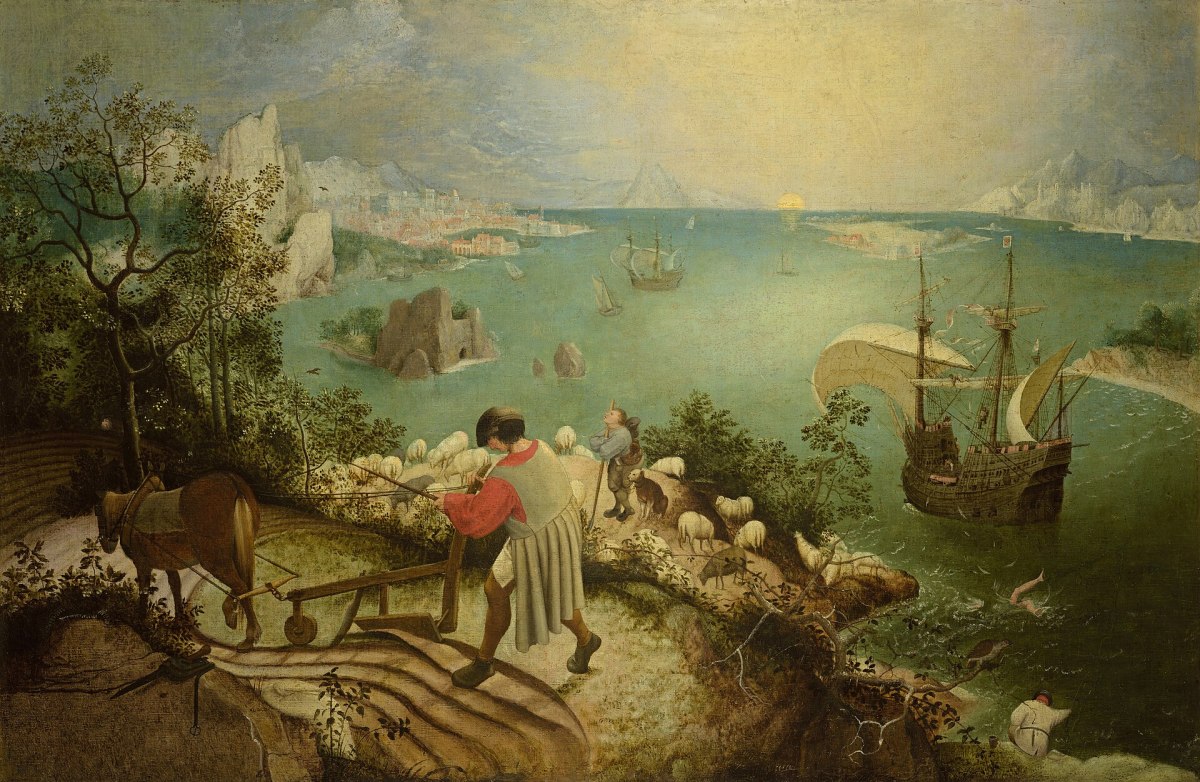
Work: Landscape with the Fall of Icarus, attributed to Pieter Bruegel the Elder, c. 1560
Why I’m a Dispatch member: The Dispatch provides the best political analysis on current events you can find.
Why I chose this work: In college, I read the poem William Carlos Williams wrote about this painting at a time when my ego was at its peak. Both works beautifully demonstrate the trap of vanity, and they have been my favorite poem and painting since.
Interested in being featured in this section? Submit a work of art here.
Interested in being featured in this section? Become a Dispatch member here.