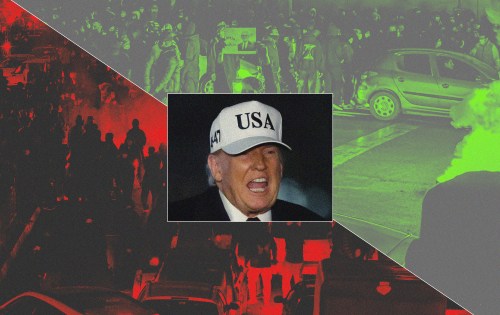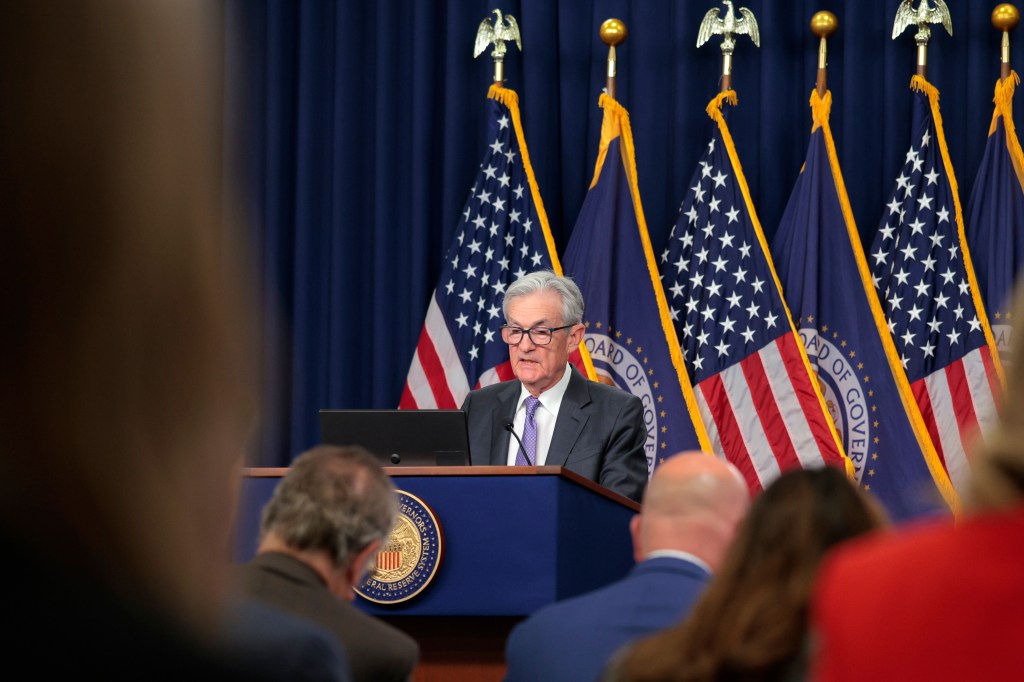
Hello and happy Saturday. President Donald Trump has been critical of Federal Reserve Chairman Jerome Powell, whom he originally nominated to that position in 2017, throughout his second term. He’s repeatedly called Powell “incompetent,” has referred to him as a “numbskull” and a “moron,” and threatened to fire him—which he cannot do legally—because Powell and the Federal Reserve have resisted pressure to lower interest rates.
Something else we’ve seen throughout Trump’s second term is targets of his ire buckling under similar pressure. Media outlets and social media companies have settled lawsuits filed by Trump, universities paid settlements and revised policies to have federal research grants restored, and law firms made deals to avoid penalties for working with lawyers Trump disliked.
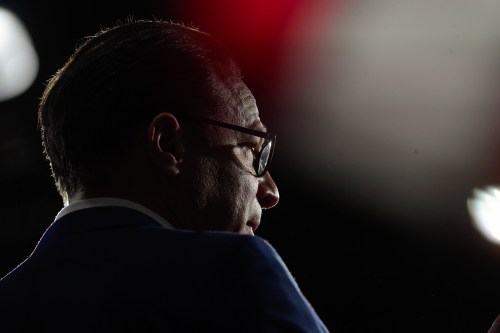
Powell chose differently. On Sunday night, he released a brief video statement announcing that the Justice Department had subpoenaed the Fed and was threatening to indict him for lying to Congress, pertaining to testimony he gave in June about the cost of renovations to the Federal Reserve headquarters. Powell saw through that pretext, saying:
The threat of criminal charges is a consequence of the Federal Reserve setting interest rates based on our best assessment of what will serve the public, rather than following the preferences of the president.
This is about whether the Fed will be able to continue to set interest rates based on evidence and economic conditions—or whether instead monetary policy will be directed by political pressure or intimidation.
In Boiling Frogs, Nick Catoggio explained why Powell was uniquely suited to speak out.
In all likelihood Powell keenly understands that he’s one of the last few first-world bulwarks in American government resisting Trump’s project to “Maduro-fy” it. And, evidently, he felt moved to act the part.
…
Nearly everyone in government has to answer either to the president, to the voters, or to their profession’s code of conduct for the things they say, and so the fact that America is becoming a banana republic before our eyes goes mostly unobserved in official channels. Powell, as the head of the last(?) quasi-independent federal agency, isn’t similarly burdened. He’s not elected, he can be removed only for cause, and he’s not bound by strict judicial ethics that require one to remain publicly neutral about the grand political effort to dismantle the constitutional order.
Powell’s bold move might well have paid off. Shortly after Powell issued his statement, Republican Sen. Thom Tillis, a member of the Senate Banking Committee, vowed to block any nominees to the Federal Reserve Board of Governors “until this legal matter is fully resolved.”
By Monday, opposition to the potential legal action was popping up even within the administration, with Treasury Secretary Scott Bessent reportedly telling Trump the investigation, launched by U.S. Attorney Jeanine Pirro in November, had “made a mess.”
John McCormack reported on the matter, talking to Tillis and other Republican lawmakers, who all backed Powell, as well as Jason Furman, former chair of the Council of Economic Advisers under President Barack Obama. Furman lauded Powell for speaking out and Tillis for responding. John writes:
Powell’s precise choice of words and strategy have mattered a lot. It’s not hard to imagine a different response—in which Powell said nothing or insisted that when the facts emerged every word of his testimony would be vindicated—that could have had a more negative impact on financial markets. By cutting to the chase that the investigation of him was pretextual—an argument a wide array of congressional Republicans buy—it’s less likely that a potential drip, drip, drip of new information will matter much.[
If you get the sense that the investigation of Powell seems a lot like the Trump administration’s pursuit of other current and former officials who have displeased the president, you’re probably not crazy.
In August the president attempted to fire Federal Reserve Gov. Lisa Cook over allegations of mortgage fraud. (A federal judge blocked the firing and the case is before the Supreme Court.) The Justice Department also pursued New York Attorney General Letitia James on claims of mortgage fraud. DOJ secured an indictment, but the case was dismissed in November. The same Trump adviser has pushed for all of these investigations. As Grayson Logue wrote in a reported piece published Thursday, “Aside from the president, the single biggest amplifier of this pressure campaign is Federal Housing Finance Agency (FHFA) Director Bill Pulte.”
Grayson details the pressure campaign Pulte has conducted against Powell:
Pulte has spent much of his tenure at FHFA focusing on Powell in interviews and a near constant stream of social media posts. He has claimed baselessly that the reason Powell is not supporting interest rate cuts is because he is personally wealthy, writing that “he will go down as the worst Chairman of the Federal Reserve in HISTORY!” At various points, he has called Powell “a phony,” “a national disgrace,” and a “corrupt swamp rat.”
Last July, Pulte reportedly presented Trump with a draft letter for the president to fire Powell. That same month, Pulte seized on unsubstantiated speculation regarding fraud in the years-long project to renovate the Fed headquarters, arguing for Powell’s resignation or firing despite the lack of evidence to substantiate any fraud or to implicate Powell in any wrongdoing.
Thank you for reading. Have a great weekend, and don’t miss the other great pieces highlighted below.
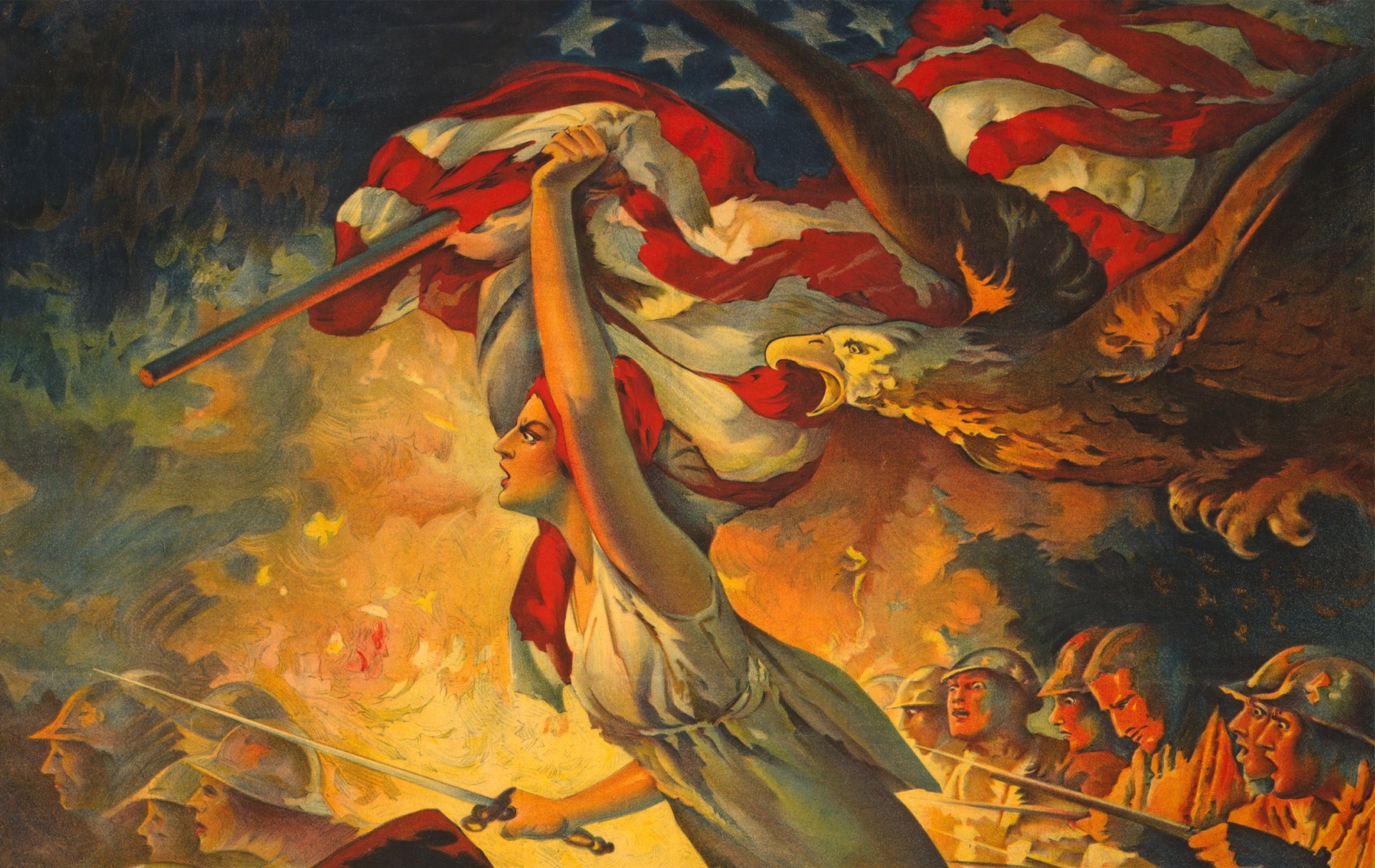
At the heart of many of these propaganda memes—and this is literally propaganda, whether you like it or not—is the insinuation that we are in some kind of war or need to be on war footing. “The American Way of Life is worth Fighting For.” “Hold the line, Patriots. Our Nation is worth Fighting For.” The pinned tweet on the Department of Labor’s account is a picture of the American flag, declaring “We are going to win. AMERICA FIRST.” Win … what? It’s not entirely clear to me. But that’s almost an afterthought, because the point of these ads is to arouse martial passion. As many of you know, I’ve long considered the moral equivalent of war to be one of the most pernicious and un-American ideas undergirding 20th- and 21st-century progressivism, because it rhetorically and often programmatically fuels an illiberal understanding of the role of the state. I won’t rehash all that. But I should also note that virtually every study of European fascism considers war mobilization central to the ideology.

The ridiculous mall-commando get-ups in which ICE agents are costumed are an affront to republican manners: The masks—which should be forbidden, categorically, to all American law enforcement—symbolically violate the fundamental promise of public accountability for public servants. The tactical vests and plate carriers and helmets and the rest of that imbecilic fantasy dress-up gear is almost always inappropriate, and it is comical in light of the fact that this particular ICE squad apparently did not have the tactical acumen to deal with the challenging environment of an ordinary Midwestern city in a relatively mild January and kept getting their vehicles stuck in the snow—but I suppose snow is not what one is planning for when one is dressed for Fallujah. Allow me to address the ladies and gentlemen at ICE in what apparently is their mother tongue: Take off the masks and put on a f—–g tie. I’ll say this much for Donald Trump: He may be badly dressed—it is amazing that he can make a Brioni suit look so cheap—but he almost always is badly dressed like a badly dressed adult. Also typically dressed as a responsible adult: the American police officer in his traditional uniform. That is worth thinking on.
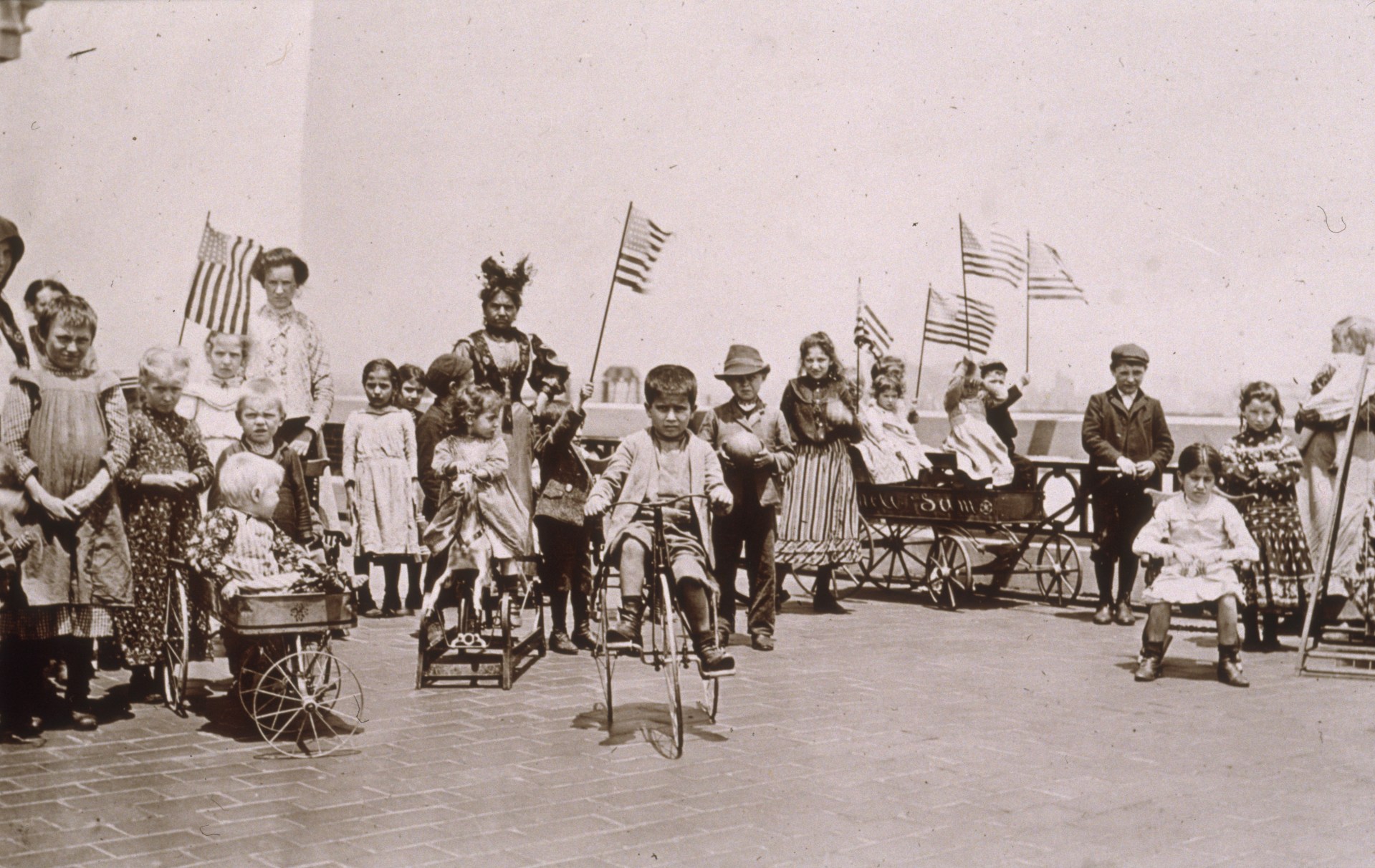
In its prime Ellis Island processed the great majority of immigrants to the United States, somewhere between 70 and 80 percent. Ellis Island’s main purpose was to facilitate immigration: Most of the people who passed through the facility were only there momentarily. Few of them failed the “perfunctory” medical examinations, and the rejection rate was very low: 1 percent, according to historian Roger Daniels in his book, Guarding the Golden Door. Yet, while it was literally an island in New York Harbor, Ellis Island was also an island of inclusion in a stormy sea of exclusion. The opening of the facility coincided with one of the sharpest nativist periods in American history, the 1880s to the 1920s. It was one of several virulent, anti-immigrant phases in America’s past. Antipathy at the sudden influx of Irish and German immigrants during the 1840s and 1850s became so pronounced that a new political party emerged calling itself the American Party. Nicknamed the “Know Nothing” Party, this group sought to limit immigrant access to citizenship and public office. … Between the 1880s and 1920s, Congress passed a series of anti-immigration laws that contrasted sharply with the popular image of Ellis Island as a place of welcome and inclusion.