Looking for the perfect gift for someone in your life who loves The Dispatch? Look no further. We just got a limited run of hats, notebooks, mugs, and T-shirts, ready to ship in time for the holidays. Check out our new merch and check a few gifts off your list.
Hello and happy Saturday. A week ago Friday, the Washington Post reported that there were two survivors from the first U.S. strike on a boat allegedly carrying narcotics in the Caribbean Sea on September 2, and that Adm. Frank M. Bradley ordered a second strike “to fulfill [Defense Secretary Pete] Hegseth’s directive that everyone must be killed.”
In a briefing with lawmakers Thursday, Bradley showed a video of the second strike and contradicted the Post’s claim that Hegseth ordered that there be no survivors. But the fact that the U.S. military carried out a strike on survivors raised questions about whether the strike amounts to a war crime and added to the debate over whether the campaign—which has killed at least 87 people—is lawful.
Experts told The Morning Dispatch the strike was illegal no matter what, but whether it’s a war crime comes down to whether the U.S. is engaged in an armed conflict. That itself is a thorny question because Congress has not authorized the U.S. operation in the Caribbean Sea, but the Trump administration maintains that the U.S. is at war.
If the category of war crimes doesn’t apply in this case, Hegseth and the military personnel in the chain of command may instead be liable for homicide. “If it’s not in a war,” said Geoffrey Corn, the director of Texas Tech University’s Center for Military Law and Policy and former chief law of war adviser to the U.S. Army, “it’s a legally unjustified killing from inception, and a killing without legal justification, when it’s done intentionally, is criminal homicide.”
The administration contends that the U.S. is indeed at war. If true, then it’s worse. If the military operations of the past few months have been legal, an order to leave no survivors, or a second strike targeting them, would be both murder and a war crime.
Whether Hegseth issued an order to leave no survivors or not, Nick Catoggio is unimpressed with how the defense secretary handled the matter. Nick notes that “he also said nothing to restrain Bradley as the incident unfolded despite watching it live via remote feed, per the New York Times. Nor is there any evidence that he’s disciplined Bradley or anyone else for the second strike in the months since it happened. Why would he? Hegseth has devoted himself as defense secretary to building a military culture that valorizes war crimes as evidence of bravado. Go figure that Bradley would respond in such a way to the incentives the secretary created.”
Kevin Williamson, meanwhile, has a few questions. For one, why is the Trump administration using the might of the U.S. military to go after alleged drug traffickers from Venezuela while the president is also pardoning … a prominent drug trafficker?
The president says his campaign of simply murdering ships full of people that he claims are probably smugglers is part of an antidrug project. There are several problems with that: One is that it asks us to take at their words such men as Donald Trump, J.D. Vance, and Pete Hegseth, a collection of habitual liars who embrace politically convenient dishonesty as a kind of virtue; another is that the president frequently cites fentanyl deaths while murdering citizens of Venezuela, which produces no fentanyl; another is that it is not clear that these boats are involved in any kind of illegal activity at all or that, if they are, this activity involves the United States in any way, inasmuch as many of these boats do not seem to have been U.S.-bound. Yet another problem is the relevant fact, cited by my friend Andy McCarthy, himself a prominent former federal prosecutor of high-profile terrorism cases, that U.S. law does not provide for summary execution of drug suspects or classify drug smuggling as an act of war. Closing out the list is the fact that the president has just used his pardon power to liberate the former president of Honduras, Juan Orlando Hernández, one of the most significant drug smugglers of our time, who was convicted of bringing some 500 tons of cocaine into the United States.
Speaking of pardons—and coming back to the second strike on the survivors, Kevin writes, “It is difficult to imagine that figures such as Pete Hegseth would be doing what they are doing … without the promise of a pardon should it come to that.”
In a piece we commissioned before the Post story broke, Tulane professor and Venezuela expert David Smilde warned that the entire operation is a threat to our own democracy. He writes: “Ironically, this is precisely how Venezuela’s process of democratic erosion began, with Hugo Chávez declaring his government was a ‘civilian-military alliance,’ and using the military and military logics for issues of civilian governance such as policing and control of protests.”
Thank you for reading, and have a great weekend.

Last April, the Intercollegiate Studies Institute invited eight college students to what an ISI staffer described in an email as an “exclusive retreat and dinner with Tucker Carlson” in Florida. Founded nearly 75 years ago, ISI is a prominent conservative collegiate intellectual institution in the United States. ISI also runs the Collegiate Network, a collection of alternative conservative newspapers on college campuses across the country, and the eight student journalists had been selected by ISI to attend the retreat and dinner because their campus newspapers were top-performing publications. After a Journalism 101 session at the Art Ovation Hotel in Sarasota, the students filed into a shuttle for a 90-minute trip to Carlson’s home on Gasparilla Island, where Carlson dispensed career advice. “Thanks to @TuckerCarlson for joining three generations of @amconmag editors/executive directors for a dinner with campus journalists from @ISI’s @collegiatenet,” ISI President Johnny Burtka posted on Twitter alongside a photo of himself, Carlson, then-Collegiate Network Executive Director Dan McCarthy, and The American Conservative editor Curt Mills. “It was an unforgettable evening that our students will cherish for years to come.” One person left out of Burtka’s photo was Carlson’s special guest at the dinner that night: Alex Jones, who appeared on Carlson’s podcast that aired the next day, April 9.”
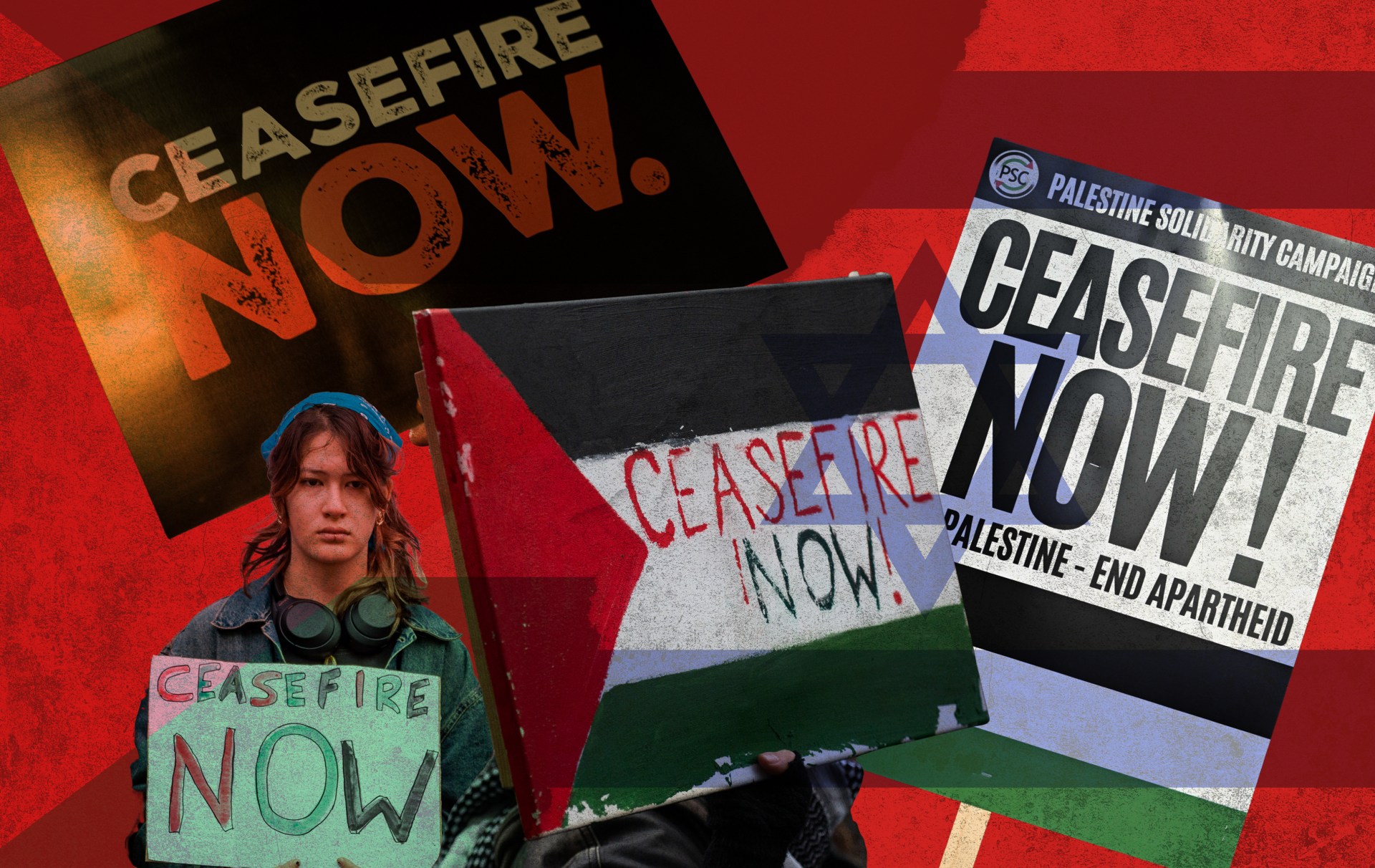
In Judaism, preserving human life is a principle held above all others. This idea, known as pikuach nefesh, is as lived as it is theoretical in Israel. The nation that once supported the release of 1,027 Palestinian prisoners to free one Israeli soldier (perhaps misguidedly, as hindsight shows) embodies this ideal of individual sacrifice for the collective in smaller ways each day. During my two years in the country, I saw this ethos in the outpouring of volunteerism in support of the more than 200,000 residents of Northern and Southern Israel displaced from their homes over the course of the war, as well as in the readiness of hundreds of thousands of protesters to drop everything each Saturday night to demand that the government prioritize securing the hostages’ release. So, when a deal to bring home the abductees was announced, the outpouring of joy on the streets of Israel that followed came as no surprise to me. What did was the muted response from the most outspoken critics of Israel, who for the first time were forced to confront an uncomfortable truth: Most Israelis meant it when they said the war was about bringing their people home. The posters of hostages adorning benches and buildings across the country were not moral cover, but rather an urgent reminder of those in peril.

Following the Civil War, prominent suffragists had hoped to see universal suffrage enshrined in the Constitution as part of Reconstruction. The desperate need for newly freed men and women to gain political protection, however, pitted questions of race against those of gender, and women’s voting rights lacked a comparable sense of urgency. The provisions in Section 2 of the 14th Amendment to protect voting rights referred to “male citizens”—the first time gender was explicitly used in the Constitution. With the 15th Amendment’s statement that voting rights could not be “abridged by the United States or by any State on account of race, color, or previous condition of servitude,” black men were enfranchised while the opportunity for universal suffrage crumbled. Effectively, the amendment left women’s voting rights in the hands of the states. Before finding its way to state legislatures, however, women’s suffrage got its start in the territories. By the time the 15th Amendment was ratified on February 3, 1870, women in the territory of Wyoming already had access to the voting rights that prominent suffragists like Cady Stanton had only dreamed of. Wyoming granted women’s suffrage in December 1869, and Utah followed just two months later.