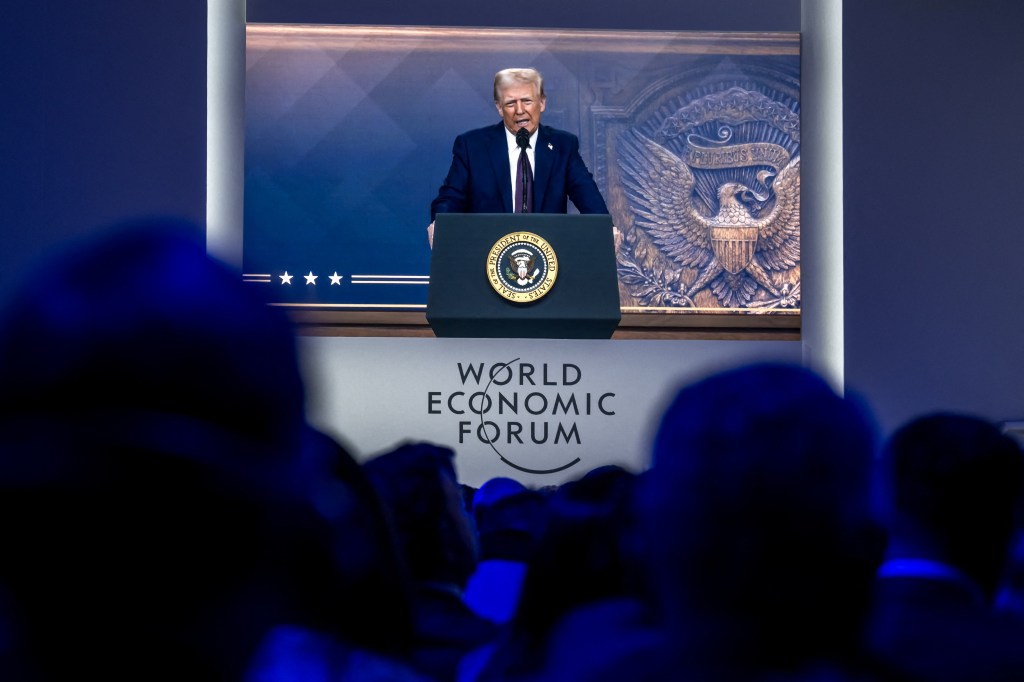
Hello and happy Saturday. On Tuesday, President Donald Trump’s trip to the World Economic Forum in Davos, Switzerland, was delayed briefly when Air Force One experienced some electrical issues and had to turn back. Trump made it to Davos a few hours late, but maybe he should have seen the snafu as an omen: The president headed to Europe with designs on acquiring Greenland but came home empty-handed after European leaders joined together to back Denmark, which controls the semiautonomous territory.
In the weeks leading up to Davos, the White House suggested that military force was an option, and last Saturday Trump said he would implement a 10 percent tariff on eight European nations for opposing his efforts. Our friends in Europe didn’t take kindly to the threat, suspending the trade deal between the EU and the U.S. that had been announced last summer and even sending a number of troops to the island.
In the end, Trump said during his speech at Davos that the U.S. would not take Greenland by force, and hours later he announced that the tariffs were off the table. He did tout a “framework of a deal” that might give the U.S. sovereignty over its military bases in the territory.
Michael Warren observed that Trump’s arguments for acquiring Greenland, including his statement that “Because that’s what I feel is psychologically needed for success” and his letter to Norway’s prime minister complaining that, because he did not receive the Nobel Peace Prize, “I no longer feel an obligation to think purely of Peace,” were at odds with the argument that it was a matter of national security. And Mike noticed something else:
Greenland may be “essential,” but don’t bother looking for its name in the Trump administration’s recently released National Security Strategy, because you won’t find it. Nor will you find references to the Arctic or concerns about Russian or Chinese incursions into that region that threaten American security and sovereignty. The 29-page document published in November purports to be a “roadmap” for restoring and preserving American strength and power on the global stage. The strategy’s “sole focus,” the document goes on, is “the protection of core national interests.” But nowhere in the strategy are there explicit references to how the protection of those interests runs, in any way, through Greenland.
While the deployment of troops was largely symbolic, as a child of the Cold War I can say it was a little odd to see NATO nations sending any number of soldiers to defend NATO territory from another NATO partner.
In Boiling Frogs on Thursday, Nick Catoggio focused on the damage that Trump had done to NATO and the broader post-World War II legacy of cooperation between the U.S. and Europe.
He destroyed 80 years of eager European cooperation with America. For nothing.
Worse than nothing, actually. He’s incentivized Western powers to form a sort of “neighborhood watch” aimed at preventing future muggings by the United States.
I thought a casino would be the most profitable thing Trump would ever bankrupt, but bankrupting global trust in the world’s dominant power since 1945 in the span of a year is a catastrophe that warrants “Great Man of History” treatment. When scholars write about America’s decline, they’ll cite this episode as a hinge point. It’s genuinely one of the stupidest, self-defeating things a U.S. president has ever done.
Touching on a similar theme, Benn Steil wrote that Trump’s actions exposed a vulnerability that had always existed within the international rules-based order. Steil pointed to the various institutions established after World War II—the United Nations, World Trade Organization, International Monetary Fund, etc.:
As extensive as this legal latticework was, it could neither cover all exigencies nor resolve contradictions. In practice, it relied on the United States to initiate action as a kind of Aristotelian uncaused cause, godlike from outside the system, while generally forgoing the type of nakedly self-interested behavior that would openly deny the order’s authority. By historical standards, the project was astoundingly successful—not in that all nations conformed, since the United States itself at times strayed willfully and radically, but in that virtually all nations felt compelled to align themselves with it, to argue for alternative understandings of it, or to justify their deviations from it.
Meanwhile, Scott Lincicome in Capitolism explored how Trump’s (revoked) tariff threat highlights a bigger problem on the home front: We have an “emergency” emergency. Trump has cited the International Emergency Economic Powers Act to justify unilateral tariffs throughout the first year of his second term, and Scott notes “there’s simply no plausible case for the situation in the Arctic to constitute a ‘national emergency.’” He predicts that the threats over Greenland will motivate countries to seek trade opportunities with nations besides the U.S.
Thank you for reading. If you are in the path of the huge winter storm that is supposed to hit this weekend, stay safe and watch out for exploding trees.
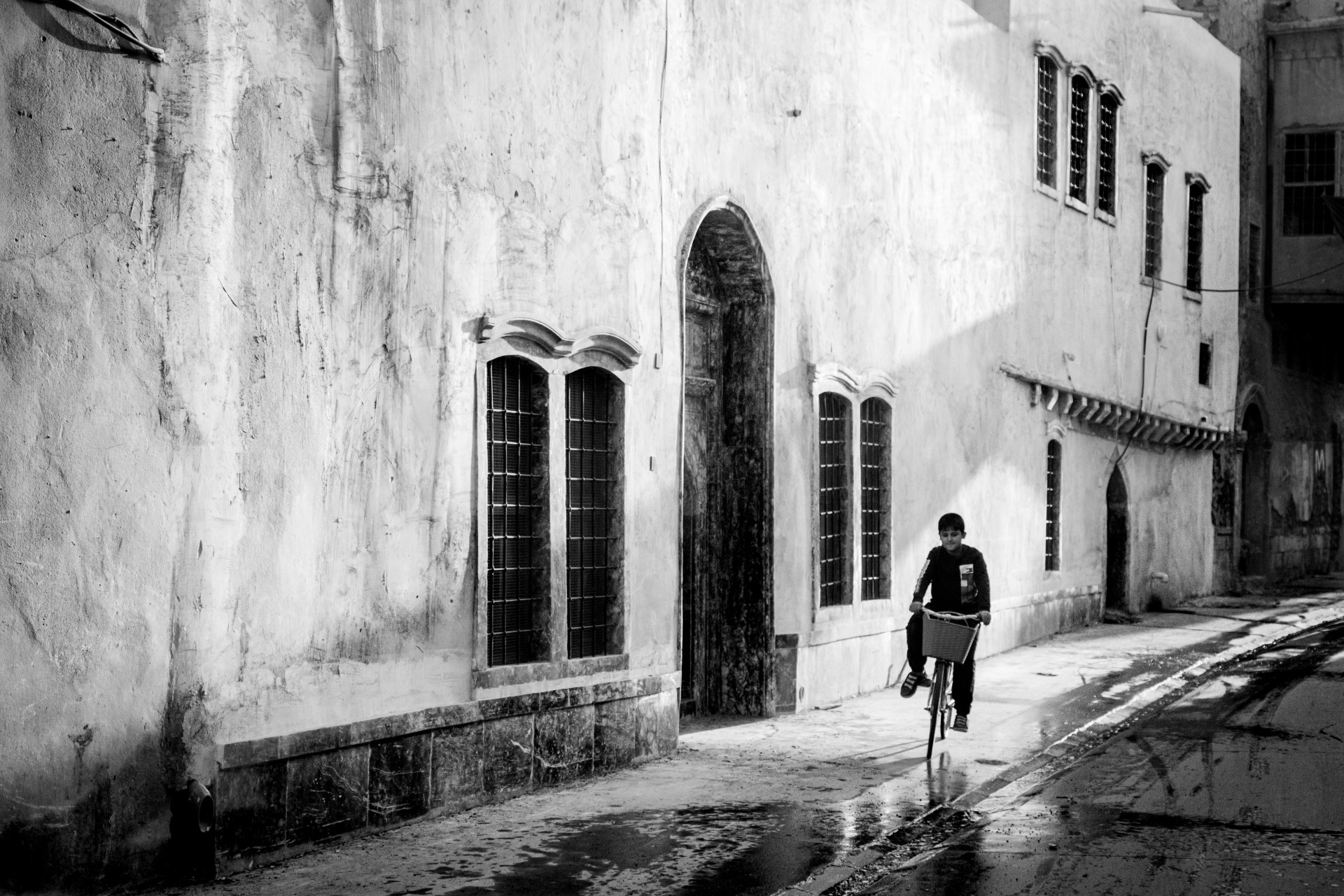
MOSUL, Iraq—Ali al-Baroodi is treating me to coffee in the souq. The old bazaar in Mosul, Iraq’s second largest city, dates to the Ottoman era, when the trade routes through town meant brisk business. On a Saturday afternoon Souq Bab al-Saray reeks of fish, raw meat, and spices. Shouting is the only way to rival the anvil blows and the hiss as forgers scrape steel in the winding passageways known as blacksmiths’ alley. We make several turns, dodging handcarts to reach a wide arcade. At Sarhan Coffee, men fill benches wedged between bulging sacks of beans, sipping. A sign above the doorway dates the shop to 1897. Rumor has it that Sarhan’s owner keeps in his back office a mortar and pestle his forebears used to grind coffee beans. It had to be hauled from the rubble following a U.S.-led battle to liberate the city from Islamic State militants in 2016-17. Just one chapter in the Iraq War, the ISIS capture of the city forced more than 1 million people to flee Mosul. Its liberation claimed at least 10,000 civilian lives. Now a prototype for places like Kyiv and Gaza City, where civilians in their homes have endured years of punishing assaults, Mosul is the oldest and one of the largest cities to stage a comeback from the kind of urban warfare suddenly commonplace in the 21st century. Every day that Sarhan opens, it proves that what’s old can be made new again.
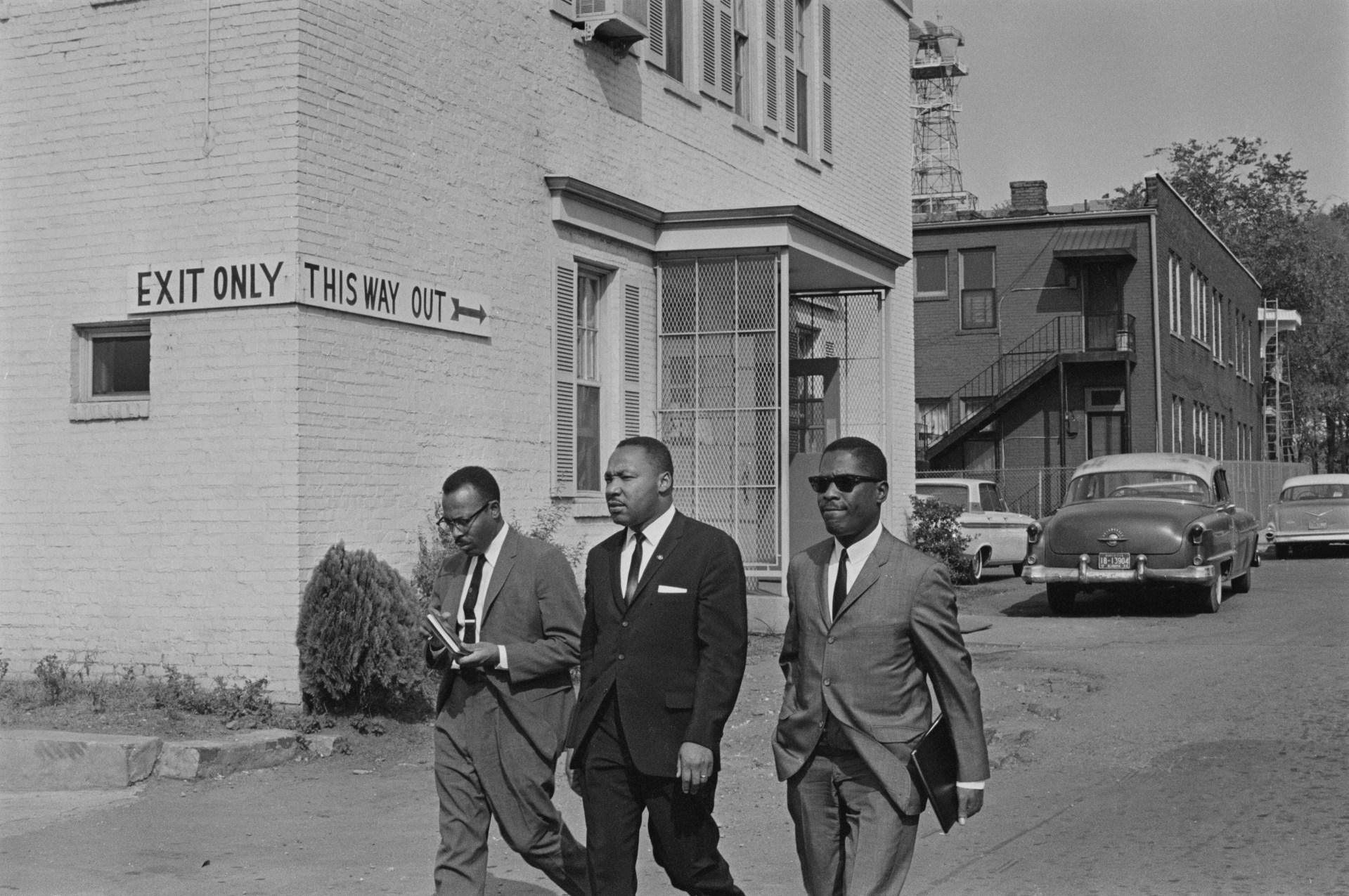
In a conversation some time back, my friend and colleague Jay Nordlinger observed that the only reason we know (and some of us revere) the name of Mohandas K. Gandhi today is the fact that his great opponent was the British Empire, which was, for all its stupidity and brutality, at heart the project of a fundamentally good and decent people. Gandhi knew imperial wickedness and cruelty—from his formative experiences in South Africa to the Jallianwala Bagh massacre—but he also experienced British goodness, British rule of law, the British sense of fair play. In fact, he overgeneralized from these, arguing that the tactics he had used against imperial Britain could have been used against Nazi Germany. But if there were Mahatmas in the struggle against Adolf Hitler—or Vladimir Lenin and Joseph Stalin, or Mao Zedong, or Augusto Pinochet, or Fidel Castro, or Pol Pot, or any of the rest of history’s long hideous line of tediously similar tyrants—we do not know about them, or know very much about them, because they were disappeared or murdered or thrown into camps and imprisoned incommunicado for the rest of their (generally short and miserable) lives. … Today, we celebrate the life and work of the Rev. Martin Luther King Jr., whose name is known around the world because of something that one cannot quite call “good luck” but circumstances that were bad but not as bad as they might have been: He was a member of an oppressed minority, but the society and the state executing his oppression were those of the United States of America and its constituent states.
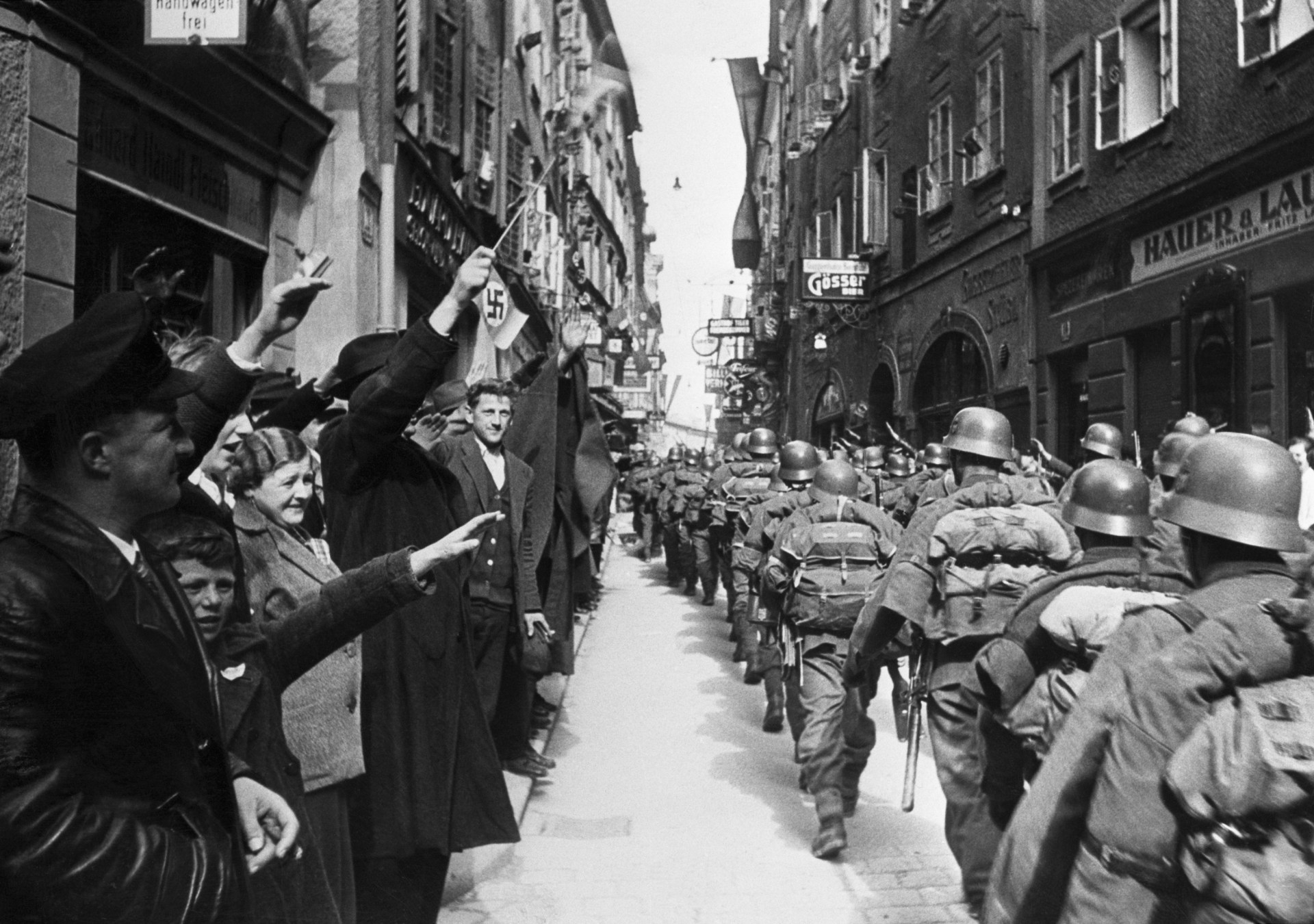
In the years leading up to the Second World War, a thrilling new air was blowing across central Europe. The vanquished powers of World War I had spent more than a decade in defeat and shame. An incompetent liberal regime ruled postwar Germany, and Germans were ready for something new. Thus came a movement born from the minds of philosophers and poets: National Socialism. …In 1938, Aurel Kolnai wrote the first real critical study of Nazi ideology: The War Against the West, published in English through a London press. The book investigated the Nazi ideas of the common good, the state, and the human person, and Kolnai began with Nazi philosophers’ critique of liberal individualism. Not unlike postliberals today, “The philosophers and prophets of Nazism are more assiduous in heaping their obloquies on ‘individualism’ than on any other feature of the West,” Kolnai wrote. He quoted the Catholic Nazi theologian Michael Schmaus as an example of this view: “In Liberal society, men did not stand by one another as an existential community: they were so many individuals, equal, of equal rights, and self-subsistent who—rather like stones in a heap, not like the members of a body—formed unions by free decision and contract.”
Best of the Rest
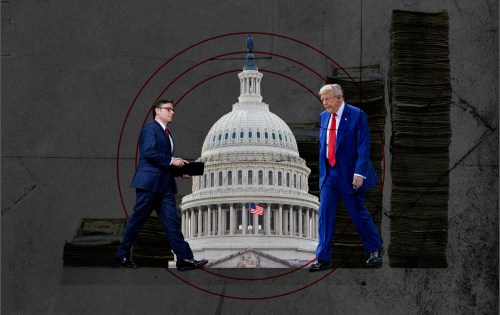

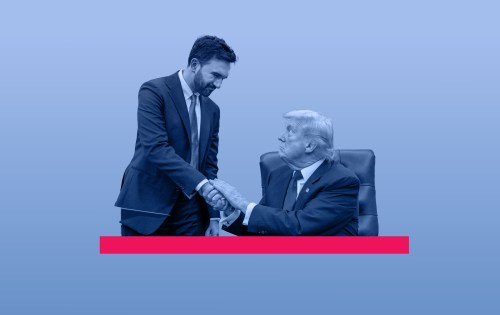
The GOP’s Mamdani Dilemma
The party plans to run against the New York mayor’s socialist agenda in the midterms at the same time the president is endorsing left-wing policy proposals.

Douthat’s Paradox
Our political words—like ‘conservatism’—actually need to mean something.