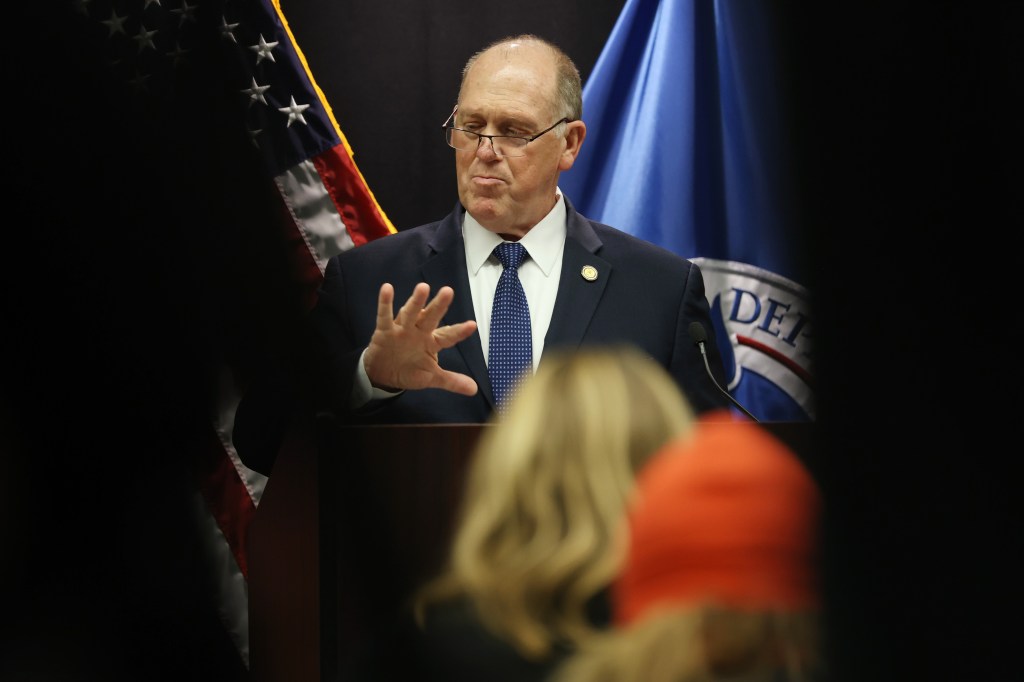
Hello. In the hours after Customs and Border Protection agents killed Alex Pretti in Minneapolis last Saturday, Trump administration officials branded the 37-year-old ICU nurse a “domestic terrorist” and “assassin” and defended the agents and the administration’s aggressive immigration enforcement actions. But by Monday, Border Patrol commander-at-large Greg Bovino had been relieved of his duties in Minneapolis and replaced by border czar Tom Homan, who brought with him a pledge to reduce the number of agents in the area and to focus on detaining illegal immigrants with criminal histories.
What happened? For starters, the many available videos—from various angles—exposed the depictions of Pretti as an assassin as blatantly false. Pretti had been lawfully carrying a holstered pistol but “brandished” only his phone; an agent had disarmed him before he was shot.
The shooting also drew the outrage of Republican lawmakers like Sens. Thom Tillis, Bill Cassidy, Susan Collins, and Lisa Murkowski. And, with a potential government shutdown looming, Democratic senators vowed to block a bill funding the Department of Homeland Security unless reforms were implemented. (The White House reached a deal with Democrats Thursday night to fund DHS for two weeks with a stopgap bill and the rest of the government through September, which passed in the Senate on Friday. The government will partially shut down over the weekend as the House is on recess until Monday.)
Aside from the blatant lying by DHS Secretary Kristi Noem, White House deputy chief of staff Stephen Miller, and others, government officials also spread misinformation pertaining to Pretti’s lawful carrying of a firearm. On Fox News last weekend, FBI Director Kash Patel said, “You cannot bring a firearm loaded with multiple magazines to any sort of protest that you want. It’s that simple. You don’t have the right to break the law and incite violence.” U.S. Attorney Bill Essayli tweeted, “If you approach law enforcement with a gun, there is a high likelihood they will be legally justified in shooting you. Don’t do it!”
In the Wednesday G-File, Jonah Goldberg noted the hypocrisy of “the Second Amendment for me, but not for thee” crowd. He writes:
Here’s the thing. If you’re going to have principles, it can’t just be when they’re convenient and popular. If you believe in elections only so long as your team wins, you don’t really believe in elections. If you believe in the free market, but only when the other team is engaging in central planning and industrial policy, you don’t believe in the free market. And if you’re a passionate Second Amendment supporter when it comes to, say Kyle Rittenhouse, or some militia occupying the Michigan Statehouse, but a nurse with a holstered legal firearm was asking for death when he annoyed a federal agent, then you don’t really believe in the Second Amendment.
In Boiling Frogs, Nick Catoggio observed that “Most Americans will be glad” that Bovino—who patrolled the streets of Minneapolis in tactical gear and called the Border Patrol agents who shot Pretti as the “victims”—is out. But he also noted that many postliberals in MAGA world are bound to be disappointed by the walkback. Nick writes:
Liberalism routinely accepts worse outcomes on policy as a trade-off for fairer process. An easy example is providing a lawyer paid for by the state to all criminal defendants. A lot of bad guys stand a much better chance of going free and menacing society than they would if we made everyone pay for their own counsel. But liberals believe it’s worth running that risk to ensure that innocents who can’t afford an attorney still get to mount an effective defense against false accusations by the state.
Postliberalism believes that liberalism’s tolerance for trade-offs between outcomes and fair process has gone too far. It finds immigration policy especially infuriating because our baroque, byzantine system is so backlogged with process that Americans occasionally end up being murdered because of it. It’s one thing to provide a bad guy with a lawyer who’ll improve his odds of being acquitted at trial, it’s another thing to release a bad guy into the country before he’s had a hearing because “fairness” left the authorities with no means to detain him.
We are one month into a new year. We woke up on January 3 to the news that the U.S. military along with law enforcement had seized Venezuelan dictator Nicolás Maduro. Trump also tried to acquire Greenland, with Stephen Miller threatening military force and Trump threatening to levy tariffs on our European allies. He came home from the World Economic Forum empty-handed, but not without having caused significant damage to NATO and our transatlantic relationships. His administration launched a criminal investigation into Federal Reserve Chairman Jerome Powell, nominally for lying to Congress about renovations to the Fed’s headquarters, though Powell’s real “crime” seems to be refusing to set interest rates at a rate low enough to please the president. We try to be sparing about publishing staff editorials here at The Dispatch, but this moment called for one. The editors write:
The catalog of the administration’s wrongdoings is so substantial as to feel endless—not impossible to keep track of, but not many people are in a position to dedicate their lives to the project. American citizens illegally detained by ICE agents. The gross corruption on the part of the president and his circle. Launching a war on Venezuela without congressional authorization, after carrying out a likely illegal campaign of extrajudicial massacres at sea. Refusing for months to enforce the law banning TikTok. The pace of outrages and abuses is part of the White House’s strategy—you’ll have forgotten about Trump’s promise to end the Russia-Ukraine war on his first day in office by the time you’ve journeyed through Minneapolis and Caracas and Tehran and Nuuk.
Here we will take the unusual step of directly addressing Sen. John Thune, the majority leader in the Senate, who, we believe, understands the difference between merely being the Senate majority leader and acting like the Senate majority leader. Whatever his admirable personal qualities, Thune has thus far failed to perform the role he is supposed to play in our constitutional order. If Trump is to be constrained—and the need only grows more dire by the day—it is Congress that will constrain him. Senate Republicans, having a majority that is at the moment expected to survive the midterms, have a special role to play in that. And Thune, as their leader, has an opportunity to begin charting the long path toward the kind of politics and governance that so many elected Republicans privately wish for when the cameras are off.
The good news is that, on top of our coverage of the Pretti shooting and its aftermath, we had a lot of excellent counterprogramming this week. Please check out Michael Warren’s profile of Jane Fraser, an 83-year-old environmental activist whose efforts to restore public access to privately owned Sea Island, Georgia, have rankled her neighbors. Grayson Logue reports on the damage done by the administration’s disregard for soft power, and contributing writer Emily Oster calls for being objective about public health guidance issued under Health and Human Services Secretary Robert F. Kennedy Jr.
Have a lovely weekend and stay warm.

About a mile past the Cloister, a left turn toward the marsh-side takes you past a few impressive-looking homes before the street dead ends next to a relatively quaint rambler. Instead of a manicured lawn of Bermuda grass, this house is partially obscured by the spindly pines and squat palmettos growing naturally all around it. Its comparative ordinariness amid the surrounding opulence seems intentional. This is the home of Jane Fraser, an environmentalist, philanthropist, and Sea Island’s unofficial gadfly. At first glance, this spry 83-year-old Southerner looks like any other well-off Sea Island denizen you might spot at the clubhouse or going for an early-morning stroll along the beach. But talk to almost anyone here or on St. Simons, and they will have an opinion about Fraser—mostly negative ones. Over the past two decades, Fraser or organizations she’s connected to have filed nearly a dozen lawsuits against everyone from the Sea Island Company to local residents and even a historic and beloved church. Many involve environmental or development complaints, and taken together they have cost Fraser (and the various defendants) a considerable amount of money but with very few victories to show for it. For Fraser, the magnificent portal I have just driven through to arrive on Sea Island is her latest and, perhaps, most ambitious target.
The U.S. has long invested in a broad portfolio of programs and support to help democratic movements in repressed countries and provide critical support in moments of crisis and transition. These efforts include not only enabling internet freedom and international broadcasting but also funding local independent media, supporting civil society and opposition parties, and even bolstering nascent transition governments. In times of upheaval, exerting external pressure on a country via targeted military strikes is often ineffective in catalyzing enduring political change unless there’s corresponding internal pressure and the local capacity to organize and sustain that energy. Even then, shaking off an authoritarian government or moving toward a democratic transition is always challenging. The array of U.S. programs engaged in what can be understood broadly as democracy work played a long game, not anticipating immediate success but endeavoring to lay the groundwork for if and when geopolitical or local circumstances provide an opportunity for change. The administration has spent the past year dismantling the lion’s share of that effort.

The changes to the vaccine schedule are not based on scientific evidence. … There are no new safety concerns, and no change in the evidence of their safety and effectiveness. And the vaccines are beneficial. The new guidelines remove the flu vaccine from being universally recommended for children. This is despite the fact that this vaccine is typically 70 percent to 90 percent protective against hospitalization, and the 2024-25 flu season marked the highest number of children’s deaths from the flu since 2004. Although the reduction in the number of recommended shots does not prohibit parents from having their kids get them, the changes made in the vaccine schedule will result in an erosion of trust in vaccines more broadly and more children dying of preventable diseases. On the other hand, the new dietary guidelines largely reflect what we already know from the data about a healthy diet. They are, in fact, similar to the previous guidelines, which covered more than 150 pages and seemed aimed more at nutritionists than typical Americans, but are condensed into just nine pages. Shortening and simplifying those guidelines is a hugely positive change. A core issue with the dietary guidelines is that most people do not follow them. Americans consume far more sugar, for example, than guidelines suggest and far fewer vegetables. A food pyramid with frozen pizza and cookies at the top would be a more accurate depiction of how people eat. Making dietary recommendations simpler isn’t magic, but it might make it more likely that people change their behaviors.
Best of the Rest

The Long Slide
A new book on Tucker Carlson shows the dark power of breaking norms for clicks.


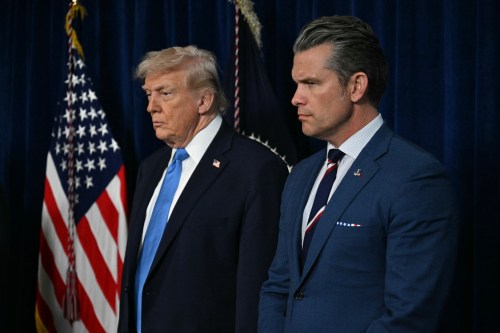




Right-Wing Theater Kids
‘Noem’s incredible political instincts are represented by the fact that she thought it would do her good to talk about shooting a dog.’