At Club 20 in the 1990s, we often fought against diverting highway funds for non-highway purposes, such as mass transit. We reminded national officials that “there will never be a Japanese bullet train from Slick Rock to Egnar.” They had never heard of either place, of course, so it was a succinct way to explain that what might work in Boston and New York can never work in Colorado, or anywhere in the West, where cities evolved around the automobile. People here do not live 20 floors above their offices.
Even in Denver, hundreds of thousands of people live in single family homes strung out one after another, mile after mile, and workers commute great distances along the Front Range every day. Suburban commuters in Jefferson, Arapahoe, and Adams Counties drive an average of nearly 30 minutes each way every day. It’s closer to 40 minutes for commuters in Elbert and Park Counties, and the story is similar in towns all across the West.
It is questionable whether cities should have been laid out that way, but it is reality. We have spent decades arguing about how to better plan for “smart growth,” but in a free and mobile society, the government simply has no way to stop people from living where they want to live and driving where they want to go. If we planned new cities from scratch, we might have better foresight.
In fact, in the early twentieth century, “neighborhood unit” theory became an academic subject even before the automobile took over. It was mostly theoretical, but in 2016, Professor Carlos Moreno, at the Sorbonne in Paris, coined a new term, proposing the “15-minute city.” He wrote of a city planning model where residents could reach almost all their daily needs – work, shopping, health care, churches, government offices, parks, and schools – within a 15-minute walk or bike ride.
It’s a cool idea. In theory. But if someone leaves Palisade at 7:30 am, even in a car, they might get to Clifton in 15 minutes, not Grand Junction. Anyone trying to commute to Junction from Fruita in 15 minutes risks a speeding ticket, at least.
One of America’s most entertaining bloggers, Jeff Childers, master of sarcastic commentary, points out that the idea was intended for newly planned places. “Even in the scheme’s original formulation, it was never meant to be superimposed on existing cities, which, after all, weren’t carefully pre-planned by technocratic elites during construction to ensure that each area was the effective equivalent of every other one.”
Yet some city officials, especially in Europe, took the idea seriously and began experimenting with government-imposed commuting limits. Britain’s Parliament blocked cities from doing that, but its new Labor Party government has lifted that ban, and several cities are jumping in with both feet. Oxford’s City Council, for example, proposes dividing the city into six “15-minute neighborhoods.” Residents will be given local “passports,” to ration trips outside their designated living zones, and those who violate the limit will pay fines.
Imagine government officials dictating that no matter how many people live in Grand Junction, they can’t have another school until Loma gets one, too. Montrose cannot get another Wal-Mart until Olathe has one. Starbucks must open stores by geographic neighborhoods, not market analyses. Which neighborhood gets the new Broncos stadium, because they’re not going to build a dozen of them. Can government make all the wealthy people split up and scatter among all the neighborhoods, so each district gets some of the high-end stores and restaurants? Governments might try that, and the London newspaper (Telegraph) can boast that “Traffic restrictions for motorists will promote walking and cycling in city centers.” But that isn’t the way life works. A city cannot require every business to open six locations. The plan cannot work, nor can it take very long for everyone to figure that out.
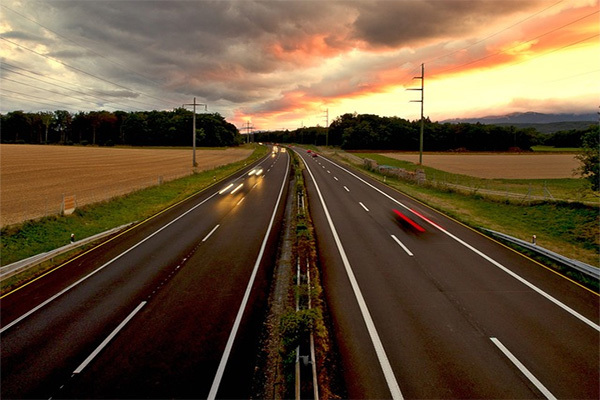
These planning enthusiasts have control of many city governments, and they are working to reorganize an otherwise free society from the ground up. But they will never understand one simple truth. The automobile is not merely a mode of transportation. For the 1.5 billion owners around the world, their car is their freedom. It is the right to come and go as they please, the ability to be self-sufficient.
Some people must go to the post office every day, others rarely do so. We’re not all the same. And if some people choose to live in Slick Rock or Egnar, they don’t need government’s permission. They need a car.