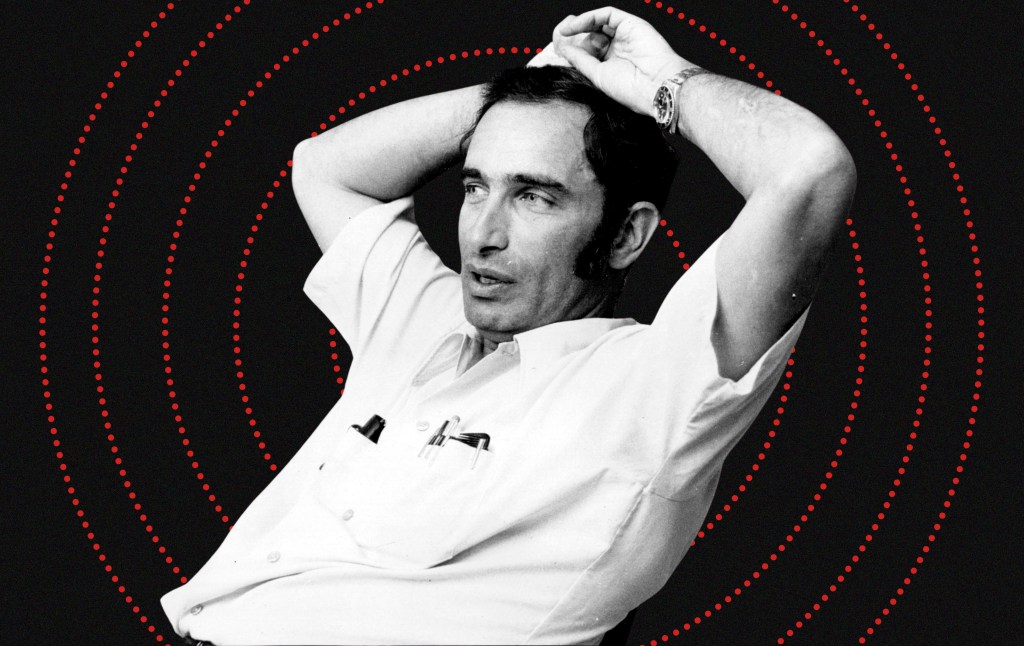
At what point must we be frank about the fact that Paul Ehrlich, The Population Bomb author who died last week at the age of 93, was not simply wrong about almost everything he ever wrote or said or thought, but positively and culpably dishonest?
If ever there were an intellectual grave that deserves pissing on posthaste, it is Paul Ehrlich’s. So let us commence.
Ehrlich was an intellectual fraud, something he had in common with many of the celebrated pseudoscientists, quacks, and cranks who became intellectual heroes to our era’s progressives, from Sigmund Freud to Noam Chomsky, Rachel Carson, Margaret Sanger, and Robert F. Kennedy Jr. until about five minutes ago. (Right-wingers don’t go around reading books by crackpots—they put them into the Cabinet.) Like Karl Marx, another great prophet of the always-wrong-but-never-in-doubt school, Ehrlich believed that there is a kind of science of history and that, consequently, future events could be predicted with great confidence by those who were willing to—all together now!—follow the science. And so Ehrlich, whose academic specialty was the study of butterflies, was famous for his startling predictions—his hilarious, wrong-headed, unsupported, book-mongering predictions. For example:
The day may come when the obese people of the world must give up diets, since metabolizing their fat deposits will lead to DDT poisoning. But, on the bright side, it is clear that fewer and fewer people in the future will be obese!
In 10 years [1980], all important animal life in the sea will be extinct. Large areas of coastline will have to be evacuated because of the stench of dead fish.
The battle to feed all of humanity is over. In the 1970s and 1980s hundreds of millions of people will starve to death in spite of any crash programs embarked upon now. At this late date nothing can prevent a substantial increase in the world death rate.
If our current rape of the watersheds, our population growth, and our water use trends continue, in 1984 the United States will quite literally be dying of thirst.
Ehrlich was also famous for refusing to own up to any of his errors in a serious way. He would later insist that The Population Bomb, published in 1968, had been “too optimistic,” and the overpopulation cultists—it is a religious phenomenon—who looked to him for direction would insist from time to time that he had been kinda-sorta, if you squint in the right way, vindicated.
That is not how you do the work of a public intellectual in a responsible way. It is, however, how you sell 3 million books in short order.
As publicity whores go, Ehrlich was a kinky kind—there was no public humiliation that he was above. In 1980, Ehrlich made his now-famous wager with Julian Simon, the libertarian economist and author of The Ultimate Resource. Ehrlich had said—in his usual all-hype-all-the-time mode—that “if I were a gambler, I would take even money that England will not exist in the year 2000.” Simon, who was in possession of a functioning nose and hence had a good idea of what Ehrlich was peddling, offered a wager: $10,000 that the price of “non-government-controlled raw materials (including grain and oil) will not rise in the long run.” Ehrlich chose a basket of commodities—chromium, copper, nickel, tin, and tungsten.
He lost on every count. The predictable apologists insisted that this was a fluke, that things would have worked out differently if different commodities had been selected or if a different time frame had been used. And there were versions of the bet in which Ehrlich would have done better, but the fact was that, in spite of the biggest decade of population growth in recorded human history, the price of market-traded commodities in general trended downward.
Ehrlich eventually paid up.
The outcome was, of course, precisely in accord with Simon’s view expressed in The Ultimate Resource: that human ingenuity and market incentives would work together to ensure that the material conditions of the future were more abundant than those of the past, rather than being overtaxed by a growing population. The same dynamic explained why Ehrlich had gotten it so wrong about food abundance and why semi-conspiracy-theory paradigms such as “peak oil” keep getting it wrong: Ehrlich insisted that he would have been right if not for Norman Borlaug and the “Green Revolution” in agriculture, just as the peak-oilers insist that they would have been right about waning petroleum supplies if not for hydraulic fracturing and horizontal drilling—all of which is true in the same sense that farm yields would be much lower if we were still plowing the fields with oxen. When goods become scarce, prices go up, and when prices go up, there are incentives for new sellers—new firms, new capital, new ideas—to get into the market. The Malthusians and their 20th-century epigones always get it wrong because they make straight-line projections that assume increased demand in the future but no increased supply.
Everything you need to know about Ehrlich can be summed up by this: He published a memoir three years ago in which he makes no mention at all of the wager with Julian Simon, by far the most famous episode in his public life beyond his authorship of the thoroughly discredited The Population Bomb.
All of us involved in public life make mistakes. In 2012, I received a telephone call from a press spokesman for Donald Trump (in retrospect, I assume it was Trump himself), who told me that the reality-television star intended to run for president and asked whether I would be interested in interviewing him about his plans. Do you know what I did? I laughed out loud. I offered to do the interview, of course—it would have been a hilarious story. Or so I thought.
I’ve been wrong about a lot of things. Chances are, I’ll be wrong about something this week. But I have always tried to own up to my errors, misunderstandings, and occasional public displays of ignorance.
But hundreds of millions dead in the Western world instead of the economic boom of the 1980s? England disappearing from the map because of famine and drought? For Pete’s sake—Ehrlich wasn’t even right about obesity, and to the extent that the number of fat people seems to be on the decline, it is because of the blessings of modern pharmacology and not because of food scarcity. And no formerly fat person on Earth seems to have been poisoned by metabolizing DDT lurking in his fat cells.
Ehrlich’s arrogance, dishonesty, and neo-Malthusianism were bound up with another of his unfortunate tendencies: his racism. The genesis of The Population Bomb began when Ehrlich made his first trip to India and decided, first thing, that there were too many Indians in the world. “I have understood the population explosion intellectually for a long time,” he wrote. “I came to understand it emotionally one stinking hot night in Delhi a few years ago.”
I lived in Delhi for a time, too, and it is a city-and-a-half in all directions, to be sure. It is hot at times, crowded in parts, and dirty in places, but much the same could be said of any major world city not located in Switzerland. Is India overpopulated? The country’s population density, at about 484 people per square kilometer, is significantly lower than that of the Netherlands (about 545 people per square kilometer), while the population density of Delhi itself is between that of New York City and Geneva—pretty high, but not off the charts. Where the Indian urban masses that so repulsed Ehrlich differed from their American or Swiss counterparts was not that they were so thickly planted but that they were poor. Do you know how modern residents of Delhi differ from the average residents of that esteemed city in the 1960s? They are a hell of a lot less poor, thanks in no small part to a series of liberal, pro-market economic reforms instituted by Narasimha Rao and Manmohan Singh running in the direction precisely opposite that imagined by such étatiste interventionists, planners, and would-be rationers of humanity as Paul Ehrlich.
In one of the great ironies of modern intellectual life, the problem now faced by such formerly teeming Asian nations as Japan and China—to say nothing of Western Europe and the United States—is population decline. China, where the “one child” policy reflected the essence of Ehrlich’s thinking as practiced by a ruthless police state (there may have been as many as 100 million forced abortions and sterilizations in a single three-year period), is entering a period of demographic crisis, offering new subsidies to encourage Chinese people to have more children. Japan is facing long-term demographic collapse. Most projections have us about 60 years away from a worldwide decline in human numbers, which will create all sorts of problems for practically all modern states with entitlement regimes based on traditional models. Will that create a catastrophe resulting in the deaths of hundreds of millions or billions of people? Maybe. But one suspects that even in a time of ubiquitous and highly effective AI, a shrinking global labor pool will put upward pressure on wages.
But I am not one for making wild, unsubstantiated predictions—which is one reason I probably won’t leave behind as large an estate as the late Paul Ehrlich, the arch anti-natalist (“by compulsion if voluntary methods fail”) who insisted that worldwide disaster was waiting in the wings but lived well into his 90s. That was long enough to meet his great-grandchildren, who were born into a world remarkably better than the one Paul Ehrlich prophesied.