Respect for and development of human life require peace. Peace is not merely the absence of war, and it is not limited to maintaining a balance of powers between adversaries. Peace can not be attained on earth without safeguarding the goods of persons, free communication among men, respect for the dignity of persons and peoples, and the assiduous practice of fraternity. Peace is “the tranquility of order.” Peace is the work of justice and the effect of charity.
It is because of this comprehensive vision of peace that the Compendium of the Social Doctrine of the Church teaches that “violence is never a proper response” and thus:
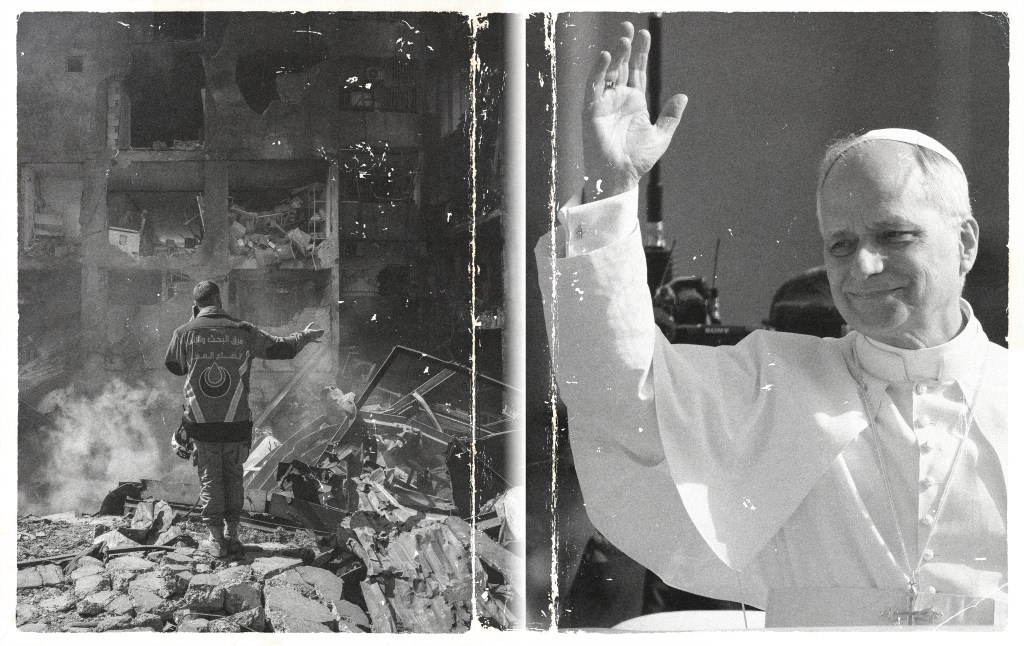
The Magisterium condemns “the savagery of war” and asks that war be considered in a new way. In fact, “it is hardly possible to imagine that in an atomic era, war could be used as an instrument of justice.” War is a “scourge” and is never an appropriate way to resolve problems that arise between nations, “it has never been and it will never be,” because it creates new and still more complicated conflicts. When it erupts, war becomes an “unnecessary massacre,” an “adventure without return” that compromises humanity’s present and threatens its future. “Nothing is lost by peace; everything may be lost by war.” The damage caused by an armed conflict is not only material but also moral. In the end, war is “the failure of all true humanism,” “it is always a defeat for humanity”: “never again some peoples against others, never again! … no more war, no more war!”
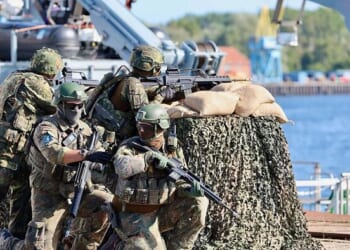
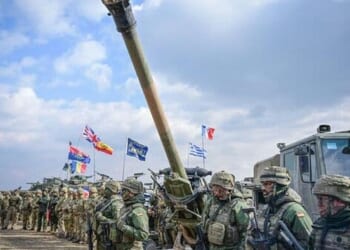
This historical and theological prelude is a key that will help unlock Pope Leo XIV’s recent statements on the current Iran war that is blessedly under a two-week ceasefire. The war began on February 28, when the United States and Israel performed a series of coordinated airstrikes across Iran, assassinating Supreme Leader Ali Khamenei along with much of the rest of the Iranian political leadership. Iran responded with a barrage of missile and drone strikes across the region, targeting Israel, American military bases in the region, and other American allies in the region. Its most effective resistance has been the closing of the Strait of Hormuz, which has disrupted global trade and sent oil prices soaring.
A little over a month into the war, Pope Leo XIV, during his Palm Sunday homily in St. Peter’s Square, meditating on Christ as the King of Peace, proclaimed:
Brothers and sisters, this is our God: Jesus, King of Peace, who rejects war, whom no one can use to justify war. He does not listen to the prayers of those who wage war, but rejects them, saying: “Even though you make many prayers, I will not listen: your hands are full of blood” (Isaiah 1:15)
The homily offered a stark contrast to U.S. Secretary of Defense Pete Hegseth’s monthly Christian worship service on the Wednesday after, during which he read the following prayer:
Let every round find its mark against the enemies of righteousness and our great nation. Give them wisdom in every decision, endurance for the trial ahead, unbreakable unity, and overwhelming violence of action against those who deserve no mercy.
Hegseth did not claim to have authored the prayer, which he credited to a military chaplain serving troops involved in the capture of former President Nicolás Maduro of Venezuela, but nonetheless thought it appropriate and fitting to pray in public worship. He is neither a Catholic nor a minister of any religious tradition, but does host worship services at the Pentagon and has instructed American citizens to pray for American troops “in the name of Jesus Christ.”
The sentiments offered by Pope Leo XIV in his homily and Hegseth in his prayer could not be more different. They are, of course, very different men with very different vocations, coming from very different religious traditions. Yet it is surprising, because they both claim to be disciples of Jesus Christ.
It is important to read Pope Leo XIV’s homily not through the lens of American partisan politics or personalities but rather in light of the Catholic tradition of which he is the chief representative. When he states that Christ “does not listen to the prayers of those who wage war” he does not mean that Jesus Christ does not listen to the prayers of those who serve, fight, and tragically die in wars. While the Catechism of the Catholic Church teaches that the “fifth commandment forbids the intentional destruction of human life” and “all … are obliged to work for the avoidance of war,” there are circumstances in which war can be considered lawful self-defense:
The strict conditions for legitimate defense by military force require rigorous consideration. The gravity of such a decision makes it subject to rigorous conditions of moral legitimacy. At one and the same time:
-the damage inflicted by the aggressor on the nation or community of nations must be lasting, grave, and certain;
-all other means of putting an end to it must have been shown to be impractical or ineffective;
-there must be serious prospects of success;
-the use of arms must not produce evils and disorders graver than the evil to be eliminated. The power of modem means of destruction weighs very heavily in evaluating this condition.
These are the traditional elements enumerated in what is called the “just war” doctrine. The evaluation of these conditions for moral legitimacy belongs to the prudential judgment of those who have responsibility for the common good.
Whether or not the current blessedly paused and hopefully concluded Iran war meets these “just war” criteria is the subject of ongoing debate. It is a question that cannot be settled by philosophy and theology alone and requires knowledge and expertise in at least the disciplines of economics, military science, and diplomacy. It is a prudential judgment that can only be made by “those who have responsibility for the common good,” who ultimately include all members of society, but particularly political authorities, civic leaders, and social institutions at all levels of society. It is not a checklist but a guide to discernment, which each one of us has a duty to participate in as stewards of the common good.
Perhaps there are elements of Hegseth’s own tradition that could bring enlightening additional context to the prayer he shared. Without such knowledge, it is beyond my own analytical power to reconcile it with the teaching of the savior who prayed for those who crucified him, “Father, forgive them; for they know not what they do.” (Luke 23:34)
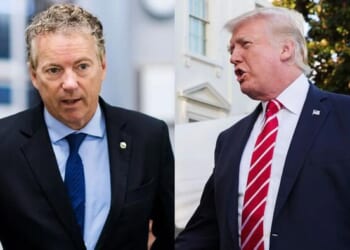
Hours before the United States and Iran reached a ceasefire deal, President Donald Trump had threatened over Truth Social:
A whole civilization will die tonight, never to be brought back again. I don’t want that to happen, but it probably will. However, now that we have Complete and Total Regime Change, where different, smarter, and less radicalized minds prevail, maybe something revolutionarily wonderful can happen, WHO KNOWS? We will find out tonight, one of the most important moments in the long and complex history of the World. 47 years of extortion, corruption, and death, will finally end. God Bless the Great People of Iran!
Pope Leo XIV responded by once more calling for peace and addressed Trump’s remarks saying:
Today, as we all know, there has also been this threat against the entire people of Iran. And this is truly unacceptable! There are certainly issues of international law here, but even more, it is a moral question concerning the good of the people as a whole, in its entirety.
Not long after the pope’s intervention the ceasefire was announced, whether or not the pope’s intervention contributed, the Lord only knows. The effectiveness of papal interventions to end or head off conflicts is not always decisive in the unfolding of God’s providential plan. Pope St. John Paul II’s appeal on the eve of Operation Desert Storm failed. Over a decade later, he would try again in his 2003 State of the World address to prevent another war in Iraq, proclaiming, “NO TO WAR! War is not always inevitable. It is always a defeat for humanity. International law, honest dialogue, solidarity between States, the noble exercise of diplomacy: these are methods worthy of individuals and nations in resolving their differences.”
Pope St. John Paul II did himself attempt to make use of diplomacy in that case, sending then Apostolic Pro-Nuncio to the United States Pío Cardinal Laghi to urge then-President George W. Bush to turn from the path of war, which also proved ineffective.
This week, a story of months-old diplomatic drama would unfold in the newly charged context of the pope’s comments on the Iran war.
In January, behind closed doors at the Pentagon, Under Secretary of Mar for Policy Elbridge Colby summoned Cardinal Christophe Pierre — Pope Leo XIV’s then-ambassador to the United State — and delivered a lectrure.
American, Colby and his colleagues told the cardinal, has the military power to do whatever it wants in the world. The Catholic Church had better take a side.
Jack Jenkins, reporting for Religion News Service, confirmed the meeting took place, but the Department of Defense disputed Ferraresi’s assessment of the meeting, saying in a statement:
The Free Press’s characterization of the meeting is highly exaggerated and distorted. The meeting between Pentagon and Vatican officials was a respectful and reasonable discussion. We have nothing but the highest regard and welcome continued dialogue with the Holy See.
The Vatican itself would issue a statement of clarification regarding the January meeting by the end of the week:
As confirmed by His Eminence Christophe Pierre, former Apostolic Nuncio to the United States, his meeting with Mr. Elbridge Andrew Colby was part of the regular mission of the Papal Representative and provided the opportunity for an exchange of views on matters of mutual interest. The narrative offered by some media outlets regarding this meeting is completely untrue.
Diplomatic incidents or non-incidents aside, Pope Leo’s comments should not be construed as a political statement. Nor is he making a prudential judgment. He is simply restating the church’s traditional moral teaching. The Council Fathers at Vatican II made plain in Gaudium et spes that, “it is one thing to undertake military action for the just defense of the people, and something else again to seek the subjugation of other nations. Nor, by the same token, does the mere fact that war has unhappily begun mean that all is fair between the warring parties.”
I hope and pray the president didn’t really mean what he said, and I thank God we have a pope who is unafraid to bear witness to Jesus, King of Peace.