You’re reading The Morning Dispatch, our flagship daily newsletter explaining all the news you need to know today in fewer than 15 minutes. To unlock the full version, become a Dispatch member today.
Happy Tuesday! We’re unlocking today’s TMD for all readers. We’re proud of this newsletter every day, but we think today’s analysis of the Trump administration’s first full year is particularly emblematic of what makes this newsletter so special—and makes a pretty good case for joining The Dispatch. Members get the full newsletter delivered every morning, as well as the ability to listen to our written work in their podcast feed of choice.
Quick Hits: Today’s Top Stories
More Pressure to Buy Greenland
President Donald Trump continued to pressure European countries to help the U.S. acquire Greenland on Monday, including by telling NBC News, “no comment” when asked whether he would use military force to do so. Norwegian Prime Minister Jonas Gahr Støre also revealed yesterday that, in response to a request for a meeting, Trump texted him, “Considering your Country decided not to give me the Nobel Peace Prize for having stopped 8 Wars PLUS, I no longer feel an obligation to think purely of Peace, although it will always be predominant,” and demanded the U.S. control Greenland. Denmark responded by deploying 58 additional troops to Greenland on Monday evening, accompanied by Chief of the Royal Danish Army Peter Boysen—bringing the total Danish military presence to more than 100 soldiers.
- Last night, Trump announced on Truth Social that he would meet NATO Secretary General Mark Rutte at Davos this week, declaring, “Greenland is imperative for National and World Security.” Officials from Denmark confirmed they will not attend.
- The EU has scheduled an emergency summit for Thursday to consider activating its Anti-Coercion Instrument, which could authorize more than $100 billion in retaliatory tariffs against the United States.
“Board of Peace” Formalizes
France formally rejected Trump’s invitation to join the “Board of Peace” on Monday over concerns that its powers would extend beyond transitional governance of Gaza and conflict with the United Nations framework. In retaliation, Trump threatened to apply a 200 percent tariff on French wine. European diplomats told Haaretz that no EU country except Hungary is expected to participate in the entity. Meanwhile, the Kremlin confirmed Monday that Vladimir Putin had received an invitation to join, with Russia seeking to “clarify all the nuances” before responding; Chinese officials confirmed this morning that they had also been invited. The confirmed members of the board thus far include Hungary, Vietnam, Argentina, Kazakhstan, and Morocco, along with Canada, with Canadian Prime Minister Mark Carney saying he had accepted “in principle.” The Board will charge member nations $1 billion for a permanent seat.
- The White House is expected to announce the official list in the coming days, likely during the World Economic Forum.
- Israeli Prime Minister Benjamin Netanyahu told the Knesset that Israel is “at odds with the United States” over Turkish and Qatari participation, though sources said the prime minister’s objections were coordinated in advance.
- Israel is reportedly blocking members of the Palestinian National Committee for the Administration of Gaza from entering the territory through Rafah, complicating Trump’s plan for the technocratic body to assume civilian administration by week’s end.
Syrian Ceasefire Frays
A ceasefire between Syrian government forces and the Kurdish-led Syrian Democratic Forces has seemingly collapsed within 24 hours of being brokered Sunday, with fighting erupting Monday around al-Aqtan prison near Raqqa that left more than 12 dead across both sides. During the chaos, ISIS detainees escaped from al-Shaddadi prison in Hasakah province—with estimates ranging from 120 to 200—though Syrian authorities said Tuesday that 130 had been recaptured, with security sweeps ongoing. A source told Fox News that most escapees were low-level local fighters, noting the military had worked with the SDF to relocate dangerous detainees beforehand.
- A five-hour Monday meeting between President Ahmad al-Sharaa and SDF commander Mazloum Abdi in Damascus yielded no breakthrough. Al-Sharaa reportedly gave Abdi until the end of day Tuesday to accept terms—including a deputy defense minister post and Hasakah governorship in exchange for deploying Syrian security forces—or face renewed military action.
- The U.S. is repositioning F-15 fighter jets to Jordan.
Investigations in Minnesota
The Justice Department filed an appeal to the 8th Circuit on Monday challenging a federal judge’s restrictions on ICE agents in Minneapolis, which bar them from arresting lawful protesters and observers, while separately opening an investigation into anti-ICE protesters who disrupted Sunday services at a St. Paul church where one of the pastors is a local ICE field office director. “Attacks against law enforcement and the intimidation of Christians are being met with the full force of federal law,” Attorney General Pam Bondi wrote on X, announcing the Civil Rights Division is investigating potential FACE Act violations. Governor Tim Walz’s spokesperson stated he “in no way supports interrupting a place of worship.”
- Some 1,500 soldiers from the Army’s 11th Airborne Division remain on standby in Alaska, though Trump walked back his Insurrection Act threat Friday, saying “I don’t think there’s any reason right now to use it.”
- The DOJ is criminally investigating Walz and Minneapolis Mayor Jacob Frey, but neither has been charged with any crime to date.
Train Crash in Spain
Spanish investigators have identified a faulty rail joint as a potential cause of Sunday’s collision between two high-speed trains near Adamuz, Córdoba, that killed at least 41 people. Sources told Reuters the worn joint had created a gap between rail sections that had been present “for some time” and had widened as trains continued to pass over it. Transport Minister Óscar Puente said investigators are examining whether the track break was “the cause or the consequence” of the derailment. The train drivers’ union SEMAF warned the state-owned rail infrastructure administrator, ADIF, in writing in August 2025 about significant wear on high-speed tracks, including the line where the crash occurred.
- Prime Minister Pedro Sánchez declared three days of national mourning, starting today, and canceled his trip to Davos.
- The crash is Spain’s worst rail disaster since 2013 and the first fatal accident on its high-speed network since it opened in 1992.
- Officials are still trying to remove bodies from the crash site.

Have you tried Dispatch Voiced?
Our newest members-only feature makes it easy to listen to our journalism on the go. Listen to high-quality audio versions of our biggest stories in your podcast player of choice, and catch up while grocery shopping, commuting to the office, running at the gym, or walking the dog.
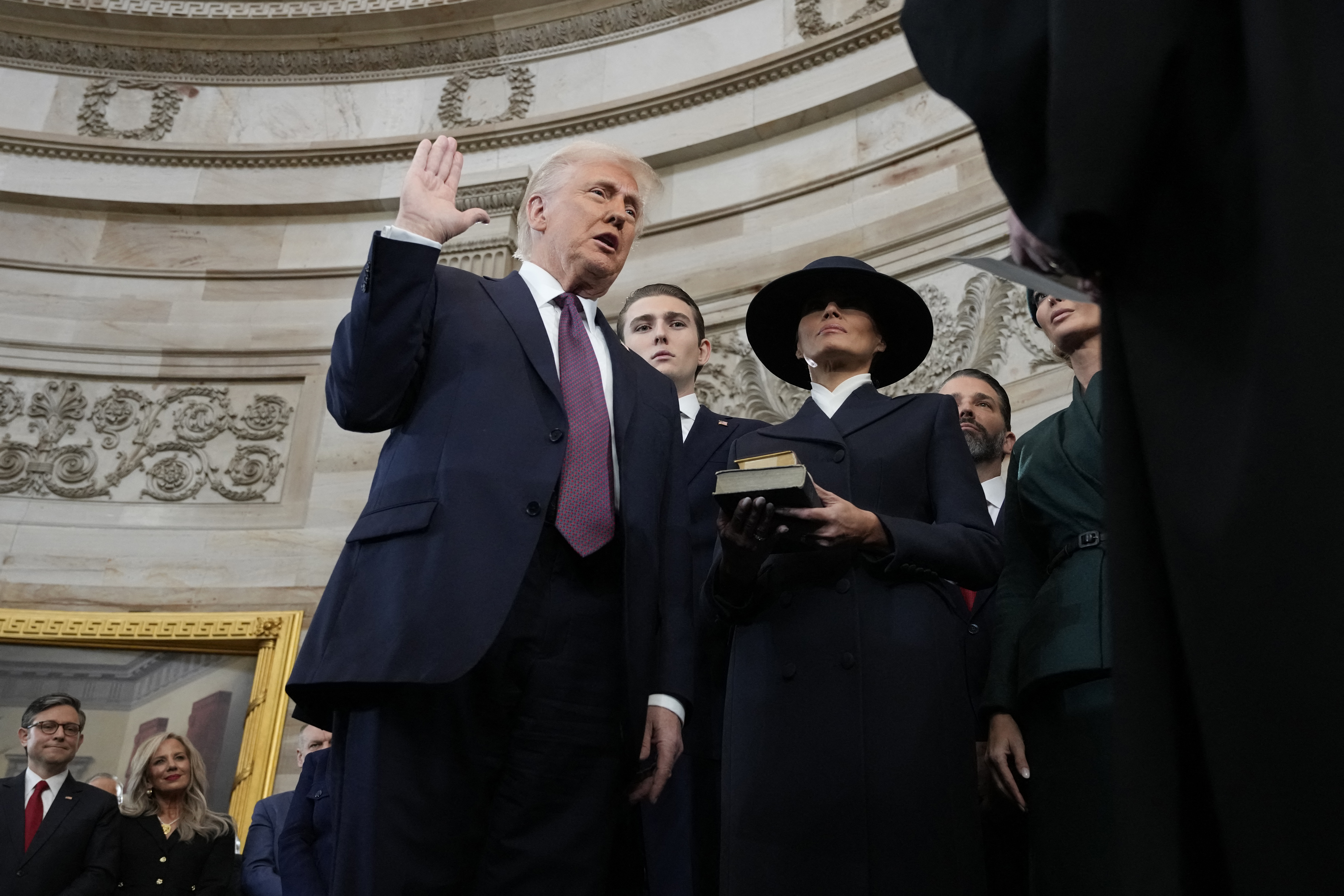
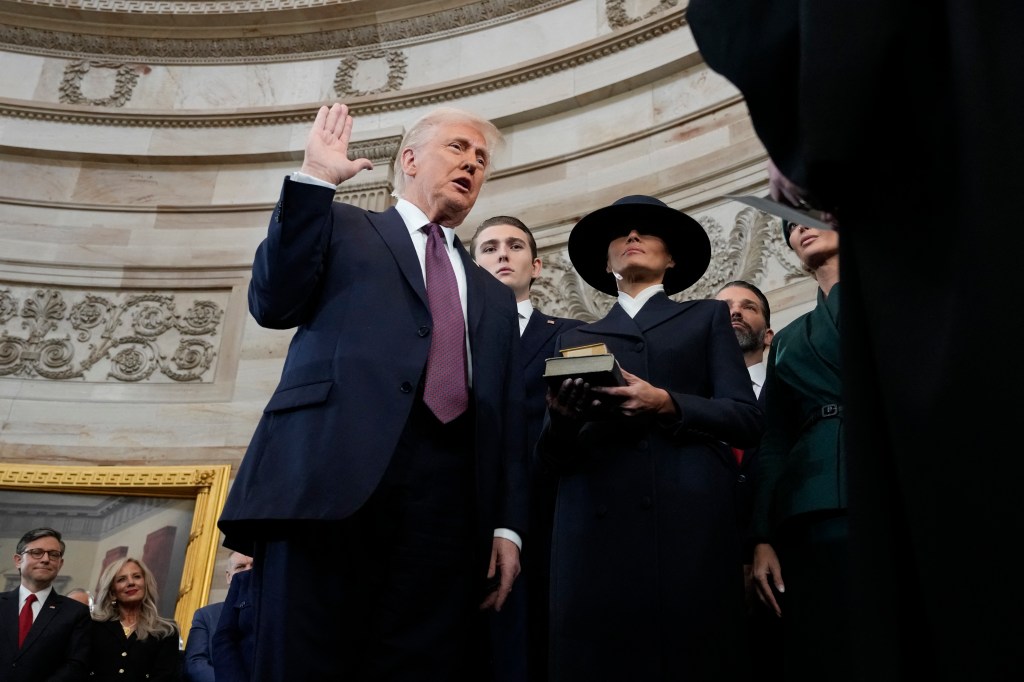
At noon ET today, it will have been one year since President Donald Trump was inaugurated for his second term, during which he promised to Make America Great Again, again. That was his high-level pledge to voters, but at rallies and in interviews, the eventual winner of the 2024 election made hundreds of specific promises about what he would do when he returned to office.
Academic research suggests national leaders generally follow through on their campaign platforms—a 2017 cross-national study found governing parties fulfill a “clear majority” of pledges—but has that been true of Trump during the first year of his second term? To find out, TMD analyzed 142 rallies that Trump spoke at in the run-up to the 2024 general election—along with five press conferences, 13 interviews and podcasts, two debates, and 33 other appearances—and broke down hundreds of distinct campaign promises.
Trump and his administration have done a number of things in office that he did not discuss or emphasize on the campaign trail—striking Iran’s nuclear program, capturing Venezuelan dictator Nicolás Maduro, gutting the U.S. Agency for International Development, dramatically expanding his use of the pardon power—but today’s piece focuses on the promises Trump did make during the 2024 campaign, and whether or not he followed through.
Immigration
Regaining control of America’s southern border and cracking down on illegal immigration more broadly were the most consistent and prominent themes of Trump’s campaign. As he told a crowd in Freeland, Michigan, on May 1, 2024, “On day one of my new administration, I will seal the border, stop the invasion, and send Joe Biden’s illegal aliens back home where they belong.”
More specifically, one of his most frequently made promises was to carry out “the largest deportation operation in American history.” As he clarified in Glendale, Arizona, on August 23, 2024, “larger even than President Dwight D. Eisenhower in the 1950s.” In his first campaign rally for his re-election, in Waco, Texas, on March 25, 2023, Trump promised to “use all necessary state, local, federal, and military resources to carry out the largest domestic deportation operation in American history.”
So, did Trump carry out the largest deportation operation in American history? According to a December 19 Homeland Security Department press release, the agency’s enforcement operations have deported more than 622,000 people since Trump took office in January, in addition to an “estimated 1.9 million self-deportations.” A recent New York Times analysis puts the total number of deportations closer to 540,000, including 230,000 people arrested inside the country by ICE officials and 150,000 people arrested by Customs and Border Protection agents at the border. That’s fewer than the 650,000 total deportations in 2024 and the 590,000 in 2023 under Biden, when border crossings were at record highs.
That said, the Trump administration has dramatically shifted interior enforcement. The Times found that deportations from ICE arrests inside the country during Trump’s first year have already exceeded the total such deportations during Biden’s entire term. The Trump administration also expanded enforcement against illegal immigrants without additional criminal records, with Cato Institute analysis showing that as of late November, 73 percent of ICE detainees had no criminal conviction, and arrests of people without criminal convictions or charges increased more than 1,200 percent year-over-year.
Other specific Trump immigration promises included:
- “immediately ban all sanctuary cities in the United States.” (Madison Square Garden, on October 27, 2024).
- “will deploy the U.S. Navy to impose a fentanyl blockade … boarding and inspecting ships to look for fentanyl.” (Dubuque, Iowa, September 20, 2023)
- “invoke the Alien Enemies Act of 1798 to target and dismantle every migrant criminal network.” (Coachella, California, on October 12, 2024)
- “end catch and release … restore Remain in Mexico. … bring back Title 42.” (Prairie du Chien, Wisconsin, on September 28, 2024)
- “sign on day one, an executive order ending automatic citizenship for the children of illegal aliens.” (Pickens, South Carolina, on July 1, 2023)
- “shut down all entries through Kamala’s migrant phone app.” (Saginaw, Michigan, on October 3, 2024)
- “demand that Congress impose criminal penalties on any future administration that erases America’s borders.” (Columbia, South Carolina, on January 28, 2023)
- “immediately ask Congress for funding to hire 10,000 new border agents.” (Tempe, Arizona, on October 24, 2024)
- “ban all welfare and federal benefits from illegal aliens.” (Tempe, Arizona, on October 24, 2024)
How’s he faring on those promises a year later?
- Trump announced last week that, effective February 1, the government would suspend all federal funds to 11 states hosting sanctuary cities, in addition to Washington, D.C. He has not attempted to “ban” or “prohibit” them as he pledged on the campaign trail.
- The U.S. Navy has not imposed a blockade to bar fentanyl shipments from reaching the U.S., though the military’s dozens of strikes in the Caribbean and Pacific in recent months targeted boats that the administration claimed were smuggling drugs.
- Trump invoked the Alien Enemies Act in March to deport suspected affiliates of the Venezuelan-based gang Tren de Aragua, though a federal appeals panel issued an injunction in September blocking the move.
- Axios reported last February that ICE had released 461 illegal immigrants under “catch and release.” The Trump administration moved to restore the “Remain in Mexico” program but not Title 42 restrictions, which would allow for the immediate expulsion of migrants on public health grounds without permitting them to make asylum claims.
- On day one, Trump signed an executive order redefining constitutional birthright citizenship to exclude individuals born in the U.S. to parents residing in the country unlawfully or on a temporary legal status. Courts have blocked the move, but the Supreme Court picked up the case in early December and is expected to weigh in on the merits this year.
- On Inauguration Day, the Trump administration terminated CBP One’s asylum appointment function, which had allowed nearly a million migrants to legally schedule their arrival at ports of entry. In March, DHS relaunched the app as CBP Home, retaining some original features—such as Form I-94 access and cargo inspection scheduling—while adding a new function allowing illegal immigrants to register for voluntary self-deportation.
- Trump has not urged Congress to pass any legislation penalizing foreign countries for illegal immigration into the U.S. The president did cite such immigration as a reason for placing tariffs on Mexico.
- The One Big Beautiful Bill Act (OBBBA) allocated funding for 3,000 additional customs officers and 3,000 new Border Patrol agents.
- Trump issued an executive order in February stipulating that “no taxpayer-funded benefits go to unqualified aliens,” and, in April, moved to eliminate all legal pathways for illegal immigrants to obtain benefits from Social Security Act programs.
As with his plans for illegal immigration, Trump has at least attempted to fulfill most of his campaign pledges around legal immigration.
On September 20, 2023, Trump told a rally in Dubuque, Iowa, that he would “bring back the travel ban and expand it even further.” In December, his administration placed complete travel bans on 19 countries and partial travel bans on 19 others, and on January 14, the State Department announced it was suspending all approvals of permanent visa applications from 75 countries. The crackdown also extended to legal refugees. Homeland Security Secretary Kristi Noem has moved to end temporary legal status for nationals from 11 countries, although courts have temporarily blocked the administration from immediately revoking legal credentials in some cases.
In Derry, New Hampshire, Trump promised to “implement strong ideological screening of all immigrants,” and in Las Vegas on October 28, 2023, he told the Republican Jewish Coalition that he would “cancel the student visas of Hamas sympathizers on college campuses.” U.S. Citizenship and Immigration Services, in a policy alert issued in August, updated its protocol to allow officers, in cases “where an exercise of discretion is required,” to screen applicants for “any involvement in anti-American or terrorist organizations.” Secretary of State Marco Rubio said in March that the Trump administration revoked 300 student and other temporary visas, telling reporters at the time, “If they’re taking activities that are counter to our foreign, to our national interest, to our foreign policy, we’ll revoke the visa.”
One notable promise remains unfulfilled. Trump told the All-In Podcast—co-hosted by David Sacks, his current White House AI and Crypto Czar—in June 2024 that when “you graduate from a college, I think you should get automatically, as part of your diploma, a green card.” The Trump administration has not created a program to extend green cards or other temporary legal protections for recent college graduates.
Editor’s Note: Due to space constraints, this is just the first part of a full breakdown of how Trump’s first year back in the White House has compared to his campaign promises. To read the full unlocked version of this piece—covering Trump’s promises on foreign policy, the economy, crime, transgender issues, and more, click the link here.
In Other News
- White House trade envoy Jamieson Greer promised that, if the Supreme Court were to strike down the president’s tariffs, the administration would “start the next day” on reinstating tariffs through different legal authorities.
- Federal Reserve Chair Jerome Powell will attend oral arguments at the Supreme Court on Wednesday, as justices deliberate over President Donald Trump’s attempted firing of Fed governor Lisa Cook.
- Officials said that a detained immigrant’s death in an ICE detention center was a suicide. This is the third death in 44 days at the Camp East Montana facility in El Paso.
- More than six tons of ready-to-eat chicken products made by a Georgia-based food company were recalled from seven states, over fears that they were contaminated with Listeria.
- A judge in Indiana and his wife were shot at their home on Sunday. Both are in stable condition.
- The Indiana Hoosiers defeated the Miami Hurricanes 27-21 on Monday to win the College Football Playoff National Championship.
- Parts of the northern United States may be able to see the northern lights tonight.
- Japanese Prime Minister Sanae Takaichi called a snap election for February 8.
- Bulgaria’s president resigned, possibly to run in the upcoming parliamentary elections.
- Israel struck multiple Hezbollah sites in southern Lebanon.
- 145 Russian drones attacked Ukrainian energy infrastructure overnight on Monday, leaving more than 5,600 residential buildings in Kyiv without heat.
- At least 15o people were abducted from three Nigerian churches by gunmen from an unknown group on Sunday.
- ISIS has claimed responsibility for a restaurant explosion yesterday in Kabul, the capital of Afghanistan. The bombing killed at least seven people.
- The New York Stock Exchange is building a digital platform for 24/7 trading of digital tokens.
- Kenya moved to privatize a state petroleum transportation company, aiming to raise $824 million.
- The Philippines announced the discovery of an undersea natural gas deposit near the South China Sea, potentially staving off a looming energy crunch.
- A smaller version of Las Vegas’ Sphere theater will be built in Maryland next to the Potomac River.
- Zootopia 2 has become Hollywood’s biggest animated film ever, amassing $1.71 billion at the box office.
- China’s largest solar panel manufacturers have forecast losses of up to $5.5 billion, due to overcapacity and rising raw material costs.
- “Trump’s Second Term Has Ended the Conservative Era” (The New York Times).
- Madeleine Speed reports on the staggering quantities of unsold liquor sitting in warehouses due to a drop in demand. (The Financial Times)
- Nithin Vejendla suggests that America has far too many bus stops. (Works in Progress)
- A writer offers 25 more thoughts about the situation in Venezuela. (Flyover Takes)
CNN: Recruiter Pitches Joining the Military to Minneapolis High School Students To Protect Their Families From ICE
The New York Times: Cows Use Tools, Too, New Study Finds
Let Us Know
Have any thoughts or questions about today’s newsletter? Drop us a note in the comments or via email at tmd.questions@thedispatch.com. We read every submission, and your message could be featured in an upcoming “Behind the Scenes” segment.
Have any thoughts or questions about today’s newsletter? Become a member to unlock commenting privileges and access to a members-only email address. We read every submission, and answer questions in the following edition of TMD.